
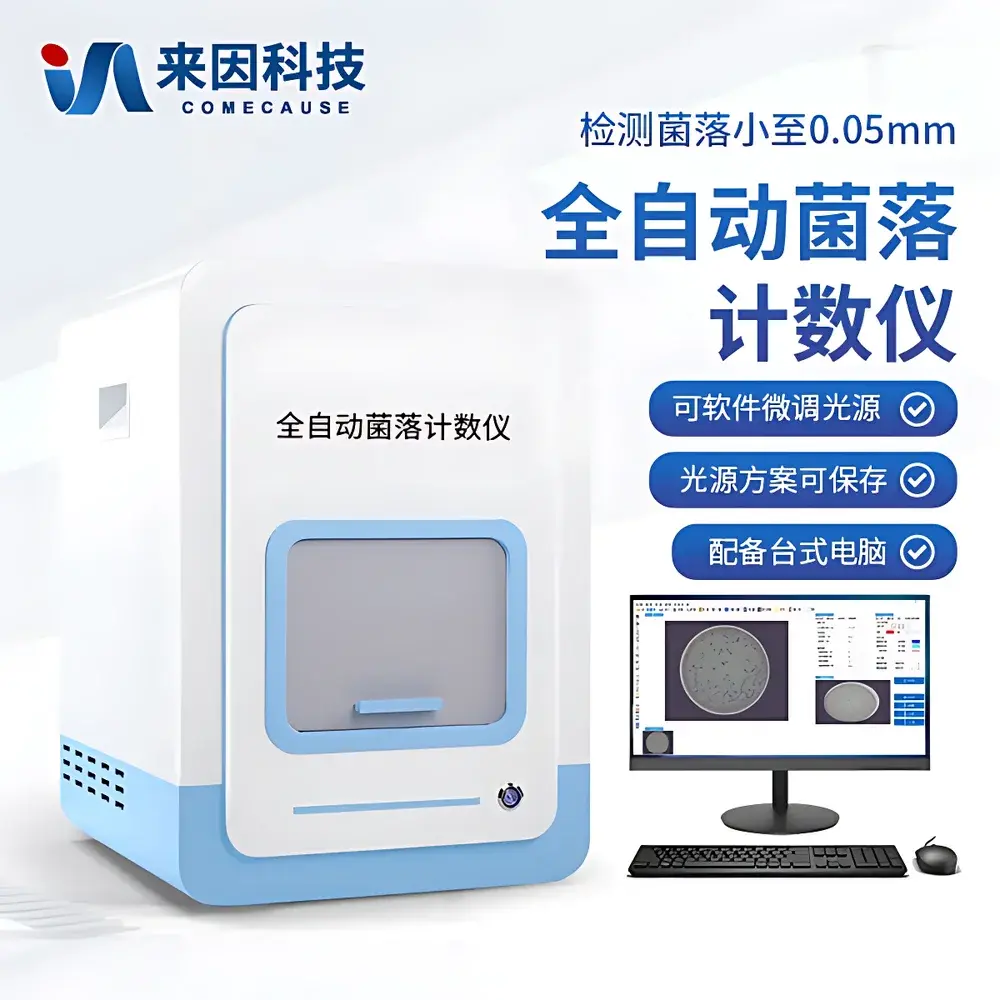
COMECAUSE IN-J400 Automated Colony Counter
| Brand | COMECAUSE |
|---|---|
| Origin | Shandong, China |
| Manufacturer Type | OEM Manufacturer |
| Instrument Type | Fully Automated Colony Counter |
| Sample Type | Petri Dish |
| Sample Diameter Range | 90–110 mm |
| Counting Accuracy | ≤ ±10% |
| Imaging Resolution | 1920 × 1080 |
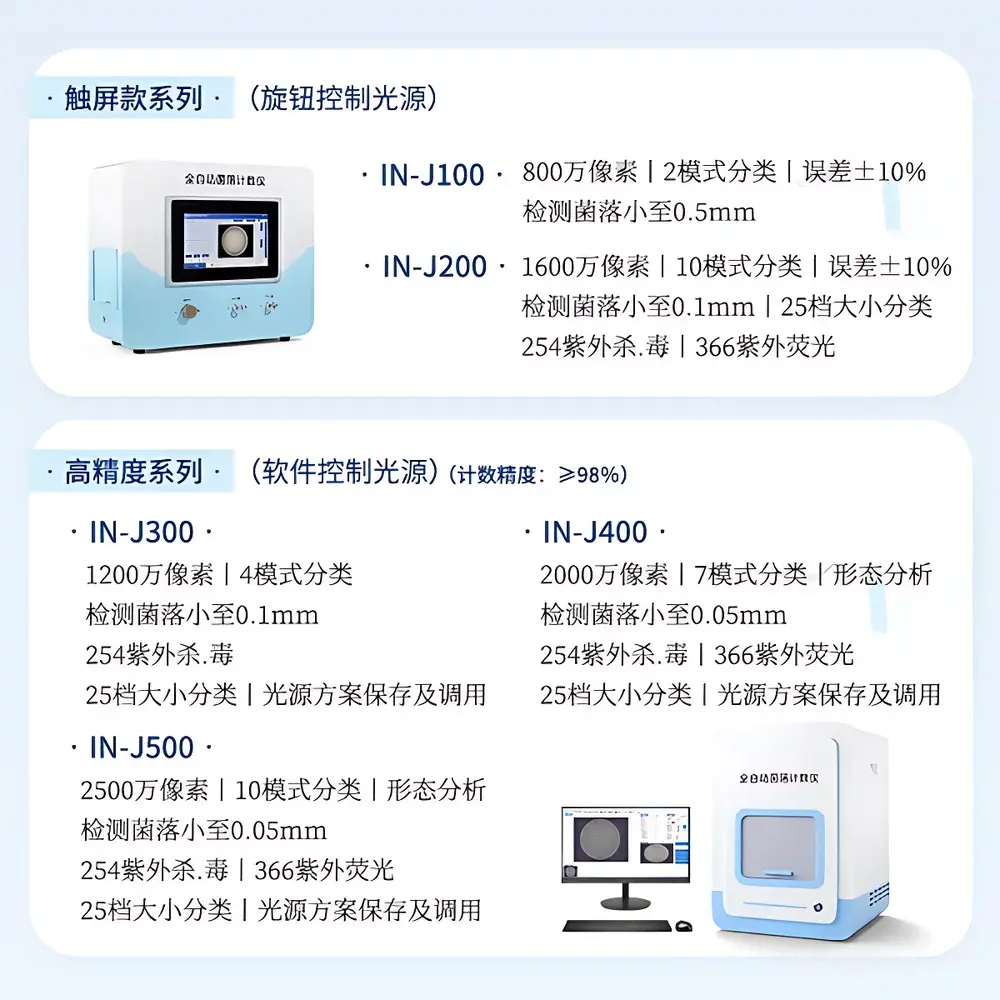
| Key Features | Software-Based Illumination Control, Fluorescence Excitation (366 nm), UV Sterilization (254 nm), Manual & AI-Assisted Correction, Multi-Mode Detection Algorithms, Audit Trail, Cloud Data Sync |
Overview
The COMECAUSE IN-J400 Automated Colony Counter is an ISO/IEC 17025-aligned digital imaging system engineered for high-throughput, objective quantification of microbial colonies grown on standard Petri dishes (90–110 mm diameter). It operates on the principle of digital image acquisition followed by algorithmic segmentation and morphological classification—leveraging contrast-enhanced illumination, multi-spectral excitation, and pixel-based spatial calibration to deliver reproducible colony enumeration across diverse microbiological matrices. Designed for compliance-driven environments—including food safety laboratories (ISO 4833-1, ISO 6888), pharmaceutical QC (USP , EP 2.6.12), and clinical microbiology—the IN-J400 eliminates subjective manual counting while supporting traceable, auditable workflows essential under GLP and GMP frameworks.
Key Features
- Fully enclosed dark-box imaging chamber with zero ambient light interference
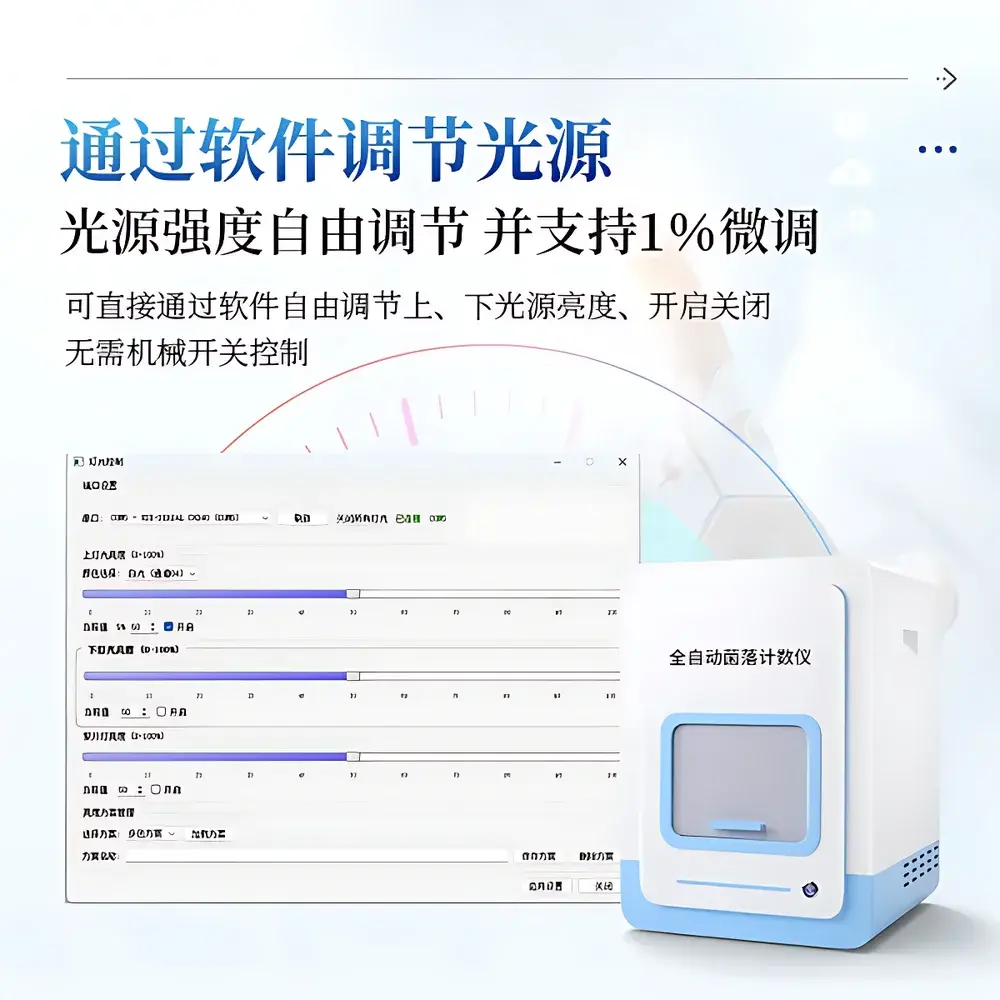
- Dual independent illumination system: top-mounted 360° quad-color LED array (white, red, green, blue) + bottom-transmitted white LED; software-controlled brightness adjustment (0–100% in 1% increments)
- Integrated UV modules: 254 nm germicidal lamp for internal cavity sterilization and 366 nm fluorescence excitation lamp for GFP-tagged strains and Escherichia coli detection on selective media
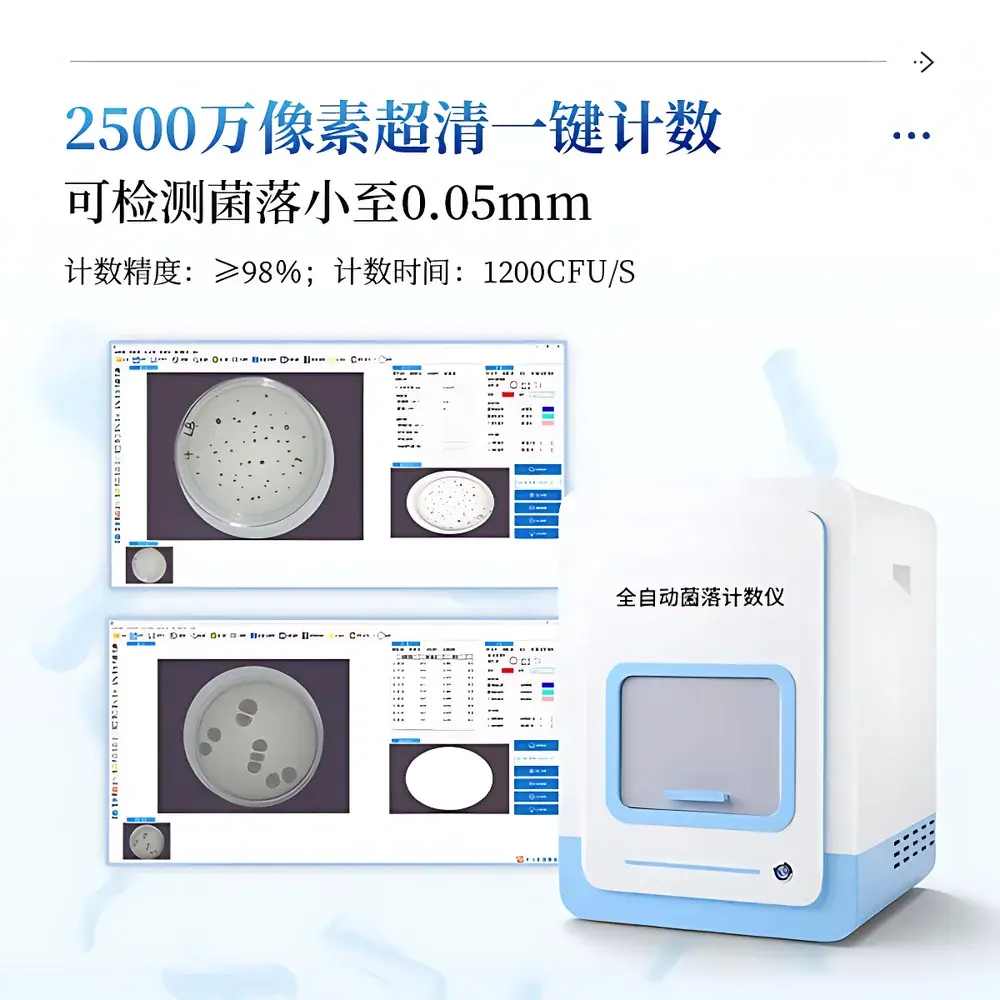
- 20 MP color CMOS sensor coupled with 12 mm f/1.4 high-resolution macro lens; minimum resolvable colony size: 0.05 mm
- Seven pre-optimized counting modes: dispersed colonies, clustered colonies, microcolonies, large colonies, Compact Dry™ grid membranes, RIDA™ filter membranes, and low-contrast background colonies
- Hybrid correction workflow: real-time manual intervention (double-click add/remove, lasso selection) + post-processing intelligent refinement using adaptive thresholding and contour splitting heuristics
- Single-colony morphometric analysis: diameter, area, perimeter, circularity, and grayscale intensity distribution per colony
- Batch-level statistical output: size distribution histogram (25-bin classification), total CFU count, dilution-corrected concentration (CFU/mL or CFU/g), and coefficient of variation (CV%)
Sample Compatibility & Compliance
The IN-J400 accepts standard polystyrene, glass, or PET Petri dishes (90–110 mm). Its optical architecture accommodates agar-based media (TSA, PCA, VRBA, mFC, etc.), membrane filtration assemblies, and chromogenic substrates. All counting algorithms are validated against reference colony counts per ASTM E2923-22 and ISO 4833-1:2013 protocols. The system supports 21 CFR Part 11-compliant audit trails—including user login timestamps, parameter modifications, correction events, and PDF report generation—with immutable original image archiving. Data export formats include CSV (raw coordinates/metrics), PDF (regulatory-ready reports), and encrypted JSON (for LIMS integration).
Software & Data Management
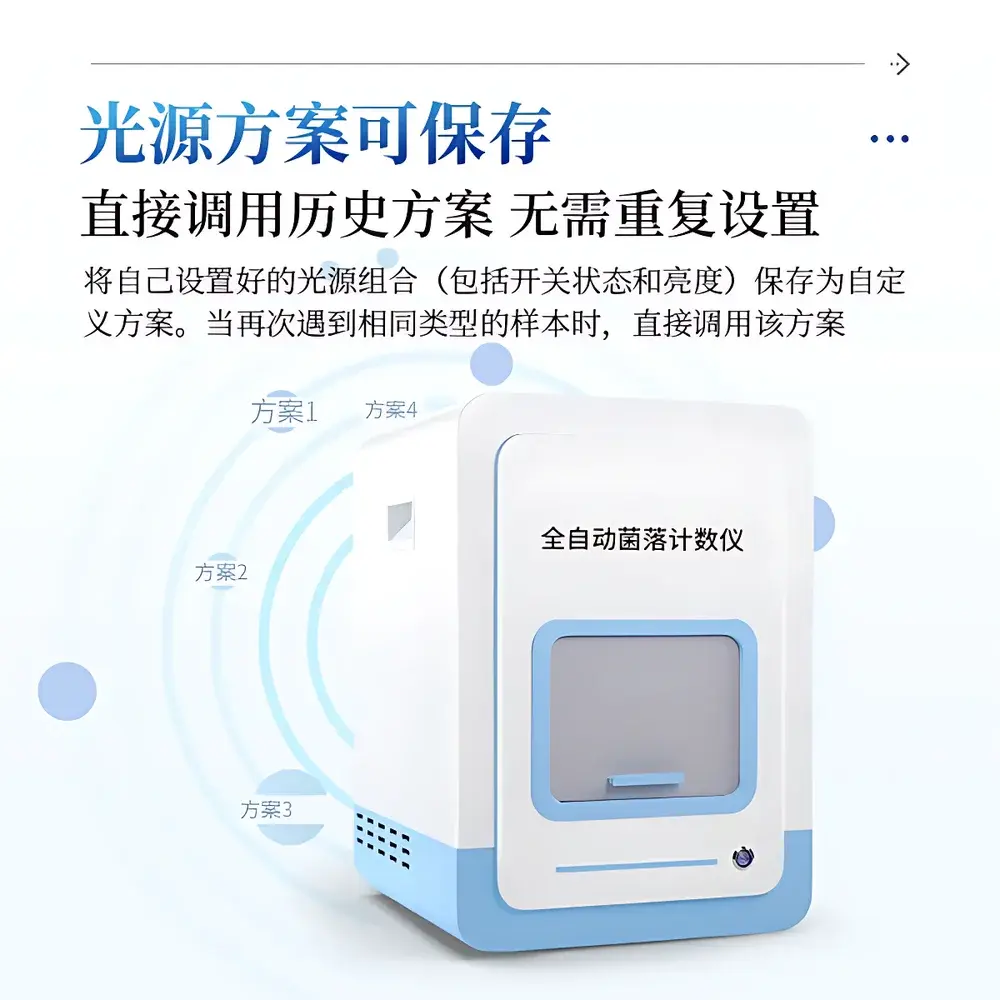
The proprietary ColonyVision™ software features bilingual UI (English/Chinese), role-based access control (admin, analyst, reviewer), and local/cloud hybrid storage. Each user session generates timestamped metadata logs tracking every action—from illumination scheme selection to final report approval. Calibration is performed via dual-mode reference: automatic pattern-matching using embedded calibration target or manual pixel-to-mm mapping using stage micrometer. All measurement data are stored in SQLite-backed local database with optional synchronization to secure AWS S3 buckets via TLS 1.3 encryption. Remote access enables cross-site collaboration and centralized QA review without compromising data sovereignty.
Applications
- Food & beverage: Total viable count (TVC), E. coli and coliform enumeration on selective agars, shelf-life validation
- Pharmaceuticals: Bioburden testing per USP , environmental monitoring (ISO 14644-1), water system qualification
- Cosmetics: Preservative efficacy testing (PET), challenge studies per ISO 11930
- Environmental labs: Wastewater effluent analysis, surface swab validation, air sampler plate enumeration
- Academic research: Mutagenicity assays (Ames test), antibiotic resistance screening, biofilm dispersal kinetics
- Hospital microbiology: Rapid colony load assessment in clinical specimen processing pipelines
FAQ
Does the IN-J400 support regulatory submissions to FDA or EMA?
Yes—the system complies with ALCOA+ principles (Attributable, Legible, Contemporaneous, Original, Accurate, Complete, Consistent, Enduring, Available) and provides full 21 CFR Part 11 audit trail functionality including electronic signatures.
Can it distinguish between viable and non-viable colonies?
No—it enumerates morphologically distinct colony-forming units (CFUs) based on optical contrast and morphology; viability confirmation requires orthogonal methods (e.g., resazurin staining, ATP bioluminescence).
Is external calibration required before each run?
No—once calibrated using the included standard target or micrometer, the system retains scaling parameters until manually reset; recalibration is only needed after lens replacement or major firmware updates.
What file formats can be exported for LIMS integration?
CSV (colony coordinates, metrics, metadata), PDF/A-1b (archival reports), and structured JSON (via REST API endpoint for automated ingestion).
How is data integrity maintained during cloud sync?
All uploads use AES-256 encryption in transit and at rest; versioned object storage prevents overwrites; checksum validation ensures bit-for-bit fidelity between local and remote datasets.
Related Products




