
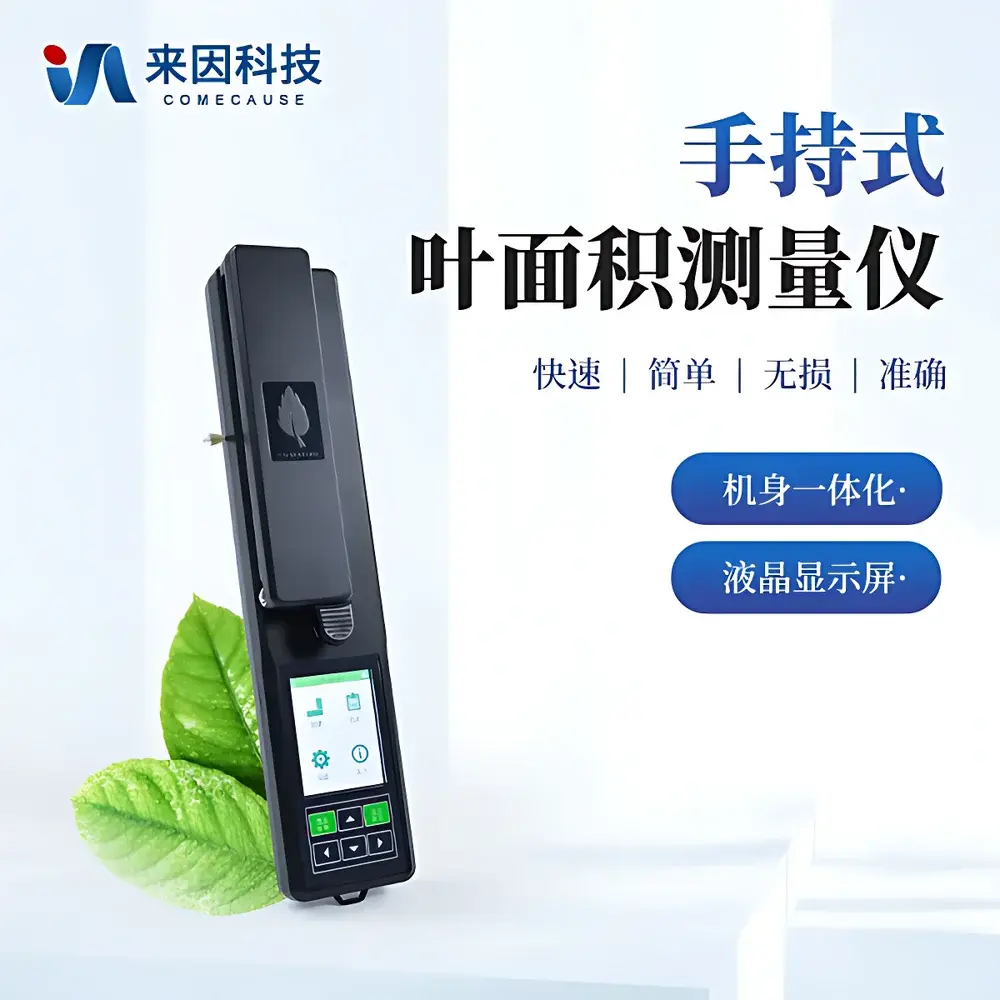
COMECAUSE YMJ-A Portable In-Vivo Leaf Area Meter
| Brand | COMECAUSE |
|---|---|
| Origin | Shandong, China |
| Manufacturer Type | Direct Manufacturer |
| Model | YMJ-A |
| Width Range | 0–155 mm |
| Length Range | 0–2000 mm |
| Area Resolution | 0.01 cm² |
| Measurement Accuracy | ±2% |
| Data Storage Capacity | 5000 sets |
| Power Supply | Built-in 5000 mAh Li-ion battery + removable 1400 mAh external battery |
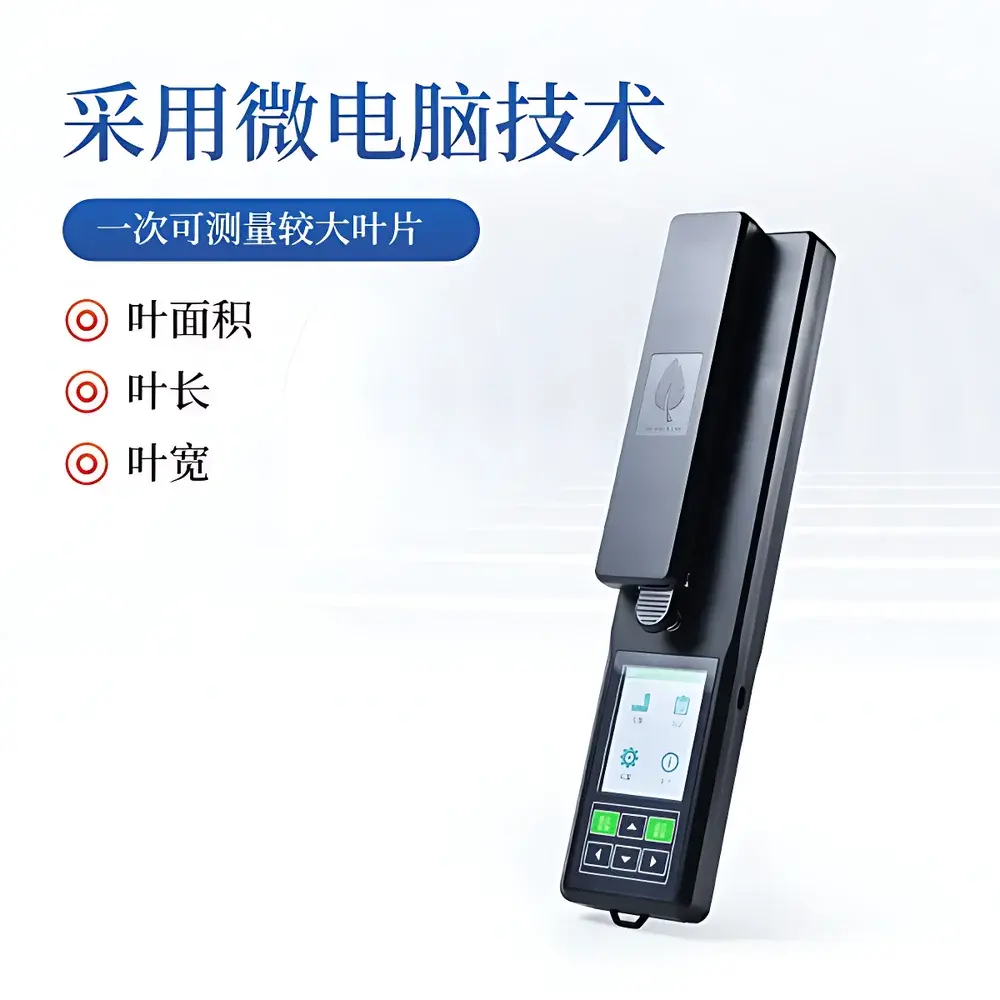
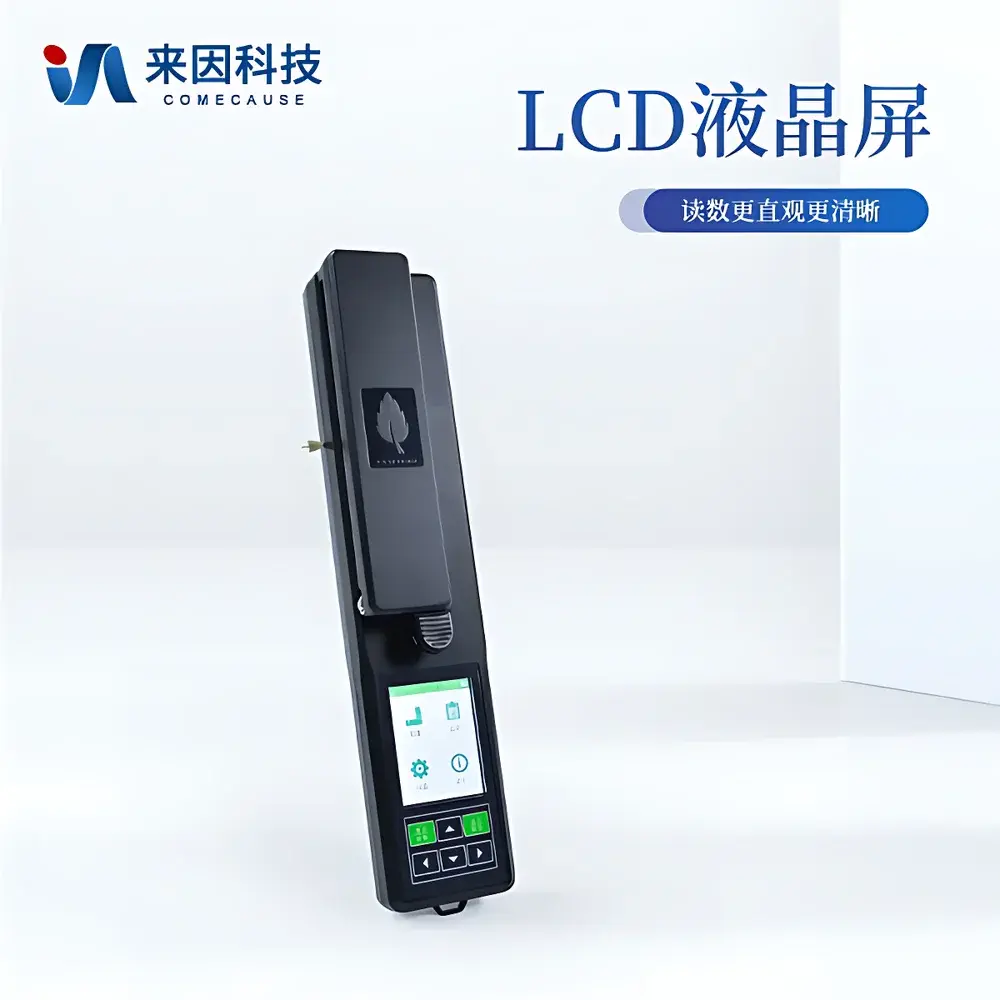
| Display | LCD with microprocessor control |
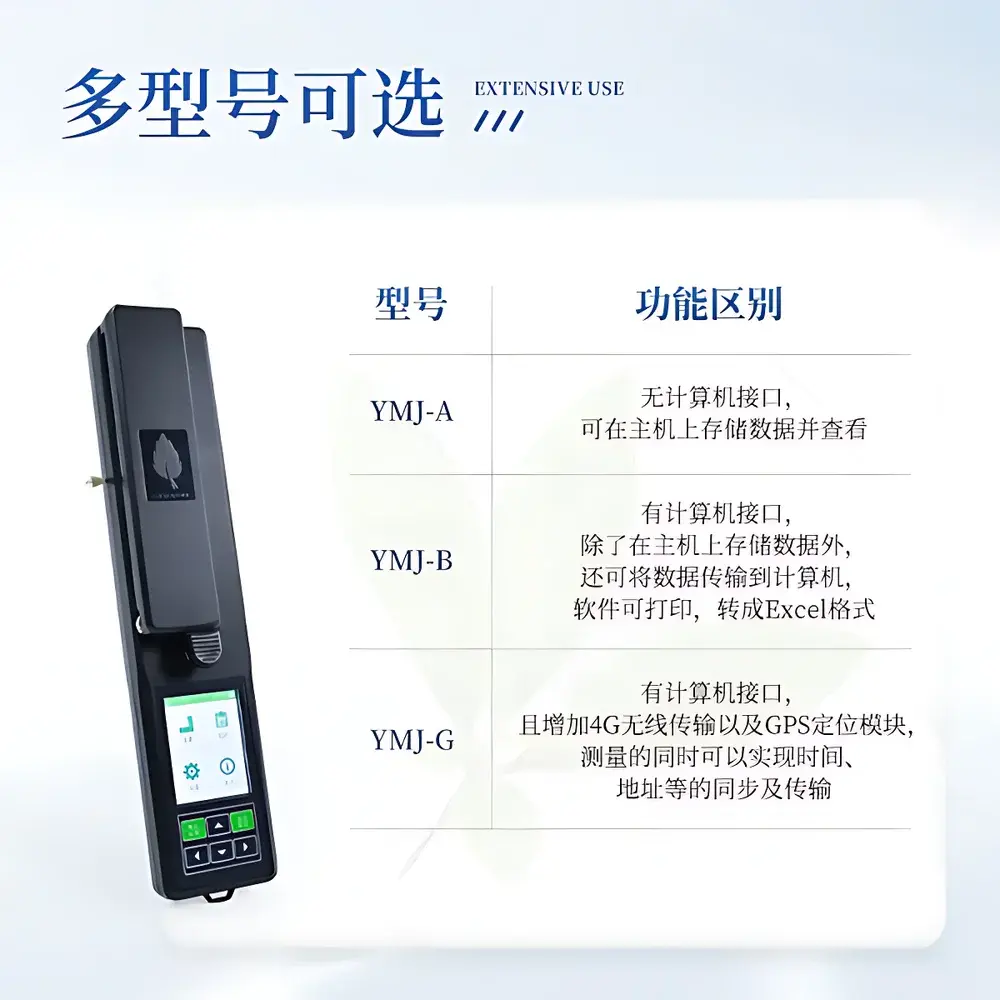
| Interface | Type-C (data export only on YMJ-B/G variants) |
| Compliance | Designed for field-deployable GLP-aligned plant phenotyping workflows |
Overview
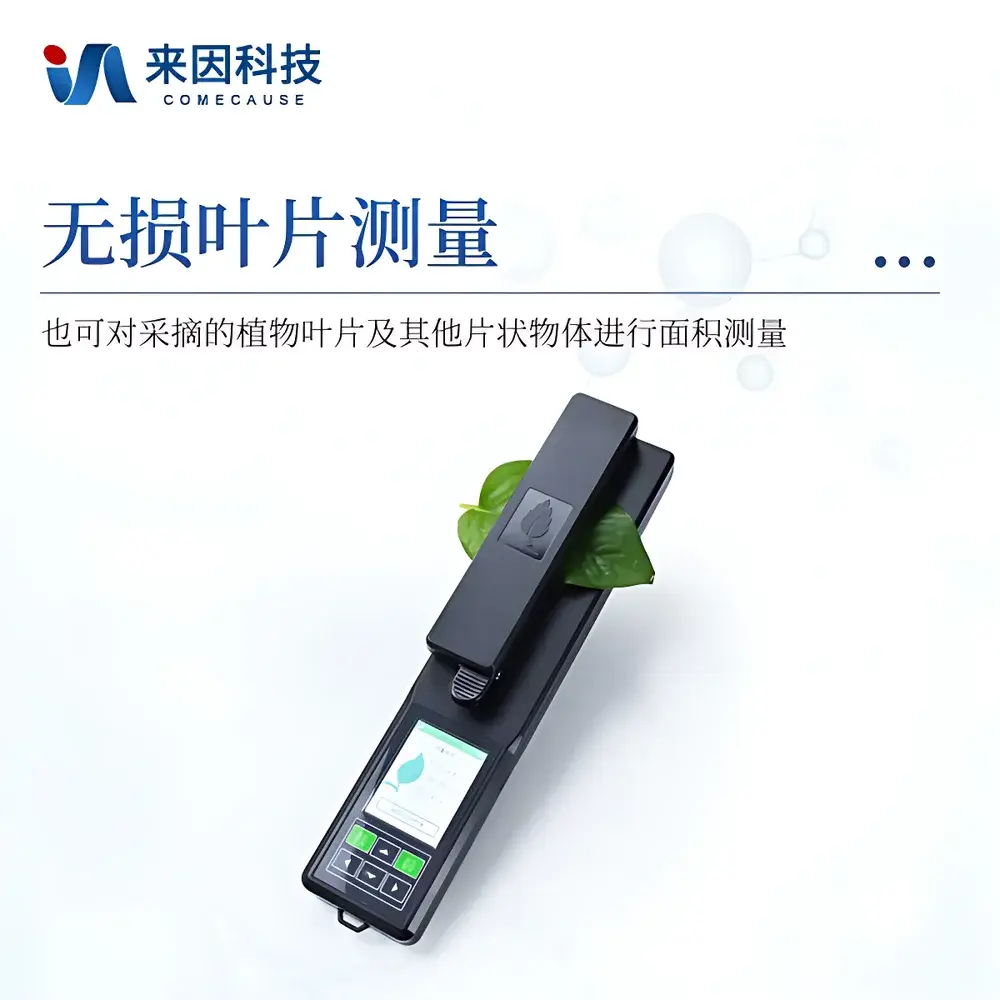
The COMECAUSE YMJ-A Portable In-Vivo Leaf Area Meter is a non-destructive, handheld optical measurement instrument engineered for rapid, high-fidelity quantification of leaf surface area in situ. Unlike destructive or indirect estimation methods—such as gravimetric conversion, grid-overlay approximation, or empirical allometric equations—the YMJ-A employs real-time optical scanning and edge-detection algorithms to capture the true projected area of intact leaves under natural orientation. Its operational principle relies on calibrated linear CCD imaging combined with embedded geometric computation, enabling direct acquisition of leaf area (cm²), length (mm), and width (mm) without physical contact or tissue removal. This approach preserves physiological integrity and eliminates bias introduced by leaf curling, venation complexity, or surface texture—factors that compromise accuracy in conventional planimeter or digital image analysis workflows requiring flatbed scanning or post-capture segmentation. The device is purpose-built for field-based plant phenotyping, supporting time-series monitoring of individual leaves or canopy-level sampling across diverse species—from narrow grass blades to broad dicotyledonous foliage—within its mechanical envelope of 2000 mm × 155 mm.
Key Features
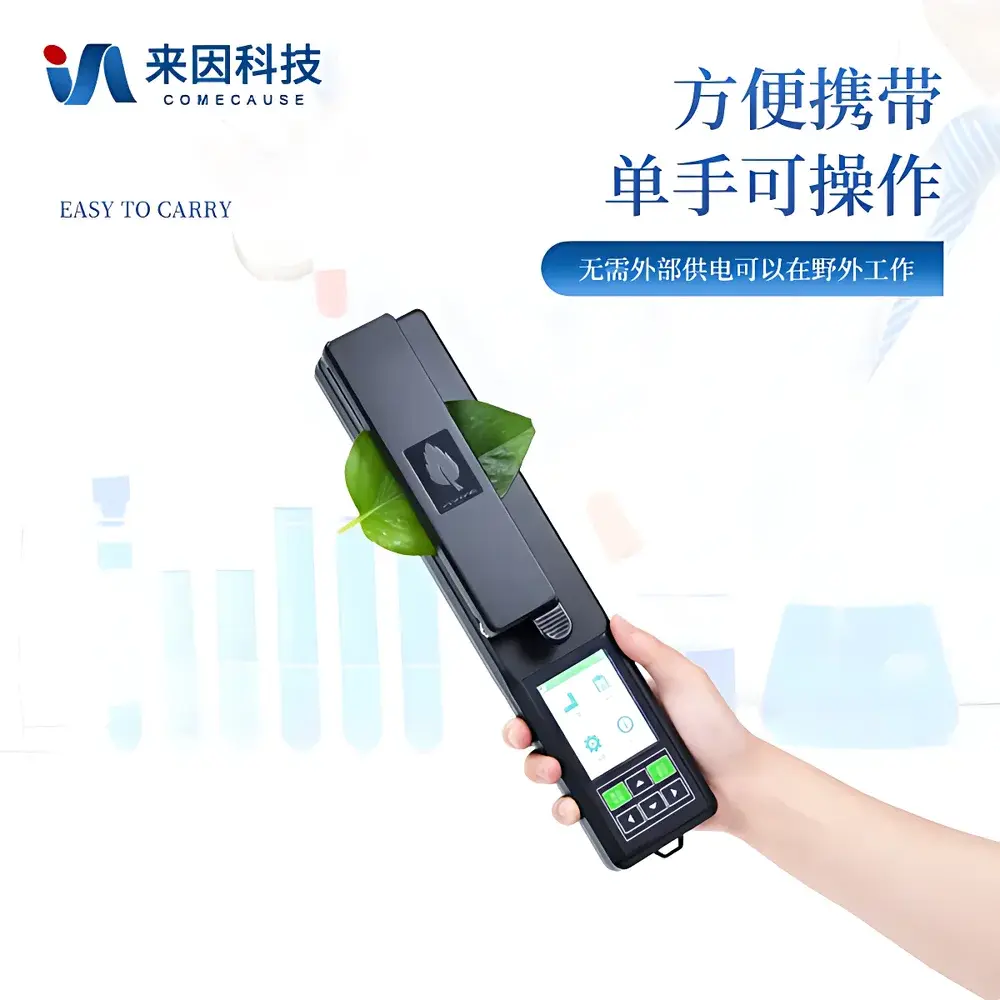
- Integrated handheld design with ergonomic grip and one-button operation for single-user field deployment
- LCD display with microprocessor-controlled interface, optimized for sunlight readability and low-power operation
- High-resolution optical sensor with 0.01 cm² area resolution and ±2% measurement accuracy against NIST-traceable reference standards
- Extended battery life: 5000 mAh internal rechargeable Li-ion cell supports >8 hours of continuous field use; optional 1400 mAh hot-swappable backup module ensures uninterrupted data collection
- On-device data storage for up to 5000 complete measurement records—including timestamp, area, length, width, and user-defined sample ID
- Self-calibration function allowing field-adjustment for ambient lighting variations and sensor drift compensation
- Ruggedized housing rated IP54 for dust and splash resistance, validated for operation in agricultural, forest, and alpine environments
- Type-C universal interface for secure data transfer to Windows/macOS systems (requires YMJ-B or YMJ-G firmware variant)
Sample Compatibility & Compliance
The YMJ-A accommodates fresh, living leaves of varied morphology—including lanceolate, ovate, pinnate, and cordate forms—without preconditioning or mounting. It performs reliably on laminar tissues with moderate surface reflectance (e.g., mature angiosperm leaves), though highly glossy, waxy, or translucent specimens may require ambient shading to minimize specular interference. While not certified to ISO/IEC 17025 for metrological accreditation, the instrument’s design adheres to principles outlined in ASTM E2917-22 (Standard Practice for Calibration of Optical Area Measurement Devices) and supports traceable data generation aligned with Good Laboratory Practice (GLP) documentation requirements. Its non-invasive methodology complies with ethical guidelines for in-vivo plant observation set forth by the International Society of Plant Physiology (ISPP) and is routinely deployed in studies subject to national agricultural research protocols in China, EU, and North America.
Software & Data Management
The YMJ-A operates autonomously without external software dependency. Data are stored internally in structured CSV-compatible format and exported via Type-C connection to standard spreadsheet applications. For users upgrading to YMJ-B or YMJ-G models, COMECAUSE provides proprietary desktop software compliant with FDA 21 CFR Part 11 Annex 11 requirements—featuring audit trails, electronic signatures, role-based access control, and automated Excel export with customizable metadata fields (e.g., plot ID, treatment group, observer initials). Cloud synchronization (YMJ-G only) utilizes TLS 1.2-encrypted MQTT protocol to transmit geotagged records—including GPS coordinates, UTC timestamps, and environmental context—to a secure SaaS platform. All cloud-stored datasets support temporal filtering, scatterplot correlation analysis, and export in .xlsx, .csv, or PDF report formats—enabling integration into larger agronomic databases such as FAO’s WaPOR or ESA’s Copernicus Land Monitoring System.
Applications
- Plant Physiology: Quantifying leaf area index (LAI) dynamics during ontogeny; calculating specific leaf area (SLA); normalizing gas exchange rates (e.g., Anet, gs) per unit area
- Agronomy & Crop Science: Monitoring canopy development in breeding trials; correlating mid-season LAI with yield potential; optimizing irrigation scheduling via evapotranspiration modeling
- Ecological Research: Estimating primary productivity in grassland and forest understory surveys; validating satellite-derived NDVI/LAI products; assessing restoration success through temporal leaf area trajectories
- Horticulture & Forestry: Evaluating pruning efficacy; screening clonal material for vigor traits; calibrating drone-based multispectral sensors using ground-truthed area metrics
- Environmental Monitoring: Tracking phenological shifts under climate change scenarios; quantifying pollutant-induced leaf abscission or necrosis extent; supporting urban tree canopy assessments per ISO 14064-1 greenhouse gas inventory frameworks
FAQ
Does the YMJ-A require external power or charging in the field?
No. The built-in 5000 mAh Li-ion battery enables full-day operation under typical usage conditions. An optional 1400 mAh external battery module allows hot-swap replacement without interrupting measurements.
Can the YMJ-A measure irregularly shaped or lobed leaves accurately?
Yes. Its optical edge-detection algorithm processes contour geometry in real time, accommodating serrated margins, deep sinuses, and compound leaflets without manual intervention.
Is calibration required before each use?
A factory calibration is preloaded. Field recalibration is recommended only when ambient light conditions change significantly (e.g., moving from shaded woodland to open field) or after extended storage (>6 months).
What is the maximum leaf thickness the sensor can accommodate?
The optical aperture accepts leaves up to 3 mm thick at the measurement zone. Thicker petioles or folded lamina may require repositioning but do not affect area calculation accuracy.
How does the YMJ-A handle overlapping or partially occluded leaves?
It measures only the contiguous, unobstructed projection. Users must ensure full exposure of the target leaf surface; overlapping structures must be manually separated prior to scanning.




