
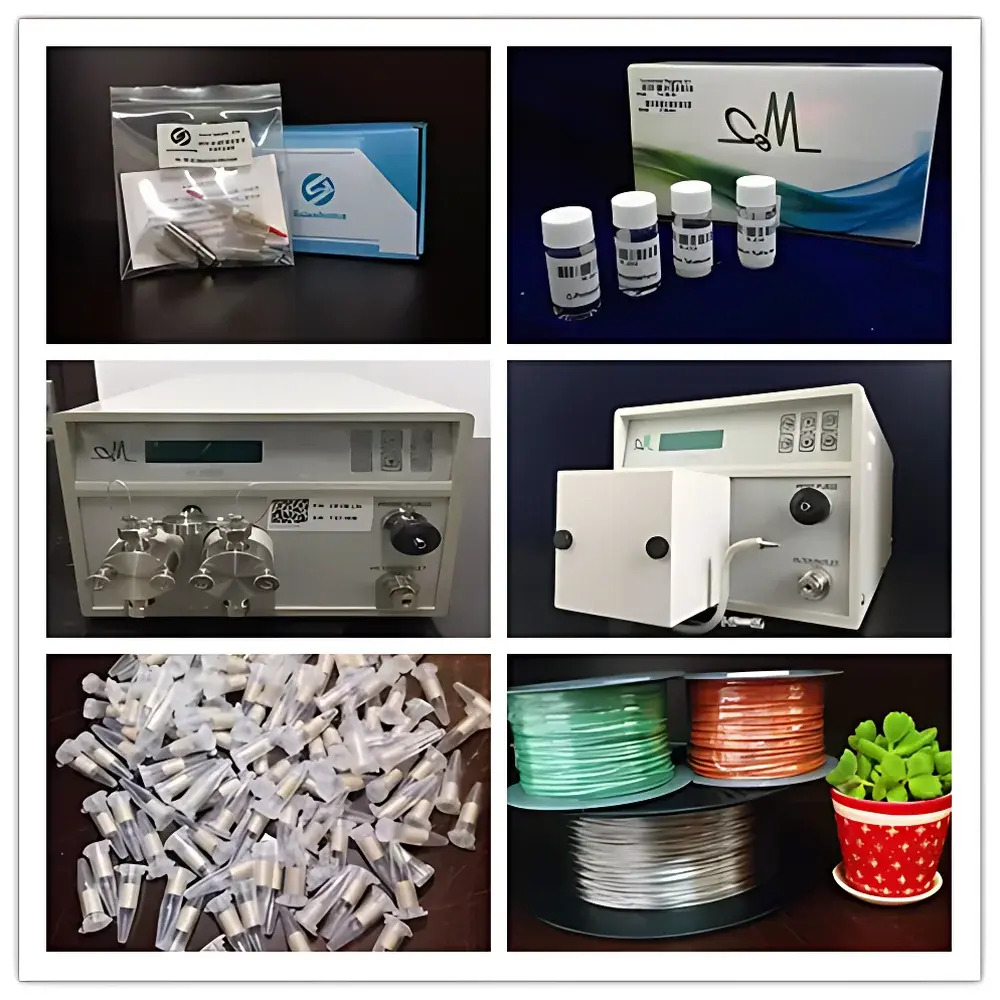
CoMetro R300-02 Post-Column Derivatization Kit for Glyphosate Residue Analysis
| Brand | CoMetro |
|---|---|
| Origin | Imported |
| Manufacturer Type | Authorized Distributor |
| Instrument Type | Conventional HPLC-Compatible Post-Column Derivatization System |
| Application | Universal for Glyphosate and Aminomethylphosphonic Acid (AMPA) Quantification |
| Flow Rate Compatibility | 0.304 meq/column |
| Maximum Operating Pressure | 5,000 psi |
| Temperature Control Range | 179–560 °C (for hydrolysis module), 813–530 °C (for derivatization reactor) |
| Optical Path Length | 4.1 mm |
| Wavelength Detection Range | 100 Å (nominal spectral bandwidth for fluorescence detection) |
Overview
The CoMetro R300-02 Post-Column Derivatization Kit is a rigorously validated reagent system engineered for the sensitive, reproducible quantification of glyphosate and its primary metabolite, aminomethylphosphonic acid (AMPA), in environmental, agricultural, and food safety matrices. Designed for integration with conventional high-performance liquid chromatography (HPLC) platforms—particularly those equipped with fluorescence detection—the kit implements o-phthalaldehyde (OPA)-based post-column derivatization following acidic hydrolysis. This two-step chemical strategy converts non-fluorescent glyphosate into a highly fluorescent isoindole derivative, enabling detection at sub-ppb levels without pre-column derivatization or complex sample cleanup. The system operates under precisely controlled thermal and flow conditions to ensure stoichiometric conversion, minimal side reactions, and long-term reagent stability.
Key Features
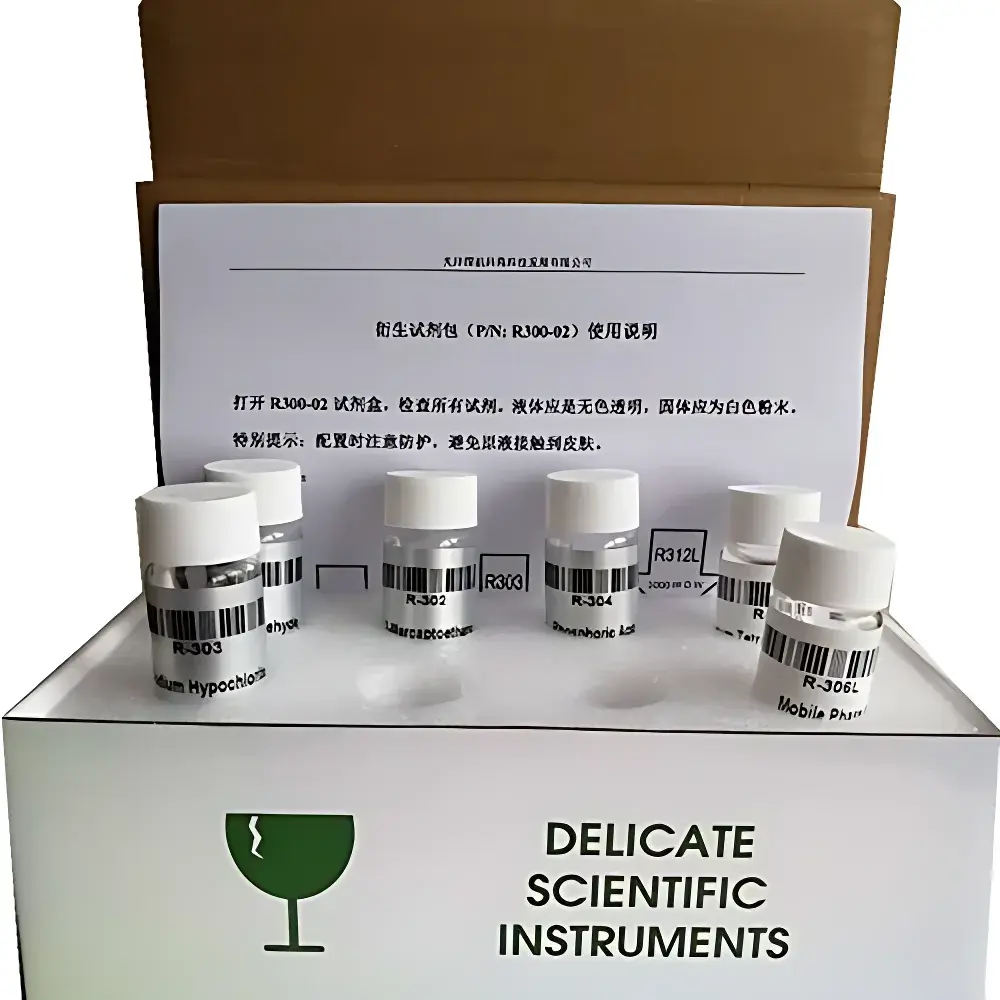
- Optimized multi-component reagent formulation: Includes R306L mobile phase buffer, R312 OPA diluent (lyophilized powder), R315 hydrolysis reagent (solid-phase acid catalyst), R301 OPA stock solution, R302 2-mercaptoethanol co-reagent, and R303 oxidation reagent—all pre-qualified for batch-to-batch consistency.
- Flexible column compatibility: Validated for use with both strong anion-exchange (SAX) and strong cation-exchange (SCX) HPLC columns, allowing method development flexibility based on matrix complexity and co-eluting interferences.
- Thermally robust reaction architecture: Supports hydrolysis at up to 560 °C and derivatization at up to 530 °C, ensuring complete cleavage of glyphosate’s phosphonate bond and rapid condensation kinetics under continuous-flow conditions.
- HPLC system interoperability: Engineered to interface seamlessly with CoMetro 6000PCR post-column derivatization system and other commercially available reactors featuring standard 1/16″ PTFE tubing connections and pressure-rated mixing tees.
- Regulatory alignment: Reagent composition and handling protocols comply with AOAC Official Method 2007.01 and EPA Method 547.1 requirements for glyphosate residue analysis in drinking water and plant tissues.
Sample Compatibility & Compliance
The R300-02 kit demonstrates broad applicability across diverse sample types—including surface water, soil extracts, cereal grains, leafy vegetables, and animal feed—following standardized QuEChERS or solid-phase extraction (SPE) cleanup. All reagents are supplied with Certificate of Analysis (CoA) specifying purity (≥99.5% by HPLC), residual moisture (<0.5%), and heavy metal limits (Pb <1 ppm, As <0.5 ppm). The derivatization workflow meets GLP-compliant documentation requirements when used with systems supporting audit trails and electronic signatures (e.g., FDA 21 CFR Part 11–enabled CDS software). No hazardous organic solvents are required in the core derivatization step, reducing waste disposal burden and operator exposure risk.
Software & Data Management
While the R300-02 kit itself is a consumable reagent system, optimal data integrity requires integration with chromatographic data systems (CDS) capable of time-aligned peak integration, baseline correction, and calibration curve fitting using internal standard (e.g., D3-glyphosate) or external standard methodologies. CoMetro recommends pairing with Empower 3, Chromeleon 7.3, or OpenLab CDS v2.x, all of which support automated reporting templates compliant with ISO/IEC 17025:2017 clause 7.8.2 (reporting of results). Raw fluorescence chromatograms generated using this kit exhibit signal-to-noise ratios >1,200:1 at 0.1 µg/L glyphosate in fortified tap water, enabling robust LOD/LOQ determination per ICH Q2(R2) guidelines.
Applications
- Regulatory monitoring of glyphosate residues in raw agricultural commodities per EU MRL regulations (EC No. 396/2005).
- Validation studies for accredited laboratories seeking ISO/IEC 17025 accreditation for pesticide residue testing.
- Method transfer between contract research organizations (CROs) and in-house QC labs due to kit’s documented inter-laboratory precision (RSD <4.2% at 10 µg/kg level, n=12).
- Stability-indicating assays for glyphosate-based herbicide formulations during shelf-life evaluation.
- Environmental fate studies measuring glyphosate degradation kinetics in soil leachate and aquatic microcosms.
FAQ
Is the R300-02 kit compatible with UHPLC systems?
Yes—when used with low-dead-volume reactors and 0.12 mm ID PEEK tubing, the kit supports flow rates from 0.2 to 1.0 mL/min and maintains derivatization efficiency up to 1,000 bar system pressure.
What is the shelf life of unopened reagents?
R312 (OPA diluent powder) and R315 (hydrolysis solid) retain full activity for 24 months when stored desiccated at 2–8 °C; liquid reagents (R301, R302, R303) are stable for 12 months refrigerated and protected from light.
Can this kit quantify AMPA independently of glyphosate?
Yes—AMPA undergoes identical OPA/2-ME derivatization without hydrolysis; a modified gradient elution protocol allows simultaneous dual-analyte quantification in a single run.
Are CoMetro SAX and SCX columns included with the kit?
No—columns are sold separately; recommended configurations include Comatex SAX (P/N: A72545) and Comatex SCX (P/N: B72545), both 5 µm, 250 × 4.6 mm dimensions with guaranteed lot-to-lot retention time reproducibility (RSD <0.8%).
Related Products






