
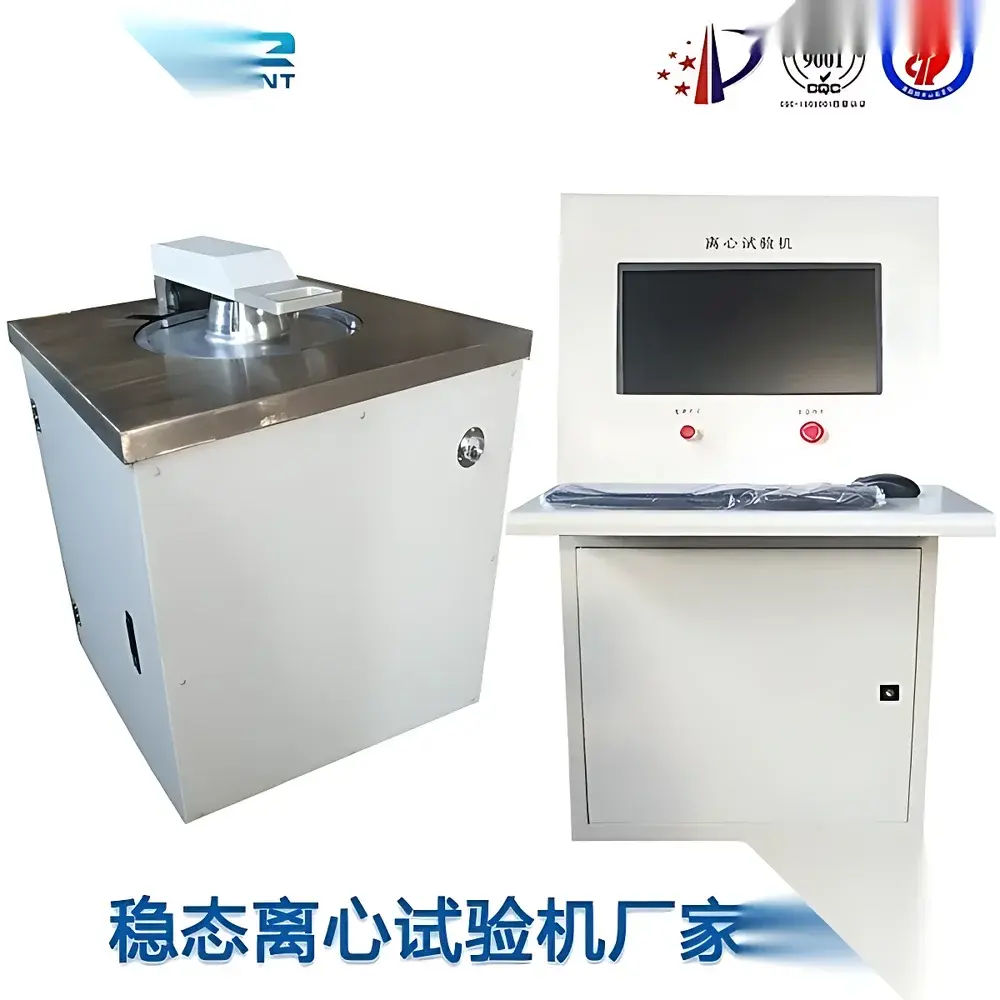
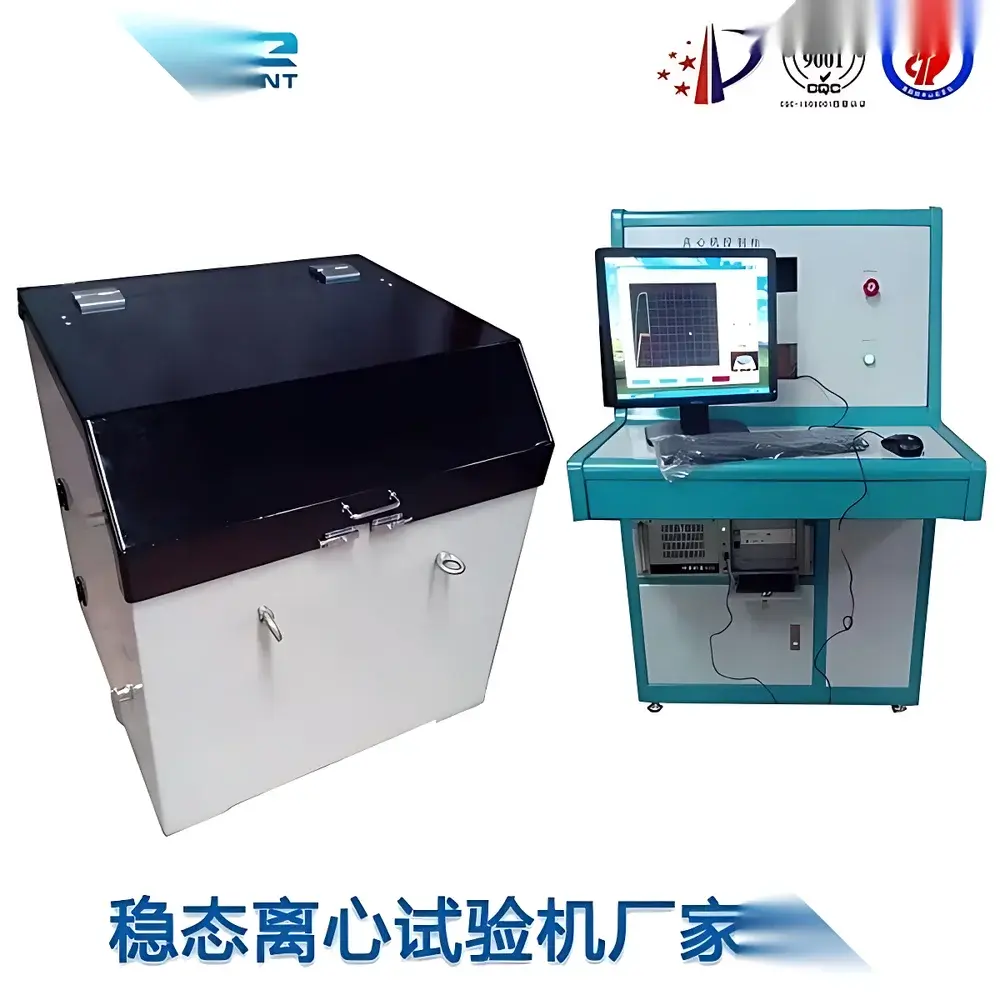
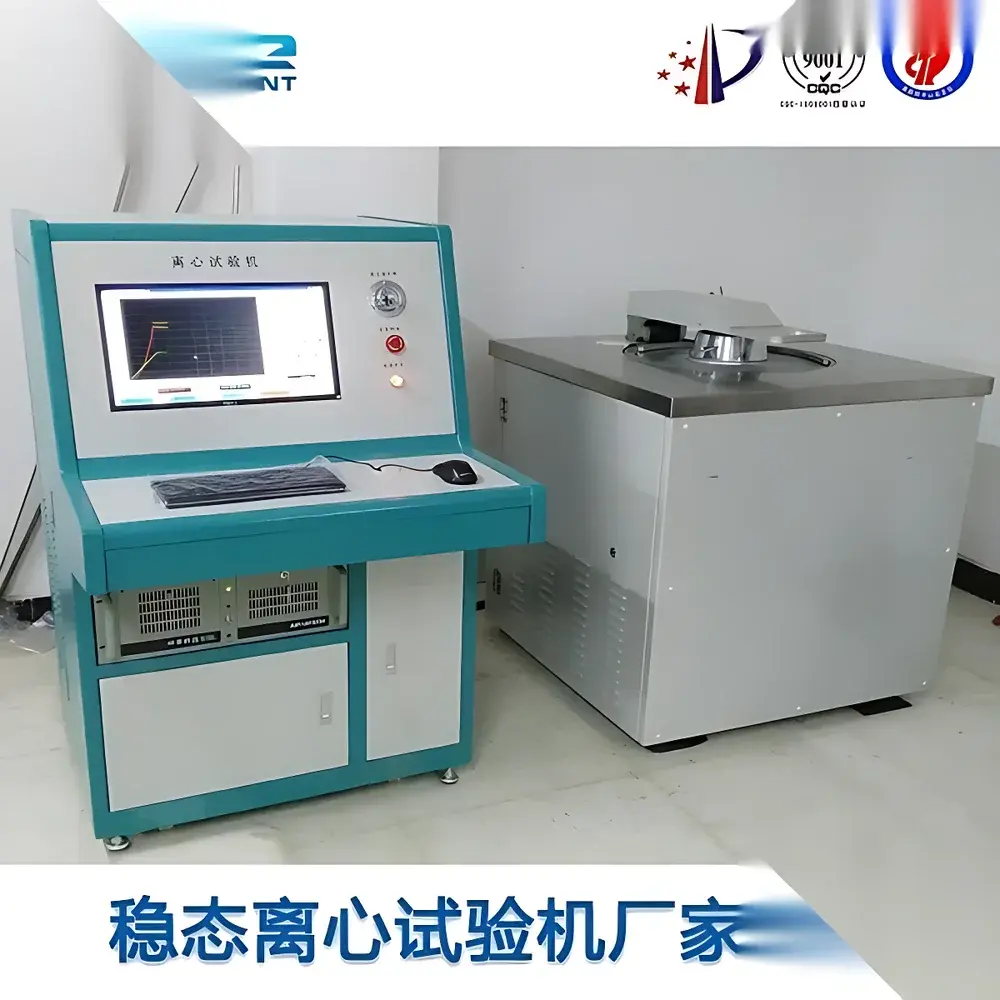
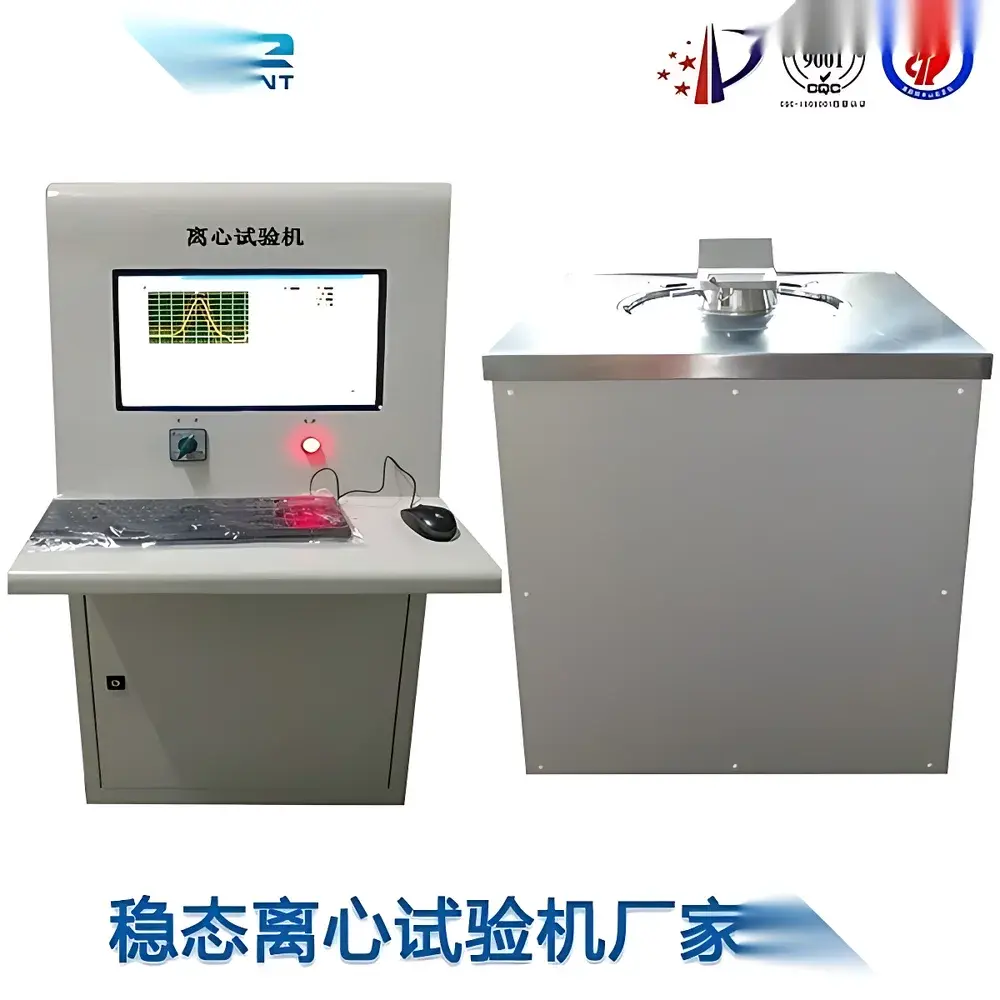
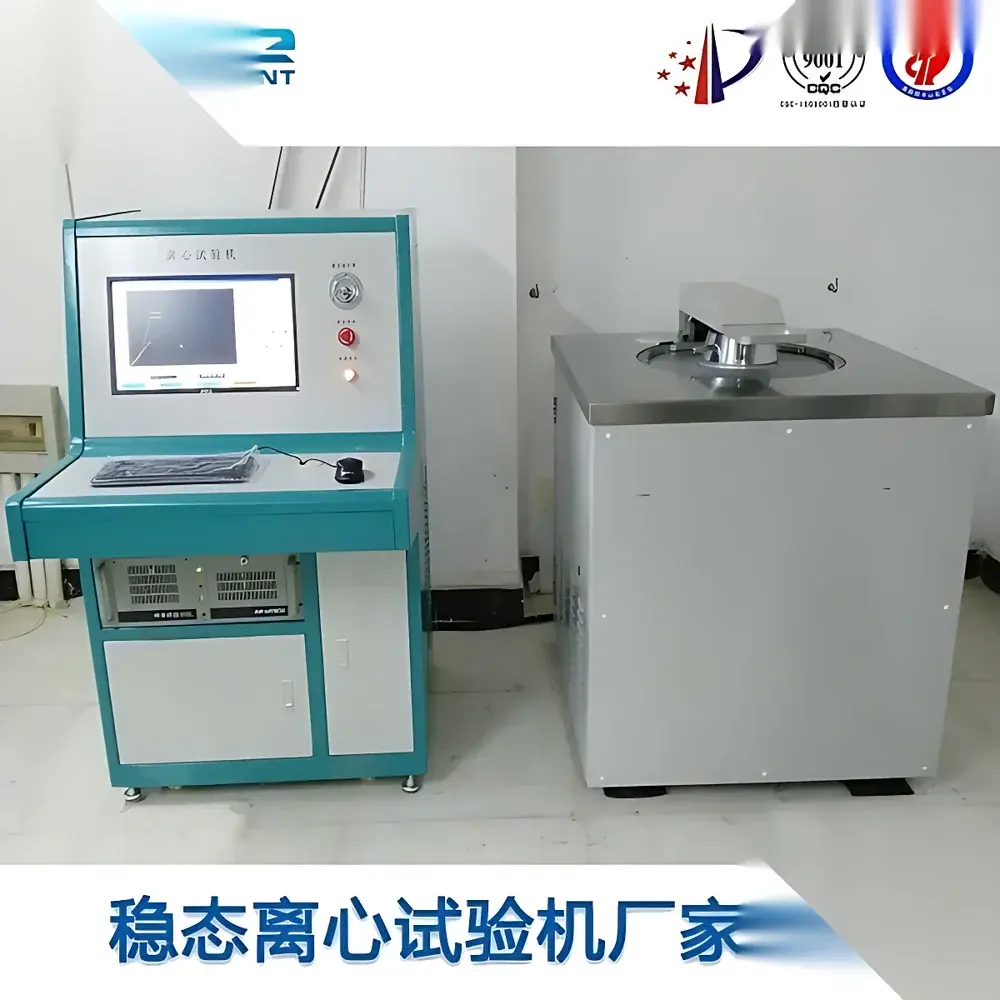
Constant Acceleration Centrifugal Test Machine LXJ Series
| Key | Brand: Other Brands |
|---|---|
| Origin | Imported |
| Manufacturer Type | Authorized Distributor |
| Price | USD 28,000 (FOB) |
| Compliance Standards | MIL-STD-810F, MIL-STD-883C, GJB 150A, GJB 360B, GB/T 2423.15, IEC 60068-2-27 |
| Max Acceleration Range | 30–400,000 g |
| Sample Mounting Radius | 200–1000 mm |
| Specimen Height Limit | 200–300 mm |
| Test Axes | X, Y, Z orthogonal directions |
| Payload Capacity | 5–200 kg |
| Power Supply | AC 380 V, 1.5–6.5 kVA |
| Continuous Operation Duration | 30–60 min |
| Control System | Industrial PC with Real-Time PID Regulation |
| Slip Ring Interface | 15-channel, 500 V / 5 A |
Overview
The Constant Acceleration Centrifugal Test Machine (LXJ Series) is a precision-engineered electro-mechanical system designed to subject electronic components, microelectromechanical systems (MEMS), avionics modules, and small-scale industrial assemblies to sustained, high-magnitude inertial acceleration loads—excluding gravitational acceleration. Unlike transient shock testers or vibration shakers, this machine generates steady-state centrifugal acceleration fields via controlled rotational motion, enabling deterministic mechanical stress application along user-defined axes (X, Y, Z). Its core operating principle relies on Newtonian centripetal force generation: F = m·ω²·r, where acceleration magnitude (a = ω²·r) is precisely regulated by real-time adjustment of angular velocity (ω) and specimen radial offset (r). The system is explicitly intended for structural integrity verification, solder joint fatigue assessment, internal bond reliability screening, and qualification-level testing per military, aerospace, and industrial environmental test standards.
Key Features
- Industrial-grade servo-motor-driven rotor assembly with dual-stage dynamic balancing for stable operation at up to 400,000 g (equivalent to ~40 million m/s²), minimizing parasitic vibrations and ensuring measurement repeatability.
- Modular turntable configuration supporting 4 to 64 independent test stations—each with individually adjustable mounting radius (200–1000 mm) and vertical height clearance (200–300 mm) to accommodate heterogeneous DUT geometries.
- Real-time closed-loop control architecture based on embedded industrial PC running deterministic RTOS firmware; supports multi-step acceleration profiles (ramp-hold-ramp-down) with programmable dwell times and tolerance band monitoring (±0.5% setpoint accuracy).
- Integrated safety interlock system featuring hardware-enforced over-acceleration cutoff, overspeed shutdown (ω > ωmax), open-circuit detection on slip-ring channels, and thermal overload protection on motor windings and power electronics.
- 15-channel high-fidelity slip ring assembly rated at 500 V DC/AC and 5 A per channel—enabling concurrent power delivery, analog sensor signal acquisition (e.g., strain gauges, thermocouples), and digital telemetry during rotation without cable torsion or signal degradation.
- Full manual override capability with tactile emergency stop, local jog controls, and diagnostic LED status indicators aligned with IEC 60204-1 functional safety requirements.
Sample Compatibility & Compliance
The LXJ Series accommodates specimens ranging from surface-mount resistors (0201–2512 packages) to compact PCB subassemblies (≤300 mm × 300 mm × 30 mm) and miniature actuators. Mounting fixtures are customizable per IPC-A-610 Class 3 or MIL-STD-202G Clause 209 guidelines. All configurations comply with the mechanical stress test requirements of:
- MIL-STD-810F Method 513.6 (Acceleration)
- MIL-STD-883C Method 2001.1 (Centrifuge Test)
- GJB 150.15A–2012 (Military Equipment Environmental Test Methods – Acceleration)
- GB/T 2423.15–2008 (IEC 60068-2-27 Ed. 3.0 equivalent)
- IEC 60068-2-27:2008 (Shock and acceleration testing of electrotechnical devices)
Test reports include timestamped acceleration vs. time curves, tolerance envelope overlays, pass/fail status per defined acceptance criteria, and raw data export in CSV and MATLAB (.mat) formats—fully traceable for GLP/GMP audit purposes.
Software & Data Management
The proprietary LXJ-Control Suite (v4.2) runs on Windows 10 IoT Enterprise and provides ISO/IEC 17025-aligned data integrity features: role-based user authentication, electronic signatures compliant with FDA 21 CFR Part 11, full audit trail logging (user actions, parameter changes, calibration events), and automatic report generation in PDF/A-1b format. Raw sensor streams (accelerometer feedback, motor current, temperature) are sampled at 1 kHz and stored with nanosecond-resolution timestamps. Export modules support direct integration with LabVIEW, Python (via PySerial/Pandas), and enterprise LIMS platforms via OPC UA 1.04 interface.
Applications
- Qualification testing of MEMS inertial sensors under sustained g-load to verify proof-mass anchoring integrity and damping performance.
- Evaluation of solder joint reliability in high-reliability PCBAs destined for launch vehicle avionics bays.
- Structural validation of miniature optical alignment mechanisms subjected to orbital insertion accelerations.
- Screening of piezoelectric actuator delamination risk under static centrifugal stress prior to dynamic fatigue cycling.
- Verification of encapsulant adhesion strength in hermetically sealed hybrid microcircuits per MIL-PRF-38534 requirements.
- Process development support for wafer-level packaging technologies exposed to >100,000 g during dicing or singulation.
FAQ
What is the maximum allowable specimen mass for the LXJ-200000 model?
The LXJ-200000 variant supports up to 200 kg at 1000 mm radius; payload capacity scales inversely with required acceleration—consult the torque vs. g-load derating curve in Section 4.2 of the Technical Manual.
Does the system support simultaneous multi-axis acceleration testing?
No. The LXJ Series applies uniaxial centrifugal acceleration per test run. Orthogonal axis evaluation requires physical reorientation of the specimen mount between tests, with recalibration performed per GJB 150.15A Annex B.
Is calibration traceable to national metrology institutes?
Yes. Factory calibration uses NIST-traceable laser interferometric accelerometers (Model LIS-3000, uncertainty ±0.15% FS) and is documented per ISO/IEC 17025:2017 requirements. On-site recalibration services available annually.
Can third-party sensors be integrated into the slip-ring system?
Yes—provided they meet voltage isolation (>1 kV), bandwidth (<10 kHz), and connector pinout compatibility per MIL-DTL-38999 Series III specifications. Custom wiring harnesses are supplied upon submission of sensor datasheets.
What maintenance intervals are recommended for long-term operational reliability?
Lubrication of main bearing assemblies every 500 operational hours; inspection of carbon brushes and slip-ring contact surfaces every 1000 hours; full dynamic balance verification annually or after any rotor impact event.



