
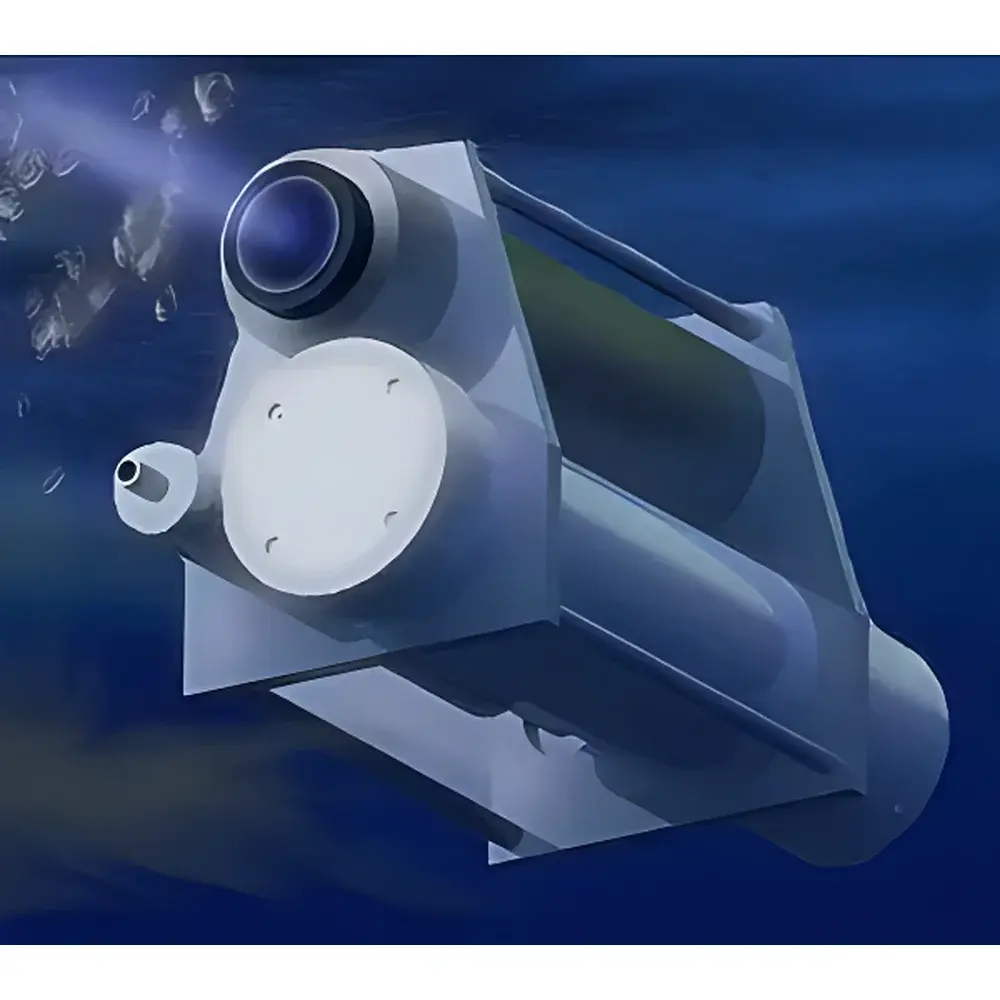
Contros LDS Subsea Hydrocarbon Leak Detection System
| Origin | Germany |
|---|---|
| Manufacturer Type | Authorized Distributor |
| Origin Category | Imported |
| Model | LDS |
| Pricing | Available Upon Request |
Overview
The Contros LDS Subsea Hydrocarbon Leak Detection System is an integrated, deep-ocean environmental monitoring platform engineered for real-time, in-situ detection of hydrocarbon seepage from subsea pipelines, wellheads, and infrastructure. Operating on the principle of high-sensitivity electrochemical and optical spectroscopic sensing—combined with continuous water column profiling—the system enables early-stage identification of dissolved methane (CH4) and polycyclic aromatic hydrocarbons (PAHs), two key chemical tracers of petroleum-derived leaks. Designed for deployment on remotely operated vehicles (ROVs), autonomous underwater vehicles (AUVs), or fixed seabed observatories, the LDS delivers quantitative, depth-resolved concentration data under extreme pressure and low-temperature conditions. Its architecture supports multi-parameter correlation—linking hydrocarbon anomalies with concurrent physical and biogeochemical variables—to distinguish anthropogenic leakage from natural seepage and reduce false positives.
Key Features
- Rated for operation at depths up to 3000 meters, with titanium-alloy and marine-grade stainless-steel housing ensuring structural integrity and corrosion resistance in seawater environments.
- Dual-sensor detection capability: electrochemical sensor for dissolved CH4 (0–50 µmol/L, ±0.3 µmol/L accuracy) and UV-fluorescence-based PAH sensor (0–500 µg/L).
- Integrated environmental sensor suite: high-precision CTD (conductivity, temperature, pressure), pH, redox potential (ORP), dissolved oxygen (DO), and fluorometry—enabling comprehensive water column characterization.
- ENWAVE deep-sea pump delivering stable 3.3 L/min flow rate, optimized for low-noise, bubble-free sampling across variable hydrostatic pressures.
- Low-power design: operates on 12 or 24 VDC input; nominal power consumption 18 W, peak 35 W—compatible with standard ROV power distribution units.
- Robust wet-mateable connectivity via SUBCONN® MCBH8-M-TI (8-pin) and MCBH5-F-TI (5-pin) interfaces for reliable data and power transmission in subsea deployments.
Sample Compatibility & Compliance
The LDS is validated for use in saline, brackish, and low-turbidity marine environments. Its sensor calibration protocols adhere to ISO/IEC 17025 principles for measurement traceability. While not a certified safety device per IEC 60079 or ATEX, it meets marine instrumentation requirements under DNV-RP-F205 (Recommended Practice for Subsea Control Systems) and complies with EU Marine Strategy Framework Directive (MSFD) Annex III monitoring guidelines for hydrocarbon contaminants. Data acquisition and timestamping support GLP-compliant field logging, with optional audit-trail configuration for regulatory reporting frameworks.
Software & Data Management
The DETECT™ software suite provides native integration with industry-standard geospatial formats—including GeoTIFF, BSB, and ESRI Shapefile—for precise leak localization and spatial overlay with bathymetric or pipeline GIS layers. Real-time ASCII/NMEA-0183 output via EIA-232 serial interface enables seamless ingestion into third-party DAQ systems (e.g., Sea-Bird SBE Data Processing, Qinsy, or Kongsberg K-Shell). The software features dynamic charting windows with time-depth-concentration triaxial plots, automated anomaly flagging based on configurable thresholds, and built-in survey planning tools for optimizing transect coverage and minimizing ROV dive time. Raw sensor logs are stored in CSV and NetCDF v4 format, preserving metadata (UTC timestamps, pressure-compensated depth, sensor diagnostics) for post-processing in MATLAB, Python (xarray/pandas), or Ocean Data View.
Applications
- Preventive integrity monitoring of subsea oil & gas pipelines and risers during operational and dormant phases.
- Environmental baseline studies and impact assessment prior to offshore construction (e.g., wind farm cable laying or platform installation).
- Regulatory compliance monitoring for national agencies (e.g., U.S. Bureau of Safety and Environmental Enforcement, UK Oil & Gas Authority) requiring continuous hydrocarbon surveillance.
- Scientific research on natural hydrocarbon seeps, microbial oxidation kinetics, and benthic-pelagic coupling in cold seep ecosystems.
- Emergency response support—rapid deployment on intervention ROVs following suspected rupture events or seismic activity.
FAQ
What is the maximum operational depth rating for the LDS system?
The system is pressure-rated to 3000 meters water depth (approx. 300 bar), with full functionality maintained across its specified temperature range (4–15 °C ambient seawater).
Can the LDS be deployed on autonomous platforms such as AUVs or gliders?
Yes—its compact form factor (520 × 170 × 200 mm), low mass in water (9.2 kg), and DC power requirements make it compatible with major AUV platforms (e.g., REMUS 6000, Gavia, or Saildrone Surveyor), subject to mechanical and electrical integration review.
Does the system support real-time telemetry via fiber-optic or acoustic modems?
The LDS outputs serial NMEA-0183 and ASCII data streams compatible with most subsea telemetry gateways; integration with acoustic modems (e.g., WHOI Micro-Modem) or fiber-optic slip-rings requires custom protocol mapping, which Contros provides upon request.
Is factory recalibration required annually?
Calibration stability is verified per ISO 17025-accredited procedures; recommended recalibration interval is 12 months or after 200 operational hours—whichever occurs first—using certified CH4 and PAH reference standards traceable to NIST or PTB.







