
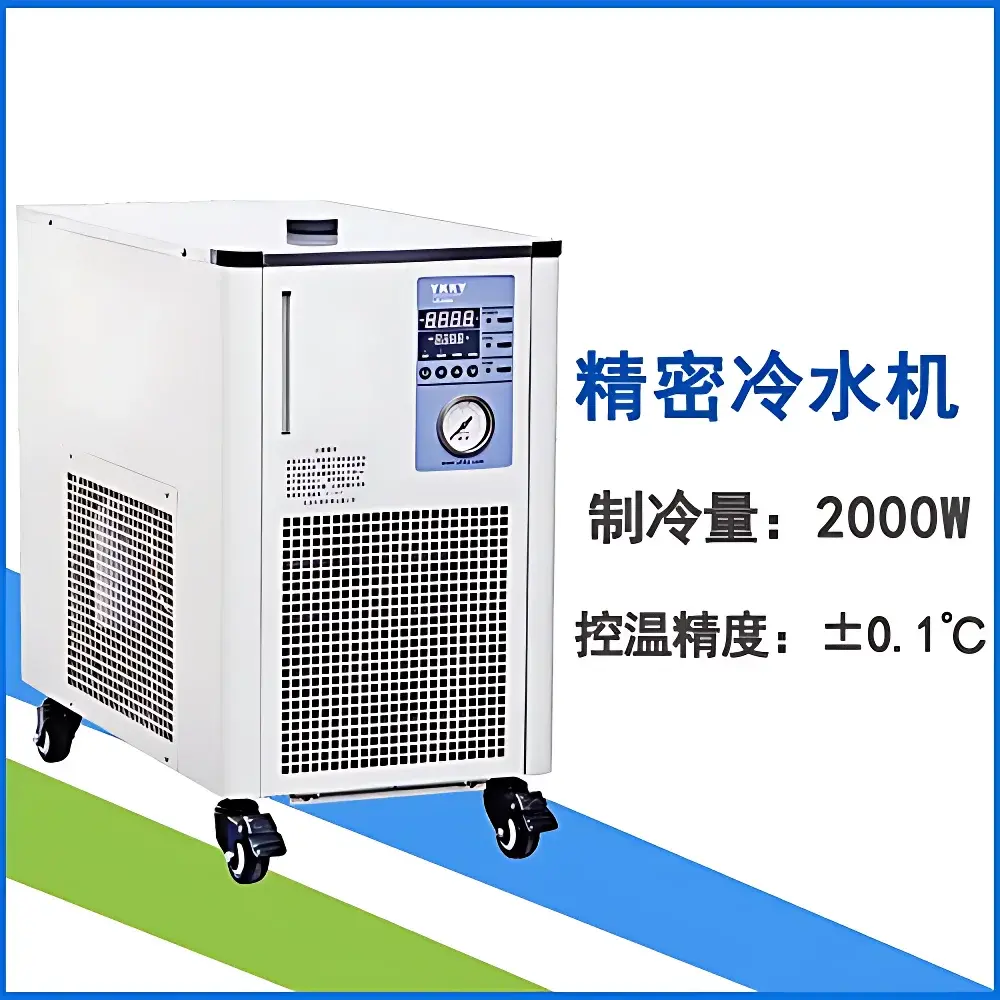
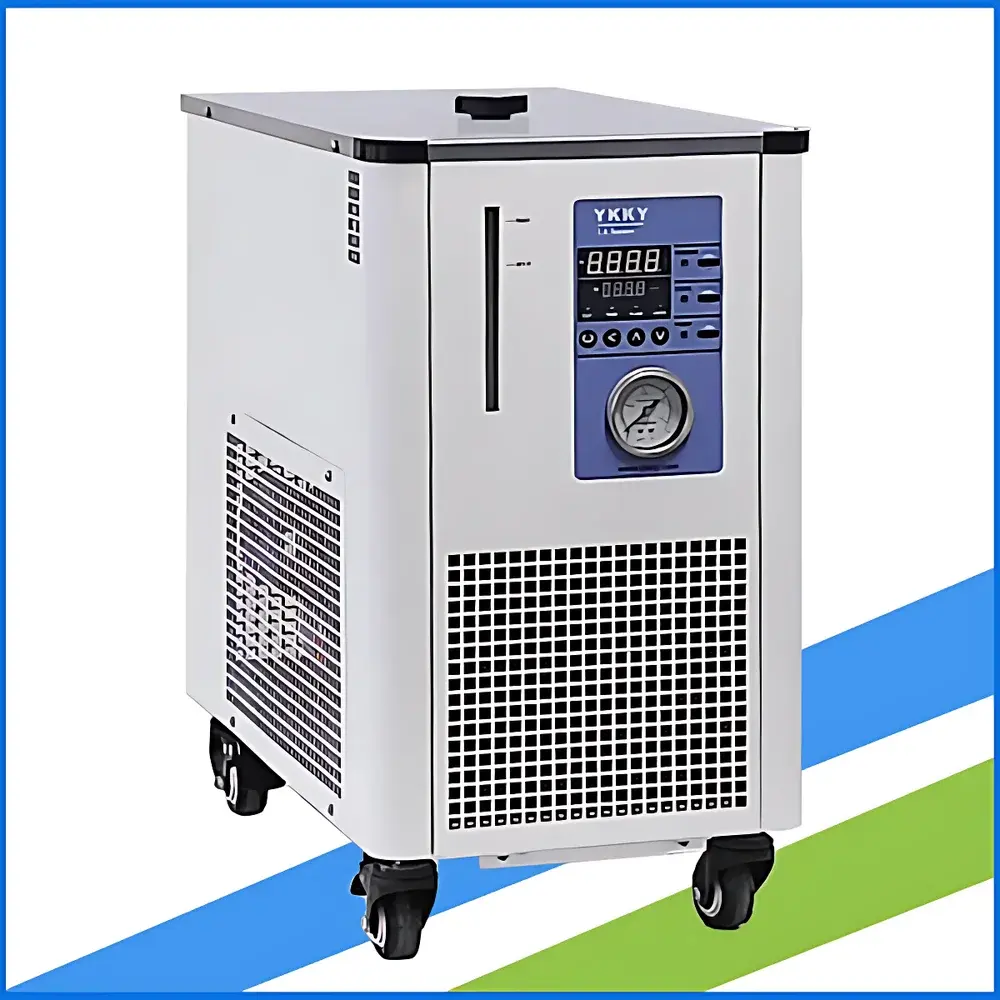
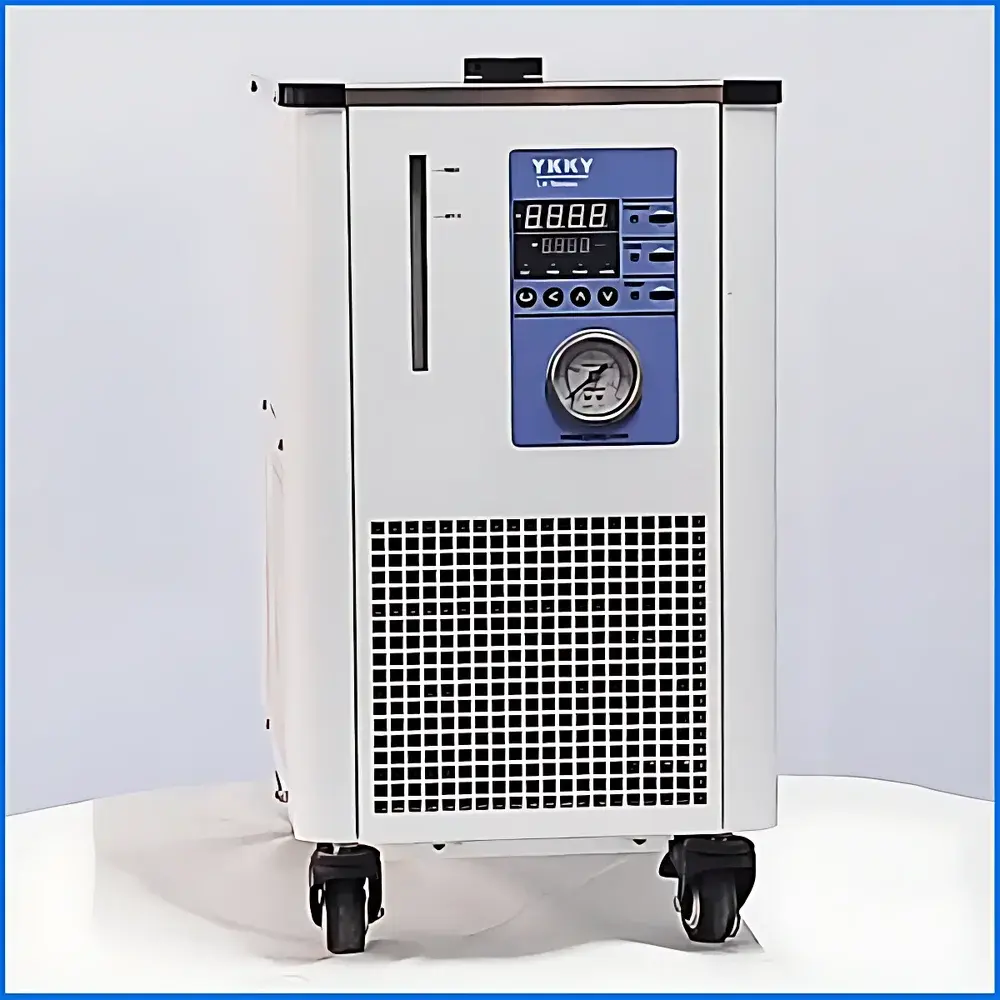
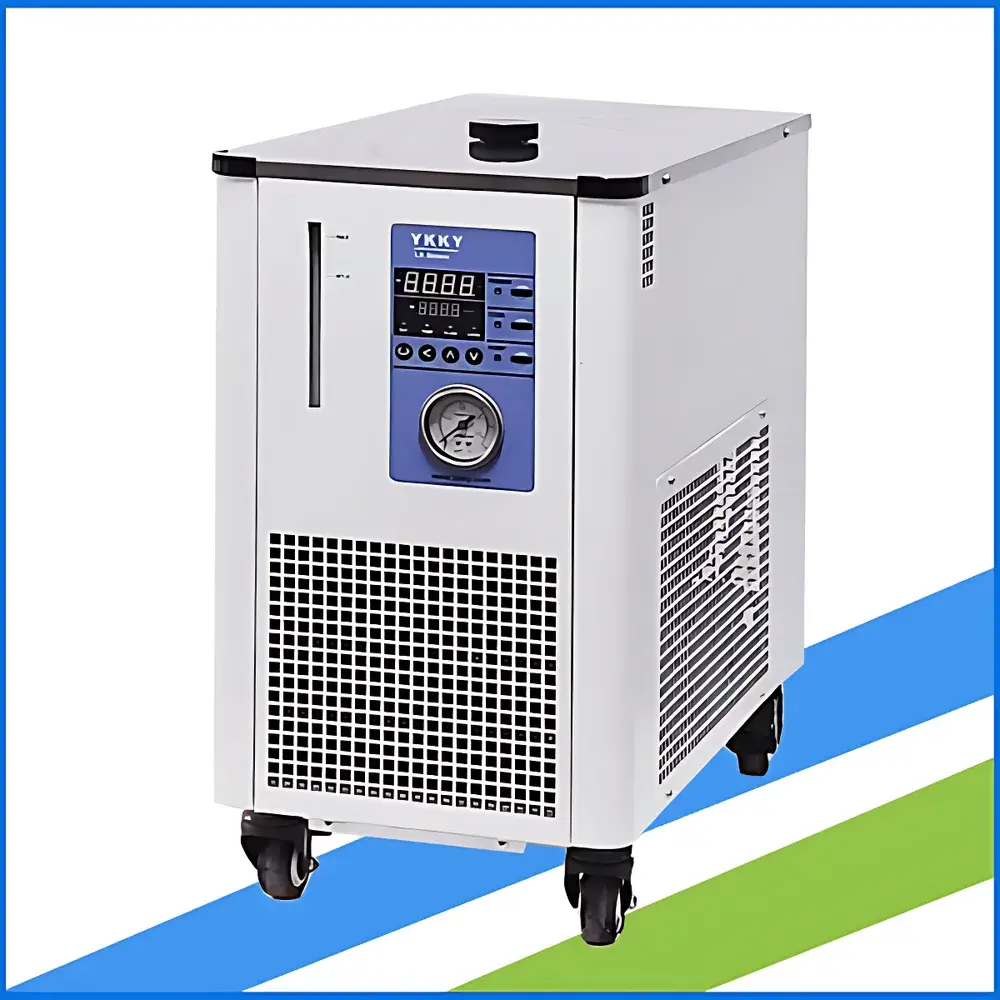
Coolium LX-2000 Precision Circulating Chiller
| Brand | Coolium |
|---|---|
| Origin | Beijing, China |
| Model | LX-2000 |
| Type | Integrated Air-Cooled Circulating Chiller |
| Temperature Range | 5–35 °C |
| Temperature Stability | ±0.1 °C |
| Refrigeration Capacity | 2000 W at 20 °C ambient |
| Reservoir Volume | 14 L |
| Circulation Pressure | 3.7 bar (max) |
| Flow Rate | 28 L/min |
| Display Resolution | 0.01 °C |
| Continuous Operation | Yes |
| Power Supply | AC 220 V, 50 Hz, 10 A |
| Dimensions (W×D×H) | 385 × 655 × 700 mm |
| Inlet/Outlet Port | 1/2″ NPT |
Overview
The Coolium LX-2000 Precision Circulating Chiller is an integrated, air-cooled refrigeration system engineered for stable thermal management of laboratory and industrial equipment requiring precise temperature control and high-flow coolant circulation. It operates on a vapor-compression refrigeration cycle—utilizing a hermetically sealed, high-efficiency scroll or rotary compressor—to transfer heat from the recirculating water loop to ambient air via an optimized finned-tube condenser and axial fans. The chilled water is then delivered through a robust, corrosion-resistant stainless-steel reservoir and a high-pressure, low-pulsation centrifugal circulation pump. Temperature regulation is achieved via a PID-controlled digital thermostat with real-time feedback from a calibrated Pt100 sensor immersed in the reservoir sump, ensuring dynamic response and minimal thermal overshoot. Designed for 24/7 unattended operation, the LX-2000 delivers consistent cooling performance across its full operating range (5–35 °C), making it suitable for applications where thermal drift must remain below ±0.1 °C over extended periods.
Key Features
- Integrated air-cooled architecture with no external water supply or drain required—ideal for labs with limited infrastructure.
- Pt100-based temperature sensing with 0.01 °C display resolution and ±0.1 °C stability over time and load variations.
- High-capacity circulation pump delivering up to 28 L/min at 3.7 bar maximum outlet pressure—compatible with long tubing runs and multi-instrument manifolds.
- 14-liter stainless-steel reservoir with level monitoring, anti-corrosion coating, and easy-access 1/2″ NPT ports.
- Industrial-grade refrigeration components: imported compressor, EC condenser fans, and sealed magnetic-drive circulation pump for extended service life and low maintenance.
- Real-time front-panel monitoring of temperature, system pressure, and liquid level—no software or PC required for basic operation.
- Over-temperature, low-level, and over-pressure safety interlocks compliant with IEC 61000-6-2/6-4 EMC standards and UL/EN 61010-1 electrical safety requirements.
Sample Compatibility & Compliance
The LX-2000 is compatible with a broad spectrum of heat-generating analytical and process instruments—including UV-Vis and FTIR spectrometers, LC-MS and GC-MS source coolers, rheometers, viscometers, rotary evaporators, laser diode arrays, and vacuum pump cold traps. Its closed-loop design prevents contamination and enables use with deionized water, 30% ethylene glycol/water mixtures, or other non-corrosive heat-transfer fluids approved per ASTM D1384 and ISO 20816-1. The unit meets CE marking requirements for electromagnetic compatibility and low-voltage directive compliance. While not inherently FDA 21 CFR Part 11–compliant (as it lacks audit-trail-enabled software), its hardware-level temperature logging and alarm history support GLP/GMP documentation when integrated with validated external data acquisition systems.
Software & Data Management
The LX-2000 operates as a standalone instrument with embedded firmware controlling all thermoregulatory functions. Optional RS485 Modbus RTU interface (standard on LX-2000-SC variant) enables integration into LabVIEW, SCADA, or building management systems for remote setpoint adjustment, status polling, and alarm forwarding. No proprietary software is required; configuration and diagnostics are accessible via ASCII command protocol. For regulated environments, third-party validation packages—including IQ/OQ templates aligned with ISO/IEC 17025 and ASTM E2500—are available upon request. Data logging interval, alarm thresholds, and pump ramp profiles can be configured via serial terminal or optional touchscreen controller add-on.
Applications
- Analytical Instrument Cooling: Maintains optimal detector and source temperatures for mass spectrometry, atomic absorption spectroscopy, and high-resolution NMR preamplifiers.
- Process Thermal Control: Stabilizes jacket temperatures in bioreactors, crystallizers, and pilot-scale reaction vessels during exothermic synthesis.
- Vacuum System Support: Cools diffusion pumps, turbomolecular pumps, and cryopanels to sustain high vacuum integrity and reduce backstreaming.
- Laser & Photonics Systems: Dissipates waste heat from DPSS lasers, fiber amplifiers, and optical parametric oscillators requiring sub-0.2 °C thermal stability.
- Materials Testing: Provides controlled coolant flow to tensile testers, thermal cycling chambers, and environmental stress screening racks.
FAQ
What is the minimum inlet fluid temperature the LX-2000 can achieve at full load?
The unit achieves a minimum setpoint of 5 °C under rated conditions (20 °C ambient, 2000 W thermal load). Sub-ambient operation below ambient temperature is not supported.
Can the LX-2000 be used with glycol-water mixtures?
Yes—up to 30% v/v ethylene or propylene glycol is permitted. Higher concentrations may reduce heat transfer efficiency and require recalibration of flow sensors.
Is the circulation pump speed adjustable?
Standard configuration features fixed-speed operation; variable-frequency drive (VFD) pump control is available as an optional upgrade (LX-2000-VFD).
Does the unit include insulation on the reservoir or tubing connections?
The reservoir is internally insulated; external pipe insulation is recommended for ambient temperatures above 35 °C or installations with >2 m line length to minimize parasitic heat gain.
What maintenance intervals are recommended for continuous operation?
Compressor oil and refrigerant charge require verification every 24 months; condenser coil cleaning is advised quarterly in dusty environments. Pump seal inspection is recommended annually.



