
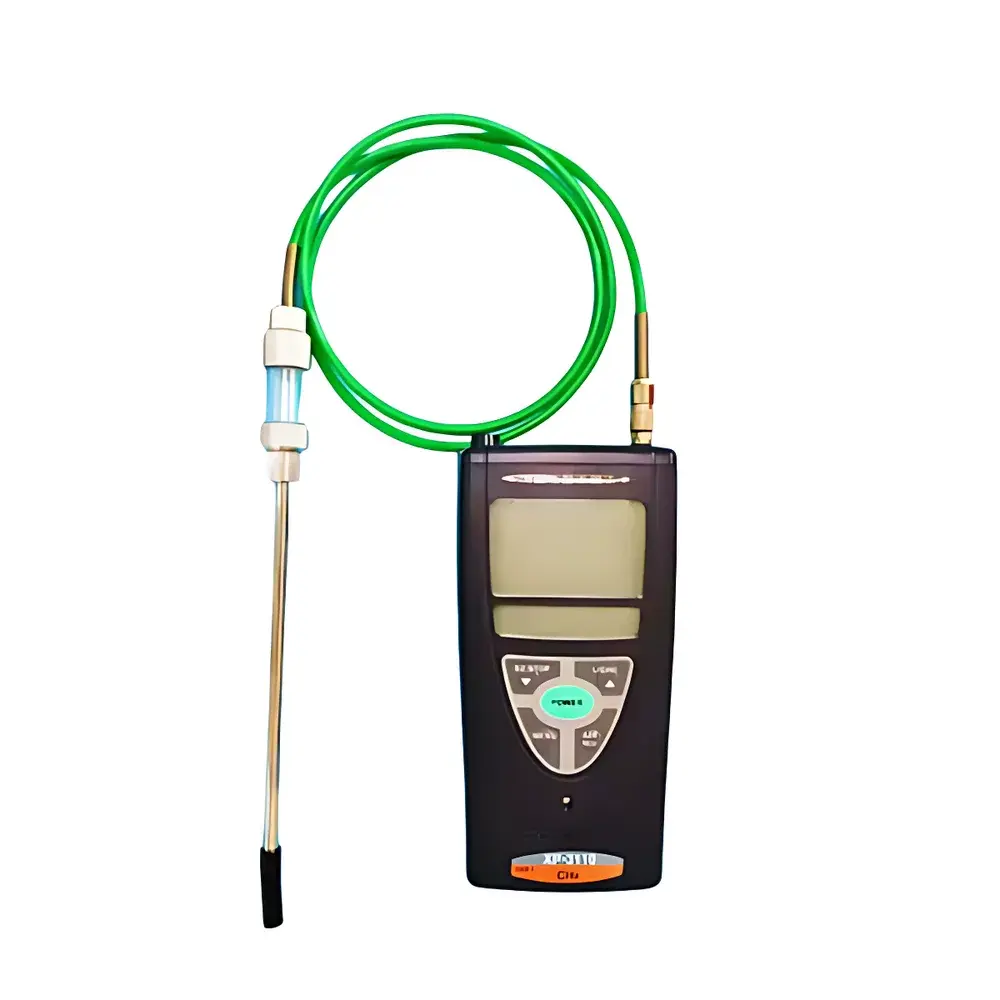
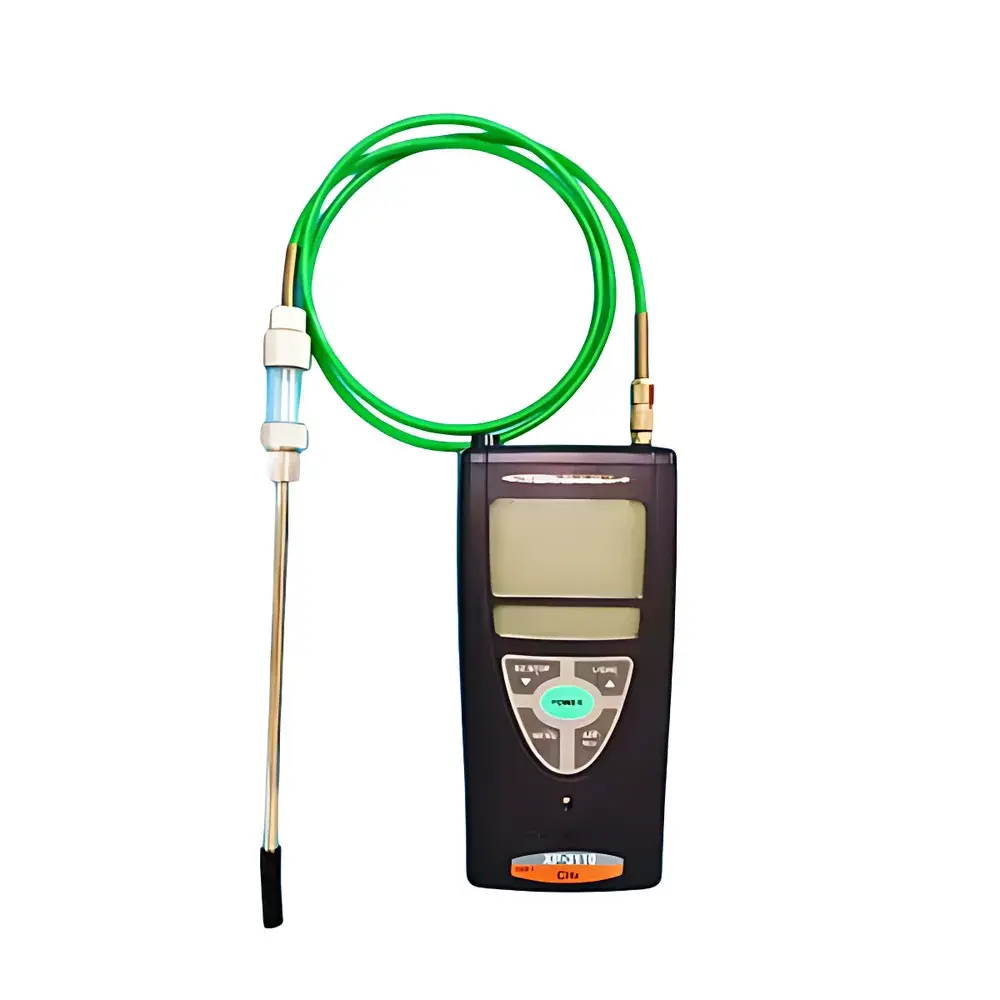
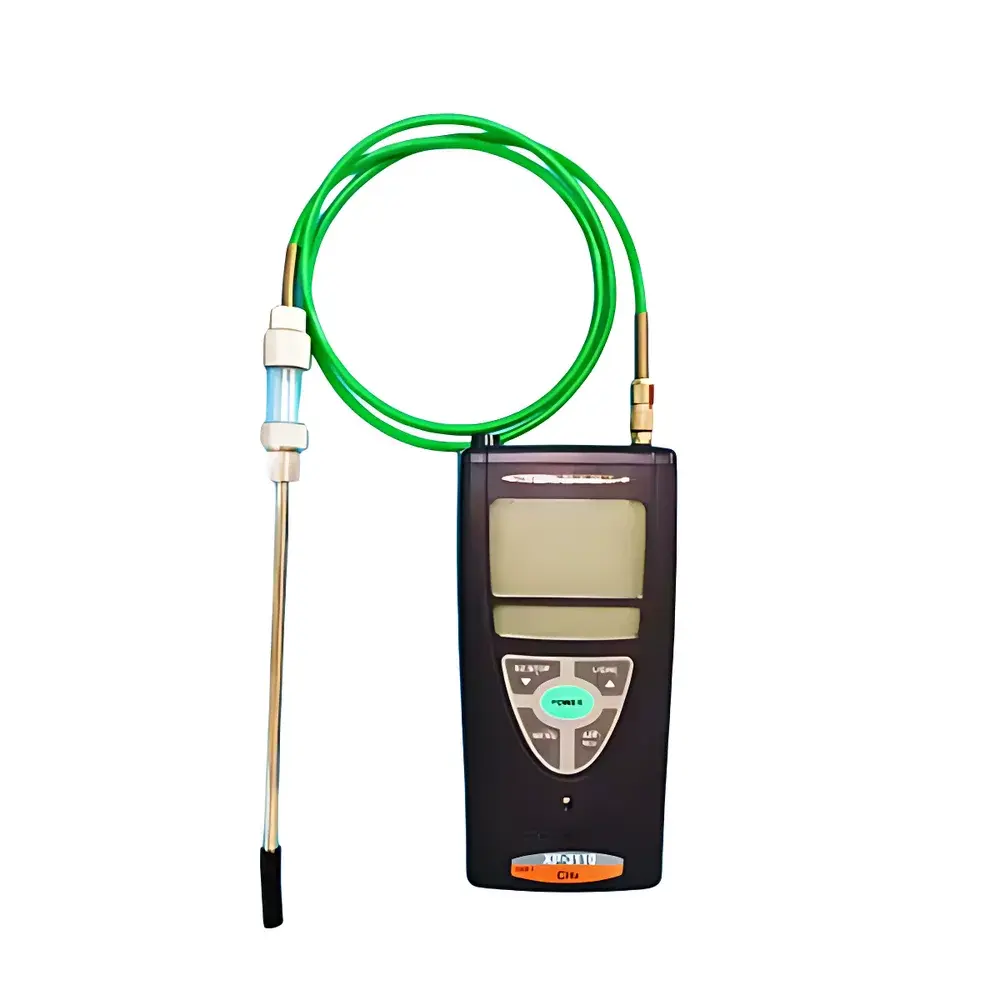
New Cosmos XP-3140 Portable Combustible Gas Detector
| Brand | New Cosmos |
|---|---|
| Origin | Japan |
| Model | XP-3140 |
| Weight | 450 g |
| Power Supply | AA alkaline batteries or dedicated rechargeable battery pack |
| Display | Dual-mode (digital + bar-graph) |
Overview
The New Cosmos XP-3140 Portable Combustible Gas Detector is an intrinsically safe, catalytic bead (pellistor)-based instrument engineered for reliable, real-time detection and quantification of combustible gases in the 0–100% LEL (Lower Explosive Limit) range. Designed and manufactured in Japan, the XP-3140 adheres to stringent JIS T 8201 and JIS T 8202 standards for portable gas detection equipment and complies with IEC 60079-0 and IEC 60079-11 for explosion protection in hazardous areas (Class I, Division 1, Groups A–D). Its robust pellistor sensor provides stable response to hydrocarbons—including methane, propane, butane, hydrogen, and gasoline vapors—while maintaining high reproducibility across temperature gradients from −10 °C to +40 °C. The device operates on a diffusion-sampling principle, eliminating the need for external pumps in standard applications, and incorporates automatic zero calibration and span-check functionality to ensure long-term measurement integrity.
Key Features
- Intrinsically safe design certified for use in Class I, Division 1 hazardous locations per JIS/IEC standards
- Dual-format display: high-contrast digital readout (0.1% LEL resolution) paired with intuitive bar-graph visualization for rapid trend assessment
- Ultra-portable form factor: compact dimensions (148 × 72 × 38 mm) and lightweight construction (450 g) optimized for extended field use
- Flexible power architecture supporting both disposable AA alkaline batteries (up to 20 hours continuous operation) and a proprietary Ni-MH rechargeable battery pack (with LED charge status indicator)
- Integrated flow anomaly detection: monitors sampling airflow in real time and alerts users to blockages or insufficient diffusion via audible/visual alarm
- Onboard data logger (standard) stores up to 10,000 timestamped readings with date/time stamping; supports manual or interval-triggered logging (1–3600 sec intervals)
- Optional multi-gas configuration enables simultaneous direct-reading of up to five pre-configured combustible gases without sensor swapping
- USB-based communication interface (optional accessory cable) enables secure data export to Windows-based analysis software compliant with ISO/IEC 17025 documentation requirements
Sample Compatibility & Compliance
The XP-3140 is validated for detection of common combustible gases encountered in industrial infrastructure maintenance, including methane (CH₄), propane (C₃H₈), butane (C₄H₁₀), hydrogen (H₂), and gasoline vapor (C₅–C₁₂ hydrocarbon mixture). It is routinely deployed in natural gas distribution networks for pipeline purging verification, post-inerting atmosphere assessment (e.g., N₂ or CO₂ displacement), and leak localization in buried utility conduits—particularly when helium tracer gas is employed for telecom cable fault detection. The instrument meets Japanese Industrial Standards JIS T 8201:2019 (Portable combustible gas detectors) and conforms to GLP-aligned operational protocols. While not FDA 21 CFR Part 11–certified as a standalone system, its data export functionality supports audit-ready reporting when integrated into validated laboratory information management systems (LIMS).
Software & Data Management
Data retrieval is facilitated through New Cosmos’ proprietary PC application, compatible with Windows 10/11 (64-bit). The software enables encrypted CSV export, customizable report generation (including operator ID, location tag, and calibration history), and graphical time-series plotting. All logged entries include embedded metadata: measurement timestamp (RTC-synced), ambient temperature, battery voltage, and sensor status flags. Audit trails are preserved locally on the host PC; no cloud upload or remote telemetry is implemented, ensuring full data sovereignty. Firmware updates are performed offline via USB, preserving traceability under ISO/IEC 17025 Clause 5.9 (Equipment Management).
Applications
- Verification of combustible gas concentration during natural gas pipeline commissioning and nitrogen purging procedures
- Routine leak surveying across municipal gas distribution networks, including valve pits, regulator stations, and service lines
- Post-inerting safety validation inside storage tanks, reactors, and confined process piping prior to hot work or personnel entry
- High-concentration leak response in petrochemical facilities, LNG terminals, and fuel depots
- Helium-tracer assisted diagnostics for identifying physical breaches in underground telecommunications cable sheaths
- Preventive maintenance screening in boiler rooms, compressor stations, and CNG refueling infrastructure
FAQ
What gases does the XP-3140 detect by default?
The base configuration detects combustible gases generically on a methane-equivalent basis (0–100% LEL). Optional factory calibration allows direct-reading mode for up to five user-specified gases.
Is the XP-3140 suitable for use in explosive atmospheres?
Yes—it carries intrinsic safety certification per JIS T 8201 and IEC 60079-11, permitting deployment in Zone 0/1 and Class I, Division 1 environments.
Does the device require periodic calibration?
Yes. Daily bump testing is recommended; full calibration using certified test gas (e.g., 50% LEL methane in air) is required at least every 30 days or after exposure to sensor-poisoning substances (e.g., silicones, lead, sulfur compounds).
Can logged data be exported in a format compliant with regulatory audits?
Yes—CSV exports include immutable timestamps, operator identifiers, and calibration verification records, supporting compliance with ISO/IEC 17025 and internal QA/QC documentation requirements.
What is the expected service life of the pellistor sensor?
Under normal operating conditions and with proper maintenance, the catalytic bead sensor maintains metrological performance for 24–36 months; replacement is indicated when zero stability degrades beyond ±2% LEL or span drift exceeds ±5% of full scale.




