
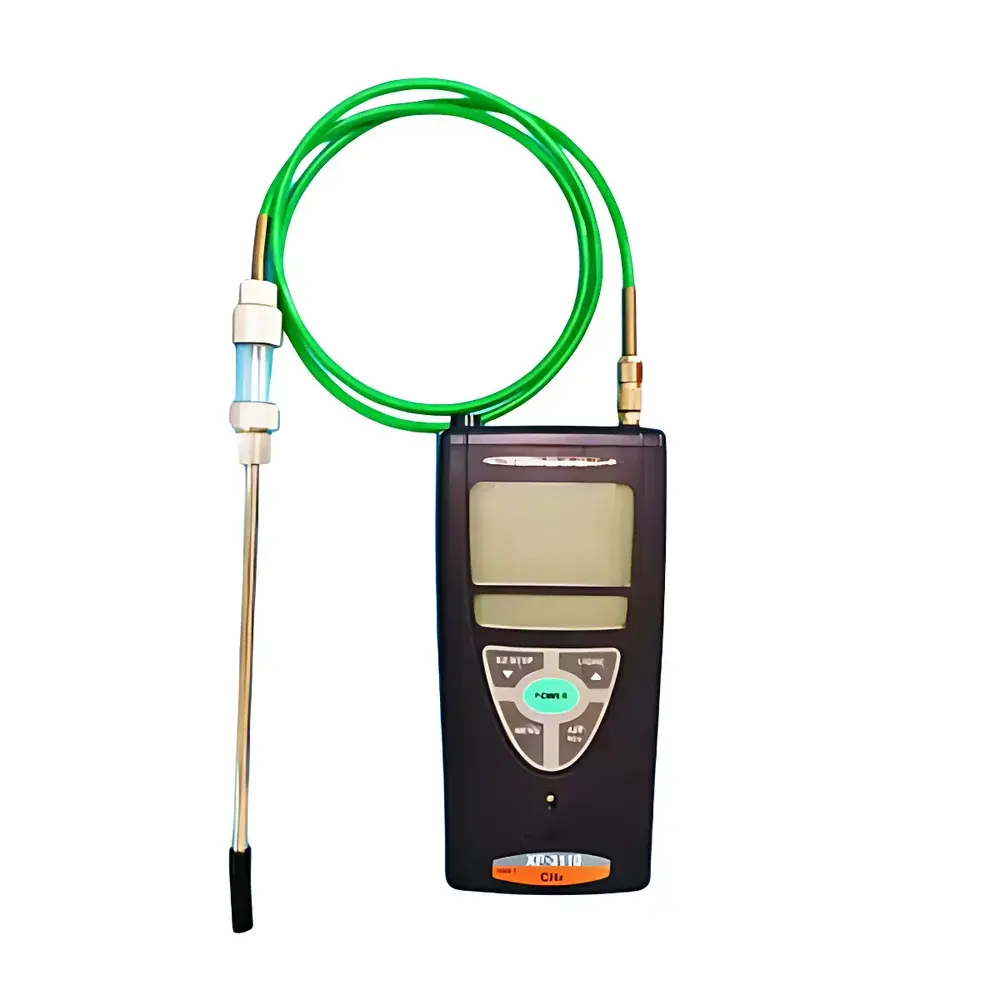
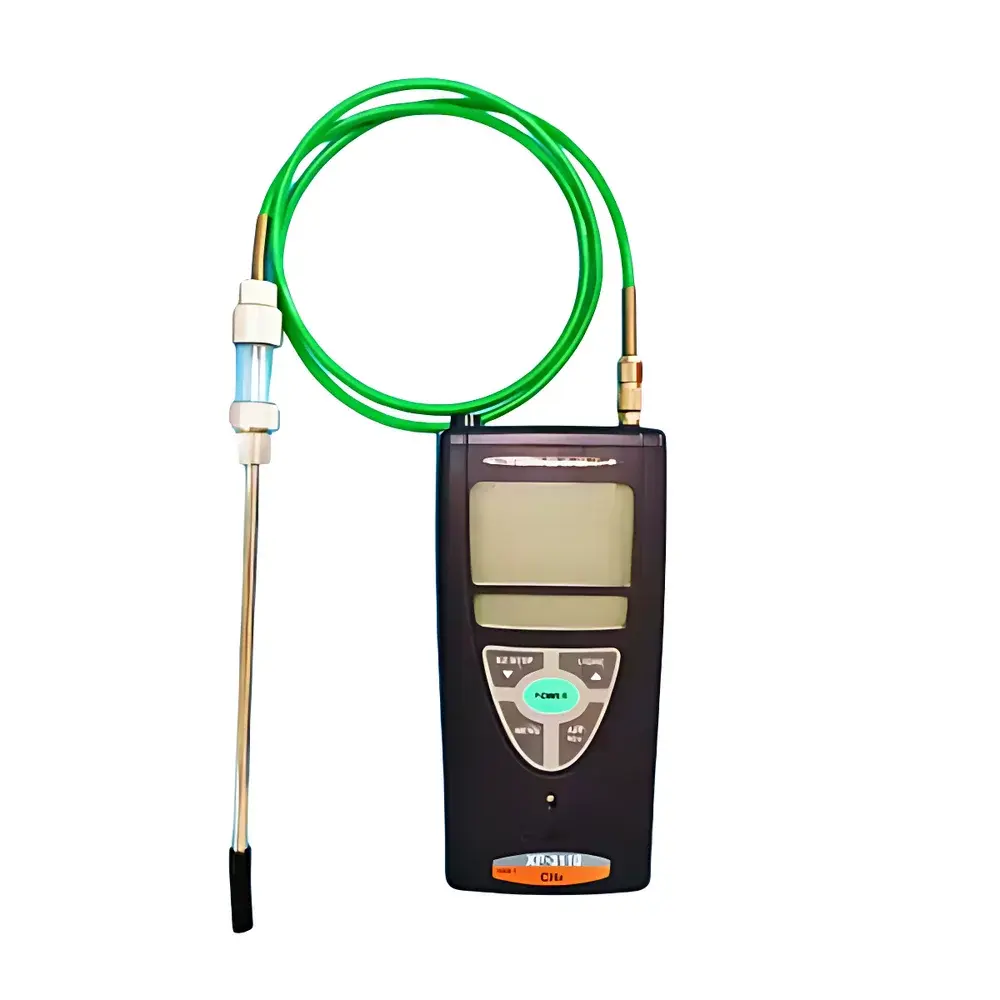
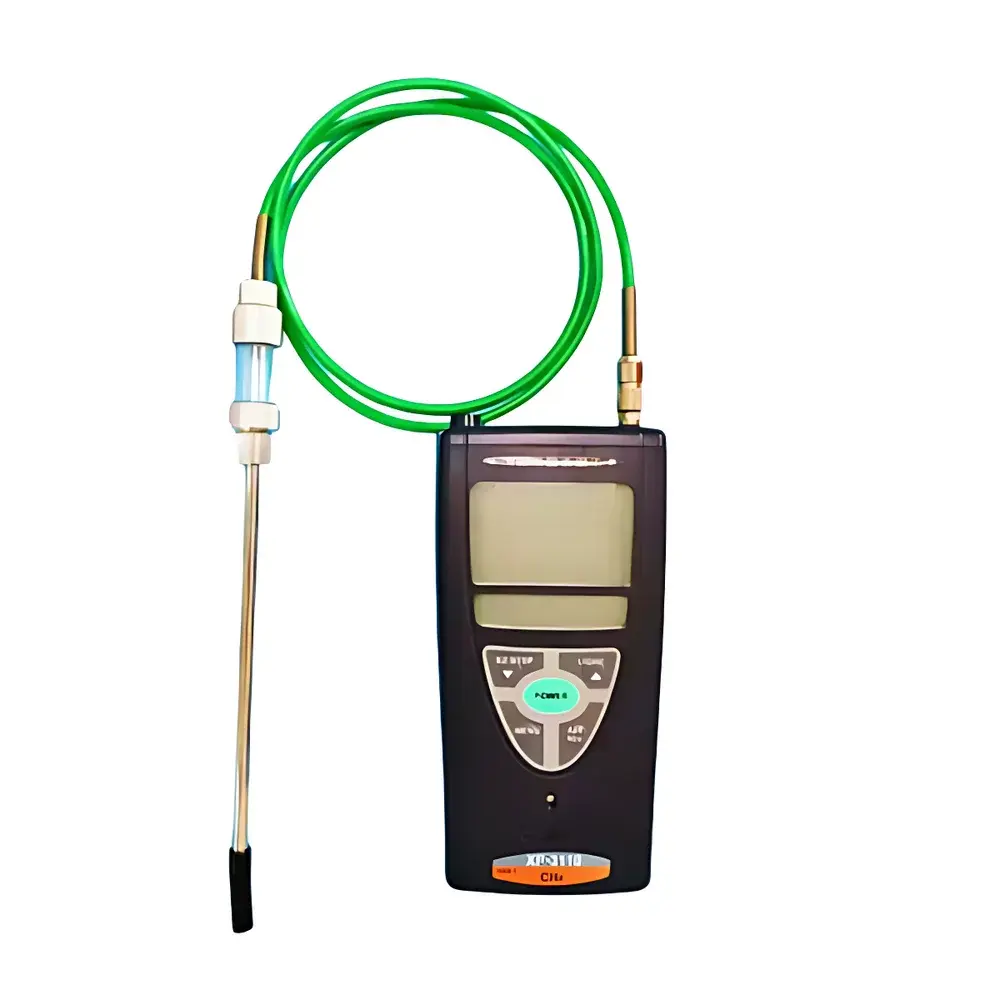
New Cosmos XP-3160 Combustible Gas Detector
| Brand | New Cosmos |
|---|---|
| Origin | Japan |
| Model | XP-3160 |
| Detection Principle | Catalytic Bead (Contact Combustion) |
| Detection Method | Pump-Aspirated |
| Measurable Gases | Combustible gases & vapors of combustible organic solvents (e.g., diesel, propane, methane, hexane) |
| Range | 0–5000 ppm or 0–1 vol% (auto-ranging) |
| Accuracy | ±5% FS (H-range), ±10% FS (L-range) |
| Alarm Thresholds | 250 ppm / 500 ppm (user-selectable) |
| Display | Backlit LCD with dual-mode output — numeric (0–5000 ppm / 0–1 vol%) and bar-graph scale (auto-switching between L-range: 0–500 ppm / 0–1000 ppm and H-range: 0–5000 ppm / 0–1 vol%) |
| Alarm Output | Audible buzzer + red LED flash (gas/fault) |
| Intrinsic Safety Rating | Ex ib d IIB T3 (combined intrinsic safety + flameproof enclosure) |
| Operating Temperature | −20 °C to +50 °C |
| Power Supply | Four AA alkaline batteries or optional Ni–Cd rechargeable pack |
| Battery Life | ~20 h (alkaline, no alarm/backlight), ~5 h (Ni–Cd, no alarm/backlight) |
| Dimensions | 82 × 162 × 36 mm (W × H × D) |
| Weight | ~450 g (without batteries) |
| Data Logging | Internal memory (standard) |
| Flow Anomaly Self-Check | Yes |
| Accessories Included | Leather carrying case, 4 × AA alkaline batteries, 1 m sampling hose, filter cartridge, filter disc, stainless steel probe tube, rubber suction tip |
| Optional Accessories | Extended sampling hose, gas mixer, data download kit (CD-ROM + USB cable), Ni–Cd battery pack, charger |
Overview
The New Cosmos XP-3160 is a portable, pump-aspirated combustible gas detector engineered for high-sensitivity leak detection in industrial environments where trace concentrations of flammable vapors pose critical safety hazards. Utilizing the proven catalytic bead (contact combustion) detection principle, the XP-3160 provides stable, repeatable response to a broad spectrum of hydrocarbon-based gases and vapors—including diesel vapor, propane, butane, methane, ethanol, and hexane—without requiring calibration-specific gas standards for each compound. Its dual-range auto-switching architecture enables seamless transition between low-concentration (0–500 ppm / 0–1000 ppm) and high-concentration (0–5000 ppm / 0–1 vol%) measurement modes, ensuring optimal resolution across diverse operational scenarios—from confined-space pre-entry verification to shipyard bilge inspection and refinery perimeter monitoring. Certified to Ex ib d IIB T3, the instrument meets stringent ATEX and IECEx requirements for use in Zone 1 and Zone 2 hazardous areas, combining intrinsically safe circuitry with a flameproof enclosure for robust field reliability.
Key Features
- Pump-aspirated sampling system with integrated flow anomaly self-diagnostic function—immediately alerts user to clogged filters, kinked tubing, or insufficient suction pressure
- Dual-mode visual display: high-contrast backlit LCD showing real-time numeric concentration (ppm or vol%) alongside dynamic bar-graph scale that auto-adjusts range based on signal amplitude
- Internal data logger stores time-stamped readings at user-defined intervals (standard configuration); supports post-mission review and regulatory documentation
- Modular power architecture—operates on four standard AA alkaline cells (20-hour typical runtime) or optional Ni–Cd rechargeable pack (5-hour runtime), with hot-swap capability in select configurations
- Ergonomic, lightweight design (450 g) with IP54-rated housing—optimized for extended handheld use in maritime repair, utility maintenance, and petrochemical QA/QC workflows
- Configurable dual-stage alarm thresholds (250 ppm and 500 ppm default) with independent audible (buzzer) and visual (pulsing red LED) outputs for both gas presence and system fault conditions
Sample Compatibility & Compliance
The XP-3160 is validated for direct measurement of combustible gases and vapors within the LEL (Lower Explosive Limit) range, with documented response factors aligned to ISO 28017:2009 (petroleum industry gas detection) and IEC 60079-29-1:2016 (performance requirements for catalytic bead sensors). It complies with JIS T 8201 (Japanese Industrial Standard for portable gas detectors) and carries full CE marking under Directive 2014/34/EU (ATEX). The Ex ib d IIB T3 certification confirms suitability for Group IIB gas atmospheres with maximum surface temperature ≤100 °C—covering common hydrocarbons such as ethylene, acetone, and diesel fuel vapors. All factory calibrations are traceable to NMIJ (National Metrology Institute of Japan) reference standards; calibration interval recommendations follow ISO 45001-aligned maintenance protocols.
Software & Data Management
Data retrieval is supported via an optional USB download kit, comprising proprietary Windows-compatible software (distributed on CD-ROM) and a shielded USB interface cable. The software enables export of logged records in CSV and PDF formats, supports time-synchronized multi-instrument comparison, and generates audit-ready reports compliant with OSHA 1910.120 and EU Directive 1999/92/EC (ATEX Workplace Directive). While the XP-3160 does not implement FDA 21 CFR Part 11 electronic signature controls (as it lacks user authentication or role-based access), its timestamped log files meet GLP documentation requirements for routine safety inspections when paired with controlled calibration logs and operator sign-off procedures.
Applications
- Maritime maintenance: Leak detection in engine rooms, fuel tanks, cargo holds, and bilge systems during dry-dock inspections
- Gas distribution infrastructure: Pipeline integrity verification, regulator station surveys, and meter pit assessments
- Industrial hygiene: Monitoring solvent vapor exposure during painting, cleaning, or degreasing operations involving diesel, toluene, or MEK
- Pre-entry clearance: Confined space evaluation prior to personnel entry per NFPA 350 and ANSI Z117.1 guidelines
- Fire investigation support: Residual hydrocarbon vapor mapping in post-incident structural assessments
FAQ
What gases does the XP-3160 detect?
The XP-3160 responds to all combustible gases and vapors with a catalytic oxidation reaction on the heated bead sensor—including methane, propane, hydrogen, gasoline vapors, diesel exhaust components, and common organic solvents such as acetone and ethanol.
Is calibration required before each use?
A functional bump test using certified 50% LEL methane or isobutylene gas is recommended prior to each shift; full span calibration is required every 30 days or after exposure to sensor-poisoning compounds (e.g., silicones, leaded fuels, sulfur compounds).
Can the XP-3160 be used in explosive atmospheres?
Yes—its Ex ib d IIB T3 rating permits safe operation in Zone 1 (potentially explosive) and Zone 2 (non-explosive under normal conditions) classified areas per IEC 60079-0 and EN 60079-11/14.
Does the instrument support multi-gas detection out of the box?
No—the XP-3160 is a single-sensor catalytic detector optimized for total combustible gas (TCG) measurement. Multi-gas capability (up to five gases) requires retrofitting with optional electrochemical or infrared sensor modules—not available in the base XP-3160 configuration.
What is the expected service life of the catalytic sensor?
Under normal operating conditions and with proper maintenance (regular cleaning, avoidance of poisons), the catalytic bead sensor typically delivers 24–36 months of stable performance, consistent with ISO 20100:2017 sensor lifetime guidance.




