
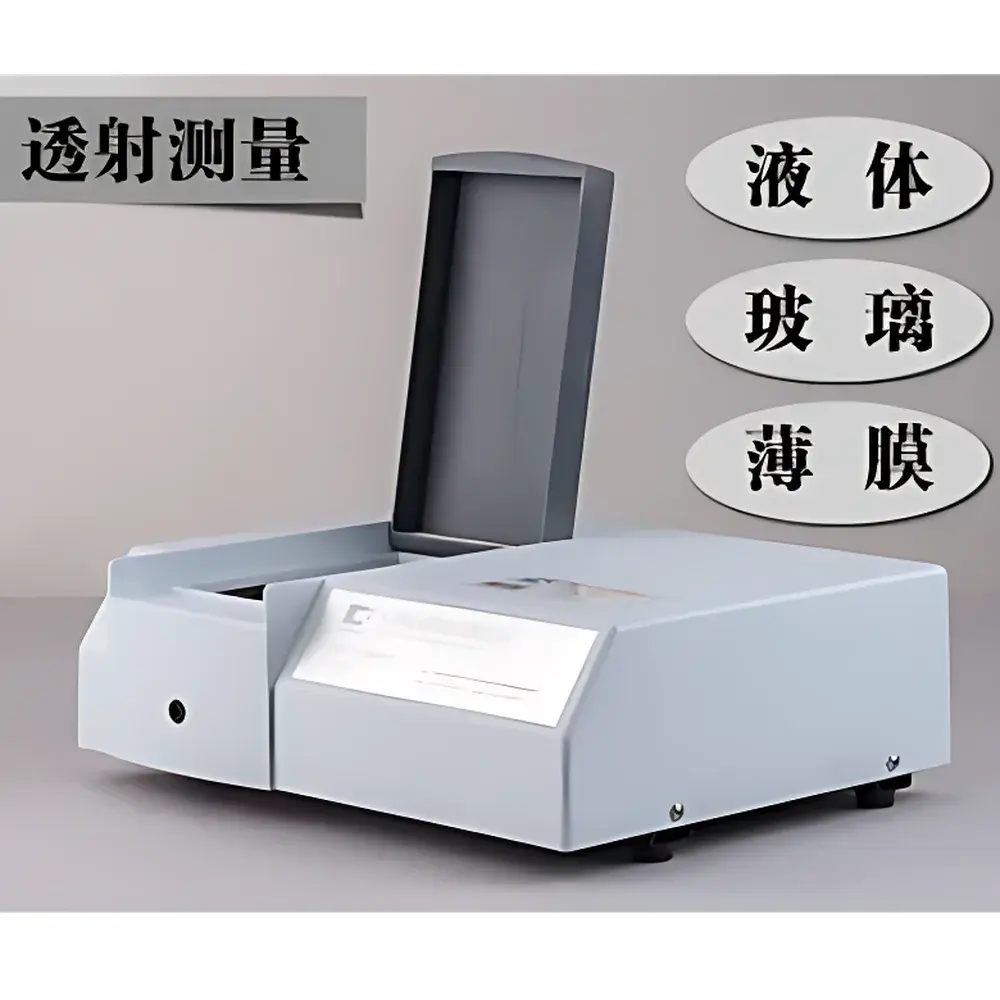
CS-810 Desktop Spectrophotometric Colorimeter
| Brand | — |
|---|---|
| Origin | Zhejiang, China |
| Manufacturer Type | Authorized Distributor |
| Regional Classification | Domestic (PRC) |
| Model | CS-810 |
| Price Range | USD 4,200 – 7,000 |
| Instrument Type | Benchtop |
| Product Category | Spectrophotometric Colorimeter |
| Illuminant | CLEDs (Full-Spectrum Balanced LED Source) |
| Geometry | D/0 (Diffuse Illumination / 0° Viewing) |
| Transmission Measurement Range | 0–200% (UV-Enhanced Silicon Photodiode) |
| Color Scales Supported | Platinum-Cobalt (Hazen/APHA), Gardner, CIE L*a*b*, L*C*h*, ΔE*ab, ΔE*00, XYZ, Yxy, RGB, sRGB, Hunter Lab |
| Sample Compatibility | Transparent & Near-Transparent Liquids, Glass Substrates |
| Compliance | ASTM D1209, ASTM D5386, ASTM E308, ISO 7724-1, ISO 11664-4, USP <631>, JIS Z 8722 |
Overview
The CS-810 Desktop Spectrophotometric Colorimeter is a precision optical instrument engineered for quantitative color assessment of transparent and semi-transparent liquid samples and glass substrates under controlled laboratory conditions. It operates on the D/0 (diffuse illumination / 0° viewing) geometry, compliant with ISO 7724-1 and ASTM D1209, ensuring high reproducibility in transmission-based color measurement. The system integrates a full-spectrum balanced CLED (Combined Light-Emitting Diode) illuminant—spectrally stabilized across 400–700 nm—to eliminate spectral discontinuities common in traditional tungsten or halogen sources. A UV-enhanced silicon photodiode enables extended transmission detection from 0% to 200%, critical for low-absorbance clear liquids and highly diluted standards where conventional photodetectors saturate or lack dynamic range.
Key Features
- D/0 optical geometry optimized for transmission colorimetry of liquids and flat transparent solids, minimizing specular reflection interference
- Full-spectrum CLED illuminant with spectral uniformity ±1.5% across visible band (400–700 nm), eliminating lamp aging drift and enabling long-term photometric stability
- UV-enhanced silicon photodiode detector with 0–200% transmittance capability, supporting accurate measurement of low-color-intensity samples such as purified water, pharmaceutical solvents, and optical-grade resins
- Integrated support for multiple standardized color scales: Platinum-Cobalt (Hazen/APHA, 1–500 units), Gardner (1–18 units), and CIE-based spaces (L*a*b*, L*C*h*, ΔE*ab, ΔE*00)
- Benchtop form factor with ergonomic sample compartment, calibrated quartz cuvette holder (10 mm pathlength standard), and optional accessories for glass tile or bottle measurement
- Embedded calibration verification routine traceable to NIST-traceable liquid standards; supports user-defined reference validation at defined intervals
Sample Compatibility & Compliance
The CS-810 is validated for use with aqueous and organic transparent liquids—including acids, bases, hydrocarbons, and polymer solutions—as well as polished glass plates and optical filters. Its D/0 configuration meets ASTM D5386 for liquid color measurement and ISO 11664-4 for colorimetric data reporting. For regulated environments, the instrument supports audit-ready operation: measurement timestamps, operator ID tagging, and raw spectral data logging align with GLP documentation requirements. While not FDA 21 CFR Part 11–certified out-of-the-box, its data export architecture (CSV, XML) permits integration into validated LIMS or QMS platforms where electronic records and signature controls are implemented externally.
Software & Data Management
The CS-810 operates with dedicated Windows-based software providing real-time spectral visualization, batch comparison, tolerance mapping, and automated report generation. All measurements are stored with metadata including date/time, operator ID, instrument serial number, calibration status, and measurement geometry. The software exports CIE-compliant tristimulus values (XYZ), chromaticity coordinates (Yxy), and delta-E deviations in both CIEDE2000 and CIELAB formulations. Customizable templates allow alignment with internal quality specifications—e.g., APHA limits for injectables per USP , or Gardner thresholds for resin intermediates. Raw reflectance/transmittance spectra (10 nm resolution) are preserved for retrospective analysis and method transfer validation.
Applications
- Pharmaceutical manufacturing: APHA/Hazen testing of purified water (PW), water-for-injection (WFI), and solvent batches per USP and EP 2.2.21
- Chemical production: Gardner index monitoring of alkyd resins, drying oils, and phenolic intermediates; platinum-cobalt tracking of hydrogen peroxide and acetic acid purity
- Food & beverage R&D: Objective quantification of caramel color intensity, vinegar clarity, and fruit juice browning indices
- Coatings & inks: Batch-to-batch consistency control of transparent varnishes and dye-based ink carriers
- Academic research: Correlation studies between color metrics and UV-Vis absorbance profiles in colloidal or molecular systems
FAQ
What is the difference between Hazen, APHA, and Platinum-Cobalt color scales?
Hazen, APHA, and Platinum-Cobalt are functionally identical scales defined by ASTM D1209 and ISO 7724-1; all express color intensity in units derived from potassium chloroplatinate/cobalt chloride solutions.
Can the CS-810 measure opaque or turbid liquids?
No—it is designed exclusively for transmission geometry and requires optically clear or near-clear samples. Turbid or scattering media require reflectance-mode instruments with integrating spheres.
Is NIST-traceable calibration included with the instrument?
A factory calibration certificate is provided; however, users must acquire and maintain NIST-traceable liquid standards (e.g., APHA Standard Solutions Sets) for periodic verification per ISO/IEC 17025 requirements.
Does the software support multi-user access with role-based permissions?
The base software supports operator login but lacks built-in RBAC; integration with enterprise authentication systems (LDAP/Active Directory) requires middleware-level configuration via API extensions.
What cuvette pathlengths are supported?
Standard configuration includes a 10 mm quartz cuvette holder; optional adapters accommodate 20 mm, 50 mm, and custom-length cells—pathlength selection must be declared during measurement setup to ensure correct absorbance scaling.





