
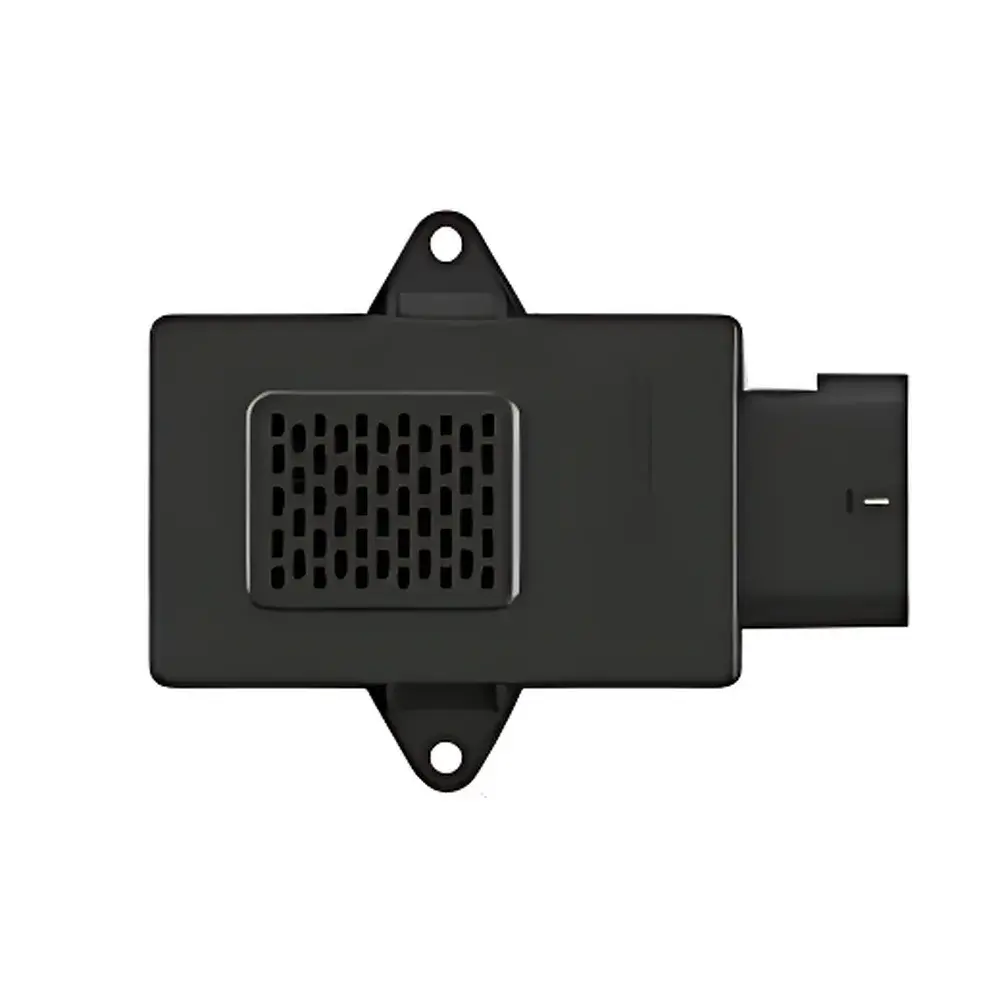
Cubic AM4205 R454B Refrigerant Leak Detection Sensor
| Brand | Cubic |
|---|---|
| Origin | Hubei, China |
| Model | AM4205 |
| Detection Principle | Non-Dispersive Infrared (NDIR) |
| Detection Range | 0–50% LFL |
| Resolution | 1% LFL |
| Accuracy | ±3.75% LFL |
| Data Refresh Rate | ≤1 s |
| Response Time (T90) | <30 s |
| Warm-up Time (T25) | ≤7 s |
| Output Options | UART / 0.8–4 V (default) / PWM (customizable) |
| Operating Temperature | −30 to +60 °C |
| Operating Humidity | 0–95% RH (non-condensing) |
| Storage Conditions | −30 to +70 °C / 0–95% RH (non-condensing) |
| Supply Voltage | 5 ± 0.1 V DC (ripple <50 mV) |
| Average Current Consumption | ≤150 mA |
| Peak Current | <300 mA |
| IP Rating | IP54 |
| Heating Function | Integrated self-heating element for anti-condensation and frost prevention |
Overview
The Cubic AM4205 is a fixed-mount, non-dispersive infrared (NDIR) gas sensor engineered specifically for the continuous, real-time detection of R454B refrigerant leaks in commercial and industrial HVAC&R systems. R454B—a zeotropic blend of 68.9% R32 and 31.1% R1234yf—is classified as an A2L mildy flammable refrigerant under ASHRAE Standard 34, necessitating reliable, low-threshold leak monitoring to ensure personnel safety, system integrity, and regulatory compliance. The AM4205 employs Cubic’s patented dual-beam NDIR optical architecture, wherein two synchronized infrared light paths—one active (sample path), one reference (compensation path)—enable dynamic compensation for optical drift caused by ambient temperature fluctuations, humidity-induced lens fogging, and long-term emitter/detector aging. This design eliminates reliance on external calibration gases during field operation and sustains measurement stability over extended service intervals—critical for unattended installations in mechanical rooms, chiller plants, cold storage facilities, and transport refrigeration units.
Key Features
- Patented dual-source NDIR optical engine delivering high selectivity for R454B with minimal cross-sensitivity to CO2, CH4, or common hydrocarbons
- Integrated self-heating element maintaining optical window temperature above dew point across −30 °C to +60 °C operating range—preventing condensation and frost formation that compromise signal integrity
- IP54-rated enclosure ensuring protection against dust ingress and water splashing from any direction—suitable for semi-outdoor and high-humidity indoor environments
- Sub-second data refresh rate (≤1 s) and rapid T90 response (<30 s), enabling timely integration with building management systems (BMS) and emergency ventilation triggers
- Low-power architecture: average current draw ≤150 mA at 5 V DC, compatible with standard 24 V-to-5 V regulated power supplies used in industrial control panels
- Flexible output interface supporting UART (TTL-level), analog voltage (0.8–4 V, factory-default), or PWM (on request)—facilitating seamless integration with PLCs, DDC controllers, and proprietary alarm panels
Sample Compatibility & Compliance
The AM4205 is calibrated and validated exclusively for R454B vapor detection within the lower flammability limit (LFL) range of 0–50% LFL (equivalent to approximately 0–1.1 vol% in air). It exhibits negligible interference from ambient CO2 (up to 5,000 ppm), water vapor (0–95% RH, non-condensing), and typical HVAC background gases including NOx, SO2, and volatile organic compounds (VOCs) at concentrations encountered in mechanical spaces. The sensor conforms to IEC 60079-29-1:2016 for performance requirements of electrical apparatus for gas detection, and its construction meets EN 61000-6-2/6-3 for electromagnetic immunity and emissions. While not intrinsically safe certified, it is intended for installation in Zone 2/Class I, Division 2 hazardous locations when deployed with appropriate barrier systems per local authority having jurisdiction (AHJ) requirements.
Software & Data Management
The AM4205 operates as a smart transducer without embedded firmware upgradability; however, its UART interface supports ASCII command protocol for interrogation of real-time concentration, internal temperature, sensor status flags (e.g., heater active, optical fault, warm-up complete), and diagnostic counters. When integrated into larger monitoring platforms—such as those compliant with ISO 50001 energy management systems or FDA 21 CFR Part 11–aligned facility monitoring networks—the sensor’s stable analog or digital output enables traceable, time-stamped logging with audit-ready metadata. Its consistent baseline behavior over temperature and humidity reduces the need for periodic zero/span verification, lowering lifecycle maintenance burden in GLP- and GMP-aligned cold chain infrastructure.
Applications
- Leak detection in R454B-charged chillers, rooftop units (RTUs), and variable refrigerant flow (VRF) systems
- Continuous monitoring in pharmaceutical cold storage warehouses and food logistics hubs where A2L refrigerants are deployed
- Integration into HVAC fault detection and diagnostics (FDD) engines for predictive maintenance of refrigerant circuits
- Supplemental safety layer in accordance with ASHRAE 15–2022 and IIAR Bulletin #114 for A2L refrigerant containment zones
- Mobile service tools and portable leak detectors requiring OEM-grade NDIR modules with environmental resilience
FAQ
Is the AM4205 certified for use in hazardous locations?
No—it is not intrinsically safe (IS) or explosion-proof certified. It must be installed in non-hazardous or protected zones per NEC Article 500 or IEC 60079-10-1, using approved isolation barriers if deployed near classified areas.
Does the sensor require periodic calibration with R454B gas?
No field calibration is required under normal operating conditions. The dual-beam NDIR architecture provides inherent drift compensation; only annual functional verification using certified R454B test gas is recommended per preventive maintenance protocols.
Can the AM4205 detect other refrigerants such as R32 or R1234yf?
It is optimized and calibrated solely for R454B. Cross-sensitivity to R32 or R1234yf is present but non-linear and unvalidated—using it for alternative refrigerants voids accuracy specifications and compliance claims.
What is the expected operational lifetime under continuous duty?
Based on accelerated life testing per IEC 60721-3-3, the optical module maintains ≥90% initial sensitivity after 5 years of continuous operation at 25 °C and 60% RH, assuming nominal power cycling and no mechanical shock or chemical exposure beyond specified limits.
Related Products







