
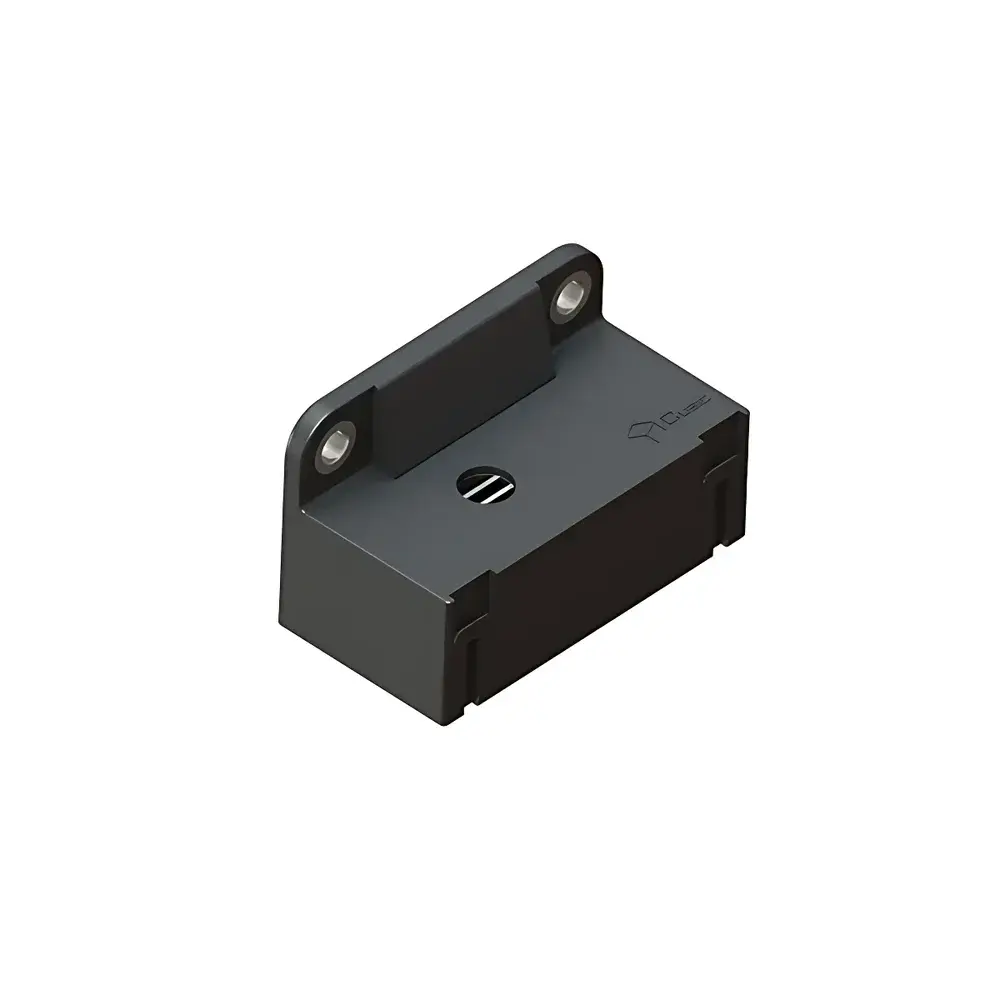
Cubic ATRS-1031 Automotive Lithium-Battery Thermal Runaway Smoke & PM Sensor
| Brand | Cubic |
|---|---|
| Origin | Hubei, China |
| Model | ATRS-1031 |
| Detection Principle | Infrared Light Scattering (PM), NTC Thermistor (Temperature) |
| Measurable Parameters | PM₂.₅/PM₁₀ (1–10,000 µg/m³), Temperature (−40 to +85 °C) |
| Resolution | 1 µg/m³ (PM), 0.1 °C (T) |
| Accuracy | ±15 µg/m³ (≤100 µg/m³), ±15% of reading (>100 µg/m³) |
| Response Time | ≤1 s |
| Output Interface | CAN 2.0B |
| Protection Rating | IP40 |
| Operating Voltage | 6–16 VDC (nominal 12 VDC) |
| Current Consumption | ≤30 mA (active), ≤500 µA (low-power mode), ≤50 µA (deep sleep) |
| Design Lifetime | 10 years |
| Operating Environment | −40 to +85 °C, 0–99% RH (non-condensing) |
| Storage Range | −40 to +95 °C, 0–99% RH (non-condensing) |
| Pressure Range | 60–120 kPa |
Overview
The Cubic ATRS-1031 is an automotive-grade integrated sensor module engineered specifically for early-stage thermal runaway detection in lithium-ion battery systems. It combines real-time particulate matter (PM) monitoring—based on proprietary infrared light scattering—and high-stability temperature sensing via precision NTC thermistors. Unlike conventional smoke detectors designed for fire alarm applications, the ATRS-1031 targets the unique aerosol signature generated during pre-ignition battery degradation: sub-micron particles and volatile decomposition products emitted prior to flame or sustained combustion. Its measurement architecture aligns with ISO 12405-4 (electric vehicle battery system safety) and supports functional safety requirements per ISO 26262 ASIL-B readiness when integrated into BMS architectures. The sensor operates as a dedicated edge node within the vehicle’s CAN network, delivering time-synchronized, low-latency data streams essential for predictive fault diagnosis and cascaded safety responses.
Key Features
- Automotive-qualified electronics compliant with AEC-Q200 stress test standards for vibration, thermal cycling, and ESD immunity
- Dual-parameter detection: simultaneous PM mass concentration (1–10,000 µg/m³) and ambient temperature (−40 to +85 °C)
- Infrared scattering optical path optimized for sub-1 µm particle sensitivity—critical for detecting early-stage electrolyte decomposition aerosols
- CAN 2.0B interface with configurable message ID and baud rate (up to 500 kbps), supporting SAE J1939-compatible frame structures
- Three-tier power management: active mode (≤30 mA), low-power sampling (12.2 s interval, ≤500 µA), and deep-sleep state (≤50 µA, externally triggered wake-up)
- IP40-rated enclosure suitable for under-hood or battery pack mounting locations with controlled airflow
- Calibration traceable to TSI 8530 reference instrumentation using standardized cigarette smoke challenge (8 mg, 1 L/min injection rate)
Sample Compatibility & Compliance
The ATRS-1031 is validated for deployment in sealed or semi-ventilated battery enclosures where early aerosol generation precedes gas-phase flammability thresholds. It exhibits minimal cross-sensitivity to CO, CO₂, VOCs, and humidity fluctuations within its specified operating range—enabling stable baseline performance across seasonal environmental shifts. Regulatory alignment includes compliance with UN ECE R100 (electric power train safety), GB/T 31467.3–2015 (Chinese EV battery safety standard), and compatibility with UL 1973 and IEC 62619 functional safety frameworks. While not intrinsically rated for hazardous area use, its design meets EMC requirements per CISPR 25 Class 3 and ISO 11452-2 for component-level immunity testing.
Software & Data Management
Sensor output conforms to standardized CAN message definitions, enabling plug-and-play integration with OEM BMS firmware stacks. Raw PM and temperature values are transmitted at ≤1 Hz update rate with monotonic timestamping. Diagnostic frames include internal health status (optical path contamination flag, NTC open-circuit detection, voltage brown-out alert). For validation and calibration logging, the module supports UDS (Unified Diagnostic Services) over CAN via SID 0x22 (read by identifier) for parameter retrieval and SID 0x2E (write by identifier) for configuration updates. Audit-trail-capable data acquisition systems may record all CAN traffic for GLP-compliant failure analysis, satisfying traceability needs under ISO/IEC 17025 laboratory accreditation protocols.
Applications
- Early-warning monitoring of lithium-ion traction batteries in BEVs, PHEVs, and commercial electric buses
- Safety supervision subsystems in stationary energy storage systems (ESS), including containerized LiFePO₄ and NMC installations
- In-cabin air quality assessment for post-crash battery leak detection and occupant evacuation guidance
- Lab-scale thermal abuse testing rigs for battery cell/module qualification (e.g., nail penetration, overcharge, external heating)
- OEM Tier-1 supplier validation platforms requiring repeatable, physics-based aerosol metrics—not binary alarm thresholds
FAQ
What particle size distribution does the ATRS-1031 detect?
It responds to airborne particulates in the aerodynamic diameter range of ~0.3–10 µm, with peak sensitivity near 0.5–2.5 µm—corresponding to typical cathode decomposition aerosols observed during LiCoO₂ and NMC thermal runaway.
Is factory calibration required before installation?
No field recalibration is needed; each unit ships with NIST-traceable calibration certificates referencing TSI 8530-generated aerosol standards. Zero-point drift compensation is handled internally via dual-detector referencing.
Can the sensor operate continuously at 85 °C?
Yes—thermal derating is built into firmware logic. At sustained 85 °C ambient, sampling frequency automatically reduces to preserve optical source lifetime while maintaining diagnostic integrity.
Does it support CAN FD or only classical CAN?
The ATRS-1031 implements CAN 2.0B exclusively. CAN FD compatibility requires external gateway translation in next-generation vehicle architectures.
How is long-term optical path contamination mitigated?
The optical chamber incorporates hydrophobic coating and laminar flow channel geometry to minimize particle adhesion. Contamination level is monitored via reference photodiode drift and reported in diagnostic CAN frames.
Related Products







