
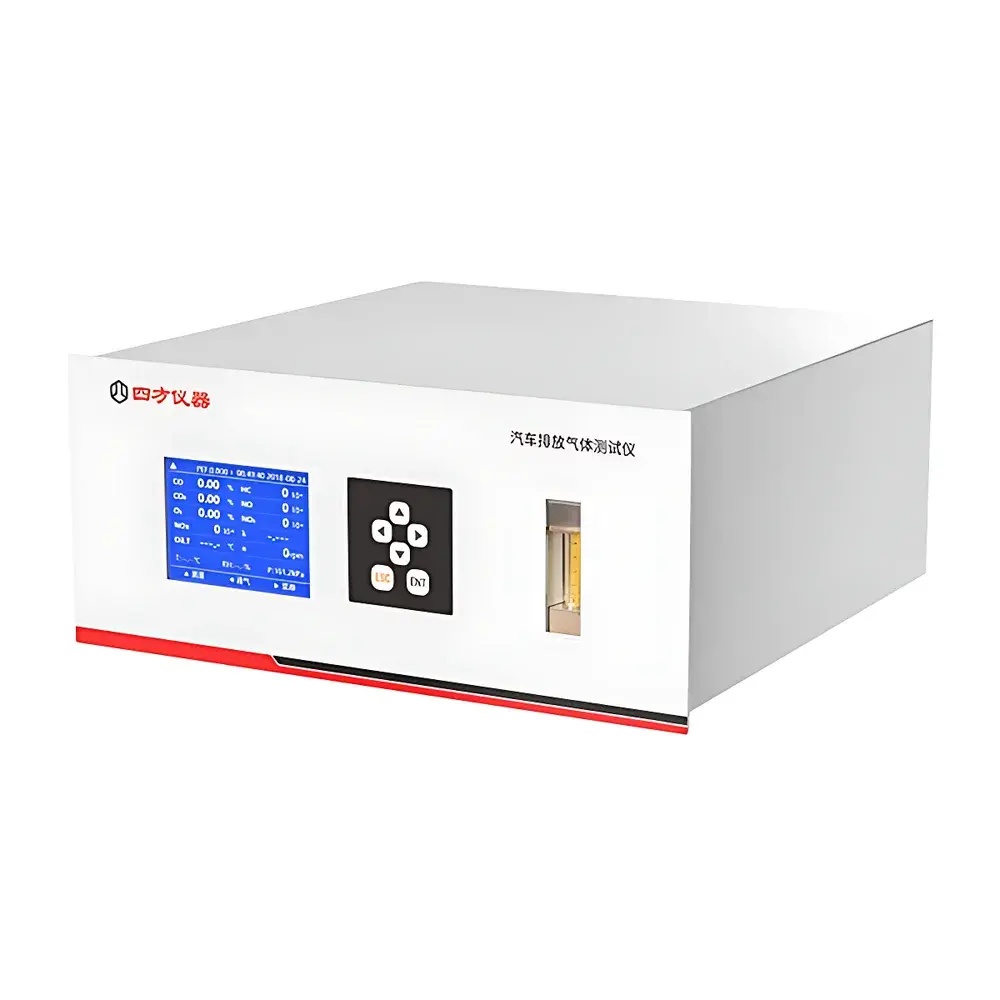
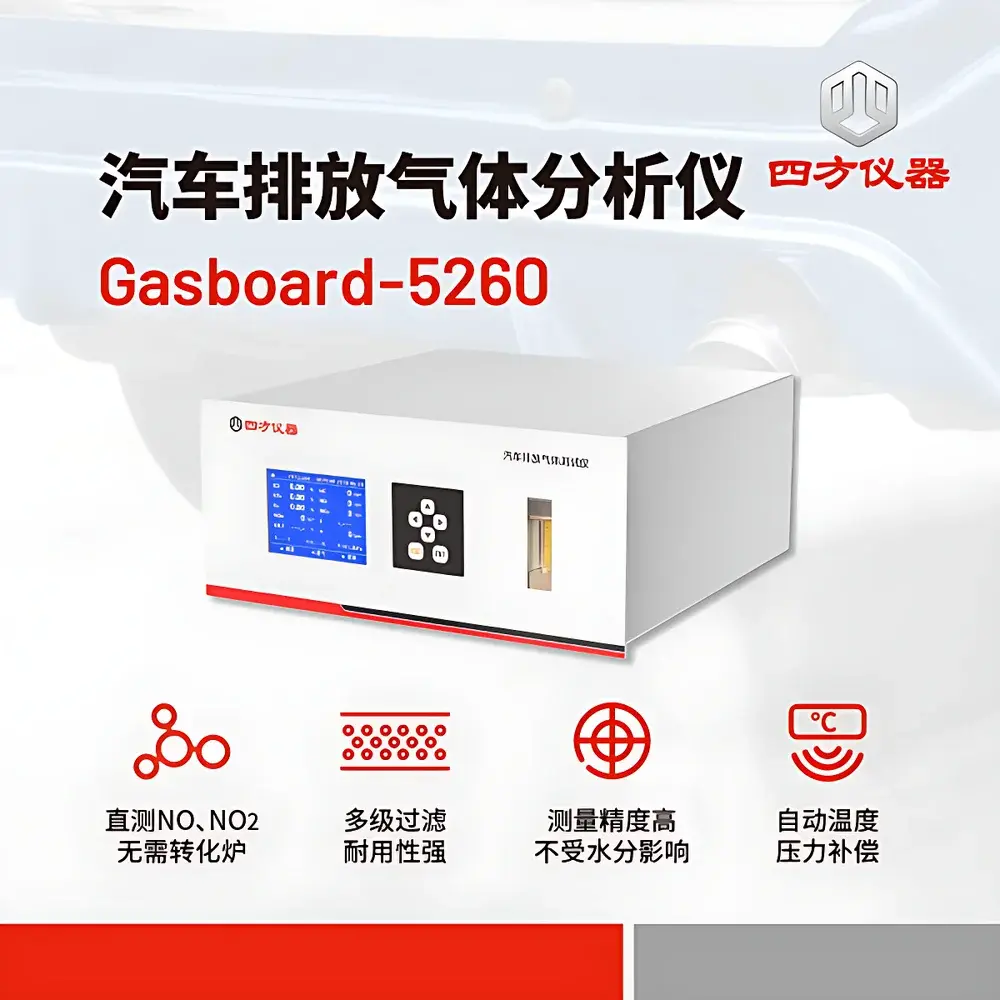
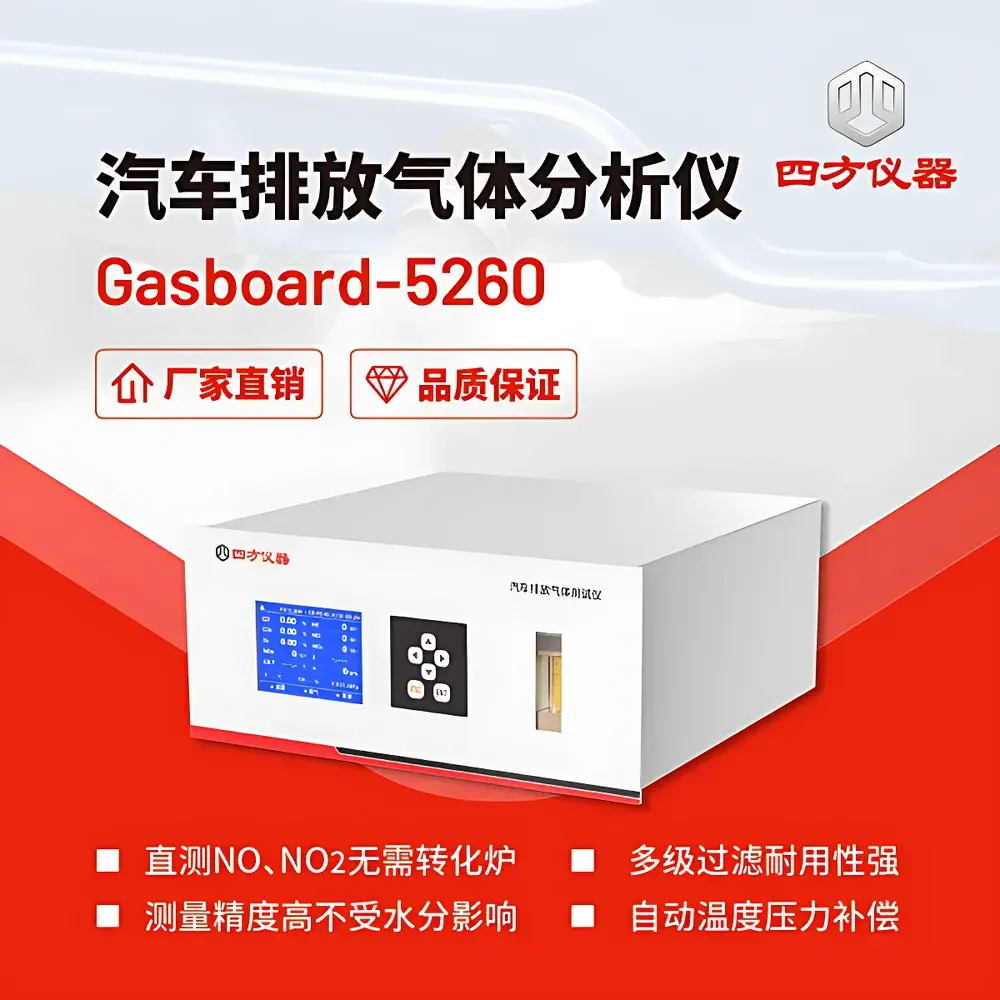
CUBIC INSTRUMENTS Gasboard-5230 Automotive Exhaust Gas Analyzer for Diesel Vehicles
| Brand | CUBIC INSTRUMENTS |
|---|---|
| Origin | Hubei, China |
| Model | Gasboard-5230 |
| Instrument Type | Online Analyzer |
| Measurement Principles | Microflow Dual-Chamber Infrared (NO), Non-Dispersive Ultraviolet (NO₂), Non-Dispersive Infrared (CO₂) |
| Measured Gases | NO, NO₂, CO₂ |
| Measurement Ranges | NO (0–5000 ppm), NO₂ (0–1000 ppm), CO₂ (0.0–18.0 % vol) |
| Accuracy | NO/NO₂ ±25 ppm or ±4% (whichever greater in low range) |
| Resolution | NO/NO₂: 1 ppm |
| CO₂ | 0.01 % vol |
| Response Time (T₉₀) | CO₂ ≤8 s |
| Warm-up Time | 30 min |
| Power Supply | 100–240 VAC, 150 W |
| Communication Interface | RS-232 / RS-485 |
| Compliance | GB 3847–2018, JJG 688–2017 Class 00 |
Overview
The CUBIC INSTRUMENTS Gasboard-5230 is an online automotive exhaust gas analyzer engineered specifically for regulatory-compliant emissions testing of diesel-powered vehicles. It employs three distinct, physically independent optical detection principles to deliver simultaneous, real-time quantification of nitrogen monoxide (NO), nitrogen dioxide (NO₂), and carbon dioxide (CO₂) in undiluted or diluted exhaust streams. NO is measured using a proprietary microflow dual-chamber infrared sensor—protected under international PCT patent PCT/CN2018100767—which integrates matched reference and measurement chambers with temperature-stabilized optical filtering to eliminate thermal drift and long-term signal degradation from component aging. NO₂ is determined via non-dispersive ultraviolet (NDUV) absorption at 400–450 nm, eliminating the need for catalytic NOx converters and associated calibration drift. CO₂ is quantified by non-dispersive infrared (NDIR) absorption at 4.26 µm, with water vapor compensation embedded in the optical path design. The instrument meets the metrological requirements of JJG 688–2017 Class 00 verification regulation and fully complies with the statutory test procedures defined in GB 3847–2018 for free-acceleration and loaded-mode diesel vehicle emissions assessment.
Key Features
- True direct measurement of NO and NO₂ without NOx conversion hardware—reducing system complexity, maintenance frequency, and cross-sensitivity artifacts
- Patented microflow dual-chamber IR sensor architecture for NO, delivering high baseline stability across ambient temperatures from 5 °C to 40 °C
- Integrated NDUV and NDIR optical modules housed within a single, thermally isolated chassis to minimize inter-channel interference
- Multi-stage particulate and moisture filtration system—including heated sampling line interface, cyclonic separator, and hydrophobic membrane filter—to ensure long-term reliability in high-soot environments
- Embedded linearization algorithms calibrated against traceable gas standards; supports user-accessible gain/offset adjustment per channel for periodic field verification
- Modular communication architecture supporting both RS-232 (for local diagnostics and setup) and RS-485 (for multi-unit integration into centralized test bay control systems)
Sample Compatibility & Compliance
The Gasboard-5230 is validated for use with raw, uncooled, and unsampled diesel exhaust gases under dynamic flow conditions typical of roller dynamometer testing, chassis dynamometer cycles, and in-line manufacturing line audits. Its optical design inherently rejects interference from H₂O vapor (up to 20 % vol), CO, and hydrocarbons below 500 ppm, as verified per ISO 15055:2021 Annex B interference testing protocols. The analyzer satisfies the metrological class requirements of JJG 688–2017 (Class 00) for exhaust gas analyzers used in statutory inspection facilities and conforms to the functional specifications and reporting formats mandated by GB 3847–2018. While not certified to EU type-approval standards (e.g., ECE R83-07), its measurement uncertainty budget aligns with ISO 9001:2015 and ISO/IEC 17025:2017 documentation practices for accredited laboratories conducting emissions verification.
Software & Data Management
The analyzer operates with embedded firmware supporting ASCII-based command-response protocol over serial interfaces, enabling seamless integration with third-party test management software (e.g., LabVIEW, TestStand, or custom MES platforms). Raw analog outputs (0–10 V or 4–20 mA per channel) are available for legacy PLC interfacing. All concentration readings include timestamped metadata (UTC sync via internal RTC), cycle identification tags, and diagnostic flags (e.g., filter saturation warning, optical path contamination index). Audit trails—compliant with GLP/GMP data integrity expectations—are stored locally on industrial-grade flash memory and exportable via USB or serial dump. Firmware updates are performed via signed binary packages to ensure version traceability and prevent unauthorized modification.
Applications
- Regulatory compliance testing in motor vehicle inspection stations (MVIS) and environmental protection bureaus conducting diesel fleet screening
- In-line emissions verification during final assembly at OEM manufacturing plants, integrated with automated pass/fail logic and SPC charting
- Diagnostic support in heavy-duty repair workshops performing post-repair verification of SCR and EGR system functionality
- Research and development laboratories evaluating aftertreatment catalyst performance under transient load profiles
- Third-party certification bodies conducting type-approval pre-tests and conformity-of-production audits per national frameworks
FAQ
Does the Gasboard-5230 require periodic calibration with span gases?
Yes—daily zero and span verification using certified NIST-traceable gas mixtures (e.g., 200 ppm NO in N₂, 500 ppm NO₂ in air, 10.0 % CO₂ in N₂) is required prior to each test session per JJG 688–2017 Section 6.3.
Can it be connected to a transmittance-type smoke meter?
Yes—the device features dedicated digital I/O and protocol handshake support for synchronized operation with the Gasboard-6000 opacity meter, enabling concurrent gaseous and particulate emission reporting per GB 3847–2018 Clause 8.4.
Is the analyzer suitable for continuous unattended operation?
It supports 24/7 duty cycling with automatic self-diagnostics and thermal stabilization routines; however, filter replacement intervals must be scheduled based on cumulative exhaust exposure (typically every 200–300 test cycles under heavy-duty conditions).
What is the maximum allowable exhaust gas temperature at the probe inlet?
The standard heated sampling probe accommodates inlet temperatures up to 200 °C; optional high-temp probes rated to 600 °C are available for engine bench applications.
Does the system meet FDA 21 CFR Part 11 requirements?
While not formally Part 11-certified, the firmware implements electronic signature logging, immutable audit trails, and role-based access control—providing a foundation for validation in regulated quality systems when deployed with appropriate procedural controls.







