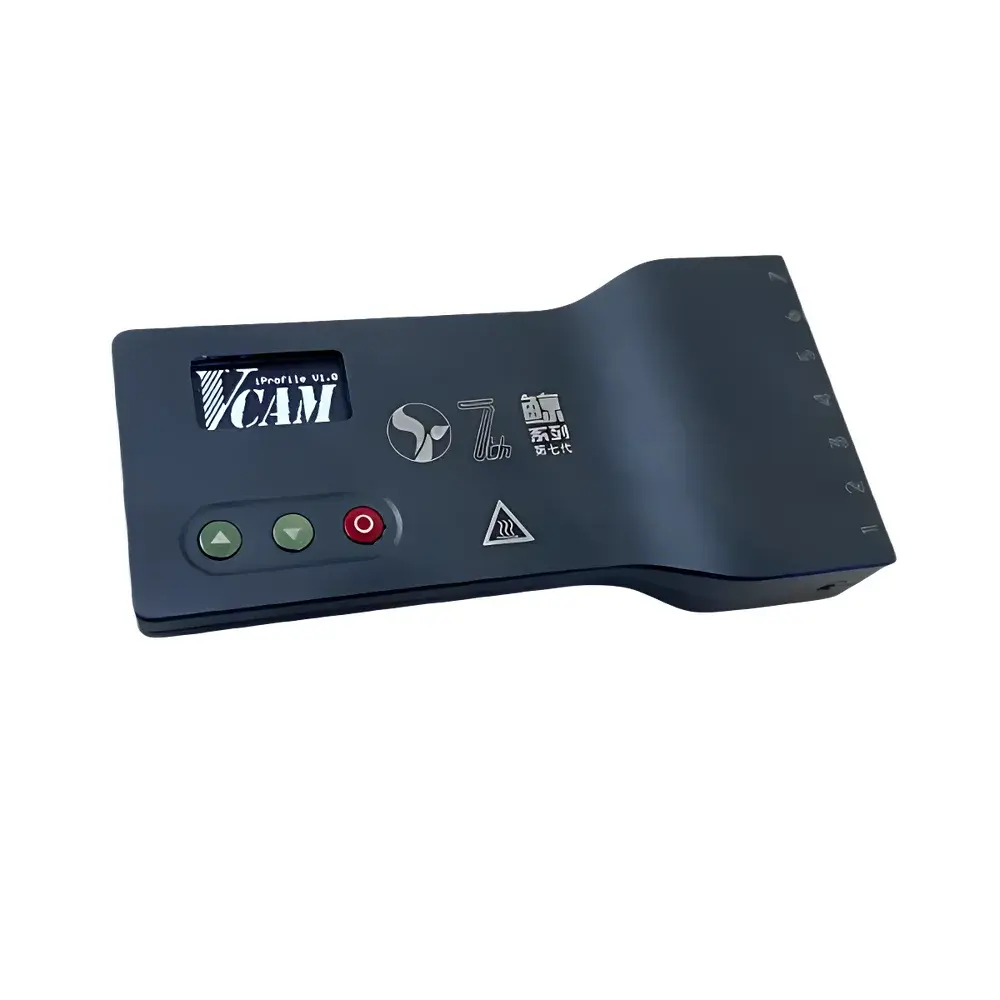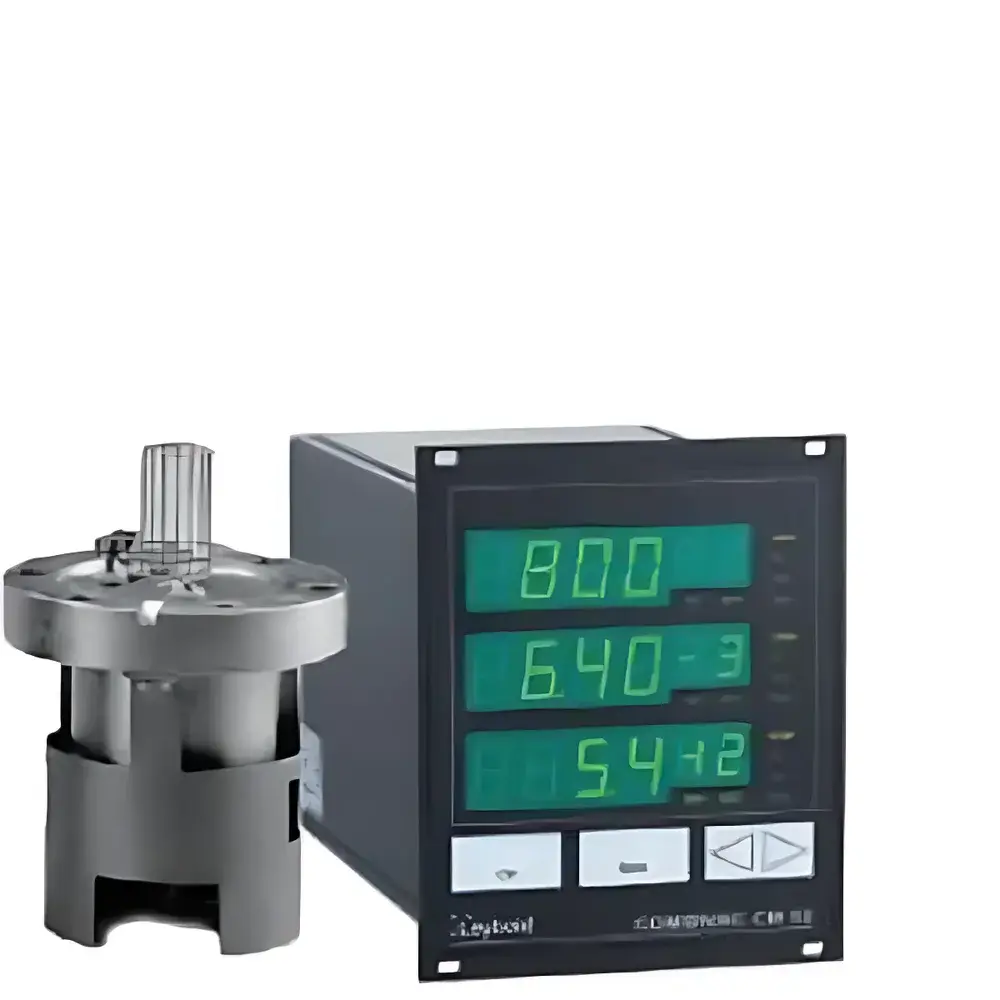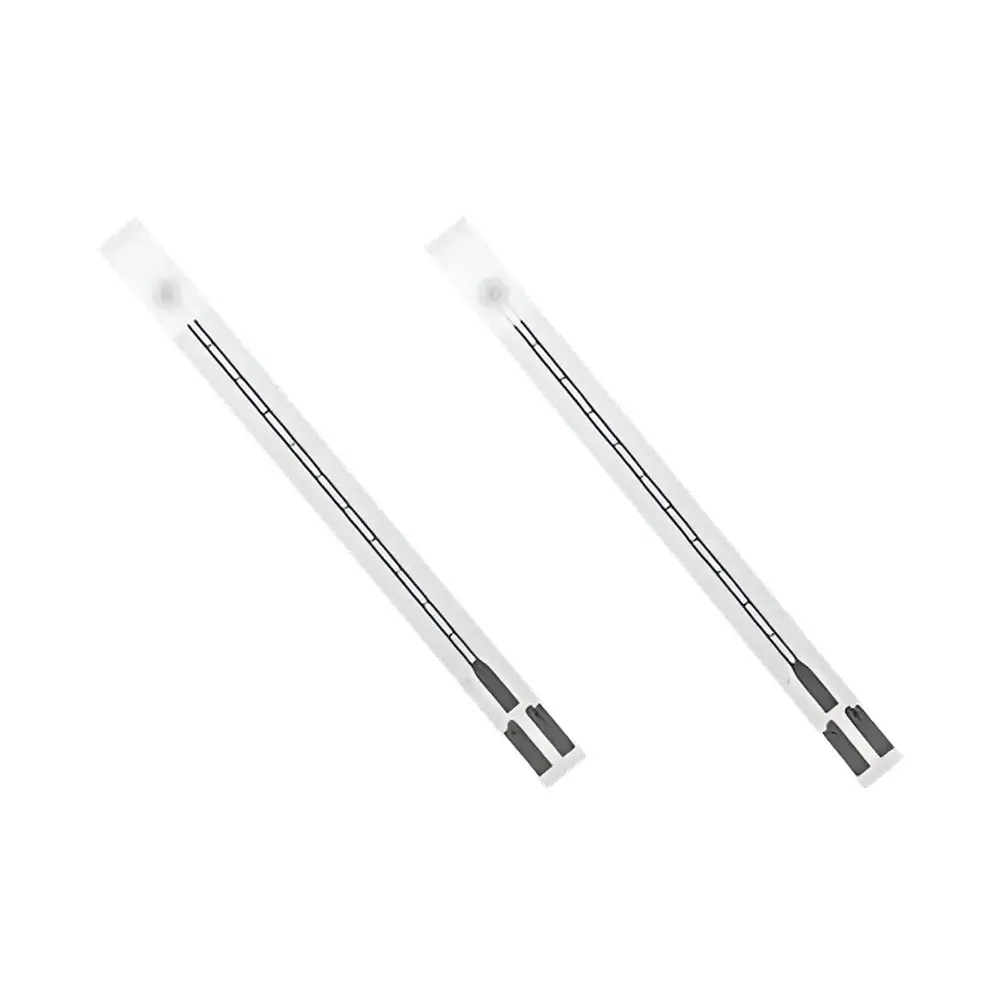
Cubic Oxygen Sensor Chip
| Brand | Cubic |
|---|---|
| Origin | Hubei, China |
| Manufacturer Type | Authorized Distributor |
| Country of Origin | China |
| Model | Oxygen Sensor Chip |
| Measurement Range | 0.98–1.02 (λ unit) |
| Operating Temperature | −40 °C to 1000 °C |
| Ambient Temperature Range | −40 °C to 105 °C |
| Supply Voltage | 12 V DC |
| Startup Time | ≤15 s to operational temperature (vs. >30 s for conventional thimble-type) |
| Heater Power Consumption | <12 W (typical at cold start) |
| Sensor Architecture | Multilayer ceramic planar element with integrated micro-heater and dual protective guard tubes |
| Aging Resistance | <±0.005 λ drift after 100,000 km simulated exhaust exposure (ISO 22738-compliant test cycle) |
| Poisoning Resistance | Validated against Pb, Si, P, and oil ash contaminants per SAE J1679 |
Overview
The Cubic Oxygen Sensor Chip is a high-reliability, planar-type zirconia-based lambda (λ) sensor element engineered for precise air–fuel ratio monitoring in internal combustion engine exhaust systems. It operates on the principle of electrochemical oxygen partial pressure differential across a stabilized zirconium dioxide (ZrO₂) electrolyte, generating a Nernst voltage signal proportional to the logarithm of the oxygen concentration ratio between exhaust gas and reference air. Unlike conventional thimble-shaped sensors, this chip adopts a low-mass multilayer ceramic architecture with an embedded micro-heater, enabling rapid thermal stabilization—achieving functional operating temperature (≥650 °C) in under 15 seconds. This accelerated light-off significantly reduces cold-start hydrocarbon and CO emissions, supporting compliance with Euro 6d, China 6b, and U.S. Tier 3 emission standards. The device is not a complete probe assembly but a core sensing element intended for integration into OEM exhaust manifolds, aftertreatment modules, or diagnostic instrumentation platforms.
Key Features
- Rapid Thermal Response: Planar geometry and optimized heater design reduce thermal mass, cutting warm-up time by ≥50% versus legacy thimble sensors—critical for transient emission control during urban driving cycles.
- Robust Long-Term Stability: Dual-layer protective guard tube system mitigates mechanical shock, thermal cycling stress, and particulate impact—validated for >150,000 km durability under real-world exhaust vibration spectra (ISO 16750-3 Level 3).
- Low-Power Heater Architecture: Integrated Pt-based micro-heater achieves full operational temperature at <12 W peak power, minimizing electrical load on vehicle ECUs and improving overall energy efficiency.
- Enhanced Contaminant Resistance: Surface-engineered electrode layers and doped ZrO₂ electrolyte demonstrate proven resilience against lead, silicon, phosphorus, and crankcase oil-derived poisons—verified per SAE J1679 accelerated aging protocols.
- Wide Operational Envelope: Functional across −40 °C ambient start-up to 1000 °C exhaust gas exposure, with stable λ output linearity maintained from stoichiometric (λ = 1.00) ±0.02 across full temperature range.
- OEM-Ready Integration: Compact footprint (Ø12.7 mm × 4.2 mm height) and standardized 12 V DC interface simplify drop-in replacement or first-fit integration into existing sensor housings and control units.
Sample Compatibility & Compliance
This sensor chip is compatible with gasoline, ethanol-blended (E10–E85), and compressed natural gas (CNG) exhaust streams. It meets dimensional and electrical interface requirements defined in ISO 22738 (automotive lambda sensors) and supports functional safety alignment with ISO 26262 ASIL-B for sensor element level. While the chip itself does not carry full automotive certification, it is manufactured under IATF 16949–certified processes and supplied with full material declarations (IMDS/SDS), RoHS 2011/65/EU, and REACH SVHC compliance documentation. For regulatory validation, end-system integrators may perform full-system testing per EPA 40 CFR Part 1065 or GB 18352.6–2016.
Software & Data Management
As a passive analog sensing element, the Cubic Oxygen Sensor Chip outputs a Nernst voltage (typically 0.1–0.9 V) corresponding to λ values between 0.98 and 1.02. Signal conditioning—including amplification, linearization, and temperature compensation—is performed externally by the host ECU or data acquisition system. The chip is fully compatible with standard OBD-II PID 0x05 (oxygen sensor voltage) and 0x06 (lambda equivalence ratio) protocols when paired with compliant interface electronics. No proprietary firmware or driver software is required. For laboratory use, the element integrates seamlessly with National Instruments DAQ systems, Keysight DSOs, or custom LabVIEW-based calibration rigs adhering to ASTM E2653–22 (standard practice for oxygen sensor verification).
Applications
- Real-time air–fuel ratio feedback control in port fuel injection (PFI) and gasoline direct injection (GDI) engines
- On-board diagnostics (OBD) for catalyst efficiency monitoring (upstream/downstream configuration)
- Engine development and calibration test benches requiring high-cycle repeatability
- Aftertreatment system control in lean-burn gasoline and stoichiometric CNG applications
- Research-grade exhaust gas analysis in academic and governmental emissions laboratories
- Integration into portable emissions measurement systems (PEMS) meeting UN GTR 15 and EU 2017/1151 requirements
FAQ
Is this sensor chip calibrated before shipment?
No. Calibration is performed at the system level during final ECU integration or bench setup using certified gas mixtures per ISO 12099. Each chip undergoes 100% functional screening at 650 °C and λ = 1.00.
Can it be used in diesel exhaust applications?
Not recommended. This chip is optimized for stoichiometric gasoline exhaust environments. For diesel applications requiring wideband NOₓ or soot correlation, Cubic offers dedicated NOₓ and PM sensor platforms.
What is the expected service life under continuous operation?
Based on accelerated aging tests per ISO 22738 Annex C, median functional life exceeds 120,000 km in passenger car duty cycles and >20,000 hours in stationary generator applications.
Does it require reference air access?
Yes. The sensor relies on ambient air as the reference electrode—integrated via diffusion channels in the housing. Sealed or vacuum-referenced configurations are not supported.
Is there a recommended signal conditioning circuit?
Cubic provides application notes (AN-O2-2023 Rev.2) detailing op-amp-based transimpedance and cold-junction compensation topologies compatible with 12 V supply rails and automotive EMC requirements (ISO 11452-2/4).