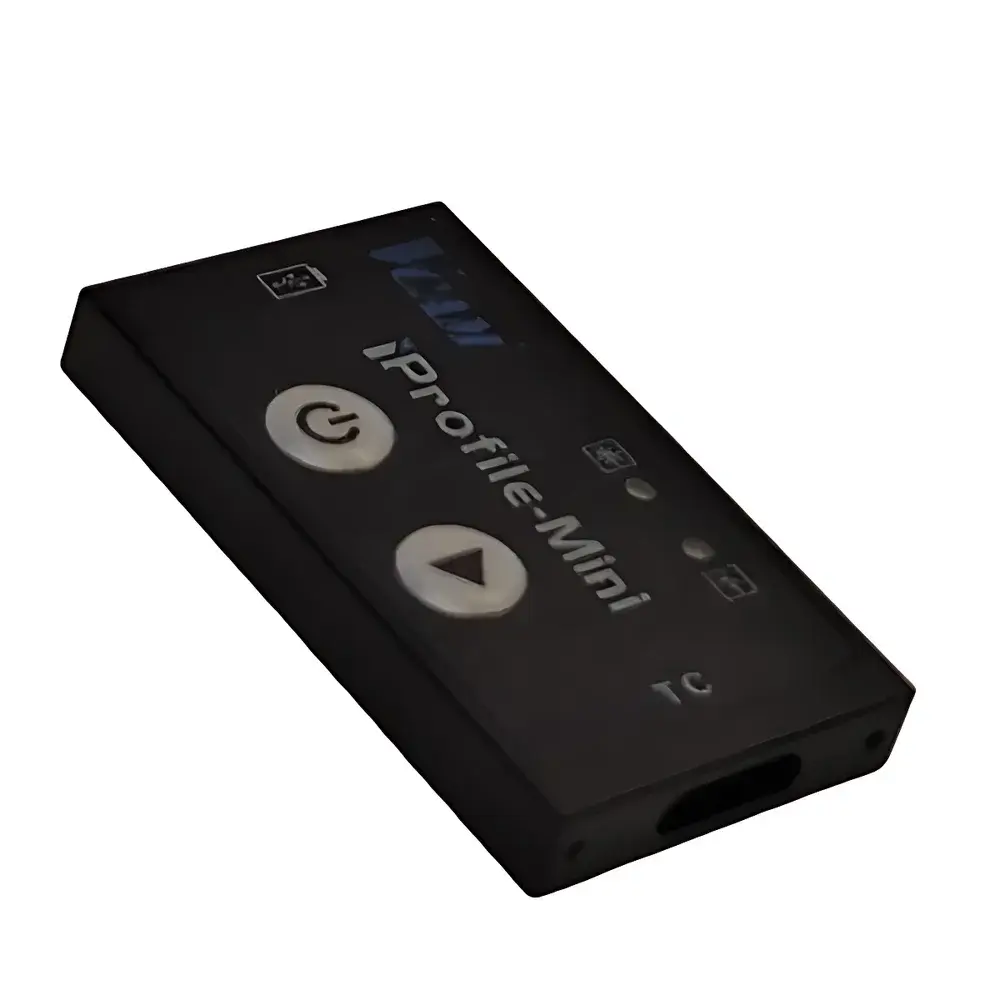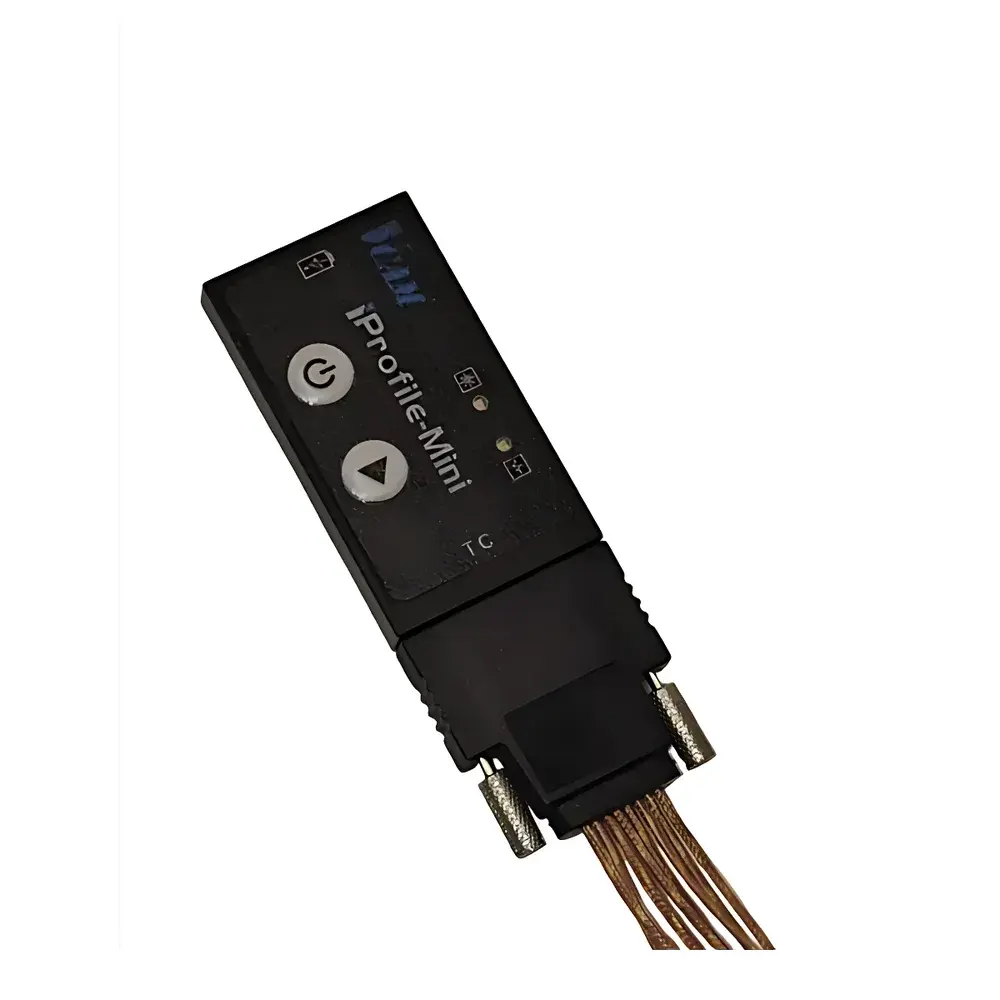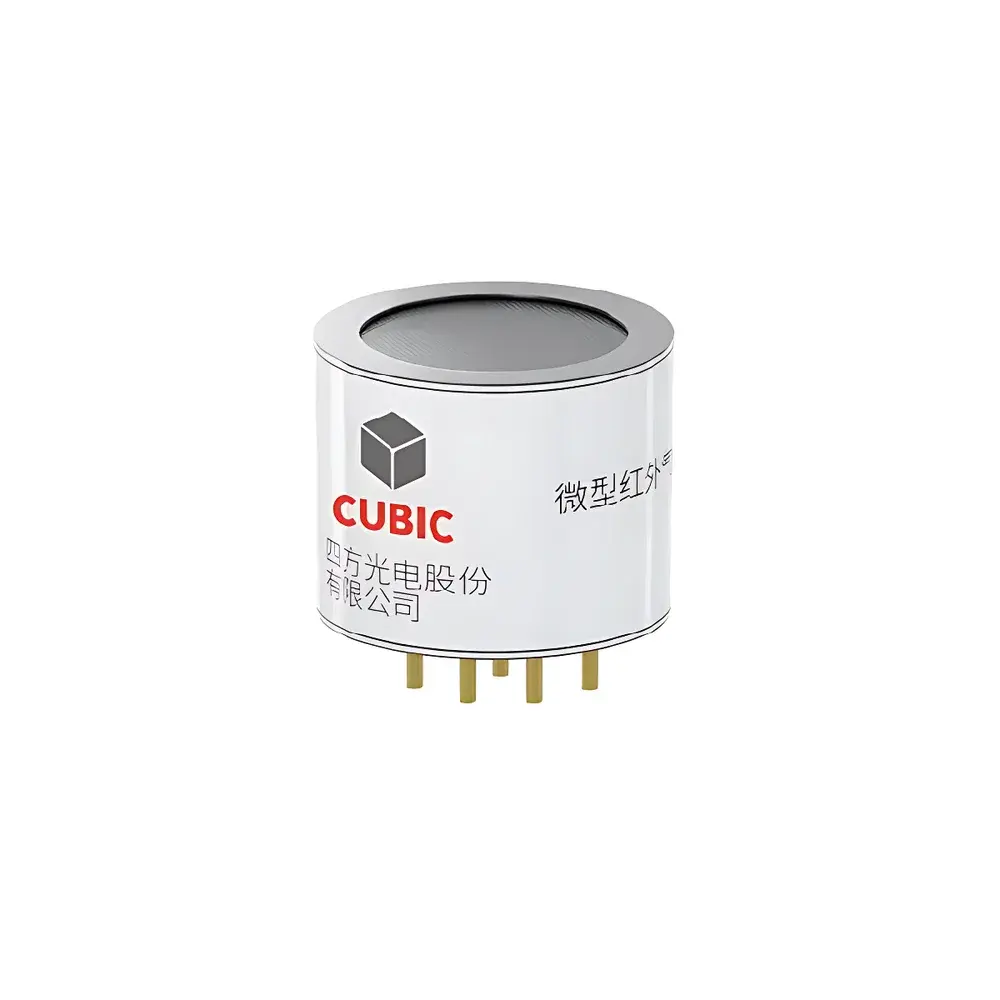
Cubic SJH Series Miniature NDIR Methane Gas Sensor
| Brand | Cubic |
|---|---|
| Origin | Hubei, China |
| Manufacturer Type | Authorized Distributor |
| Country of Origin | China |
| Model | SJH |
| Detection Principle | Non-Dispersive Infrared (NDIR) |
| Measurement Range | 0–5% vol and 0–100% vol |
| Accuracy | ≤±0.06% vol (0.00–1.00% vol) |
| Operating Temperature | −40°C to +70°C |
| Storage Temperature | −40°C to +70°C |
| Operating Humidity | 0–95% RH (non-condensing) |
| Explosion Protection Rating | Ex ia II C T4 Ga |
| Dimensions | Φ20 × 19 mm / Φ20 × 16.6 mm (excluding pins) |
| Output Options | Analog (4–20 mA / 0–5 V) and Digital (UART TTL/RS485) |
| Housing Material | Hermetically Sealed Metal Enclosure |
| Calibration | Full-Range Temperature Compensation |
Overview
The Cubic SJH Series Miniature NDIR Methane Gas Sensor is an industrial-grade, compact gas detection module engineered for precise, stable, and interference-resistant measurement of methane (CH4) concentration in ambient air. It employs non-dispersive infrared (NDIR) spectroscopy—a physical absorption-based technique—where methane molecules selectively absorb infrared radiation at a characteristic wavelength (~3.3 µm). Unlike catalytic bead (pellistor) or thermal conductivity sensors, the SJH sensor eliminates poisoning risks, baseline drift due to humidity or background gases, and long-term calibration instability. Its dual-beam optical architecture—comprising an active measurement channel and a reference channel—ensures high photometric stability and compensates for LED aging, dust accumulation, and environmental fluctuations. Designed for continuous operation in demanding environments, the SJH meets rigorous performance requirements for safety-critical applications across oil & gas, coal mining, chemical process monitoring, medical gas analysis, and laboratory research.
Key Features
- NDIR Core Technology: Utilizes a thermopile detector and IR source with optimized optical path length to deliver fast response (T90 < 30 s), high selectivity for CH4, and immunity to H2, CO, CO2, and hydrocarbon cross-sensitivity.
- Full-Temperature Compensation: Embedded microprocessor performs real-time, full-scale temperature correction across −40°C to +70°C, ensuring metrological consistency without external recalibration.
- Robust Industrial Packaging: All-metal hermetic housing (stainless steel and aluminum alloy) provides mechanical durability, EMI shielding, and resistance to vibration, corrosion, and condensation.
- Dual-Output Interface: Simultaneous analog output (4–20 mA or 0–5 V DC) and digital communication (UART TTL or RS485 Modbus RTU) enable seamless integration into PLCs, DCS systems, and IoT gateways.
- Intrinsic Safety Certified: Certified to Ex ia II C T4 Ga per IEC 60079-0/-11, suitable for installation in Zone 0/1 hazardous areas where explosive atmospheres containing Group II C gases (e.g., hydrogen, acetylene, methane) may be present.
- Configurable Range & Gas Specificity: Available in two standard ranges (0–5% vol and 0–100% vol); optional firmware and optical filter variants support customization for acetylene (C2H2) and propane (C3H8) detection upon request.
Sample Compatibility & Compliance
The SJH sensor is designed for direct sampling of ambient air or extracted gas streams with minimal particulate loading (<1 µm filtration recommended). It operates reliably under non-condensing humidity conditions (0–95% RH) and requires no consumables or periodic reagents. The device complies with international standards including IEC 60079-29-1 (gas detectors—performance requirements), EN 50194-1 (domestic gas alarm systems), and GB/T 34004–2017 (Chinese national standard for methane sensors). While not pre-certified to ATEX or UKCA, its Ex ia II C T4 Ga rating aligns with EU Directive 2014/34/EU Annex II requirements for Category 1G equipment. For regulated industries—including pharmaceutical cleanrooms (ISO 14644), petrochemical refineries (OSHA 1910.120), and mine ventilation systems (MSHA Part 30)—the SJH supports traceable calibration logs and configurable alarm thresholds compatible with GLP/GMP audit documentation protocols.
Software & Data Management
The SJH communicates via ASCII protocol over UART or Modbus RTU over RS485, enabling straightforward integration with SCADA, BMS, and cloud-based data platforms (e.g., AWS IoT Core, Azure IoT Hub). Cubic provides a Windows-based configuration utility (SJH ConfigTool) for setting zero/span calibration points, adjusting alarm thresholds, enabling temperature compensation profiles, and exporting calibration certificates in PDF format. All configuration changes are stored in non-volatile memory with write-protection options. For enterprise deployments, the sensor supports time-stamped data logging (via host controller), configurable sampling intervals (1–60 s), and diagnostic registers reporting LED health, signal-to-noise ratio, and internal temperature deviation—facilitating predictive maintenance and FDA 21 CFR Part 11–compliant audit trails when paired with validated host software.
Applications
- Continuous methane leak detection in natural gas distribution networks, compressor stations, and LNG terminals.
- Explosive atmosphere monitoring in underground coal mines (per national coal safety regulations) and refinery flare stacks.
- Biogas composition analysis in anaerobic digesters and landfill gas recovery systems.
- Medical oxygen/nitrous oxide delivery system integrity verification and anesthesia gas scavenging monitoring.
- Research-grade gas mixture preparation and chamber atmosphere control in university and industrial labs.
- OEM integration into portable multi-gas detectors, fixed-area monitors, and smart ventilation controllers.
FAQ
What is the typical lifetime of the NDIR light source and detector?
The integrated IR LED and thermopile detector are rated for >5 years of continuous operation under specified environmental conditions; accelerated life testing shows <5% signal degradation after 43,800 hours at 25°C.
Does the SJH require field calibration during routine maintenance?
Zero calibration is recommended every 6 months using certified nitrogen or fresh air; span calibration with certified CH4 gas is advised annually or after exposure to extreme contamination events.
Can the sensor operate in vacuum or high-pressure environments?
No—the SJH is rated for atmospheric pressure operation only (86–106 kPa); pressure deviations beyond this range affect gas density and require custom compensation algorithms.
Is firmware upgrade supported over the serial interface?
Yes—field firmware updates are supported via UART using signed binary packages; version history and checksum validation ensure integrity and traceability.
How does the dual-beam design improve long-term stability?
By continuously comparing active and reference channel signals, the sensor cancels out common-mode drift caused by optical fouling, thermal expansion, and source intensity decay—achieving <2% full-scale drift over 12 months.