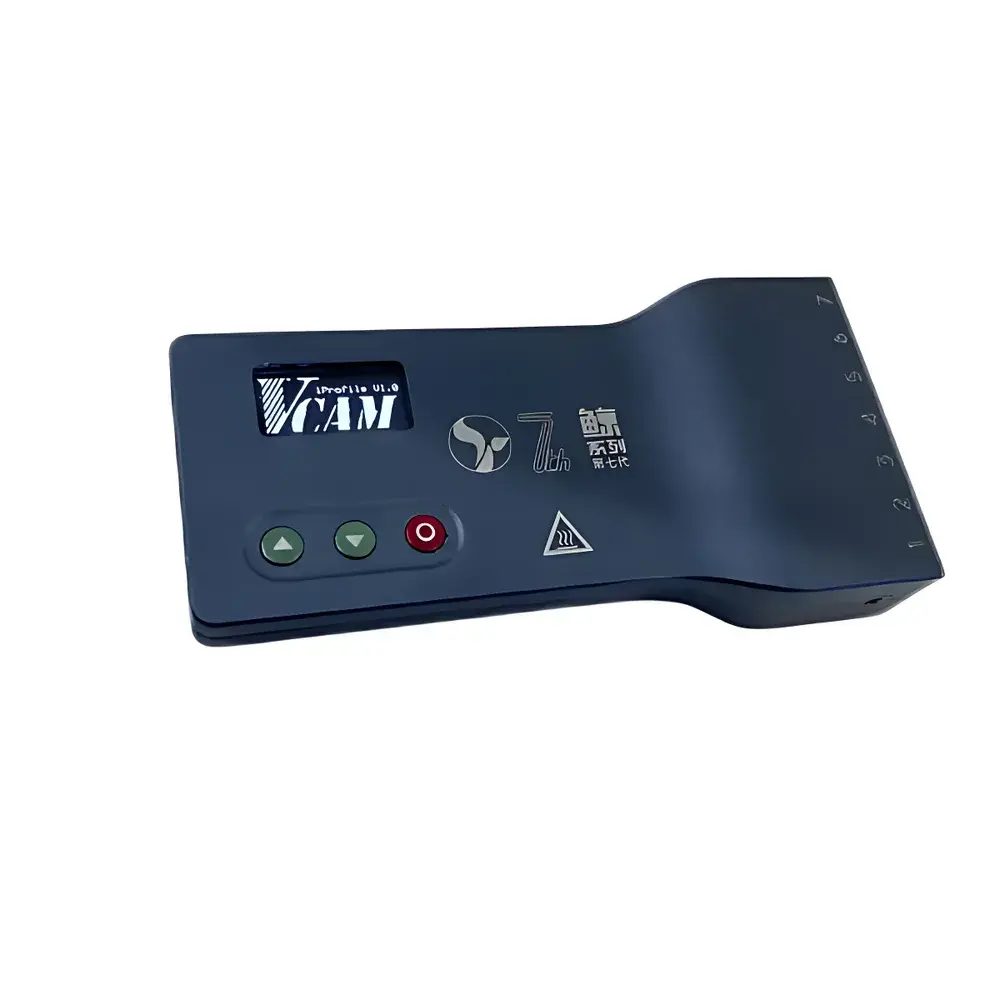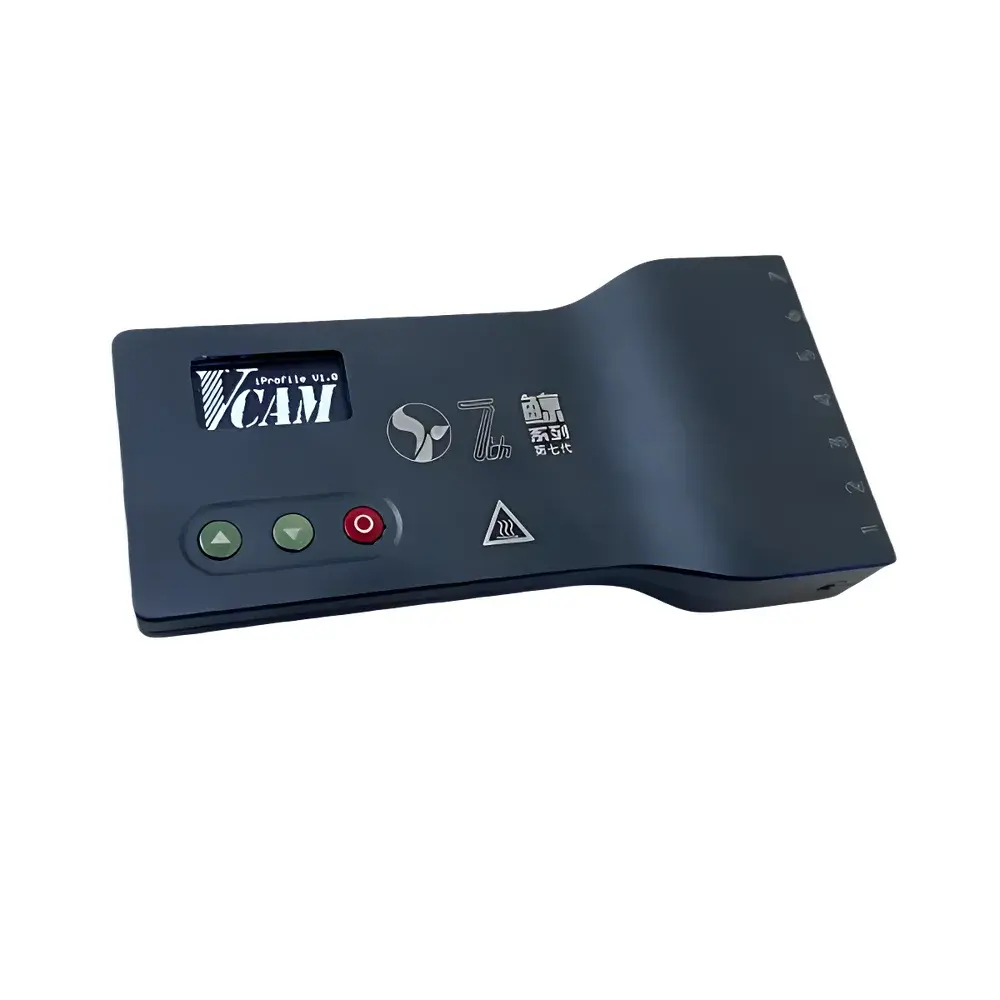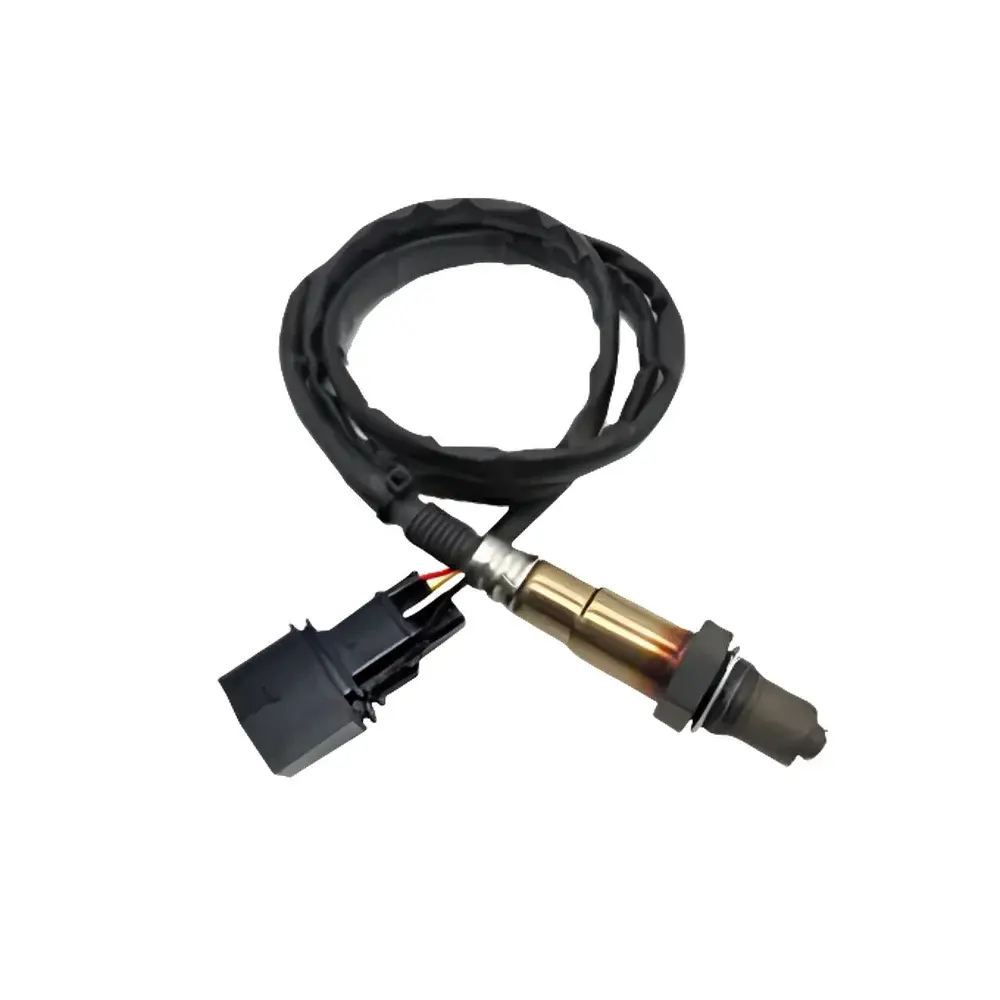
Cubic ZS-WB4.2-01 Wide-Range Lambda Oxygen Sensor
| Brand | Cubic |
|---|---|
| Origin | Hubei, China |
| Model | ZS-WB4.2-01 (LUS4.2) |
| Detection Principle | Zirconia Solid Electrolyte High-Temperature Nernst Principle |
| Operating Voltage | DC 9 V |
| Storage Temperature | −40 °C to 90 °C |
| Exhaust Gas Operating Temperature Range | 150 °C to 930 °C |
| Mounting Thread | M18 × 1.5 |
| Heater Steady-State Power | 10 W |
| Nernst Cell Internal Resistance | 80 Ω |
| Lambda (λ) Measurement Range | 0.65 to ∞ |
| Lambda Accuracy | ±0.03 at λ = 0.8 |
Overview
The Cubic ZS-WB4.2-01 Wide-Range Lambda Oxygen Sensor is an automotive-grade, planar zirconia-based electrochemical sensor engineered for precise, real-time air–fuel ratio (AFR) monitoring across the full stoichiometric spectrum—from rich (λ < 1.0) to extremely lean (λ > 2.0). Unlike conventional narrow-band zirconia sensors that only indicate whether the mixture is richer or leaner than stoichiometry (λ = 1.0), the ZS-WB4.2-01 employs a dual-chamber design with integrated Nernst and pumping cells, operating on the solid electrolyte principle at elevated temperatures (≥600 °C). This architecture enables continuous, linear lambda output proportional to oxygen partial pressure differential—making it indispensable for closed-loop combustion control in modern gasoline powertrains compliant with Euro 6, U.S. Tier 3, and China 6 emission standards.
Key Features
- Planar HTCC (High-Temperature Co-Fired Ceramic) substrate ensures mechanical robustness, thermal shock resistance, and long-term dimensional stability under cyclic exhaust thermal loads.
- Fully self-developed and manufactured sensing chip—designed and qualified for OEM integration across multiple vehicle platforms including passenger cars, light-duty trucks, and hybrid powertrain applications.
- Integrated heater with 10 W steady-state power consumption achieves rapid light-off (<20 s to 600 °C) and maintains optimal operating temperature across transient engine conditions.
- Nernst cell internal resistance of 80 Ω supports stable signal generation with low noise floor and high signal-to-noise ratio, critical for accurate feedback to engine control units (ECUs).
- Wide lambda measurement range (0.65 to ∞) enables detection of ultra-lean mixtures used in stratified-charge and lean-burn engines, as well as rich conditions during cold start and deceleration fuel cut-off.
- Hermetically sealed ceramic housing and M18 × 1.5 threaded mounting interface comply with ISO 23275 and SAE J1850 mechanical installation requirements.
Sample Compatibility & Compliance
The ZS-WB4.2-01 is validated for direct installation into exhaust manifolds and close-coupled positions upstream of three-way catalysts. It operates reliably in complex gas matrices containing CO, CO₂, H₂O, NOₓ, unburned hydrocarbons, and trace sulfur compounds typical of gasoline combustion effluents. The sensor meets functional safety requirements per ISO 26262 ASIL-B for sensor-level hardware integrity and conforms to electromagnetic compatibility (EMC) standards IEC 61000-4-2/4/5/6. Its calibration traceability aligns with ISO/IEC 17025-accredited reference gas protocols using certified NIST-traceable calibration gases (e.g., λ = 0.8, 1.0, 1.7 points). Long-term durability testing exceeds 150,000 km equivalent exposure under accelerated aging per ISO 15701 and GB/T 28046-2011.
Software & Data Management
While the ZS-WB4.01 is an analog-output sensor (typically delivering 0–5 V or current-loop signals proportional to lambda), its integration into vehicle diagnostic systems supports standardized OBD-II PID access (e.g., Mode 06, PID 0x20–0x2F for wideband sensor diagnostics). When paired with compatible ECU firmware, it enables real-time logging of AFR deviation, heater duty cycle, and Nernst voltage—data essential for powertrain validation, emissions certification testing (e.g., WLTP, FTP-75), and post-certification conformity surveillance. Sensor output linearity and hysteresis are characterized per ISO 11452-8 and documented in manufacturer-provided calibration reports, supporting GLP-compliant test lab workflows and audit-ready data archives.
Applications
- Real-time air–fuel ratio feedback control in gasoline direct injection (GDI) and port fuel injection (PFI) engines.
- OBD-II compliance monitoring for on-board diagnostics and malfunction detection (e.g., catalytic converter efficiency, misfire detection).
- Development and validation of advanced combustion strategies including homogeneous charge compression ignition (HCCI) and lean-diesel-gasoline hybrids.
- Aftertreatment system optimization—supporting DOC, GPF, and TWC performance modeling and aging assessment.
- Engine-in-the-loop (EIL) and hardware-in-the-loop (HIL) simulation environments requiring high-fidelity lambda input.
FAQ
What is the difference between a wide-range lambda sensor and a conventional narrow-band oxygen sensor?
A narrow-band sensor operates only near stoichiometry (λ ≈ 1.0) and outputs a binary switching signal; a wide-range sensor provides continuous, linear lambda values across 0.65–∞, enabling precise fuel trim across all engine load and speed conditions.
Does the ZS-WB4.2-01 require external signal conditioning?
Yes—it requires a dedicated wideband controller (e.g., Bosch LSU 4.9 interface circuitry or equivalent OEM ECU driver stage) to supply pump current, regulate reference air diffusion, and convert raw cell voltages into calibrated lambda output.
Is the sensor suitable for ethanol or flex-fuel applications?
Yes—the zirconia-based electrochemical cell is chemically inert to ethanol, methanol, and blended fuels (E10–E85); however, calibration offsets must be applied in ECU software to account for altered stoichiometric ratios.
What is the recommended replacement interval?
Under normal operation and proper exhaust system maintenance, service life exceeds 160,000 km or 10 years—subject to periodic OBD monitoring of heater resistance and signal response time per SAE J1930 guidelines.