
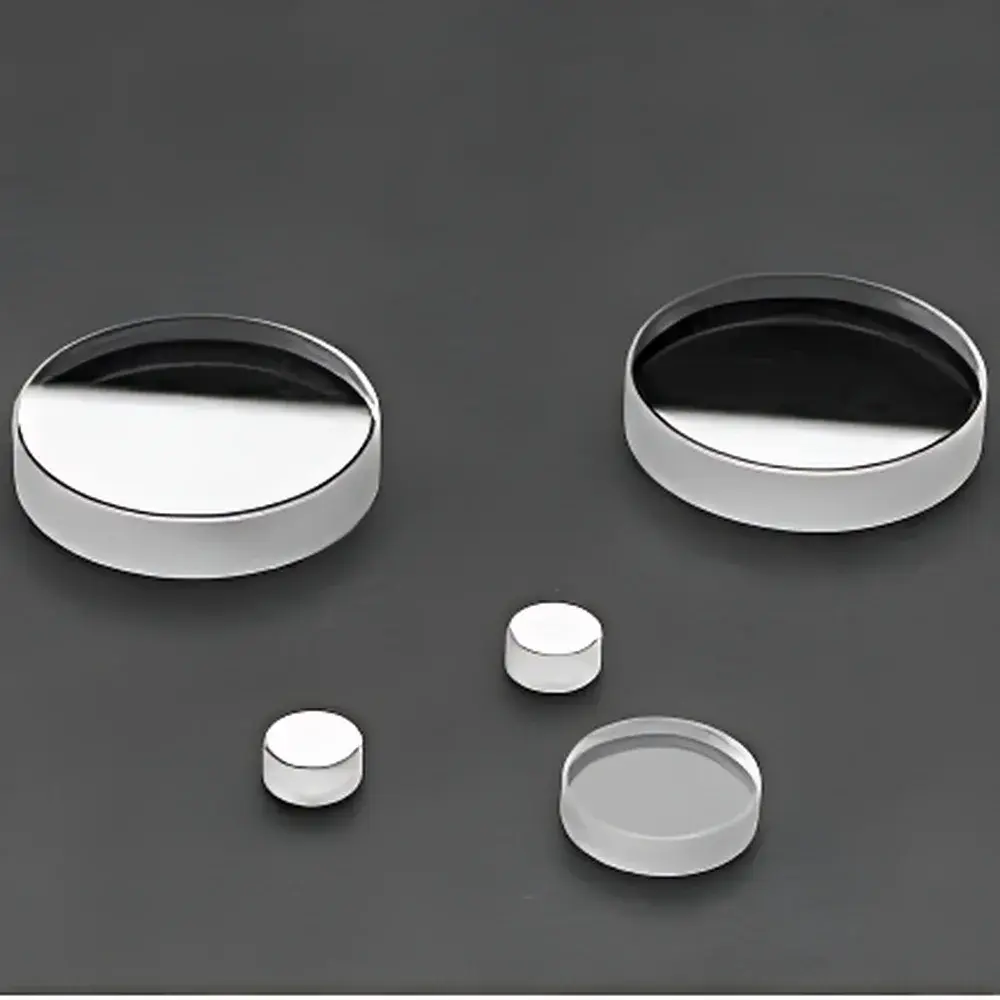
CVI Melles Griot SPL Optical Components
| Brand | CVI Melles Griot |
|---|---|
| Origin | USA |
| Manufacturer Type | Authorized Distributor |
| Import Status | Imported |
| Model | SPL Series |
| Component Category | Precision Optical Elements |
| Compliance | ISO 10110, MIL-PRF-13830B, RoHS Compliant |
| Coating Options | AR, HR, HT, Polarization-Specific, Ultrafast-Compatible Dielectric & Metallic Coatings |
| Surface Quality | 10–5 to 20–10 Scratch-Dig |
| Surface Flatness | λ/10 to λ/4 (typical) |
| Transmission Range | UV-VIS-NIR-MIR (193 nm – 12 µm, dependent on substrate and coating) |
| Substrates | Fused Silica, N-BK7, CaF₂, MgF₂, SF10, ZnSe, Ge, Si, Sapphire |
Overview
The CVI Melles Griot SPL Series Optical Components represent a rigorously engineered family of precision optical elements designed for integration into high-performance laser systems, interferometric setups, spectroscopic instrumentation, and advanced research platforms. These components operate on fundamental principles of wavefront manipulation—including reflection, refraction, polarization control, spectral filtering, and beam division—enabling precise control over light propagation, phase, intensity, and spectral content. Engineered in accordance with ISO 10110 surface specification standards and tested per MIL-PRF-13830B scratch-dig criteria, the SPL line supports demanding applications in ultrafast laser amplification, quantum optics, aerospace-based remote sensing, semiconductor metrology, and life science imaging systems where wavefront fidelity, thermal stability, and long-term environmental reliability are non-negotiable.
Key Features
- Precision-manufactured optical substrates including fused silica, N-BK7, calcium fluoride (CaF₂), magnesium fluoride (MgF₂), zinc selenide (ZnSe), germanium (Ge), silicon (Si), and sapphire—selected for optimal transmission, dispersion, and damage threshold characteristics across UV (193 nm) to mid-IR (12 µm) spectral bands.
- Advanced dielectric and metallic thin-film coatings deposited via ion-assisted e-beam evaporation and magnetron sputtering—offering customizable reflectance/transmittance profiles, polarization selectivity, and group delay dispersion (GDD) compensation for femtosecond pulse applications.
- Surface flatness tolerance down to λ/10 @ 633 nm and surface quality up to 10–5 scratch-dig—validated using Zygo interferometry and automated dark-field inspection systems.
- Full traceability to NIST-traceable calibration artifacts; batch-specific test reports include wavefront error maps, spectral transmittance/reflectance curves, and coating adhesion data per ISO 9211-3.
- Designed for compatibility with standard optomechanical interfaces (e.g., SM1, SM2 threading, kinematic mounts) and vacuum-compatible environments (UHV-rated upon request).
Sample Compatibility & Compliance
The SPL Series is routinely deployed in regulated environments requiring adherence to international quality and safety frameworks. All coated components meet RoHS Directive 2011/65/EU restrictions on hazardous substances. Substrate materials and coating processes comply with ASTM F2617 for optical material certification and ISO 9001:2015 manufacturing system requirements. For pharmaceutical or medical device R&D instrumentation, components support GLP-compliant documentation packages—including full material declarations, coating process logs, and environmental stress screening records (thermal cycling, humidity exposure, and laser-induced damage threshold testing per ISO 21254-1). Custom configurations can be qualified under FDA 21 CFR Part 11 for electronic record integrity when integrated into validated analytical systems.
Software & Data Management
While the SPL components themselves are passive elements, CVI Melles Griot provides comprehensive digital asset support through its Optics Design Portal—a web-based resource offering downloadable Zemax (.ZAR), Code V (.CFG), and ASAP (.ASD) optical design files for all standard catalog items. Each component’s spectral performance dataset (transmission, reflection, phase shift vs. wavelength/angle) is available in CSV and HDF5 formats, enabling direct import into MATLAB, Python (SciPy/OpticsPy), or LabVIEW-based system modeling environments. Traceable metrology reports are archived with unique serial identifiers and accessible via secure customer portal with audit trail logging compliant with ISO/IEC 17025 clause 7.11.
Applications
- Laser cavity design and harmonic generation (e.g., SHG, THG) using high-LIDT mirrors and waveplates with <10 fs GDD compensation.
- Interferometric displacement measurement systems relying on etalons with finesse >300 and thermal drift <1 ppm/K.
- Flow cytometry and confocal microscopy platforms integrating multi-band dichroic filters with OD >6 blocking and <1% ripple in passbands.
- Space-qualified Earth observation spectrometers utilizing radiation-hardened CaF₂ prisms and anti-reflective-coated sapphire windows.
- Ultrafast amplifier chains incorporating chirped mirror pairs and zero-order quartz waveplates calibrated for broadband quarter-wave retardation (±1° over 700–900 nm).
FAQ
Are SPL components supplied with individual test certificates?
Yes—each shipped lot includes a Certificate of Conformance (CoC) referencing ISO 10110-5 and MIL-PRF-13830B test results, along with spectral performance validation data.
Can CVI provide custom coating specifications for non-standard angles or polarization states?
Absolutely—custom designs undergo rigorous modeling in Essential Macleod or TFCalc, followed by prototype validation and full production qualification per agreed technical specification.
Is vacuum compatibility available for SPL windows and lenses?
Standard fused silica and sapphire components are UHV-ready (<10⁻⁹ Torr); optional bake-out validation and outgassing rate reporting per ASTM E595 are available upon request.
Do SPL optical filters support multi-notch or edge-steepness requirements beyond catalog specifications?
Yes—custom filter designs achieve transition widths <0.5 nm and blocking levels up to OD 8 across multiple spectral regions, validated via FTIR and tunable laser scanning.
What lead time should be expected for custom SPL assemblies?
Standard components ship within 2–4 weeks; custom-coated or multi-element assemblies typically require 8–12 weeks from final design freeze and deposit confirmation.



