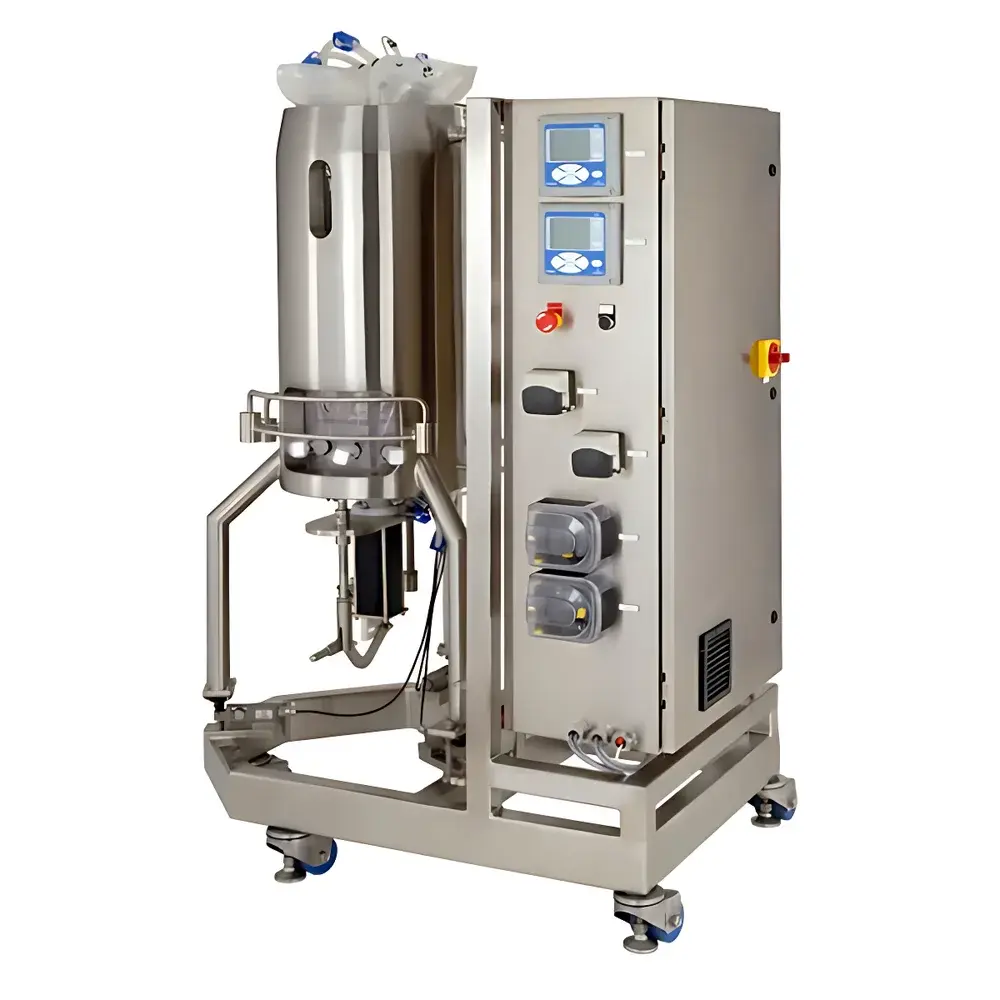
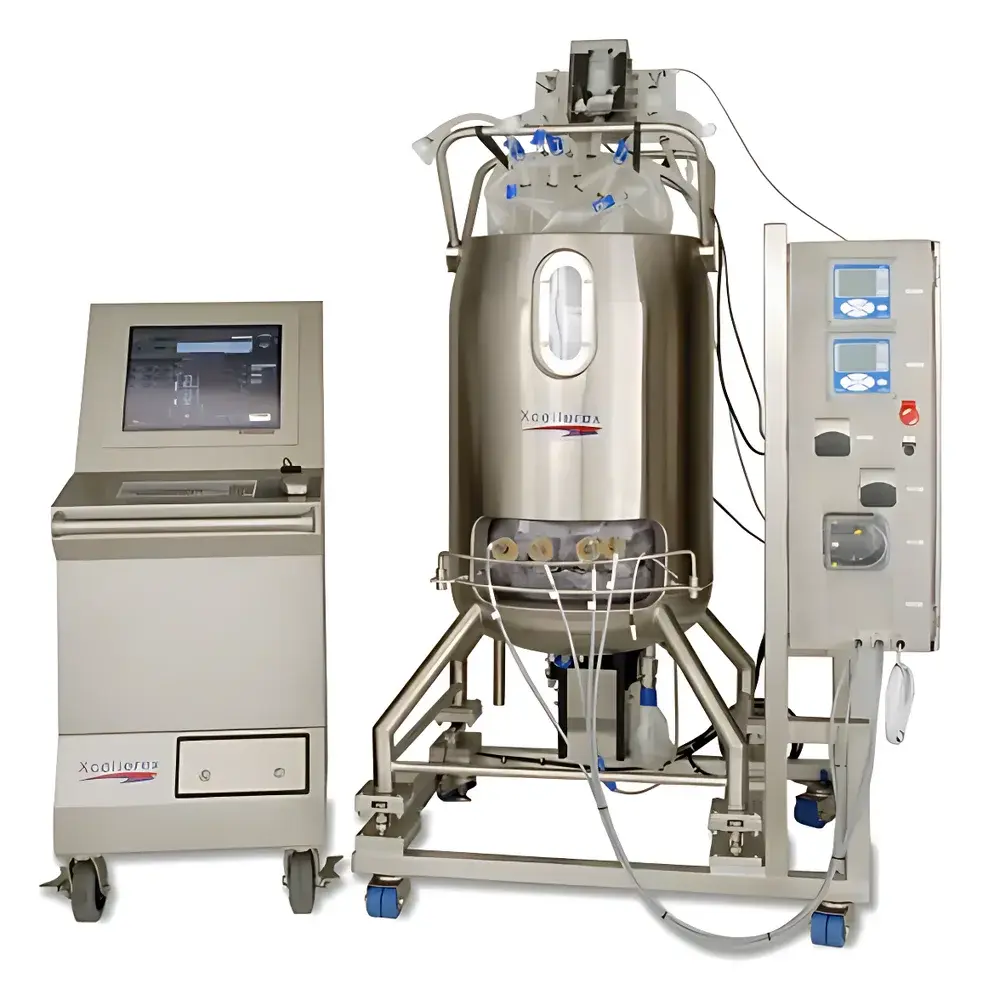
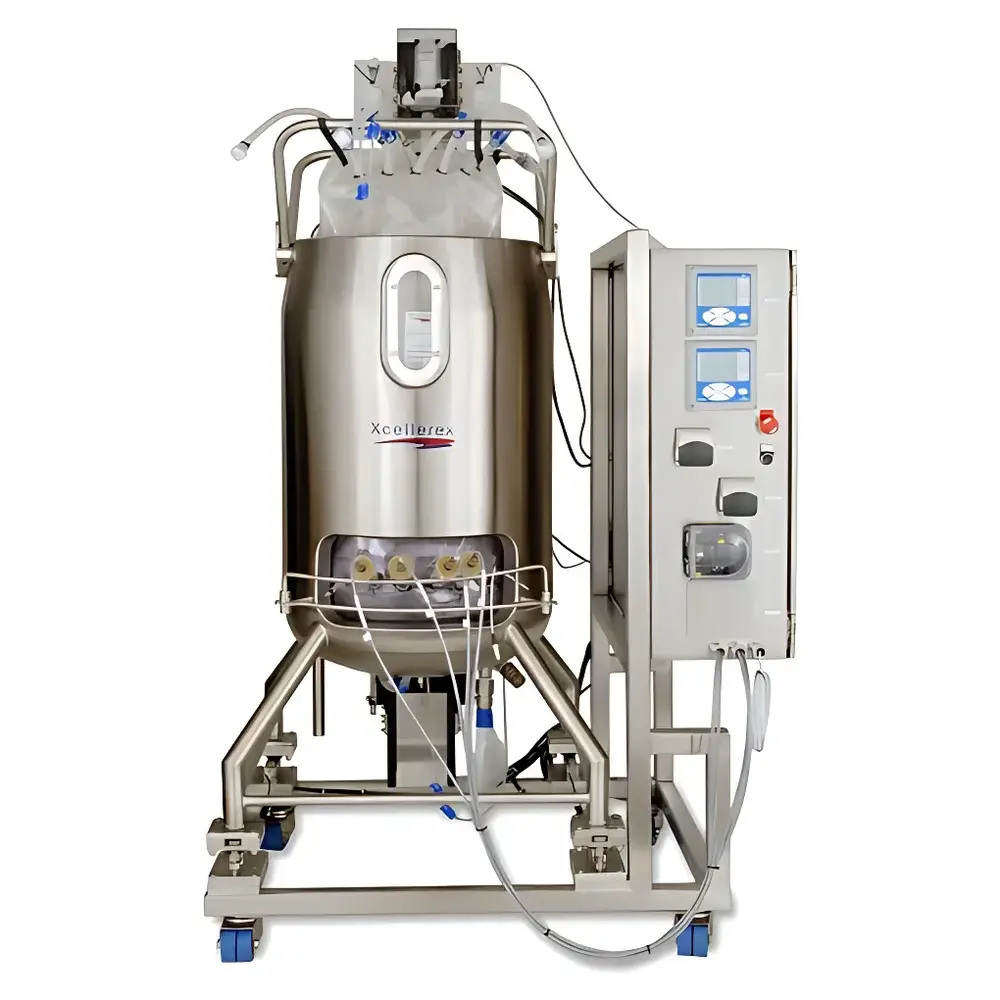
Cytiva Xcellerex XDR 50–2000 Single-Use Bioreactor System
| Brand | Cytiva |
|---|---|
| Origin | USA |
| Manufacturer Type | Authorized Distributor |
| Product Category | Imported |
| Model | Xcellerex XDR 50–2000 |
| Working Volumes | 50 L, 200 L, 500 L, 1000 L, 2000 L |
Overview
The Cytiva Xcellerex XDR 50–2000 Single-Use Bioreactor System is an engineered platform for scalable, process-consistent mammalian cell culture under both cGMP and non-cGMP conditions. Based on stirred-tank bioreactor hydrodynamics, the XDR series replicates key scale-up parameters—including impeller tip speed, power input per unit volume (P/V), gas mass transfer coefficient (kLa), oxygen transfer rate (OTR), and shear stress profiles—across its full working volume range (50–2000 L). This alignment with legacy stainless-steel bioreactor design space enables predictive, linear process transfer from lab-scale development through clinical and commercial manufacturing. The system integrates single-use technology with industrial-grade automation architecture, supporting batch, fed-batch, and perfusion modes within the same hardware framework—eliminating the need for parallel platform investments or process requalification when shifting between operational strategies.
Key Features
- Consistent geometric and hydrodynamic scaling across five working volumes (50 L, 200 L, 500 L, 1000 L, 2000 L) to ensure reproducible process performance from seed train to production.
- Stainless-steel jacketed vessel frame enabling precise temperature control via external fluid circulation—compatible with standard utility infrastructure.
- Modular subsystem architecture comprising three independent units: Vessel/Rack Assembly, I/O Cabinet, and X-Station Controller—supporting flexible room layout, phased commissioning, and simplified maintenance.
- Single-use bioprocess bags constructed with USP Class VI-certified low-density polyethylene (LDPE) contact layer, validated for sterility, extractables/leachables, and mechanical integrity under extended culture durations.
- Bottom-mounted, shaftless impeller assembly with integrated magnetic drive—minimizing dead volume, enhancing mixing efficiency, and eliminating seal-related contamination risks.
- Configurable gas blending and mass flow control (O₂, N₂, CO₂, air), along with precision peristaltic or diaphragm pump options for feed, base, antifoam, and harvest lines.
Sample Compatibility & Compliance
The XDR platform supports a broad spectrum of biologics manufacturing applications, including monoclonal antibodies (mAbs), recombinant proteins, viral vectors (AAV, lentivirus), and cell therapies requiring adherent or suspension culture formats. All single-use bags undergo rigorous pre-sterilization validation per ISO 11137 and are supplied gamma-irradiated (25–45 kGy). Materials comply with USP and cytotoxicity and systemic injection testing requirements. Process data acquisition and control systems are designed to support compliance with FDA 21 CFR Part 11, EU Annex 11, and GAMP 5 guidelines—enabling audit-ready electronic records, user access controls, and change management traceability. The system is routinely deployed in facilities operating under ICH Q5A–Q5E, Q7, and Q9 quality frameworks.
Software & Data Management
The X-Station controller runs proprietary deterministic real-time operating software with embedded PID loops for pH, DO, temperature, and agitation control. All process parameters—including sensor readings, actuator status, alarm logs, and operator interventions—are timestamped and stored locally with optional integration into enterprise MES/LIMS platforms via OPC UA or Modbus TCP. Audit trails capture user identity, timestamp, parameter value before/after change, and reason-for-change—fully aligned with ALCOA+ data integrity principles. Batch reports are exportable in PDF and CSV formats; raw data archives support retrospective analysis and regulatory submission packages (e.g., BLA, MAA).
Applications
- Upstream process development and tech transfer across scales—from 50 L benchtop models used in DoE studies to 2000 L production units executing commercial campaigns.
- Accelerated clinical manufacturing for Phase I–III programs where rapid facility fit-for-purpose deployment is critical.
- Multi-product facility operations leveraging shared infrastructure across mAb, bispecific, and gene therapy workflows.
- Perfusion-based high-density culture for difficult-to-express proteins or low-yield constructs requiring extended residence time and nutrient replenishment.
- Platform qualification and comparability studies supporting regulatory filings for process changes, site transfers, or bag supplier transitions.
FAQ
Can the same XDR vessel frame accommodate different bag sizes?
No—each working volume (50 L, 200 L, etc.) requires a dedicated vessel frame and corresponding bag kit. However, control logic, HMI interface, and operational procedures remain consistent across all models.
Is the XDR system compatible with third-party sensors or controllers?
While the X-Station is optimized for Cytiva-certified sensors (e.g., Hamilton Arc, Mettler Toledo InPro), analog 4–20 mA and digital RS485 inputs allow limited integration of validated third-party probes—subject to functional risk assessment and IQ/OQ verification.
What is the maximum recommended run duration for XDR bags?
Standard XDR bags are qualified for up to 21 days of continuous operation under typical CHO fed-batch conditions; extended-duration protocols (e.g., >28 days for perfusion) require specific bag configuration review and additional validation support.
Does Cytiva provide process characterization data for scale-up correlations?
Yes—Cytiva publishes peer-reviewed scale-down/scale-up correlation matrices covering kLa, mixing time, oxygen uptake rate (OUR), and viable cell density (VCD) trajectories across the XDR volume range, referenced against common stainless-steel bioreactor benchmarks (e.g., Sartorius BIOSTAT STR, Thermo Fisher HyPerforma).
How is cleaning-in-place (CIP) handled for the reusable components?
The vessel frame, I/O cabinet, and X-Station controller are cleaned using validated aqueous CIP protocols (e.g., 0.5% NaOH at 60°C for 30 min), followed by purified water rinse and compressed air drying—no sterilization-in-place (SIP) is required as only single-use bags contact process fluids.
Related Products