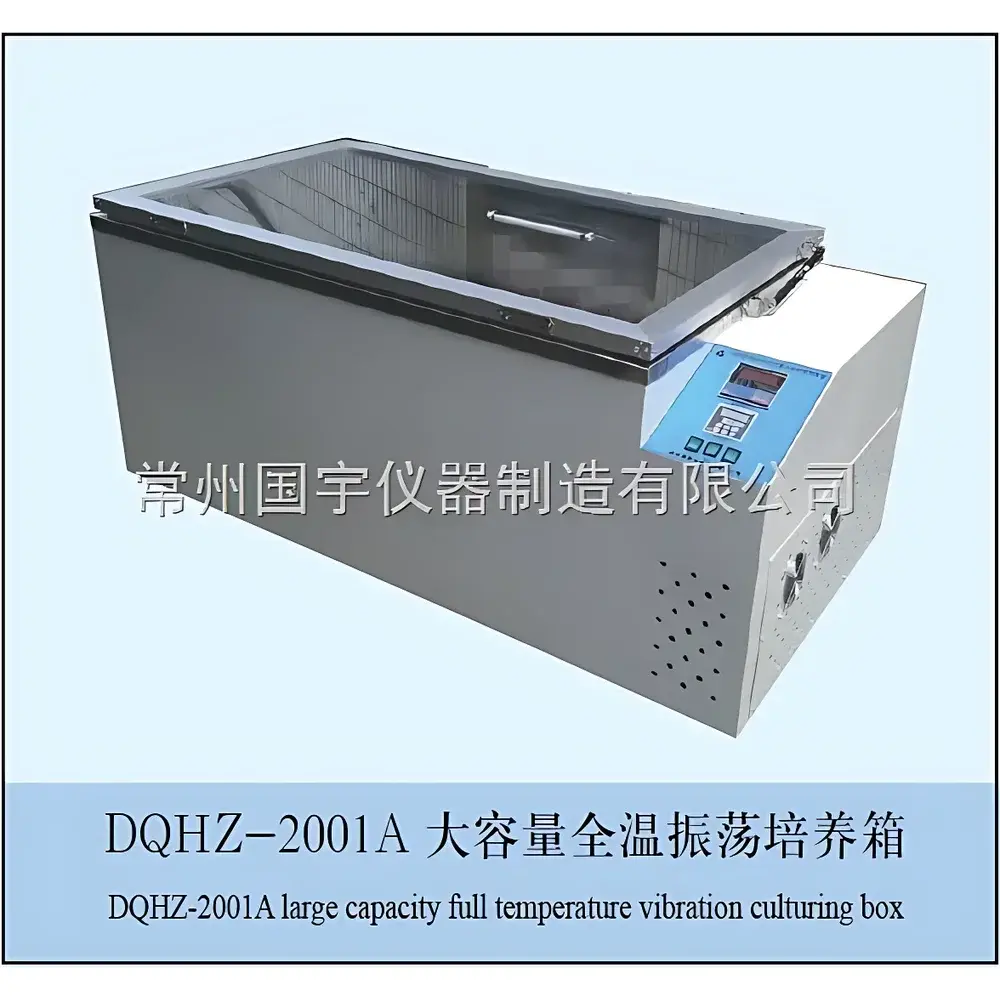
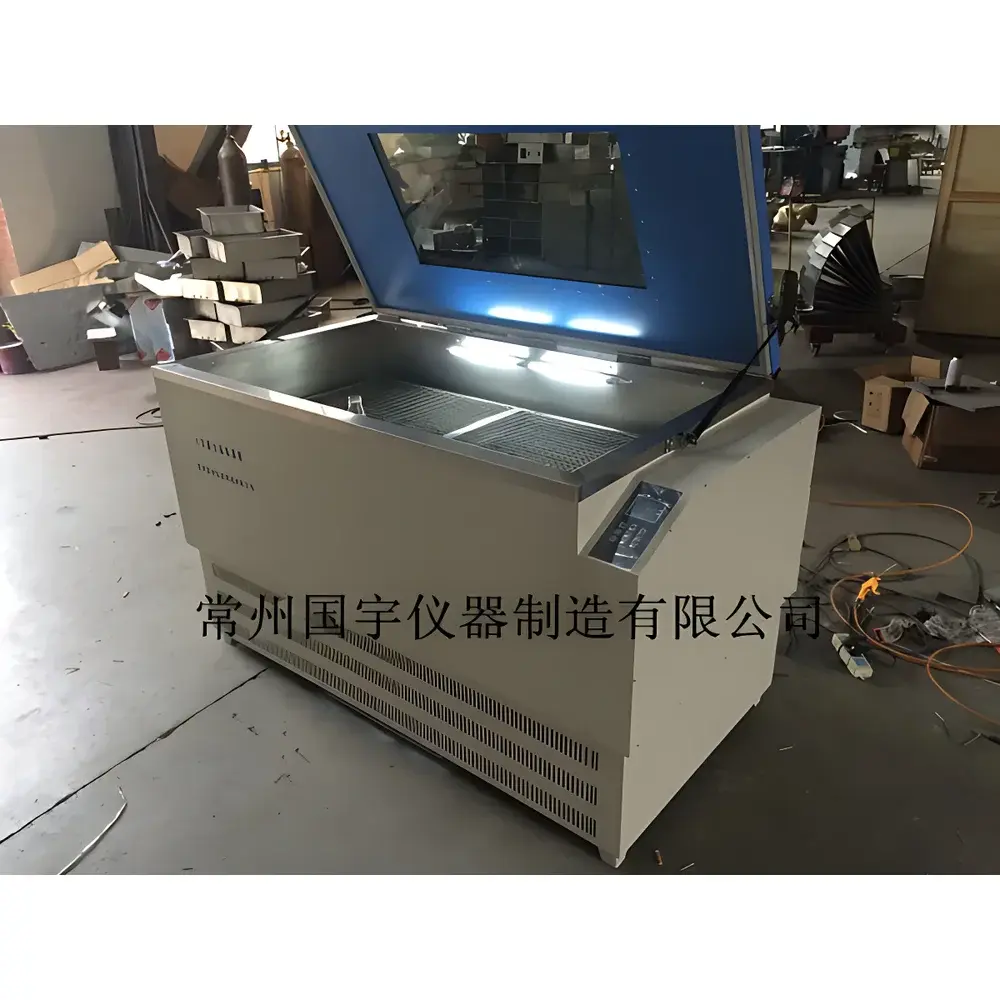
CZGY DQHZ-2001A Large-Capacity Full-Temperature Air-Bath Orbital Shaker Incubator
| Brand | CZGY |
|---|---|
| Origin | Jiangsu, China |
| Manufacturer Type | Direct Manufacturer |
| Instrument Type | Air-Bath Constant-Temperature Orbital Shaker |
| Timer Range | 0–9999 min |
| Oscillation Frequency | 40–300 rpm (±1 rpm) |
| Oscillation Amplitude | 26 mm |
| Temperature Range | 4–60 °C (±0.5 °C) |
| Number of Shaking Platforms | 1 |
| Power Supply | 220 V, 50 Hz |
| Heating Power | 1200 W |
| Compressor Power | 330 W |
| External Dimensions | 1570 × 850 × 960 mm |
| Capacity | 72 × 250 mL or 50 × 500 mL Erlenmeyer flasks |
| Platform Fixture | Spring Clamp Assembly |
| Construction | Stainless Steel Double-Wall Chamber with High-Efficiency Insulation |
Overview
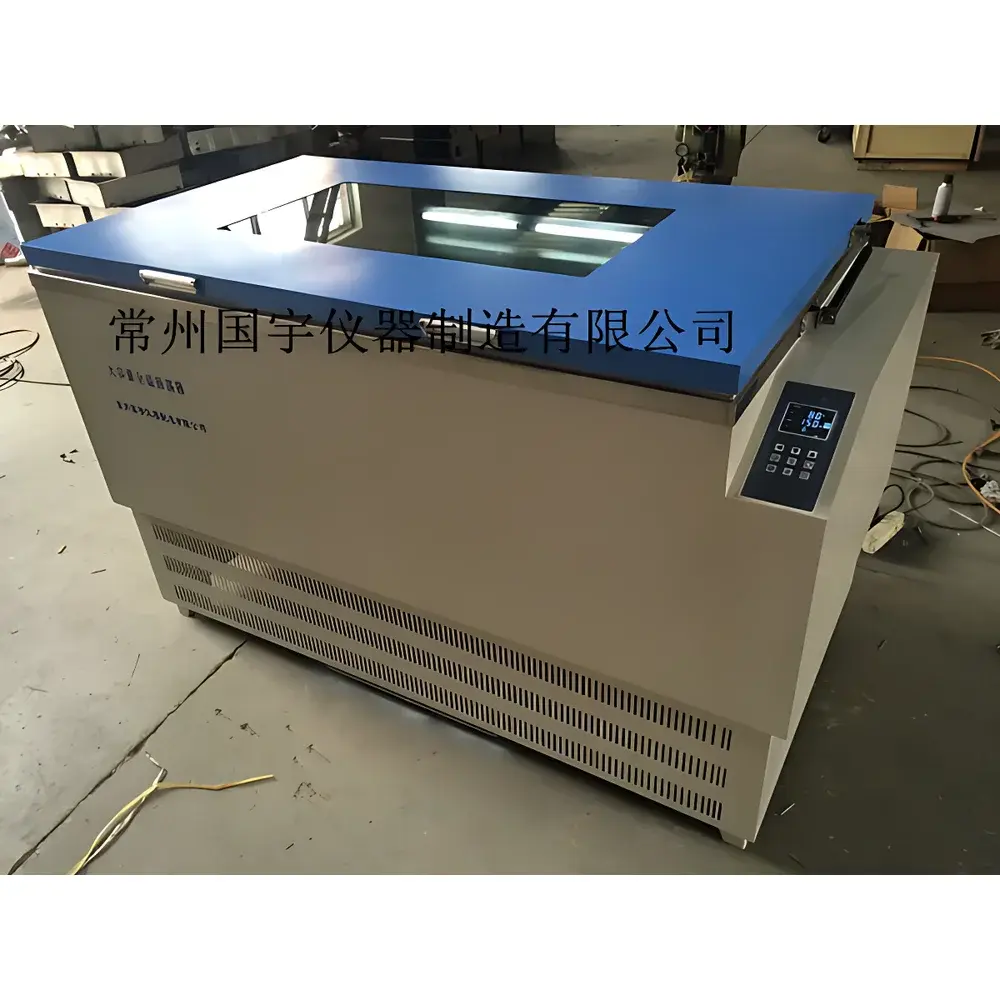
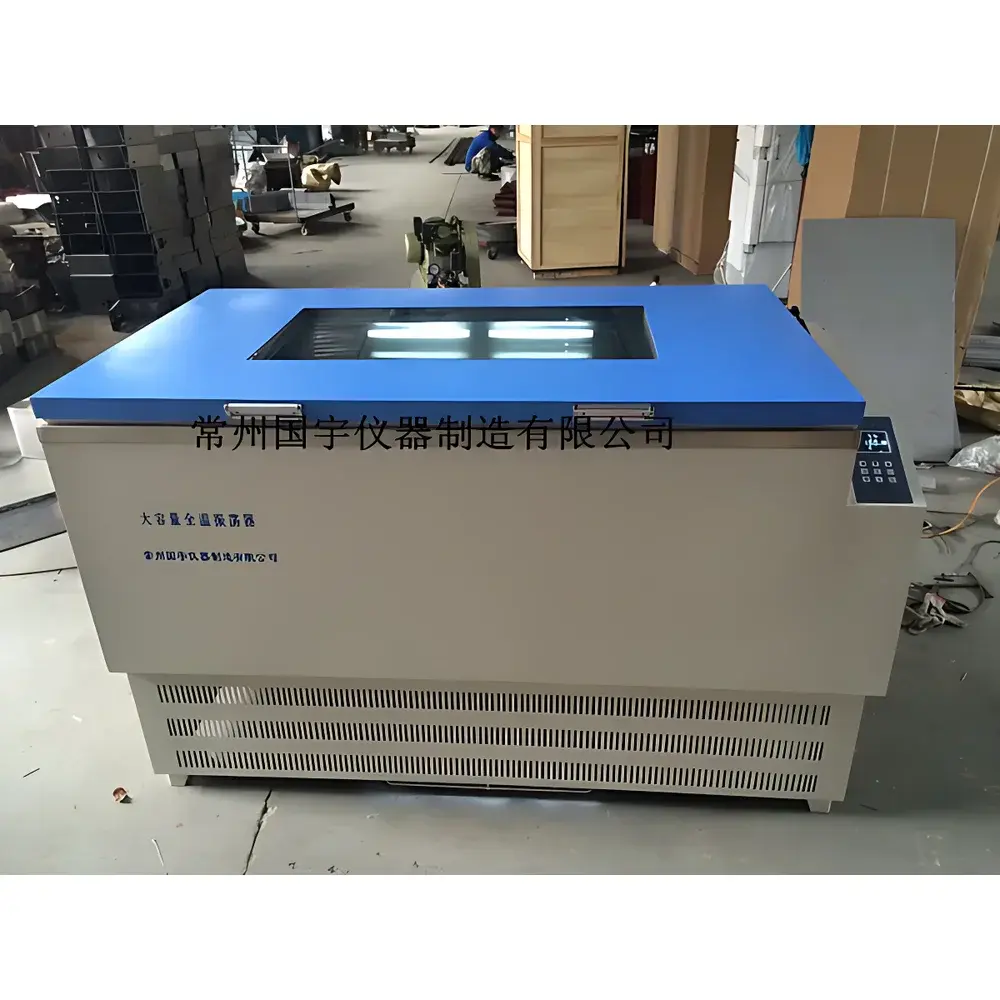
The CZGY DQHZ-2001A is a large-capacity, full-temperature air-bath orbital shaker incubator engineered for precise and reproducible cultivation of microbial, cellular, and enzymatic cultures under controlled thermal and mechanical agitation conditions. Unlike water-bath systems, this instrument employs forced-air convection as the primary heat transfer medium—ensuring uniform temperature distribution across the entire shaking platform while eliminating risks associated with liquid leakage, corrosion, or bath contamination. Its integrated design merges the functionality of a precision incubator and an orbital shaker into a single robust platform, supporting applications requiring simultaneous temperature regulation and consistent orbital motion (26 mm diameter). The unit operates across a biologically relevant temperature range—from refrigerated (4 °C) to elevated (60 °C) conditions—making it suitable for psychrophilic, mesophilic, and thermotolerant culture workflows. Core engineering features include a brushless DC motor for low-noise, maintenance-free operation over extended durations; a segmented LCD controller with fuzzy PID algorithm for high-stability thermal regulation; and a double-walled stainless steel chamber with optimized insulation for energy efficiency and minimal thermal gradient (<0.3 °C across platform at 37 °C).
Key Features
- Brushless DC motor delivering stable rotational speed across the full 40–300 rpm range (±1 rpm accuracy), with no carbon dust generation or commutator wear—ideal for uninterrupted long-term experiments (e.g., 72+ hr fermentation runs).
- Fuzzy PID temperature control system with ±0.5 °C accuracy and <0.2 °C short-term fluctuation, validated per ASTM E2500-13 guidelines for laboratory equipment qualification.
- Large viewing window with integrated LED illumination enables real-time visual monitoring of culture turbidity, pellet formation, or media clarity without opening the chamber.
- Spring-clamp platform accommodates standard Erlenmeyer flasks (250 mL × 72 or 500 mL × 50) with secure, tool-free attachment; compatible with universal adapter plates for tubes, deep-well plates, and custom vessels.
- Double-wall stainless steel construction (304 grade interior, powder-coated exterior) provides chemical resistance, structural rigidity, and thermal retention—critical for GLP-compliant labs where environmental consistency must be documented.
- Programmable timer (0–9999 minutes) supports unattended operation with automatic shutdown, reducing manual intervention and operator variability in routine QC assays.
Sample Compatibility & Compliance
The DQHZ-2001A supports a broad spectrum of biological and biochemical sample formats—including bacterial and yeast suspensions, mammalian cell suspension cultures, enzyme kinetics assays, antigen-antibody binding studies, and microbial growth profiling. Its air-bath architecture avoids cross-contamination risks inherent in shared water baths, aligning with ISO 13485:2016 requirements for medical device manufacturing environments. Temperature and timing parameters are traceable via on-device logging (non-volatile memory), satisfying basic audit trail needs for ISO/IEC 17025-accredited testing laboratories. While not inherently 21 CFR Part 11 compliant, the system can be deployed within validated workflows when paired with external electronic lab notebook (ELN) integration and procedural SOPs governing parameter entry, calibration verification, and maintenance records.
Software & Data Management
The DQHZ-2001A operates via an embedded microcontroller with local parameter storage—no proprietary software or PC interface is required for standard operation. All setpoints (temperature, speed, time) are retained after power cycling. For laboratories requiring digital data capture, optional RS-485 or analog 4–20 mA output modules (available upon request) enable connection to SCADA systems, building management platforms, or centralized lab monitoring dashboards. Calibration certificates for temperature and speed sensors can be supplied with NIST-traceable documentation, supporting IQ/OQ protocols during equipment qualification. Firmware updates are performed manually via USB interface using manufacturer-provided utilities, ensuring version control and change management compliance.
Applications
- Microbial growth curve analysis under variable temperature and agitation conditions (e.g., E. coli expression optimization at 30 °C vs. 37 °C).
- Production-scale seed train expansion in biopharmaceutical upstream processing (USP), particularly for non-adherent suspension cell lines.
- Enzyme activity screening across thermal gradients, including thermostability assessment and kinetic parameter derivation (Km, Vmax).
- Environmental microbiology studies involving soil slurry enrichment, wastewater biodegradation assays, and bioremediation pilot testing.
- Academic teaching labs conducting standardized BOD5 (Biochemical Oxygen Demand) determinations per APHA Standard Methods 5210B.
- Food safety labs performing aerobic plate counts (APC) and pathogen enrichment per ISO 4833-1:2013 and FDA BAM protocols.
FAQ
What is the maximum flask loading capacity for 1 L bottles?
The platform is mechanically rated for 26 mm amplitude at up to 300 rpm with 500 mL flasks. Loading 1 L bottles is not recommended due to center-of-mass displacement and potential resonance-induced instability.
Can the unit operate continuously at 4 °C with high humidity samples?
Yes—the compressor-based cooling system maintains stable sub-ambient temperatures; however, condensation may form inside the chamber if ambient humidity exceeds 70% RH. Use of desiccant trays or pre-drying samples is advised.
Is the spring clamp compatible with glass tubes or microcentrifuge racks?
Standard configuration supports only Erlenmeyer flasks. Optional universal adapter plates (CZGY part #ADP-UB-01) enable secure mounting of 15–50 mL conical tubes and 96-well deep-well plates.
How often does the unit require calibration verification?
Per ISO/IEC 17025, temperature and speed sensors should be verified annually using traceable reference standards—or after any impact event, major maintenance, or observed performance deviation.
Does the device support remote monitoring via Ethernet or Wi-Fi?
No native network connectivity is included. Remote supervision requires integration through optional I/O modules and third-party industrial gateways (e.g., Modbus TCP to MQTT bridges).