
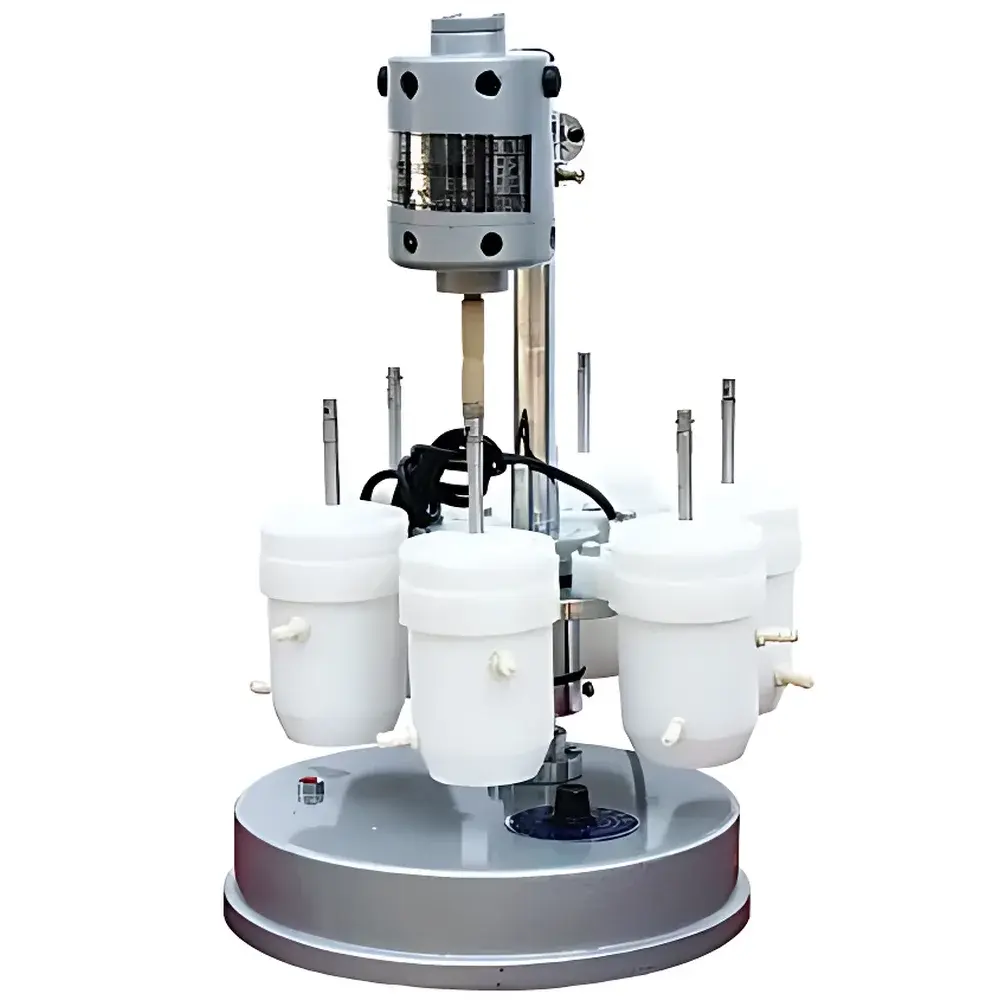
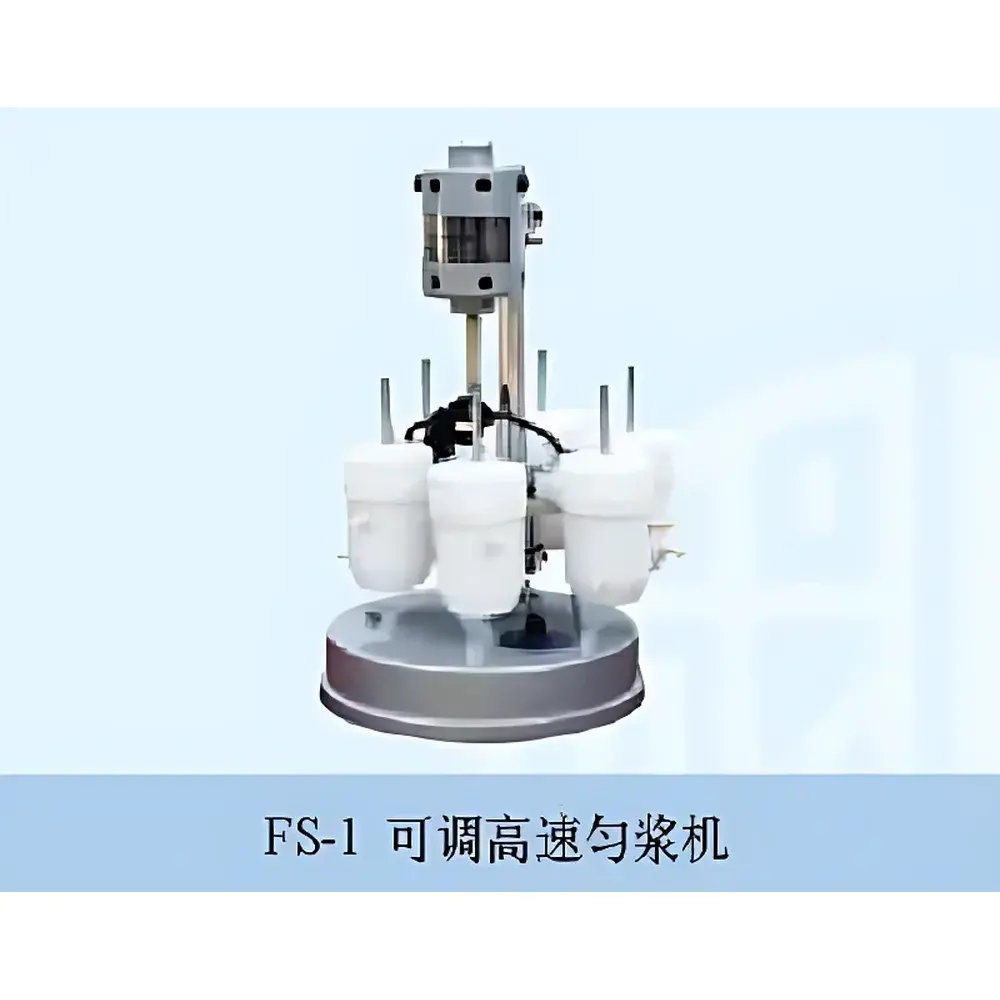
CZGY FS-1 Adjustable High-Speed Homogenizer
| Brand | CZGY |
|---|---|
| Origin | Jiangsu, China |
| Manufacturer Type | Direct Manufacturer |
| Model | FS-1 |
| Power Consumption | 200 W |
| Input Voltage | 220 V ±10%, 50 Hz ±5 |
| Speed Range | 0–20,000 rpm (continuously adjustable) |
| Dimensions | 500 × 370 × 350 mm |
| Weight | 14 kg |
| Sample Vessel Capacity Options | 1–5 mL, 5–15 mL, 15–25 mL, 25–50 mL, 50–100 mL, 100–150 mL |
| Cooling/Heating Compatibility | Six temperature-controlled sample cups (compatible with external hot/cold baths) |
| Motor Type | 200 W single-phase series-wound micro-motor |
| Operating Mode | Continuous duty |
Overview
The CZGY FS-1 Adjustable High-Speed Homogenizer is a precision-engineered mechanical homogenization system designed for laboratory-scale cell disruption, tissue homogenization, emulsification, dispersion, and rapid wetting or dissolution of organic and inorganic compounds. It operates on the principle of high-shear mechanical homogenization—utilizing a rapidly rotating stainless-steel blade assembly driven by a robust 200 W series-wound motor capable of sustained rotational speeds up to 20,000 rpm. The device leverages controlled fluid dynamics within sealed sample vessels to generate intense localized shear stress, cavitation, and turbulent mixing—enabling efficient particle size reduction and uniform phase distribution. Its compact footprint, continuous-duty rating, and broad speed adjustability make it suitable for routine preparation of biological lysates, suspension-based formulations, polymer dispersions, and extraction matrices across academic, industrial, and regulatory-compliant research environments.
Key Features
- Continuously variable speed control (0–20,000 rpm) via analog rheostat, enabling precise optimization for shear-sensitive or highly viscous samples
- Six interchangeable vessel configurations (1–150 mL capacity range), each with dedicated blade assemblies and standardized mounting geometry
- Integrated temperature management support: six thermally isolated sample cups compatible with external heating/cooling baths (e.g., circulating water or ice-salt mixtures)
- Mechanically indexed vessel coupling system ensures coaxial alignment between motor shaft and blade shaft, minimizing vibration and bearing load under high-speed operation
- Grounded metal housing with integrated power indicator LED and zero-start safety logic—speed dial must be set to minimum prior to power activation
- Durable construction: cast aluminum chassis, corrosion-resistant stainless-steel blades, and sealed ball-bearing motor assembly rated for extended continuous use
- Compliance-ready design: meets general electrical safety requirements per IEC 61010-1 for laboratory equipment; grounding terminal provided for site-specific ESD and fault-current protection
Sample Compatibility & Compliance
The FS-1 accommodates a wide spectrum of sample types—including soft animal tissues (liver, spleen), plant material (leaves, seeds), microbial pellets, polymer solutions, pharmaceutical suspensions, and food-grade emulsions—provided vessel selection matches viscosity, volume, and thermal sensitivity. Each vessel set includes calibrated volume markings and chemically resistant glass or polypropylene options (user-supplied). While the instrument itself does not carry CE, UL, or FDA 510(k) certification, its operational parameters align with common method development frameworks referenced in ASTM D2892 (standard practice for mechanical dispersion), ISO 13320 (laser diffraction particle sizing sample prep), and USP <729> (light scattering assay for liposomal preparations). For GLP/GMP environments, users may implement documented SOPs covering calibration verification (tachometer validation), preventive maintenance logs (bearing lubrication every 6 months), and traceable blade replacement records.
Software & Data Management
The FS-1 is a manually operated analog instrument with no embedded firmware, digital interface, or data logging capability. This architecture ensures electromagnetic compatibility in sensitive instrumentation suites (e.g., adjacent to HPLC or mass spectrometers) and eliminates software validation overhead. Speed settings are recorded manually in lab notebooks alongside batch identifiers, sample IDs, and processing duration—supporting audit-ready documentation per 21 CFR Part 11 when paired with electronic lab notebook (ELN) systems. Optional external tachometers (contact or non-contact) may be used for periodic speed verification and calibration traceability.
Applications
- Pre-analytical sample preparation for proteomics and metabolomics workflows, including mammalian cell lysis and subcellular fractionation
- Routine homogenization of soil, sediment, or environmental samples prior to heavy metal extraction or microbial DNA isolation
- Formulation development in food science: stabilizing oil-in-water emulsions, dispersing functional ingredients (e.g., dietary fibers, probiotics)
- Pharmaceutical R&D: preparing nanosuspensions, wet-milling active pharmaceutical ingredients (APIs), and generating reference standards for dissolution testing
- Agricultural biotechnology: extracting nucleic acids from fibrous plant tissues or fungal mycelia
- Quality control labs: standardizing particle size distribution in pigment dispersions, catalyst slurries, or cosmetic bases
FAQ
What is the recommended maintenance schedule for the FS-1?
Motor bearings require relubrication with high-temperature grease (e.g., Klüberplex BEM 41-132) every six months under normal use. Carbon brushes should be inspected quarterly; replace if worn below 8 mm length or exhibiting excessive sparking.
Can the FS-1 be used for sterile applications?
Yes—provided vessels and blades are autoclaved separately (121 °C, 15 psi, 20 min) and assembled under aseptic conditions. Note: the motor housing and electronics are not autoclavable.
Is speed calibration required, and how is it performed?
Periodic verification using a certified handheld tachometer is recommended. Record deviations >±3% at three setpoints (e.g., 5,000 / 10,000 / 18,000 rpm) and adjust rheostat zero-point if necessary.
What safety certifications does the FS-1 hold?
It complies with general laboratory equipment safety principles per IEC 61010-1. CE, UL, or CSA listing is not included; users must verify local regulatory acceptance prior to installation.
Are replacement blades and vessels available as spare parts?
Yes—CZGY supplies OEM-matched blade sets, vessel adapters, and rubber coupling sleeves. All components are serialized and traceable to manufacturing lot numbers.



