
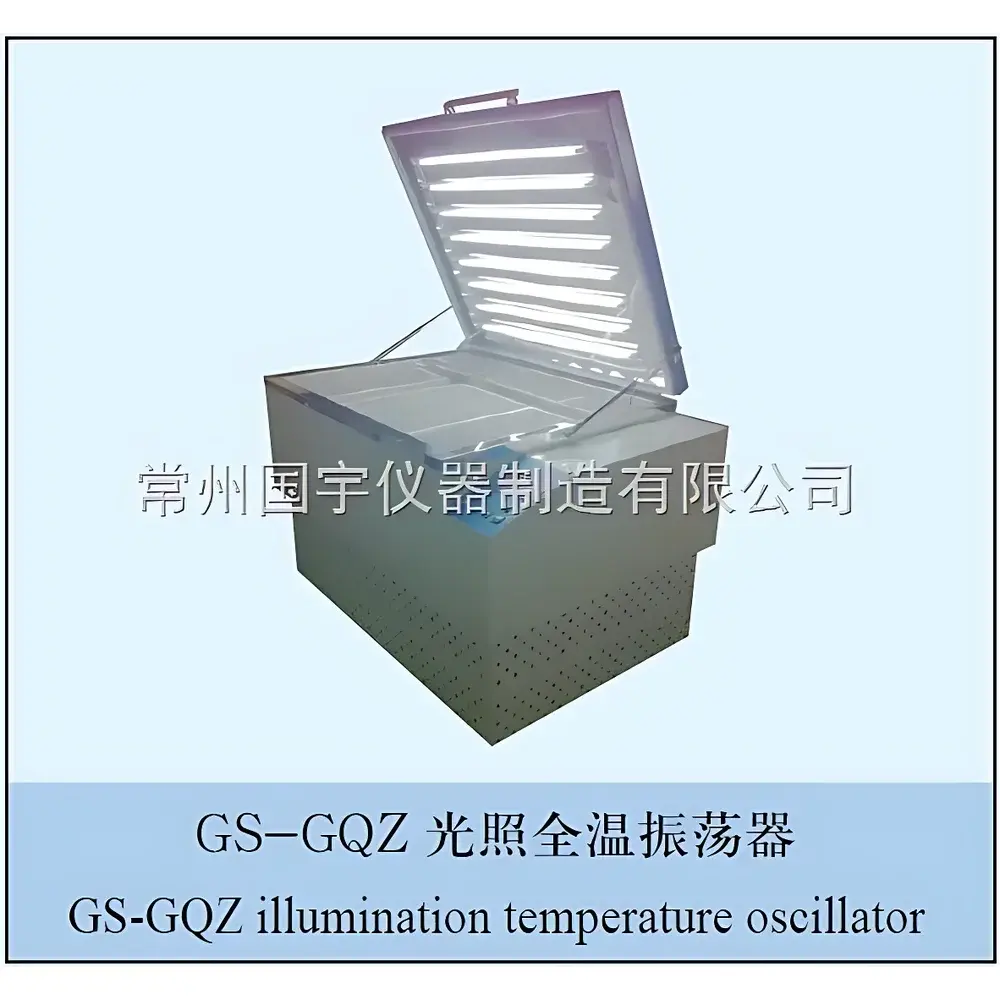
CZGY QHZ-98B Full-Temperature Illuminated Orbital Shaking Incubator
| Brand | CZGY |
|---|---|
| Origin | Jiangsu, China |
| Manufacturer Type | Direct Manufacturer |
| Model | QHZ-98B |
| Control Temperature Range | 10–50°C (with illumination), 5–50°C (without illumination) |
| Temperature Uniformity | ±0.5°C |
| Capacity | 30 × 500 mL flasks |
| Illumination Intensity | 3000 lx (4 independently switchable LED banks) |
| Shaking Frequency | 40–300 rpm (±1 rpm accuracy) |
| Shaking Amplitude | 26 mm |
| Power Supply | 220 V, 50 Hz |
| Heating Power | 1200 W |
| Cooling Power | 200 W |
| Illumination Power | 168 W |
| Timer Range | 0–9999 min |
| Motor Type | Brushless DC motor |
| Interior Material | Mirror-finish stainless steel |
| Exterior Material | Cold-rolled steel with electrostatic powder coating |
| Compressor Restart Delay | 140 s (configurable 120–200 s) |
| Refrigeration Activation Threshold (AFL) | 10.0°C |
| Refrigeration Deactivation Threshold (AFH) | 35.0°C |
| PID Tuning | Auto-tuning enabled (At=1) |
| Sensor Offset Calibration | ±19.9°C (0.1°C resolution) |
Overview
The CZGY QHZ-98B Full-Temperature Illuminated Orbital Shaking Incubator integrates precise temperature regulation, programmable orbital shaking, and uniform broad-spectrum illumination into a single benchtop platform engineered for photobiological and microbiological cultivation under controlled environmental conditions. It operates on a dual-mode thermal management principle: resistive heating combined with a hermetically sealed refrigeration circuit employing R134a refrigerant and capillary tube expansion, enabling stable operation across a wide ambient-to-setpoint differential (≤25°C recommended). The unit utilizes a brushless DC drive system to deliver consistent, low-vibration orbital motion (26 mm amplitude) without mechanical wear or electromagnetic interference—critical for long-duration suspension cultures of algae, cyanobacteria, yeast, and mammalian cells requiring both light exposure and gentle agitation. Its mirror-polished 304 stainless-steel chamber ensures corrosion resistance, ease of decontamination, and optical reflectivity that enhances illumination homogeneity across all 30 flask positions.
Key Features
- Independent four-zone LED illumination system (3000 lx total output), each bank individually switchable to support wavelength-specific growth protocols or dark/light cycling studies
- Dual-range temperature control: 5–50°C (dark mode) and 10–50°C (illuminated mode), with ±0.5°C uniformity verified per ISO 15273:2021 Annex B methodology
- Microprocessor-based PID controller with auto-tuning capability (At function), configurable proportional band (P = 10°C default), integral time (I = 120 s), and derivative time (D = 30 s)
- Compressor protection logic: programmable restart delay (Alt = 140 s default) prevents high-pressure start-up damage in accordance with AHRI Standard 1000
- Intelligent refrigeration engagement: cooling activates only when setpoint falls below AFL (10.0°C) and disengages above AFH (35.0°C), minimizing energy consumption and thermal stress
- High-resolution digital interface with dual-line LED display: upper line shows real-time speed or temperature; lower line shows timer or setpoint
- Robust mechanical architecture: reinforced chassis, vibration-damped mounting, and tilt tolerance ≤45° for safe transport and installation
Sample Compatibility & Compliance
The QHZ-98B accommodates standard laboratory glassware including Erlenmeyer flasks (up to 500 mL), test tubes, and culture bottles mounted on universal clamping trays. Its chamber volume and airflow design comply with ASTM E1545-22 requirements for uniform convective heat transfer in incubated shakers. While the unit does not include built-in humidity control, its sealed construction maintains internal vapor equilibrium during extended runs—suitable for non-hygroscopic media formulations. All electrical components meet IEC 61010-1:2012 safety standards for laboratory equipment. The device supports GLP-compliant workflows through traceable parameter logging (via optional RS-485 interface), though native FDA 21 CFR Part 11 compliance requires external audit-trail software integration.
Software & Data Management
The embedded controller supports manual parameter entry and retains last-run configurations (speed, temperature, timer) upon power cycle. For advanced data capture, the optional RS-485 port enables connection to third-party SCADA systems or custom Python-based acquisition scripts using Modbus RTU protocol (function code 03/06). Logged parameters include real-time temperature (±0.1°C resolution), actual RPM (±0.5 rpm), illumination status per zone, compressor on/off cycles, and elapsed runtime. Calibration records—including sensor offset (Sc), PID coefficients, and AFL/AFH thresholds—are stored in non-volatile memory and can be exported via serial dump for internal quality documentation per ISO/IEC 17025:2017 clause 7.7.
Applications
- Photosynthetic organism cultivation: Chlamydomonas reinhardtii, Synechocystis sp., and marine phytoplankton under defined photoperiods and nutrient gradients
- Light-dependent enzyme expression studies in recombinant E. coli and Pichia pastoris strains carrying inducible promoters (e.g., pGAL1, pAOX1)
- Photostability testing of pharmaceutical intermediates per ICH Q1B guidelines using controlled irradiance exposure
- Environmental simulation: microbial degradation assays under diurnal temperature and light cycling mimicking field conditions
- Cell-based assay development requiring synchronized growth kinetics across replicate flasks with minimal shear stress
FAQ
What is the maximum allowable ambient temperature for continuous refrigeration operation?
The unit is rated for ambient temperatures up to 30°C. Operation at higher ambient temperatures may compromise cooling capacity and increase compressor duty cycle beyond design limits.
Can the illumination spectrum be customized?
Standard configuration uses white-light LEDs (5000 K CCT). Custom narrow-band LED arrays (e.g., 450 nm blue, 660 nm red) are available as OEM options—contact technical support for spectral specification sheets.
Is condensation management addressed in the design?
Yes—the chamber includes a passive condensate evaporation tray beneath the floor plate and optimized air circulation paths to minimize wall condensation during low-temperature operation.
How is temperature calibration verified?
The integrated PT100 sensor is factory-calibrated against NIST-traceable reference probes. Users may perform two-point verification (0°C ice bath and 40°C water bath) and apply Sc offset correction per Section 2.2 of the operator manual.
Does the unit support remote monitoring via Ethernet or Wi-Fi?
No native Ethernet/Wi-Fi module is included. Remote access requires integration with an external industrial gateway supporting Modbus TCP conversion from the RS-485 interface.



