
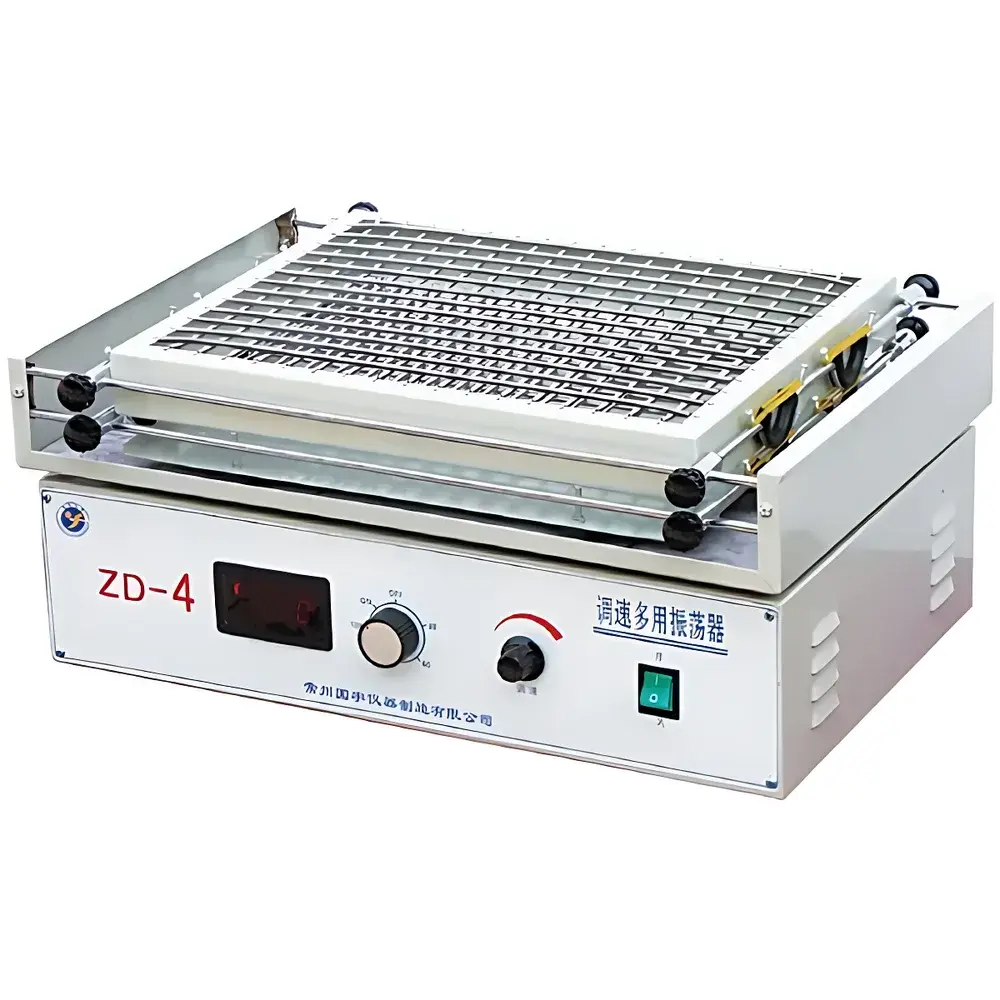
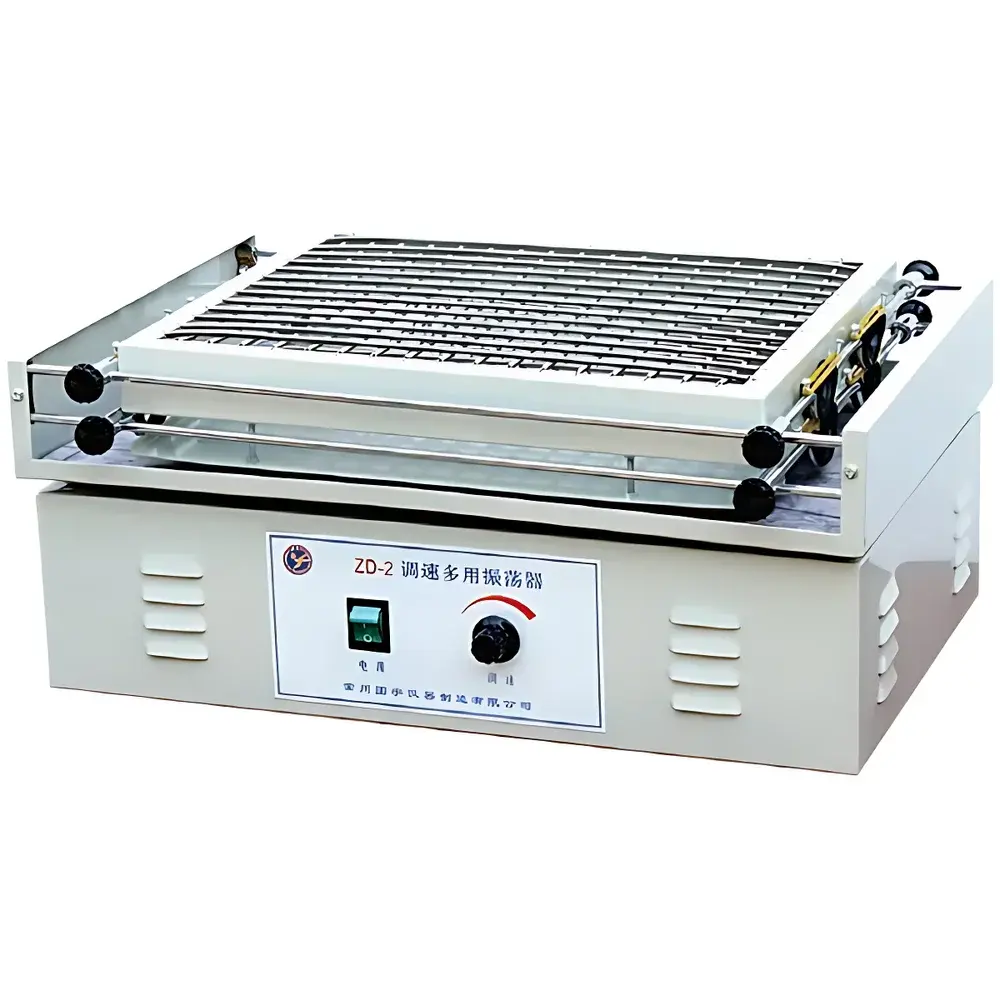
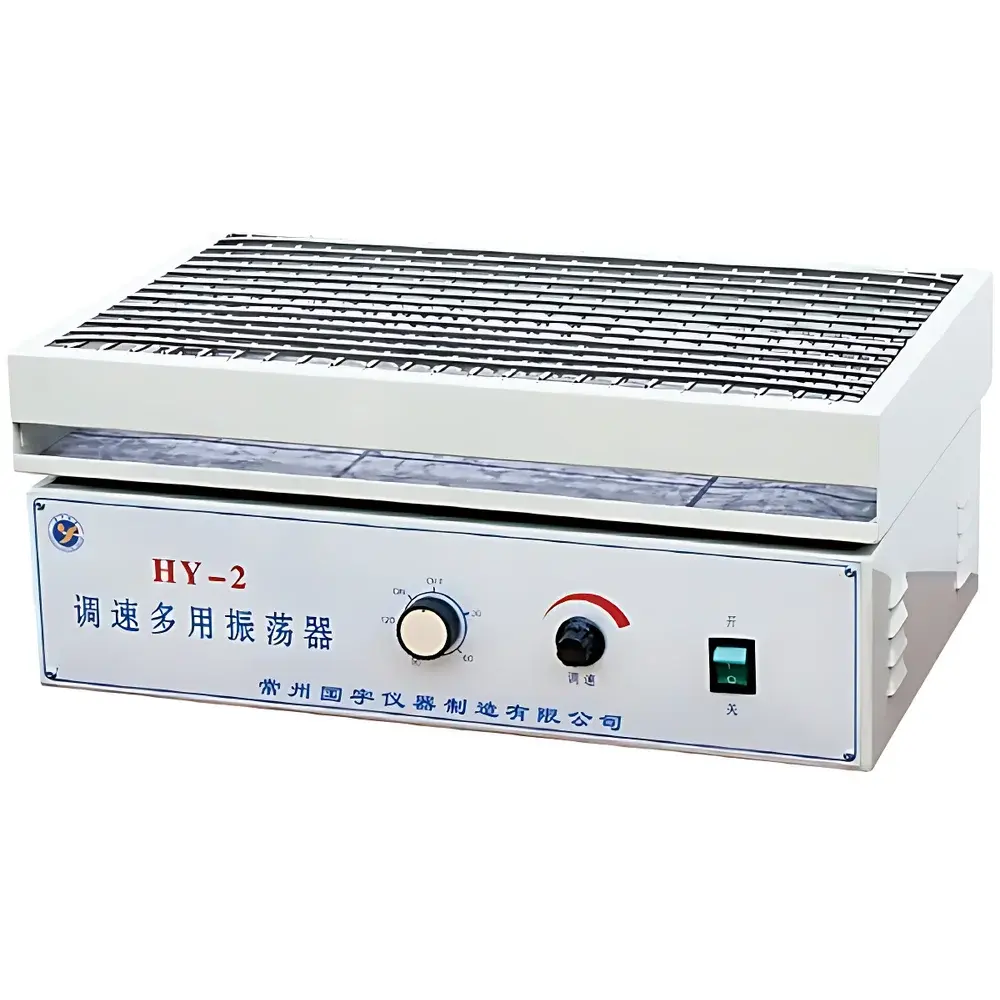
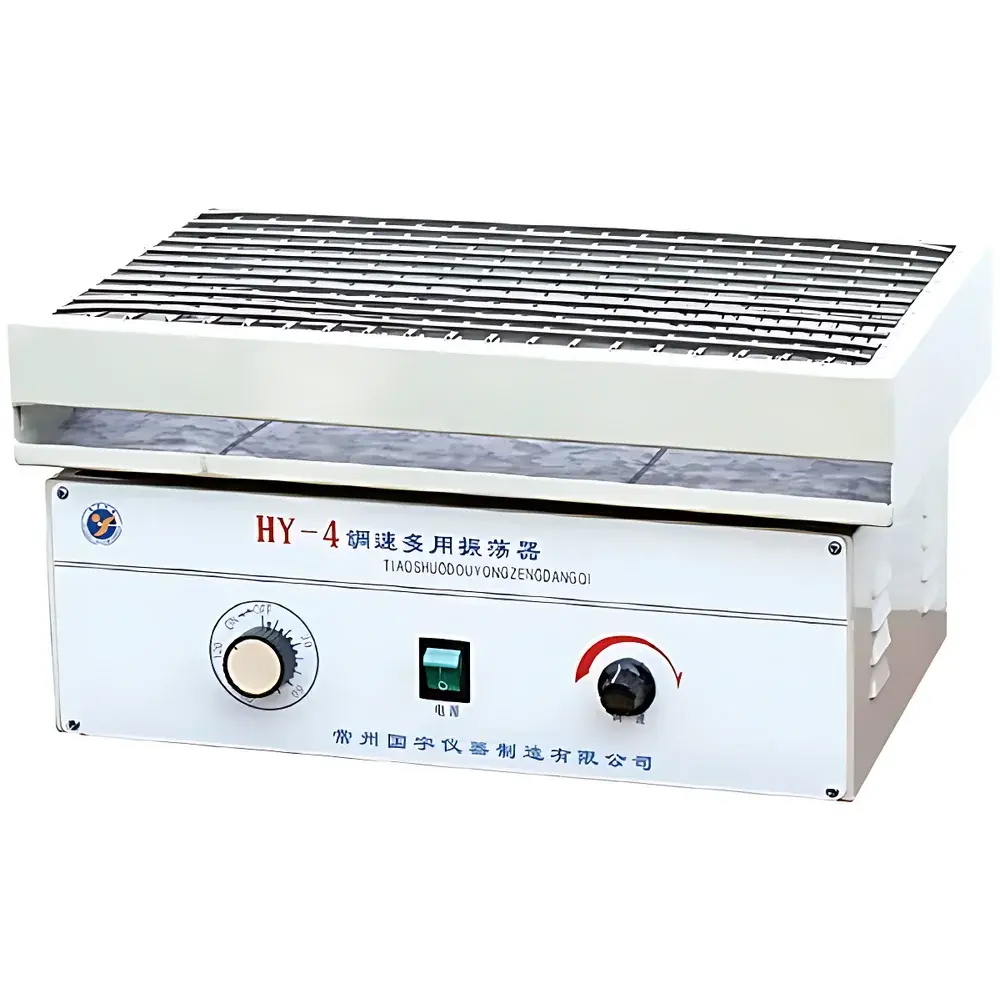
CZGY ZD-4 Digital Speed-Controlled Multi-Purpose Reciprocal Shaker
| Brand | CZGY |
|---|---|
| Origin | Jiangsu, China |
| Manufacturer Type | Direct Manufacturer |
| Model | ZD-4 |
| Instrument Category | General-Purpose Reciprocal Shaker |
| Timer Range | 0–120 min |
| Oscillation Frequency | 0–300 rpm |
| Oscillation Amplitude | 20 mm |
| Number of Platforms | 1 |
| Load Capacity | 20 kg |
| Platform Dimensions | 43 × 26 cm |
| External Dimensions | 50 × 37 × 23 cm |
| Operating Mode | Reciprocal (Linear Back-and-Forth) |
| Power Supply | Standard AC Mains |
| Display | LED Digital Speed Readout |
Overview
The CZGY ZD-4 Digital Speed-Controlled Multi-Purpose Reciprocal Shaker is an entry-level, robust benchtop shaker engineered for routine sample mixing, suspension homogenization, and culture agitation in life science laboratories. It operates on a mechanical reciprocal motion principle—driven by an eccentric cam mechanism—to generate linear back-and-forth oscillation across a single flat platform. Unlike orbital or rotary shakers, the ZD-4’s reciprocating action delivers high-shear mixing suitable for applications requiring vigorous suspension of particulates, cell disaggregation, or reagent resuspension without centrifugal separation effects. Its low center-of-gravity structural design ensures mechanical stability during continuous operation at variable speeds up to 300 rpm, minimizing resonance-induced vibration transmission to adjacent equipment. The instrument is intended for ambient-temperature use only (non-thermostatic), making it appropriate for pre-incubation mixing, sample preparation prior to centrifugation or filtration, and general-purpose agitation in molecular biology, microbiology, environmental testing, and quality control labs.
Key Features
- Digital LED speed display with real-time rpm readout for precise process repeatability and operator verification
- Mechanically actuated analog timer (0–120 minutes) with “continuous run” mode selection for unattended operation
- Stainless steel-reinforced platform (43 × 26 cm) supporting up to 20 kg total load — compatible with standard Erlenmeyer flasks (up to 2 L), test tubes, Petri dishes, and up to five 2-L separatory funnels
- Adjustable amplitude of 20 mm peak-to-peak displacement optimized for efficient mixing of viscous or dense suspensions
- Low-noise induction motor with integrated thermal protection and factory-lubricated bearings (No. 1 calcium–sodium grease)
- Sturdy steel frame with non-slip rubber feet; designed for long-term reliability under daily laboratory use
Sample Compatibility & Compliance
The ZD-4 accommodates a broad range of container formats including glass and plastic conical flasks (50 mL to 2 L), centrifuge tubes (15–50 mL), multi-well plates (when secured with clamps), and standard separatory funnels. Its 20 mm stroke enables effective wetting and dispersion of insoluble compounds, microbial pellets, and precipitated proteins. While not certified to ISO/IEC 17025 or GLP-compliant validation protocols out-of-the-box, the shaker supports traceable operation when used in conjunction with external calibration logs and maintenance records. Its mechanical timer and analog speed control meet basic requirements for documented procedures under ISO 9001-based QA systems and internal SOPs governing sample preparation steps in pharmaceutical QC, academic research, and environmental monitoring workflows.
Software & Data Management
The ZD-4 is a standalone hardware device with no embedded microprocessor, network interface, or data logging capability. All operational parameters—including speed setting and timer activation—are manually configured via front-panel dials. This architecture eliminates software-related validation overhead and ensures deterministic behavior across power cycles. For laboratories operating under FDA 21 CFR Part 11 or EU Annex 11 requirements, users may integrate the shaker into validated processes by maintaining manual logbooks that record date, operator ID, speed (rpm), duration (min), load configuration, and visual inspection status before and after each run. Routine preventive maintenance—including biannual bearing relubrication and quarterly inspection of drive belts and electrical connections—is recommended to sustain performance integrity over extended service life.
Applications
- Resuspension of bacterial and yeast cell pellets prior to lysis or DNA extraction
- Mixing of immunoassay reagents and ELISA plate coatings
- Agitation of soil or water samples for heavy metal leaching and nutrient extraction
- Pre-incubation shaking of mammalian cell cultures in static flasks before transfer to bioreactors
- Homogenization of polymer solutions, colloidal suspensions, and nanoparticle dispersions
- Extraction of plant metabolites using solvent-based maceration protocols
- Standardized mixing of calibration standards and reference materials in environmental testing labs
FAQ
Is the ZD-4 suitable for temperature-controlled applications?
No. The ZD-4 is a non-thermostatic shaker and must be operated in a climate-stabilized environment (15–30 °C) with adequate ventilation.
What maintenance schedule is recommended for sustained performance?
Inspect electrical connections and mechanical fasteners quarterly; lubricate drive bearings every six months with No. 1 calcium–sodium grease (filling ~1/3 of bearing cavity); replace drive belt if cracking or slippage is observed.
Can the platform accommodate uneven or asymmetric loads?
For optimal balance and minimal vibration, distribute mass symmetrically across the platform. If fewer than full capacity containers are used, counterbalance empty positions with identical-weight dummy vessels filled with water or buffer.
Does the unit include regulatory documentation for international shipment?
Yes — CE-marked units ship with Declaration of Conformity (DoC), RoHS compliance statement, and English-language user manual compliant with IEC 61010-1 safety standards.
Is speed calibration traceable to national standards?
While the unit does not include factory-calibrated tachometer certification, users may verify rpm accuracy using a handheld optical tachometer traceable to NIST or equivalent metrology institute.




