
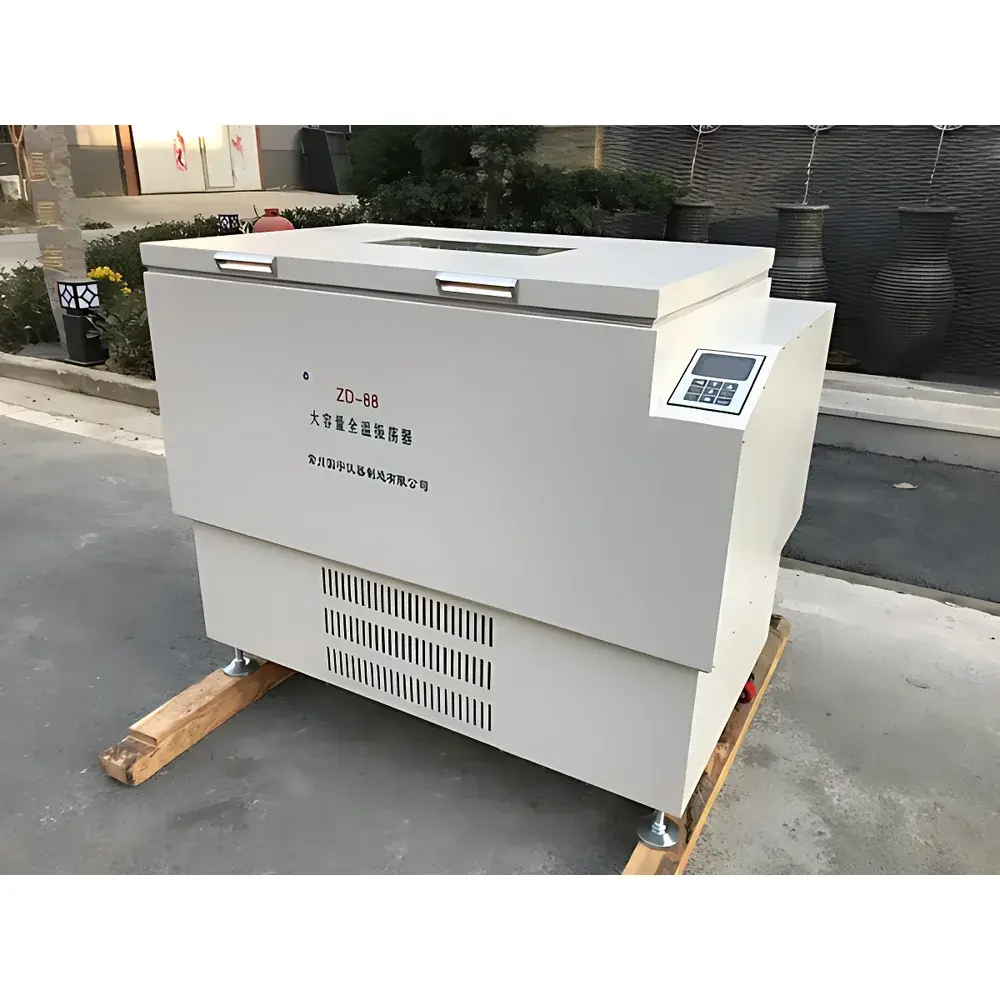
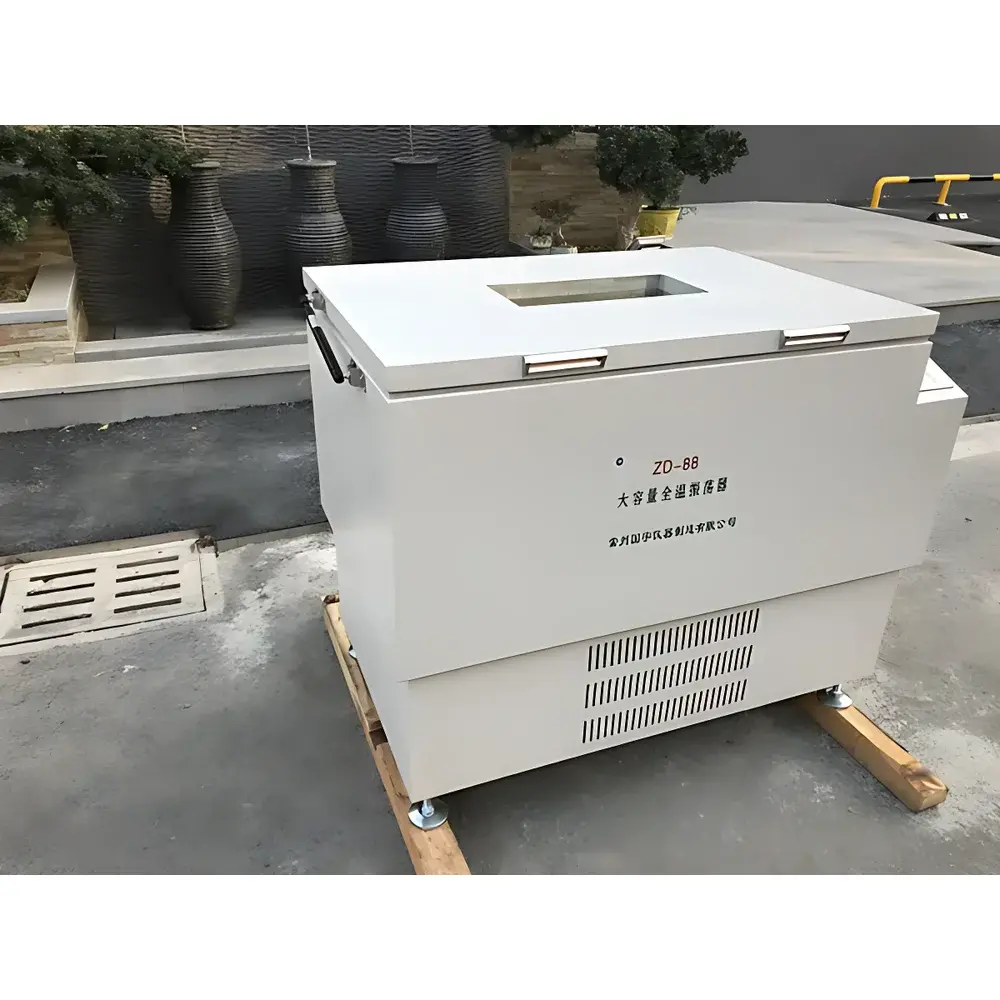
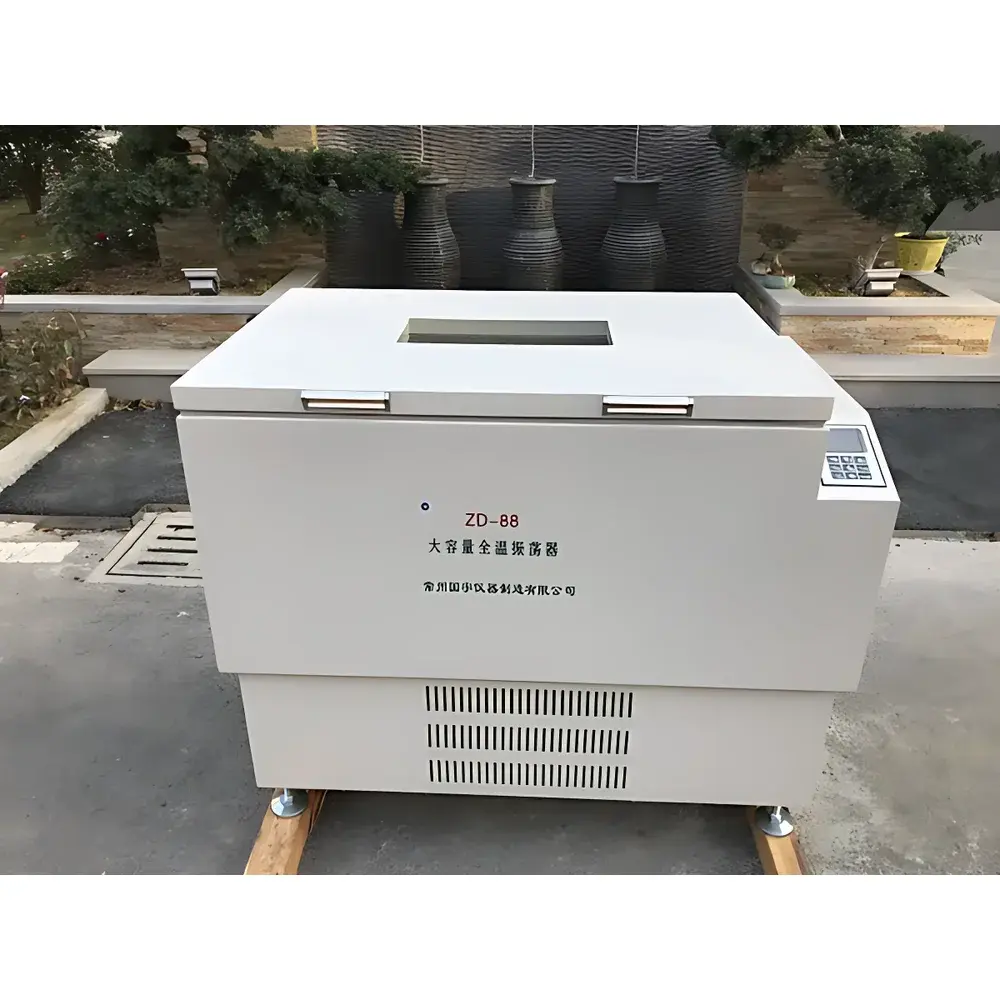
CZGY ZD-88 High-Capacity Air-Bath Constant-Temperature Orbital Shaker
| Brand | CZGY |
|---|---|
| Origin | Jiangsu, China |
| Manufacturer Type | Direct Manufacturer |
| Instrument Type | Air-Bath Constant-Temperature Shaker / Orbital Shaker |
| Model | ZD-88 |
| Timing Range | 0–9999 min |
| Oscillation Frequency | 30–300 rpm |
| Orbit Diameter | 20 mm |
| Temperature Range | 5–60 °C |
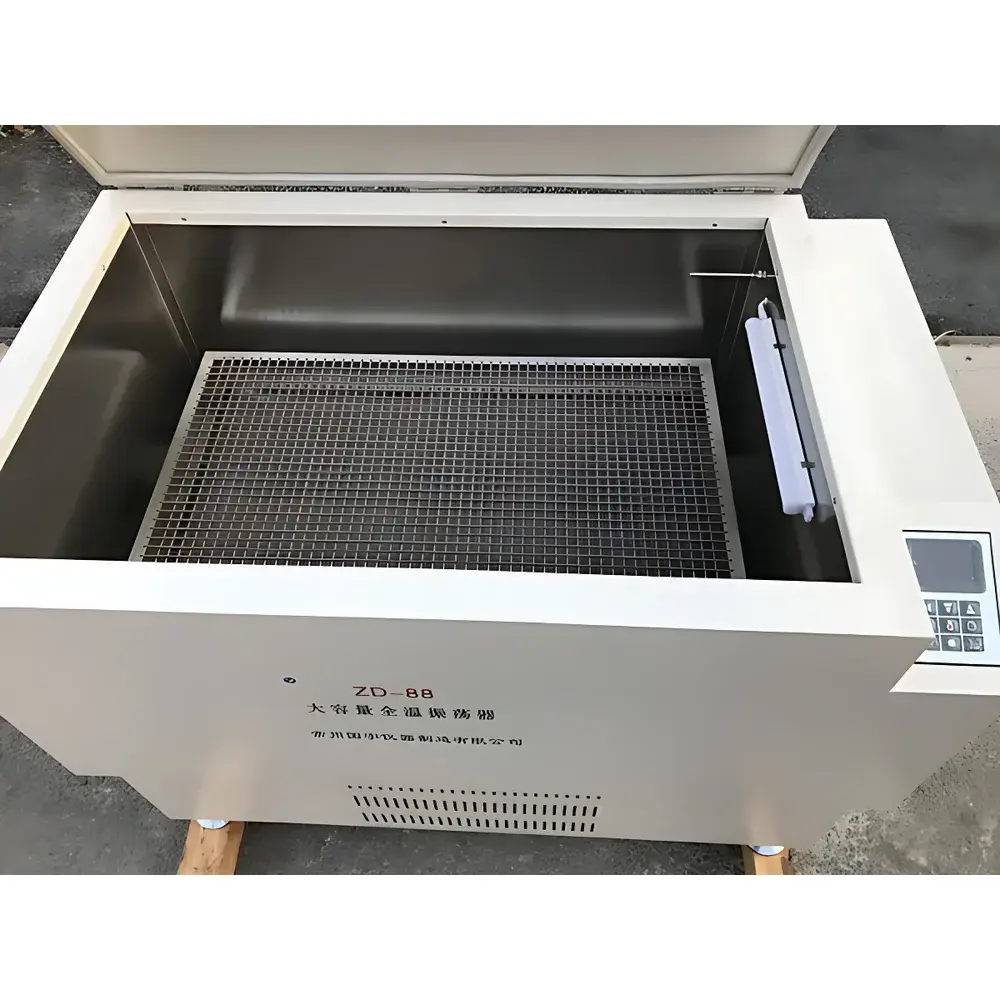
| Shelf Quantity | 1 stainless steel platform |
| Power Supply | 220 V, 50 Hz |
| Heating Power | 1200 W |
| Compressor Power | 196 W |
| Platform Dimensions | 850 × 500 mm |
| Speed Accuracy | ±0.5 rpm |
| Motor Type | Brushless DC Motor |
Overview
The CZGY ZD-88 is a high-capacity air-bath constant-temperature orbital shaker engineered for precision-controlled incubation and agitation of biological samples under stable thermal conditions. Unlike water-bath shakers, this instrument employs forced-air convection within an insulated chamber to achieve uniform temperature distribution across the entire oscillating platform—eliminating condensation risks and enabling operation across a broad ambient-compatible range (5–60 °C). Its orbital motion—characterized by a fixed 20 mm diameter circular trajectory—provides gentle yet effective mixing ideal for cell suspension cultures, microbial fermentation, enzyme kinetics assays, and hybridization protocols where shear-sensitive organisms or fragile aggregates must be preserved. The unit integrates a brushless DC motor for maintenance-free, low-vibration, long-duration operation with consistent rotational stability across its full speed range (30–300 rpm), making it suitable for both routine QC workflows and extended unattended experiments.
Key Features
- Brushless DC motor ensuring continuous operation with <±0.5 rpm speed stability and zero carbon dust generation—critical for GLP-compliant laboratories.
- Fuzzy PID temperature control algorithm coupled with segmented LCD display for intuitive real-time monitoring of setpoint, actual temperature, and elapsed time.
- Double-walled stainless steel chamber with high-efficiency insulation and a large transparent front window equipped with LED illumination—enabling non-invasive visual observation without thermal disturbance.
- Single robust stainless steel platform (850 × 500 mm) rated for uniform load distribution up to 25 kg, accommodating multiple flasks (up to 5 L each), deep-well plates, or custom-sized culture vessels.
- Independent dual-timer functionality: separate programmable countdowns for temperature stabilization and oscillation duration (0–9999 minutes each), supporting multi-stage experimental protocols.
- Integrated safety architecture including over-temperature cutoff, motor stall detection, and automatic power-down on door opening—meeting IEC 61010-1 requirements for laboratory equipment.
Sample Compatibility & Compliance
The ZD-88 supports standard microbiological and cell culture formats including Erlenmeyer flasks (50–5000 mL), baffled flasks, Petri dishes, multi-well plates, and roller bottles. Its air-bath design avoids direct liquid contact with heating elements, eliminating contamination pathways common in water-bath systems—making it compatible with sterile technique requirements per ISO 13408-1 and USP . The chamber’s stainless steel interior and smooth-radius corners facilitate cleaning validation per FDA 21 CFR Part 11 Annex 11 guidelines. While not certified for Class II biosafety applications, the unit complies with EN 61326-1 (EMC) and EN 61010-1 (safety) for general-purpose life science instrumentation use in academic, pharmaceutical, and food testing laboratories.
Software & Data Management
The ZD-88 operates via embedded firmware with no external PC dependency; however, all critical operational parameters—including temperature setpoint, speed, timers, and real-time sensor readings—are logged internally with timestamping. Optional RS-232 or USB-to-serial interface (available upon request) enables integration with LIMS or ELN platforms for automated data export in CSV format. Audit trail functionality records user-initiated changes (e.g., parameter edits, start/stop events) with operator ID fields—supporting traceability requirements under GLP and GMP frameworks. Firmware updates are delivered via secure encrypted firmware packages validated against SHA-256 checksums.
Applications
- Microbial growth studies requiring precise temperature–agitation coupling (e.g., E. coli expression optimization, yeast propagation).
- Mammalian and insect cell suspension cultures in serum-free or low-shear media formulations.
- Antibody-antigen binding assays and nucleic acid hybridization under controlled kinetic conditions.
- Environmental microbiology: BOD testing, bioremediation simulation, and wastewater treatment inoculum activation.
- Food safety labs: pathogen enrichment (e.g., Salmonella, Listeria) per ISO 6579 and AOAC 998.10 protocols.
- Pharmaceutical R&D: excipient solubility screening, dissolution rate profiling, and stability-indicating shake-flask studies.
FAQ
What is the maximum recommended load capacity for the platform?
The platform is structurally rated for up to 25 kg distributed evenly; exceeding this may compromise speed stability and temperature uniformity.
Can the ZD-88 operate continuously for 72+ hours?
Yes—its brushless motor and thermally optimized heat exchange system support uninterrupted operation when ambient temperature remains ≤30 °C and ventilation clearance ≥10 cm on all sides.
Is calibration documentation provided with the instrument?
A factory calibration certificate (traceable to NIST standards) is included, covering temperature accuracy (±0.3 °C at 37 °C) and speed verification (±0.5 rpm) at three points across the range.
Does the unit meet FDA 21 CFR Part 11 requirements for electronic records?
When configured with optional data logging and user authentication modules, the system supports Part 11 compliance—including electronic signatures, audit trails, and record retention controls.
What maintenance intervals are recommended?
Visual inspection of fan filters every 3 months; annual verification of PID loop response and thermal uniformity mapping using calibrated PT100 probes per ISO/IEC 17025 guidelines.





