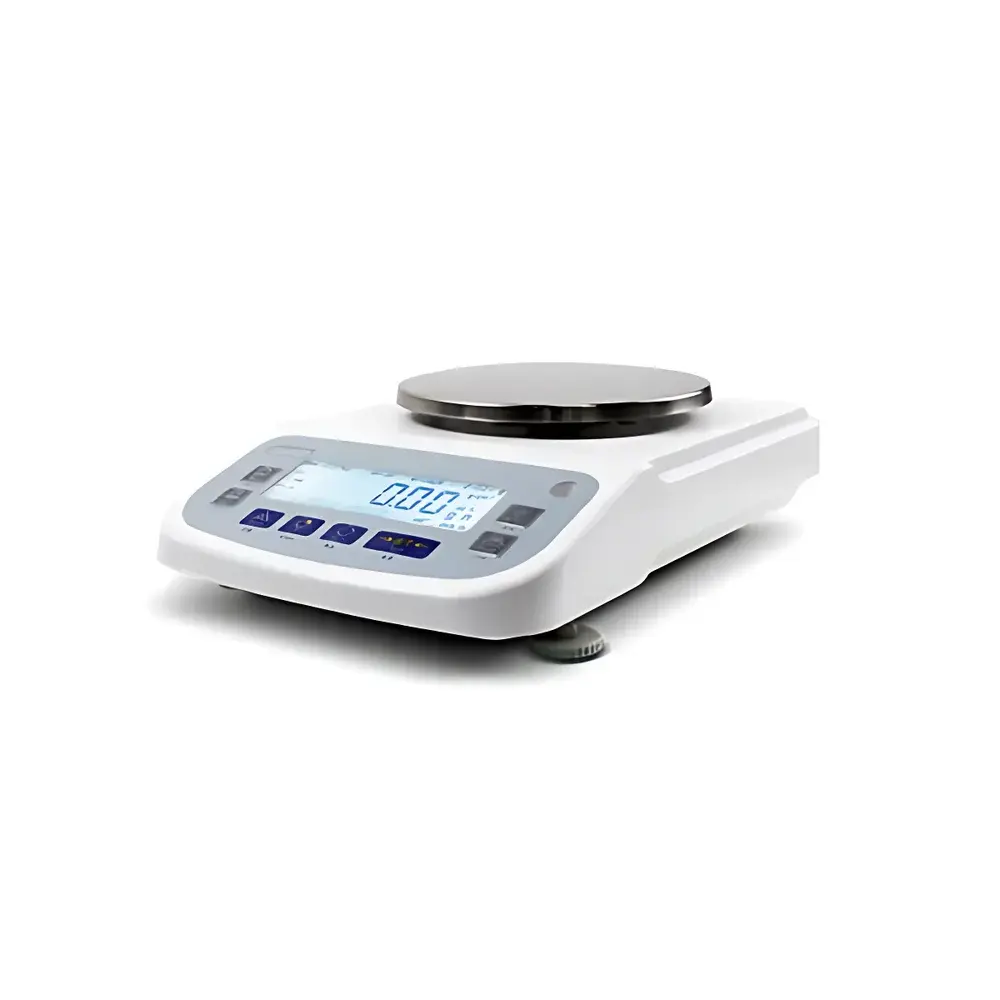
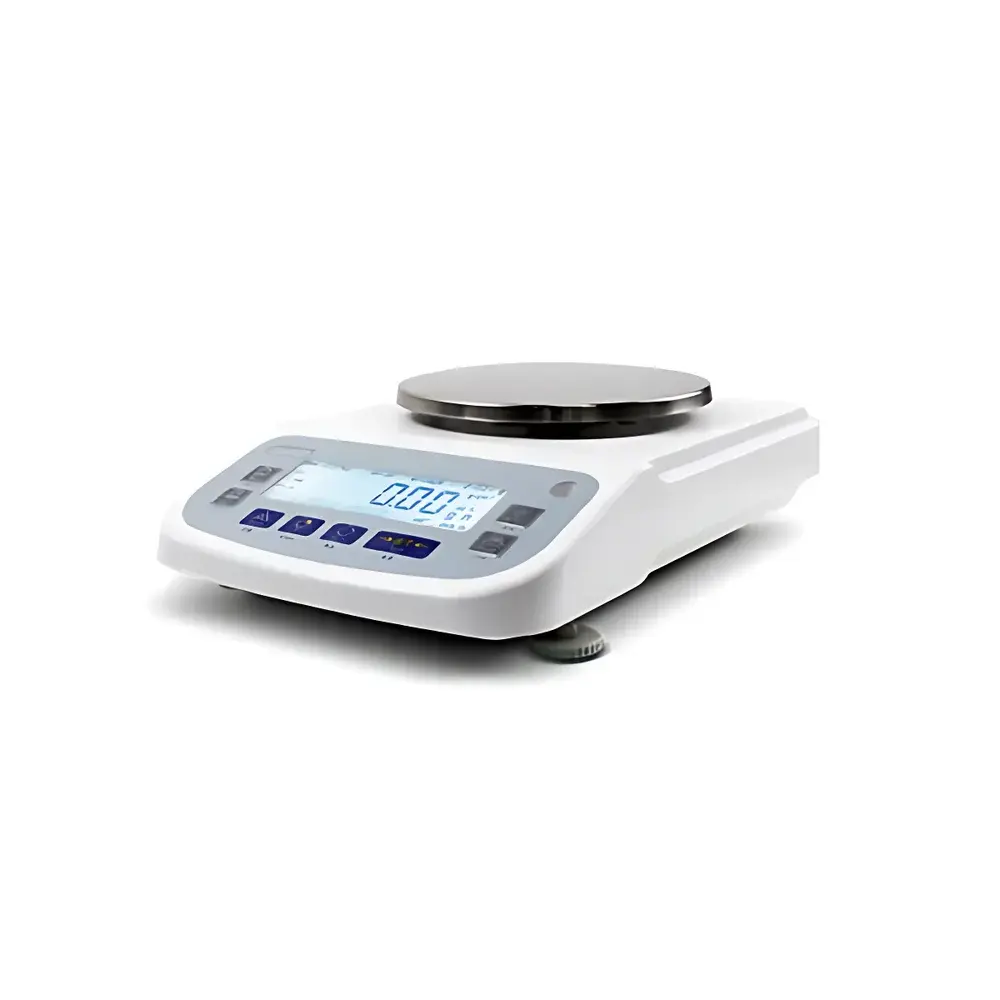
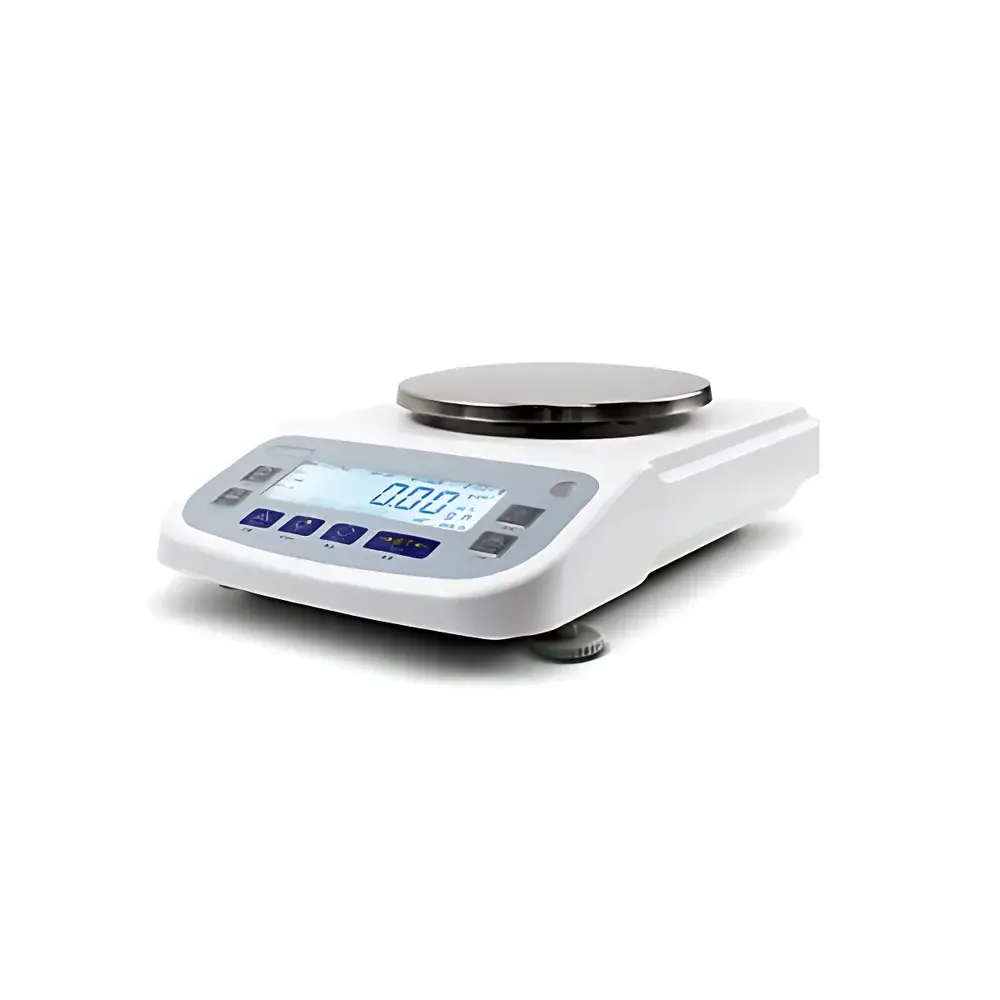
D&A ES1035A Semi-Micro Balance
| Brand | D&A |
|---|---|
| Origin | Tianjin, China |
| Model | ES1035A |
| Max Capacity | 120 g |
| Readability | 0.01 mg |
| Repeatability | ±0.02 mg |
| Linearity | ±0.02 mg |
| Calibration | Automatic Internal Calibration |
| Stabilization Time | ≤2.5 s |
| Operating Temperature | 10–30 °C |
| Operating Humidity | 20–80 %RH |
| Pan Diameter | Ø90 mm |
| Chamber Height | 230 mm |
| Display | Adjustable LCD (185 × 100 mm) |
| Interface | RS232 (300–9600 bps) |
| Power | 220 V AC / 50 Hz input |
| Accuracy Class | Class I (per OIML R76) |
Overview
The D&A ES1035A Semi-Micro Balance is an OIML Class I precision weighing instrument engineered for laboratories requiring high-resolution mass measurement in the 0.01 mg readability range. Based on electromagnetic force compensation (EMFC) technology, it delivers stable, drift-resistant performance under typical ambient lab conditions (10–30 °C, 20–80 %RH). Unlike analytical balances with front-mounted sensors, the ES1035A employs a rear-positioned EMFC transducer—minimizing mechanical coupling between user interaction and load cell response. This architecture enhances long-term stability and reduces sensitivity to operational perturbations such as keypad actuation or air currents near the weighing chamber. Its 120 g maximum capacity and dual-range functionality (31 g / 0.01 mg and 120 g / 0.1 mg) support both ultra-precise micro-weighing tasks and broader semi-micro applications—including gravimetric standard preparation, pharmaceutical active ingredient dosing, catalyst loading, and reference material verification.
Key Features
- Rear-mounted electromagnetic force compensation sensor for enhanced mechanical isolation and signal integrity
- Modular design with physically separated display unit and weighing module—eliminating vibration transmission during data entry or parameter adjustment
- Optimized dynamic response algorithm for micro-addition workflows: maintains reading stability while accelerating settling time during sequential powder or liquid dispensing
- Extendable high-contrast LCD display (185 × 100 mm) with ergonomic tilt adjustment for multi-angle viewing and reduced parallax error
- Removable transparent glass draft shield with full 360° sample visibility—designed for rapid disassembly, cleaning, and compliance with ISO 17025 traceability protocols
- Multi-mode weighing: standard mass, percentage, piece counting, and net/gross/tare functions
- Unit conversion across metric and imperial systems: g, mg, ct, oz, lb, and custom user-defined units
- RS232 serial interface supporting bidirectional communication with LIMS, ELN, or statistical process control software—configurable baud rates (300–9600 bps)
Sample Compatibility & Compliance
The ES1035A accommodates samples up to Ø90 mm in diameter and 230 mm in height within its enclosed weighing chamber. Its open-bottom chamber geometry permits compatibility with tall vessels, crucibles, and custom sample holders. The balance conforms to OIML R76-1 (2017) requirements for Class I instruments and meets relevant clauses of ISO 9001:2015 for metrological traceability. Internal calibration satisfies GLP/GMP documentation needs when paired with audit-trail-capable host software. While not FDA 21 CFR Part 11–certified out-of-the-box, its RS232 output enables integration into validated environments where electronic records are governed by ALCOA+ principles (Attributable, Legible, Contemporaneous, Original, Accurate).
Software & Data Management
Data export via RS232 supports ASCII-based output formats compatible with Microsoft Excel, LabWare LIMS, and custom Python/Matlab acquisition scripts. The balance transmits timestamped mass values, stability status flags, and unit identifiers—enabling automated logging without manual transcription. Optional terminal emulation (e.g., Tera Term) allows real-time monitoring and script-triggered zeroing or calibration sequences. For regulated environments, users may implement external validation protocols to verify data integrity, including checksum verification and sequence number tracking per NIST SP 800-53 controls.
Applications
- Preparation of certified reference materials (CRMs) and primary standards in metrology labs
- Gravimetric analysis of catalysts, nanomaterials, and high-purity reagents where mass uncertainty must remain below 0.05 % RSD
- Quality control of tablet coatings, excipient blends, and lyophilized formulations in pharmaceutical manufacturing
- Weighing of microgram-scale biological samples (e.g., tissue biopsies, enzyme aliquots) prior to HPLC or LC-MS injection
- Educational use in university chemistry and materials science laboratories requiring hands-on exposure to Class I weighing principles
FAQ
What is the difference between “semi-micro” and “ultra-micro” balance classifications?
Semi-micro balances (like the ES1035A) offer readability from 0.01 mg to 0.1 mg and capacities typically up to 200 g. Ultra-micro balances provide sub-0.01 mg resolution (e.g., 1 µg) but with lower max capacities (usually ≤50 g) and stricter environmental requirements.
Does the ES1035A meet ISO/IEC 17025 calibration requirements?
Yes—when used with documented internal calibration procedures, traceable temperature/humidity monitoring, and periodic external verification using certified weights (e.g., ASTM E617 Class E2), it fulfills Clause 6.5.2 of ISO/IEC 17025:2017 for equipment suitability.
Can the balance be integrated into a 21 CFR Part 11–compliant system?
The hardware itself does not include electronic signature or audit trail features. However, its RS232 output allows integration with validated third-party software that provides electronic records, user authentication, and change history—meeting Part 11 requirements at the system level.
Is the draft shield removable for cleaning without recalibration?
Yes—the glass shield is mechanically decoupled from the load cell assembly. Removal and reinstallation do not affect calibration status, provided no impact or torsional stress is applied to the weighing pan or sensor housing.
What is the recommended warm-up time before critical measurements?
Minimum 30 minutes is specified; however, for measurements requiring ≤0.02 mg repeatability, a 60-minute stabilization period is advised to ensure thermal equilibrium across the EMFC coil, magnet, and feedback circuitry.