
DataRay LLPS-50 / LLPS-200 / LBPS-250 Line and Large-Area Laser Beam Profilers
| Brand | DataRay |
|---|---|
| Origin | USA |
| Model | LLPS-50, LLPS-200, LBPS-250 |
| Spectral Range | 190–1150 nm (extendable to 163 nm–16 µm) |
| Minimum Line Width | 55 µm |
| Maximum Line Length | 200 mm |
| Maximum Measurable Beam Diameter | 250 mm |
| Pixel Resolution | 4 µm (system-dependent) |
| Transmission Screen Size (LBPS-250) | 200 × 200 mm |
| Effective Imaging Area (LBPS-250) | 170 × 170 µm |
| Lens Focal Length (LBPS-250) | 12.5 mm, f/1.4–f/16 |
| SNR | 2500:1 |
Overview
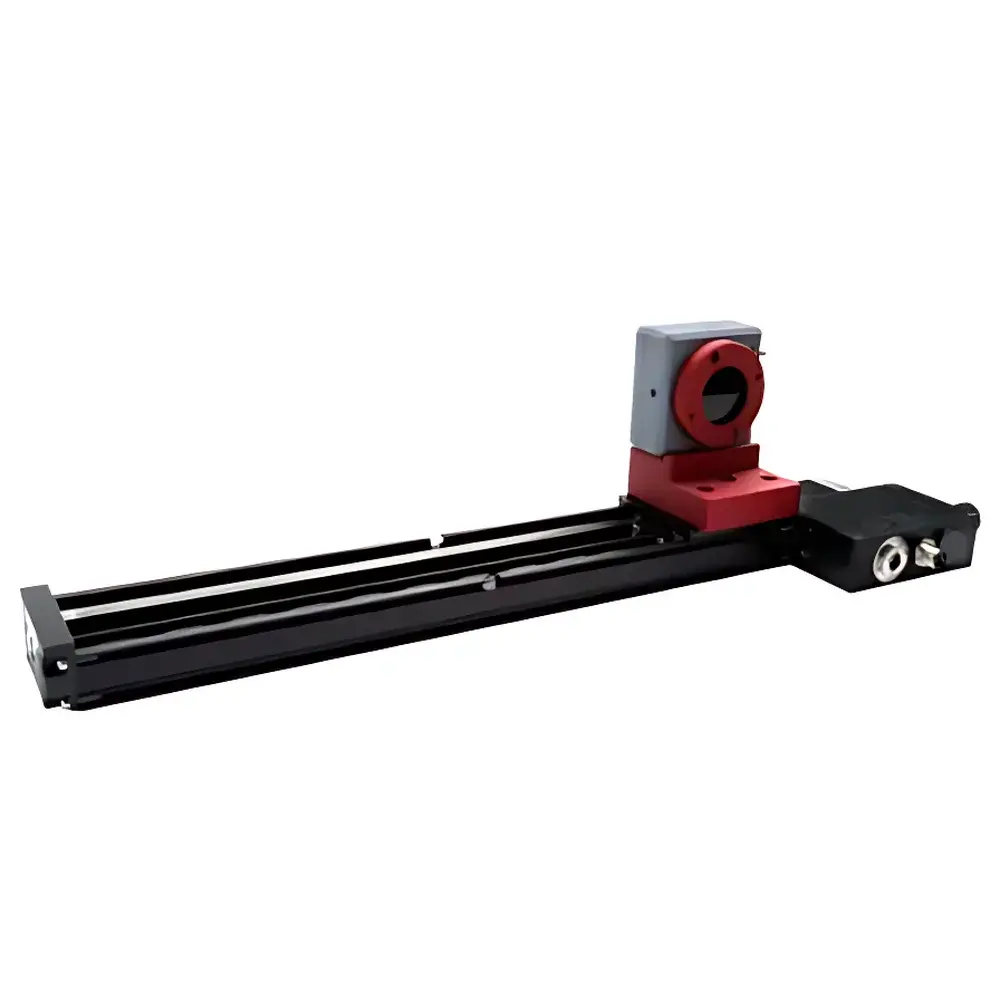
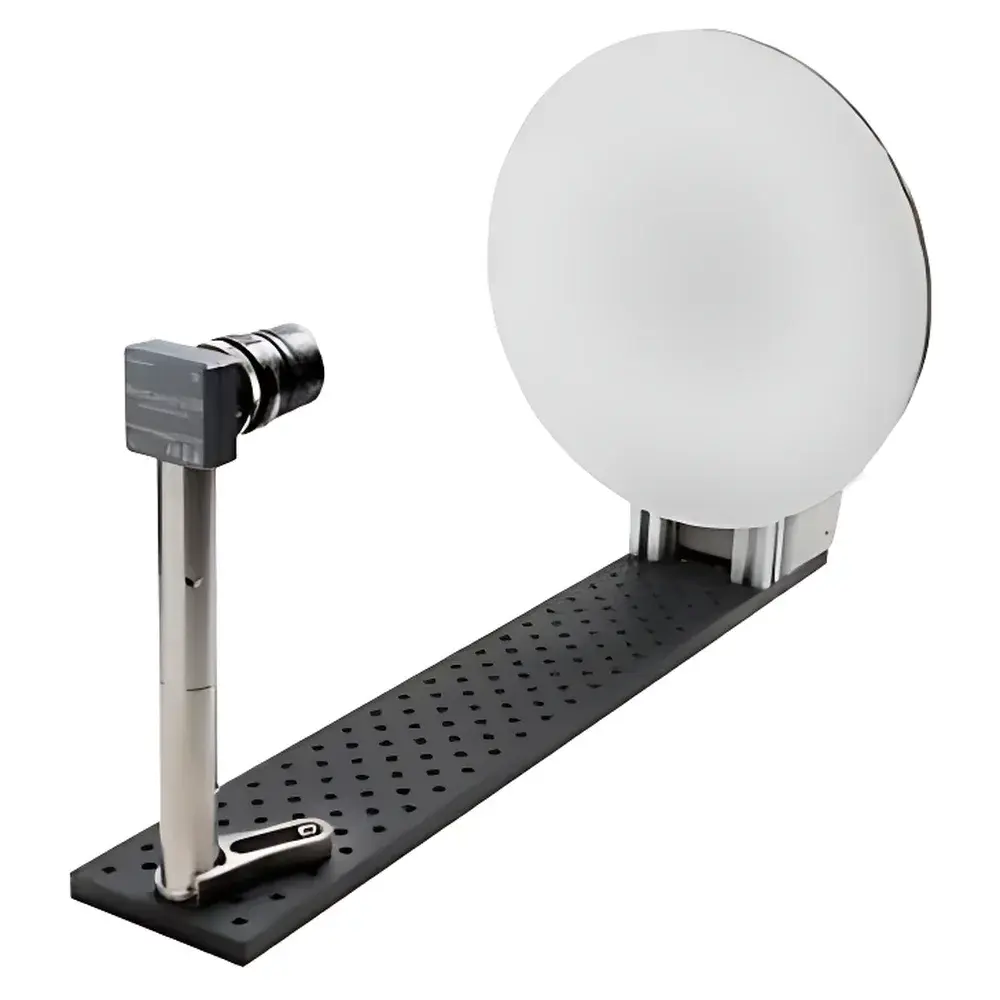
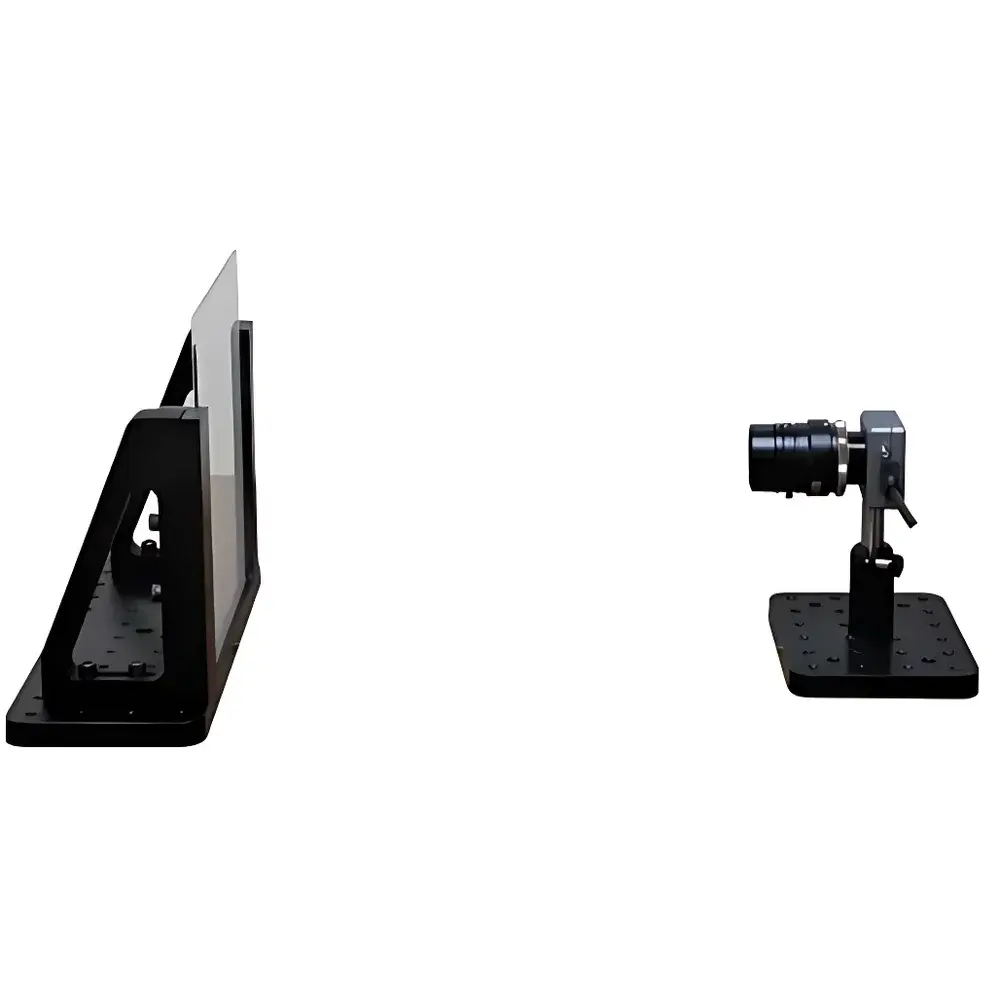
DataRay LLPS-50, LLPS-200, and LBPS-250 are precision-engineered laser beam profiling systems designed for quantitative characterization of non-Gaussian, elongated, and large-diameter optical beams. Unlike conventional 2D camera-based profilers optimized for circular or elliptical beams, these instruments employ specialized mechanical scanning and telecentric imaging architectures to deliver traceable, high-fidelity measurements of line-shaped and macro-scale irradiance distributions. The LLPS series utilizes a motorized translation stage coupled with a high-stability optical mount and real-time image stitching algorithms—enabling continuous, sub-pixel-aligned acquisition across up to 200 mm of linear extent. The LBPS-250 implements a calibrated relay imaging path: incident laser light is projected onto a uniform transmission screen, then imaged via an f/1.4–f/16 adjustable lens onto a WinCamD-LCM sensor, preserving spatial fidelity across beams up to 250 mm in diameter. All systems operate on the fundamental principle of direct intensity mapping—capturing raw pixel-wise irradiance data without interpolation or model fitting—ensuring compliance with ISO 11146-1:2019 and ASTM E1290-22 requirements for beam parameter determination.
Key Features
- Line beam profiling with automated stage traversal and seamless image stitching (LLPS-50/LLPS-200)
- Large-area beam measurement up to 250 mm diameter using calibrated telecentric imaging (LBPS-250)
- Spectral coverage from deep UV (190 nm) to near-IR (1150 nm); optional extension to VUV (163 nm) and mid-IR (16 µm) via interchangeable sensors
- Sub-55 µm minimum resolvable line width; 4 µm effective pixel resolution (dependent on sensor configuration)
- Real-time tilt angle calculation and centroid regression along the line axis for alignment-critical applications
- Adjustable f-number lens (f/1.4–f/16) for dynamic depth-of-field and signal-to-noise optimization
- 2500:1 system-level signal-to-noise ratio enabling low-power and pulsed-beam analysis
- Full 2D/3D intensity visualization, cross-sectional slicing, and export of ASCII, CSV, and HDF5 data formats
Sample Compatibility & Compliance
The LLPS and LBPS platforms accommodate free-space CW and pulsed lasers (ns to CW), including multimode diode bars, fiber-coupled line generators, excimer sources, and VCSEL arrays. Beam divergence, M² estimation, and D4σ diameter calculations conform to ISO 11146-1 and ISO 11146-2 standards. Software-generated reports include full audit trails, timestamped metadata, and user-defined calibration certificates—supporting GLP/GMP workflows and FDA 21 CFR Part 11 compliance when deployed with validated installation qualification (IQ) and operational qualification (OQ) documentation. Transmission screens meet MIL-PRF-13830B scratch-dig specifications; all optical components are AR-coated for minimal ghosting and reflectance <0.25% per surface.
Software & Data Management
BeamGage Professional v6.x provides unified control across all DataRay profiler models. The software implements ISO-compliant algorithms for beam width (D4σ, knife-edge, 1/e²), ellipticity, centroid stability, peak intensity location, and beam propagation analysis. Real-time stitching engine compensates for stage positioning drift and thermal expansion effects using embedded encoder feedback. Data export supports automated integration with LabVIEW, MATLAB, and Python (via native SDK). Audit logs record operator ID, instrument configuration, environmental conditions (optional external sensor input), and raw frame timestamps—enabling full traceability in regulated environments. Optional validation packages include IQ/OQ protocols, uncertainty budgets per GUM (JCGM 100:2008), and electronic signature support.
Applications
- Laser material processing: monitoring line focus uniformity in welding, cladding, and annealing systems
- LiDAR transmitter characterization for automotive ADAS and AR/VR depth-sensing modules
- VCSEL and diode bar array testing—including far-field pattern reconstruction and emitter binning
- Optical metrology: calibration of autocollimators, theodolites, and digital levels via line centroid tracking
- Biomedical laser delivery: verification of ophthalmic scanning beam geometry and ablation profile consistency
- LED and micro-LED panel homogeneity assessment for display backlighting and head-up displays
- Particle image velocimetry (PIV) sheet illumination profiling and jitter quantification
- Free-space optical communications: mode-matching analysis for fiber coupling efficiency optimization
FAQ
What beam parameters can be measured with the LLPS-200?
The LLPS-200 reports line width (minimum 55 µm), length (up to 200 mm), tilt angle, centroid position along both axes, peak irradiance, integrated power density, and M²-equivalent divergence metrics—all derived directly from stitched raw frames.
Is the LBPS-250 suitable for pulsed lasers?
Yes. When paired with a gated WinCamD-LCM sensor and external trigger synchronization, the LBPS-250 supports single-shot profiling of nanosecond pulses with temporal jitter <10 ns.
Can the system be integrated into an automated production line?
All models support Ethernet/IP and USB3 Vision protocols; BeamGage SDK includes C++, C#, and Python APIs for PLC and MES integration, including pass/fail decision logic and SPC chart generation.
Does DataRay provide NIST-traceable calibration?
Yes. Factory calibration includes certified reference apertures, neutral density filters, and collimated beam sources traceable to NIST SRM 2035 and SRM 2036, with full uncertainty budgets provided per ISO/IEC 17025.
How is beam uniformity quantified for line sources?
BeamGage calculates top-hat uniformity (TU), RMS flatness, and ISO 13694-defined modulation transfer function (MTF) along the line axis using spatial frequency domain analysis of the stitched profile.




