
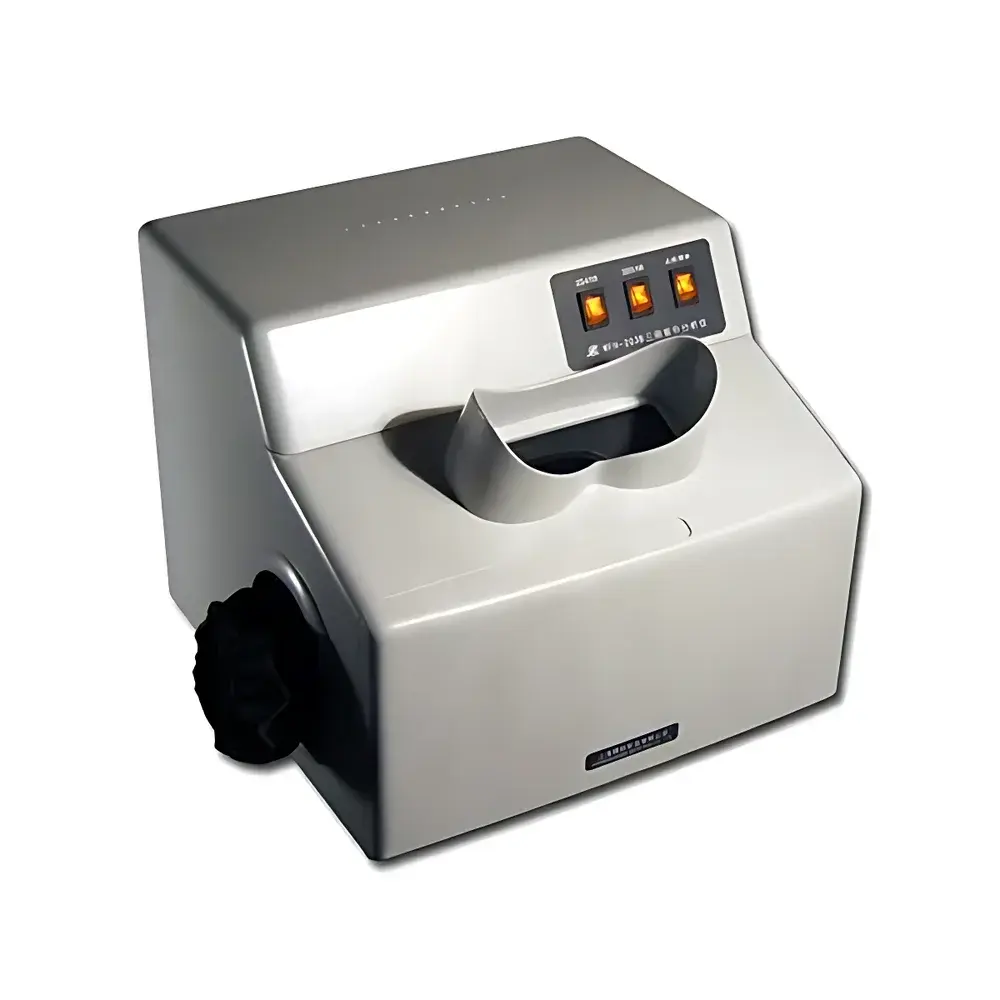
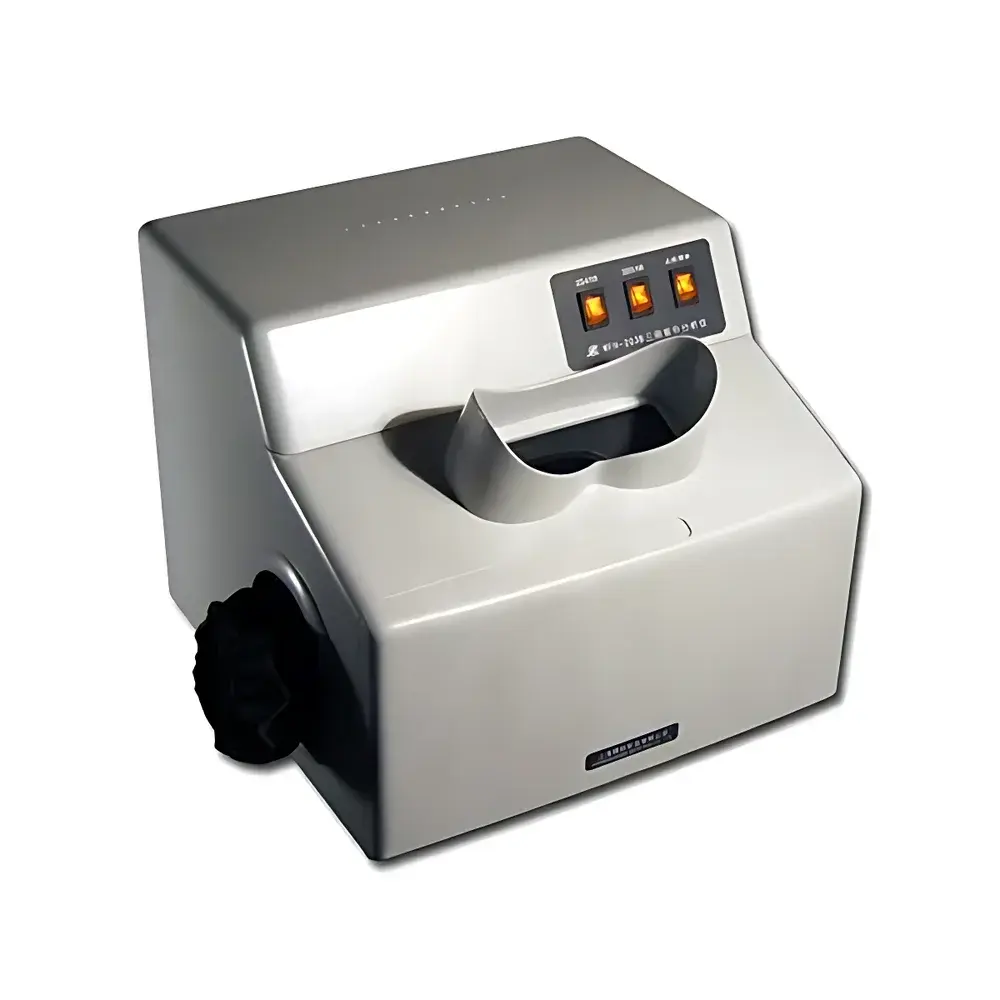
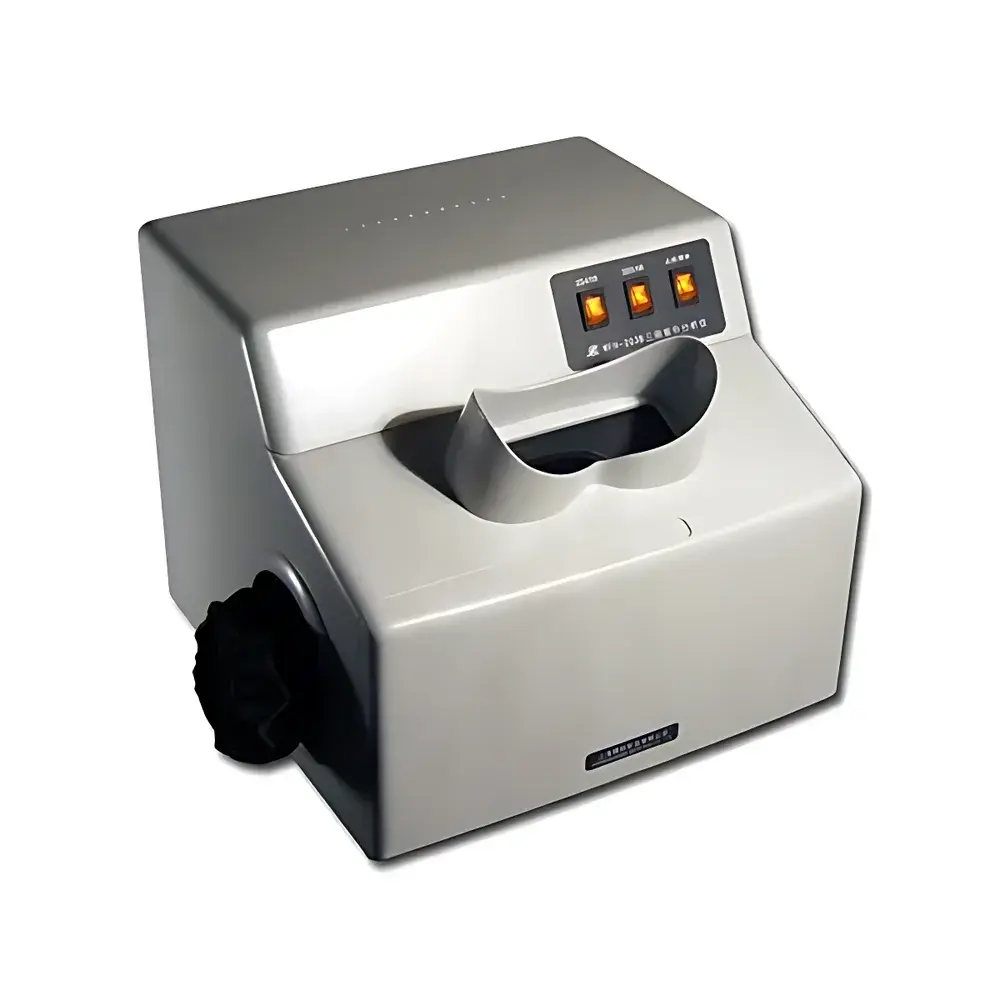
DELEITE DarkS-300B Darkroom Triple-Function UV Analyzer
| Brand | DELEITE |
|---|---|
| Origin | Shanghai, China |
| Manufacturer Type | Authorized Distributor |
| Product Origin | Domestic (China) |
| Model | DarkS-300B |
| Optical Design | Single-beam |
| Detector Type | Photocell |
| Wavelengths | 254 nm and 365 nm |
| Wavelength Accuracy | ±1 nm |
| Wavelength Repeatability | ≤±1 nm |
| Stray Light | ≤0.1% |
| Power Supply | AC 220 V ±10%, 50 Hz |
| Dimensions (L×W×H) | 300 × 300 × 270 mm |
| Illuminated Area | 250 × 250 mm |
| Filter Size | 150 × 50 mm |
| Weight | 3 kg |
Overview
The DELEITE DarkS-300B Darkroom Triple-Function UV Analyzer is a compact, single-beam ultraviolet transilluminator engineered for qualitative fluorescence detection and visualization in laboratory environments. It operates on the principle of narrow-band ultraviolet excitation—emitting discrete, high-intensity UV radiation at two fixed wavelengths: 254 nm (germicidal/UVC range) and 365 nm (long-wave UVA range). These wavelengths are selected to match common electronic transitions in aromatic compounds, nucleic acids, proteins, and conjugated fluorophores. The instrument integrates dual UV lamps with precision optical filters that suppress visible light emission, ensuring high signal-to-noise ratio during fluorescence observation. Its enclosed darkroom design eliminates ambient light interference, enabling consistent visualization of low-intensity fluorescent bands—particularly critical in thin-layer chromatography (TLC), paper chromatography, and nucleic acid gel documentation. Engineered for stability and thermal efficiency, the DarkS-300B sustains continuous operation without significant lamp drift or overheating, supporting extended analytical sessions under GLP-aligned workflows.
Key Features
- Fixed-wavelength dual UV source: Independently selectable 254 nm and 365 nm emission modes, plus simultaneous dual-wavelength illumination for comparative fluorescence screening.
- Optically isolated darkroom enclosure: Light-tight chamber with matte-black interior surface minimizes stray reflections and maximizes contrast during visual inspection.
- High-transmission bandpass filters: 150 × 50 mm filter set ensures >90% peak transmission at target wavelengths and effective suppression of visible spectrum components.
- Single-beam photocell-based detection architecture: Designed for qualitative intensity assessment—not quantitative absorbance measurement—making it ideal for rapid spot identification rather than spectral quantification.
- Thermally stable lamp housing: Low-power UV tubes generate minimal heat, permitting uninterrupted use for up to 8 hours without performance degradation or safety concerns.
- Compact benchtop footprint: 300 × 300 × 270 mm dimensions accommodate standard fume hoods or laminar flow cabinets; 3 kg mass enables easy repositioning within shared lab spaces.
Sample Compatibility & Compliance
The DarkS-300B supports direct visualization of UV-active samples across diverse matrices including silica gel TLC plates, cellulose paper, agarose and polyacrylamide gels, electrophoretic membranes, and solid-phase extraction cartridges. It is routinely employed in protocols aligned with ASTM D7213 (fluorescence detection of hydrocarbons), USP (residual solvent analysis via TLC), and ISO 15195:2018 (laboratory quality management for clinical chemistry analyzers). While not intended for regulated quantitative reporting, its wavelength accuracy (±1 nm) and repeatability (≤±1 nm) meet internal method validation requirements for qualitative forensic, pharmaceutical, and food safety screening per ISO/IEC 17025 clause 7.7. The unit complies with IEC 61010-1:2010 safety standards for electrical equipment used in laboratory environments and carries CE marking for EMC and low-voltage directive conformity.
Software & Data Management
The DarkS-300B is a manually operated, hardware-only instrument with no embedded microprocessor or digital interface. All parameter selection—including wavelength mode switching and power activation—is performed via front-panel mechanical switches. As such, it produces no native digital output, requires no driver installation, and introduces zero cybersecurity or data integrity risks associated with firmware-based systems. This analog architecture ensures long-term operational continuity, eliminates obsolescence from OS updates, and satisfies audit requirements where electronic records are prohibited or impractical (e.g., certain GMP Annex 11 exemptions for non-critical support equipment). Photographs of fluorescent bands may be captured externally using DSLR or scientific CMOS cameras equipped with UV-pass lenses—no proprietary software or calibration files are needed.
Applications
- Molecular biology: Rapid detection of ethidium bromide-, SYBR® Safe-, or GelRed®-stained DNA/RNA bands in agarose and acrylamide gels.
- Pharmaceutical QC: Identity confirmation of APIs exhibiting native fluorescence (e.g., quinolones, tetracyclines, riboflavin) via TLC under 254 nm or 365 nm excitation.
- Food safety testing: Screening for aflatoxin B₁ (excited at 365 nm) and other mycotoxins in grain extracts; verification of unauthorized fluorescent whitening agents in dairy or honey products.
- Forensic document analysis: Visualization of latent fingerprints treated with cyanoacrylate fuming + rhodamine 6G, and examination of security inks or erased handwriting under long-wave UV.
- Materials science: Identification of polymer additives (e.g., UV stabilizers, optical brighteners) in rubber, plastics, and textile fibers through characteristic fluorescence signatures.
- Geological sample screening: Differentiation of carbonate minerals, hydrocarbon-bearing sediments, and fossilized organic matter based on autofluorescence behavior.
FAQ
Is the DarkS-300B suitable for quantitative densitometry?
No. It lacks a calibrated photometric detector and spectral scanning capability. It is designed exclusively for qualitative fluorescence visualization.
Can I use this unit for UV crosslinking of nucleic acids?
No. The 254 nm output is not intensity-calibrated for crosslinking applications, and the unit does not provide dose control or real-time irradiance monitoring.
Does it comply with FDA 21 CFR Part 11 requirements?
Not applicable—this is a non-computerized, non-data-generating instrument. It falls outside the regulatory scope of Part 11.
What safety certifications does the instrument carry?
It conforms to IEC 61010-1:2010 for laboratory electrical safety and bears CE marking for electromagnetic compatibility (EMC Directive 2014/30/EU) and low-voltage safety (LVD Directive 2014/35/EU).
Are replacement lamps and filters available separately?
Yes. DELEITE supplies OEM-compatible 254 nm and 365 nm low-pressure mercury lamps (GPH series) and certified bandpass filters with documented spectral transmittance curves.





