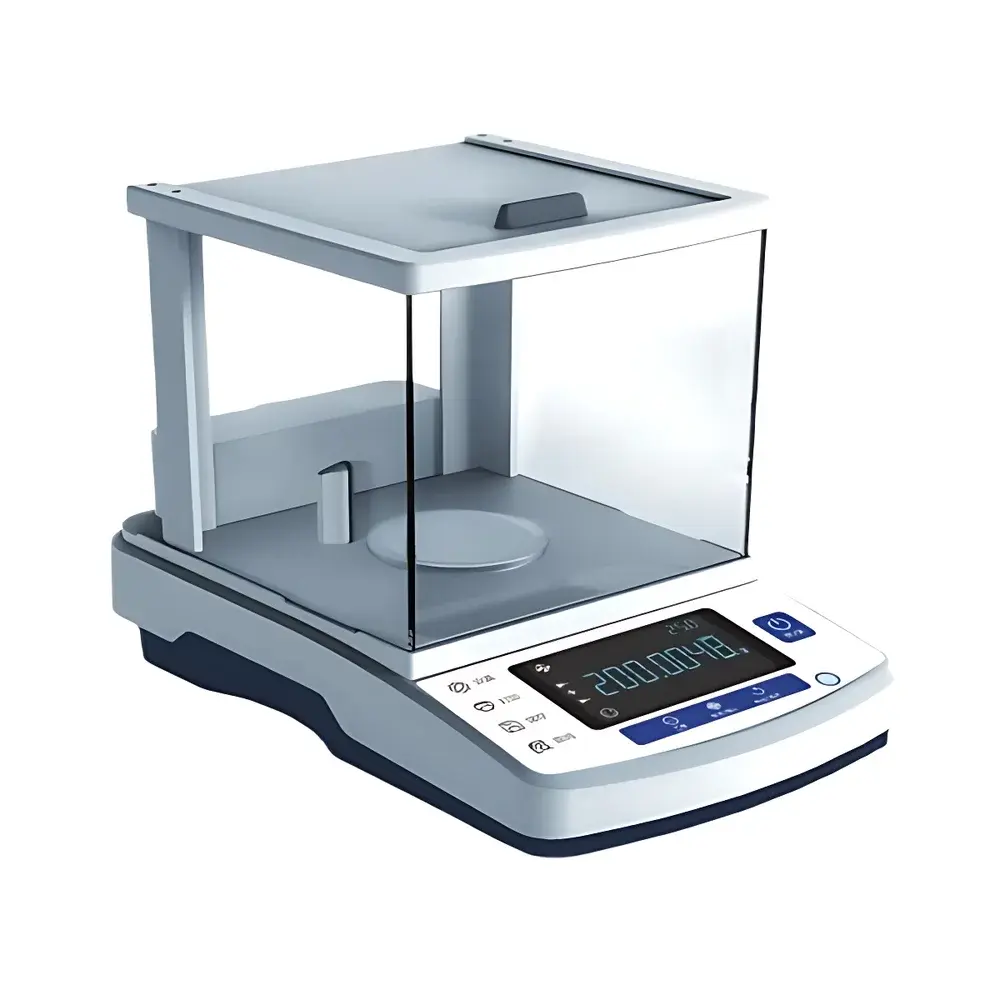
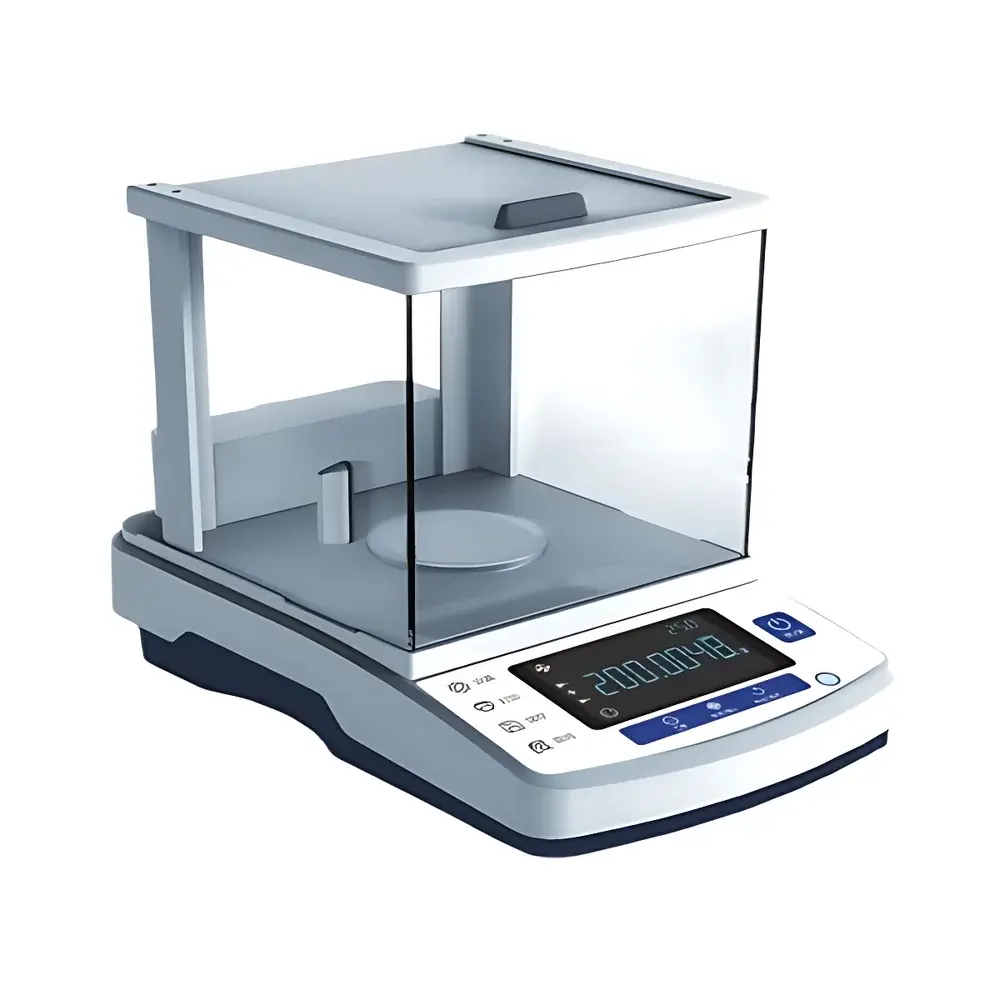
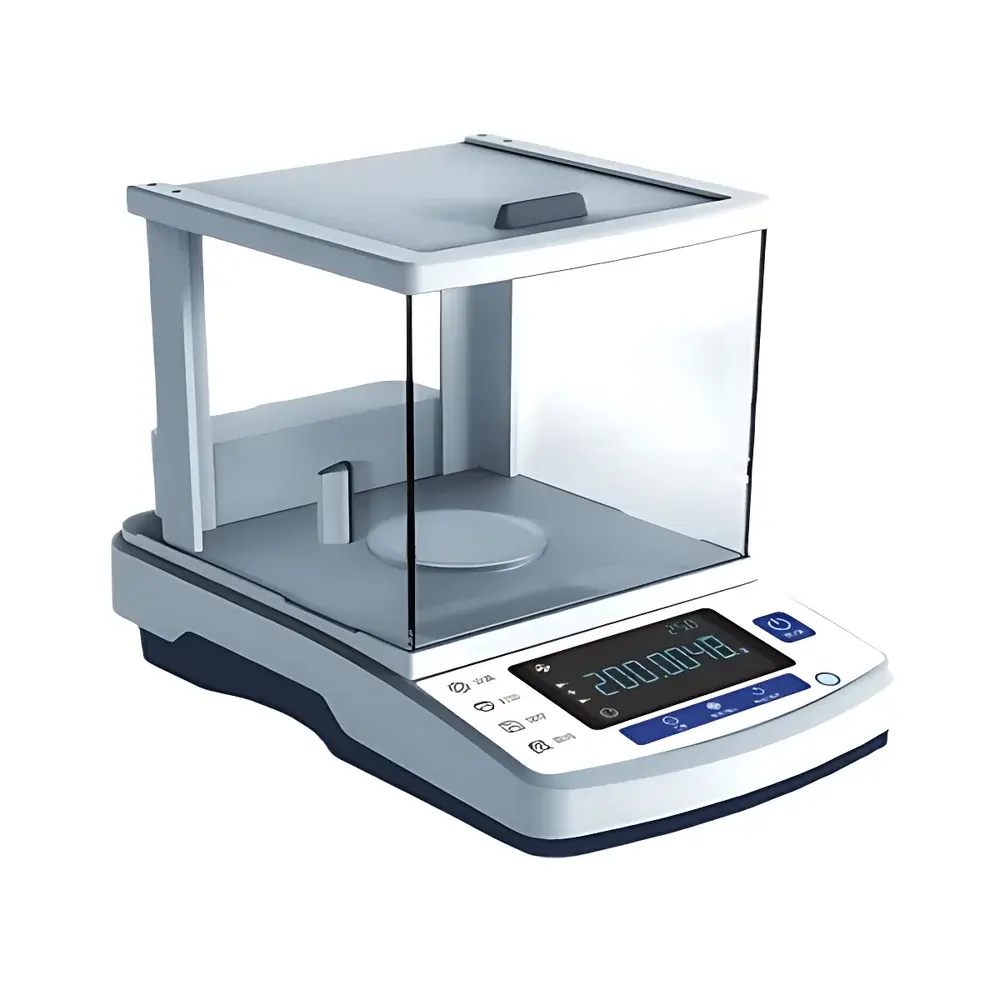
DELEITE VLF Series Analytical Balance
| Brand | DELEITE |
|---|---|
| Origin | Shanghai, China |
| Model | VLF Series |
| Type | Analytical Balance |
| Capacity | 100 g / 120 g / 200 g / 220 g |
| Readability | 0.1 mg |
| Calibration | External (VLF-E models) or Internal (VLF-C models) |
| Stabilization Time | ≤2 s (fast mode) or ≤4 s (precision mode) |
| Pan Diameter | Φ85 mm |
| Dimensions (W×D×H) | 350 × 210 × 346 mm |
| Display | LED, with real-time ambient temperature indication |
| Leveling | Front-mounted bubble level |
| Interface | RS232C serial port |
| Data Management | Local storage & recall, PC connectivity via dedicated software, optional Bluetooth printer support |
| Weighing Modes | Standard weighing, counting, percentage, density (indirect), animal/weighing-in-motion (via software extension) |
| Units | g, mg, oz, ct, lb, etc. |
Overview
The DELEITE VLF Series Analytical Balance is a precision laboratory instrument engineered for high-reproducibility mass measurement in regulated and research-intensive environments. Designed according to the fundamental principles of electromagnetic force compensation (EMFC), the VLF Series delivers stable, drift-resistant readings across its full capacity range — from 100 g to 220 g — with a consistent readability of 0.1 mg (100 µg). Its robust mechanical architecture features a monolithic weighing sensor assembly, optimized thermal mass distribution, and passive damping to minimize environmental perturbation effects such as air currents and vibration. The balance operates within standard laboratory conditions (20 ± 5 °C, <70% RH non-condensing) and incorporates real-time ambient temperature monitoring directly on the LED display — a critical parameter for traceable mass metrology workflows where thermal expansion coefficients of samples and tare vessels must be considered. The VLF Series complies with international metrological requirements for Class I analytical balances per OIML R 76-1 and meets essential performance criteria outlined in ISO/IEC 17025 for accredited testing laboratories.
Key Features
- High-resolution LED display with intuitive icon-based menu navigation and built-in ambient temperature readout
- Dual stabilization modes: selectable fast response (≤2 s) for routine tasks or enhanced precision mode (≤4 s) for low-drift critical measurements
- Front-mounted leveling bubble and adjustable foot screws for rapid, repeatable instrument alignment
- Dedicated external calibration (VLF-E) and internal motorized calibration (VLF-C) variants — both traceable to NIST-traceable standards
- Integrated microprocessor control system ensuring long-term stability, linearity, and repeatability (RSD < 0.0015% at full scale)
- RS232C serial interface compliant with standard ASCII protocol for seamless integration into LIMS, ELN, or custom QA/QC data acquisition systems
- Onboard memory for storing up to 99 weighing records with timestamp and operator ID (when configured with user authentication)
Sample Compatibility & Compliance
The VLF Series supports a broad spectrum of sample types including powders, granules, liquids in tared containers, small components, and reference standards. Its Φ85 mm stainless-steel weighing pan accommodates standard weighing boats, crucibles, and volumetric flasks. All models are CE-marked and conform to EMC Directive 2014/30/EU and Low Voltage Directive 2014/35/EU. For regulated pharmaceutical and clinical laboratories, the balance supports audit-ready operation when paired with compliant software: full electronic record integrity, user access control, and 21 CFR Part 11–compatible audit trails are achievable via validated third-party data management platforms. Routine verification follows ASTM E898–22 (Standard Guide for Selection and Use of Analytical Balances) and USP requirements for repeatability and sensitivity tests.
Software & Data Management
The VLF Series communicates natively via RS232C using standard command syntax (e.g., “S” for stable weight query, “I” for identification string), enabling plug-and-play compatibility with industry-standard laboratory software such as LabX (Mettler Toledo), WinWedge, or custom Python/Node.js scripts. Optional Bluetooth thermal printers allow immediate hardcopy generation of GLP-compliant reports — including date/time stamp, net/gross/tare values, unit, and operator code. Data export formats include CSV and TXT; metadata fields support batch ID, sample ID, and method identifier tagging. When deployed in GxP environments, the balance can be integrated into a validated data capture workflow requiring electronic signatures, change control logs, and periodic performance verification records.
Applications
- Quantitative preparation of standard solutions and reference materials in analytical chemistry labs
- Content uniformity testing and active pharmaceutical ingredient (API) dispensing in QC laboratories compliant with ICH Q5C and USP
- Gravimetric moisture analysis using pre- and post-drying mass differentials
- Small-part counting for electronics manufacturing and component inventory control
- Teaching applications in university physics and chemistry curricula requiring sub-milligram resolution
- Environmental testing labs performing filter weighing for PM2.5/PM10 particulate matter analysis per EPA Method 201A
FAQ
What calibration standards are recommended for external calibration of VLF-E models?
NIST-traceable Class M1 or Class F1 weights (e.g., 100 g certified standard) are recommended for routine verification and adjustment per ISO 17025 Clause 6.5.
Is internal calibration on VLF-C models fully automatic?
Yes — activation initiates a self-contained sequence including temperature stabilization, zero-point verification, and span calibration using an embedded motor-driven weight mechanism.
Can the VLF Series be used in a fume hood?
It may be installed in a low-turbulence fume hood only if airflow velocity at the pan position remains below 0.2 m/s and the unit is isolated from vibrations; however, benchtop placement is strongly preferred for optimal performance.
Does the balance support GLP-compliant user management?
Hardware-level user roles require external software integration; the native interface supports operator ID entry, but full role-based access control and electronic signatures depend on validated third-party middleware.
What is the maximum permissible error (MPE) at 100 g load for VLF-1004E?
Per OIML R 76-1 Class I specification, MPE = ±0.5 mg at 100 g, verified under controlled metrological conditions.