Delta Instruments GB/T 12996 Wheelchair Dynamic Stability Test Track
| Brand | Delta Instruments |
|---|---|
| Origin | Guangdong, China |
| Model | GB/T 12996 |
| Standard Compliance | GB/T 12996–2012, GB/T 13800–2009 |
| Incline Range | 0° to 10° (continuous, motorized adjustment) |
| Incline Accuracy | ≤ ±0.2° |
| Test Platform Dimensions | 10 m × 3 m |
| Friction Force Measurement | 0–100 N (±1 N accuracy) |
| Load Mass | 5 kg ± 0.05 kg |
| Control Interface | Microcomputer-based system with color touch screen |
| Automatic Stop Logic | Angle-triggered termination |
Overview
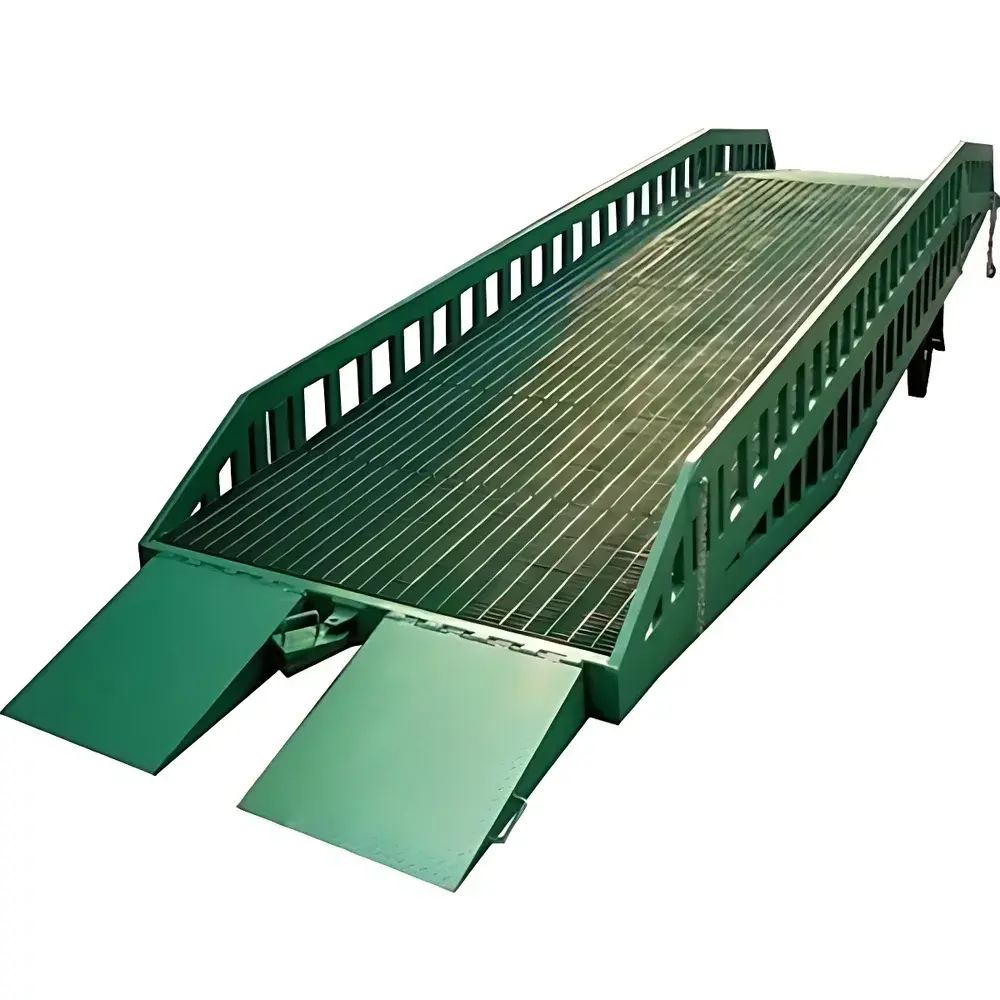
The Delta Instruments GB/T 12996 Wheelchair Dynamic Stability Test Track is an engineered test platform designed for objective, repeatable evaluation of manual and powered wheelchair stability under simulated real-world incline conditions. It operates on the principle of controlled gravitational loading—applying precise, reproducible ramp angles to assess static and dynamic stability limits, rollover thresholds, and center-of-mass behavior in accordance with internationally referenced national standards. Unlike generic slope testers, this system integrates calibrated inclination control, force measurement, and standardized loading protocols to support regulatory verification, product development validation, and post-market surveillance for rehabilitation assistive devices. Its architecture adheres to fundamental mechanical testing principles: deterministic angle positioning, traceable force transduction, and deterministic stop logic—ensuring data integrity across sequential test cycles.
Key Features
- Motor-driven, continuously adjustable incline mechanism spanning 0° to 10°, with angular resolution and repeatability better than ±0.2°—meeting the positional fidelity requirements of GB/T 12996–2012 Annex B.
- Structurally reinforced 10 m × 3 m test surface fabricated from high-friction, non-slip textured steel plate, dimensionally stable across ambient temperature fluctuations (15–30°C) and compliant with ISO 13485 environmental robustness expectations for medical device test equipment.
- Integrated microcomputer control system featuring a 7-inch industrial-grade color touch interface, enabling direct input of target angle, dwell time, and test sequence parameters; all operational logs—including actual achieved angle, timestamp, and system status—are stored internally for audit readiness.
- Dedicated friction coefficient module comprising a digital tensile force sensor (0–100 N range, ±1 N linearity error per ISO 376:2011 calibration protocol) and certified 5.000 kg ± 0.05 kg stainless-steel loading mass—designed for consistent application of normal force during static coefficient-of-friction assessment per GB/T 13800–2009 Clause 6.3.
- Fail-safe automatic halt function triggered exclusively upon reaching the user-defined incline setpoint—eliminating overshoot risk and ensuring compliance with safety-critical test boundary conditions defined in IEC 62366-1 usability engineering requirements.
Sample Compatibility & Compliance
The test track accommodates Class I and Class II manual and power-assisted wheelchairs (ISO 7176-1:2014 defined), including rigid-frame, folding, and ultra-lightweight configurations, with rear axle spacing up to 750 mm and overall width ≤ 700 mm. It supports both occupied and unoccupied testing modes as specified in GB/T 12996–2012 Section 5.2. All mechanical and electrical subsystems conform to GB 5226.1–2019 (equivalent to IEC 60204-1) for safety of machinery. Documentation includes factory calibration certificates traceable to CNAS-accredited reference standards, declaration of conformity to GB/T 19001–2016 (ISO 9001:2015), and technical files aligned with MDR Annex II requirements for Class I reusable testing apparatus.
Software & Data Management
No proprietary software installation is required. The embedded controller stores raw test records—including commanded angle, actual measured angle (via dual-axis inclinometer), elapsed time, and system fault flags—in CSV-compatible format on internal flash memory (≥10,000-cycle retention). Export is performed via USB 2.0 port; no cloud connectivity or remote access capabilities are implemented—ensuring full data sovereignty and alignment with HIPAA-compliant lab environments and GLP-aligned quality systems. Audit trail functionality includes immutable timestamps, operator ID fields (manually entered), and version-stamped firmware identifiers—supporting 21 CFR Part 11–aligned electronic record integrity where local policy permits.
Applications
- Verification of maximum safe operating incline for new wheelchair designs prior to clinical evaluation.
- Comparative stability benchmarking across competing models under identical GB/T 12996–2012 test sequences.
- Root-cause analysis of rearward rollover incidents through controlled incremental angle escalation with video-synchronized event logging.
- Validation of anti-tip device efficacy using standardized 5 kg loading mass and prescribed lateral/longitudinal force application points.
- Supporting notified body assessments for CE marking (MDD/MDR) and NMPA registration dossiers requiring physical stability evidence.
FAQ
Does this system meet FDA or ISO 13485 requirements for use in regulated medical device testing?
Yes—while the test track itself is classified as Class I non-invasive equipment under FDA 21 CFR 890.3800, its design, calibration traceability, and documentation package support use within ISO 13485-certified QMS environments for verification testing.
Can third-party calibration services be performed on-site?
Yes—angular position sensors and load cells are accessible for field recalibration using standard metrology tools; Delta Instruments provides calibration procedure documentation and uncertainty budgets upon request.
Is the 10 m length mandatory for all tests per GB/T 12996–2012?
No—the standard specifies minimum effective test length based on wheelchair wheelbase; the 10 m platform ensures full compliance across all common adult and pediatric wheelchair configurations without reconfiguration.
What maintenance intervals are recommended for long-term reliability?
Biannual inspection of drive belt tension, inclinometer zero drift verification, and tactile verification of platform surface texture integrity—documented in the provided maintenance log template.