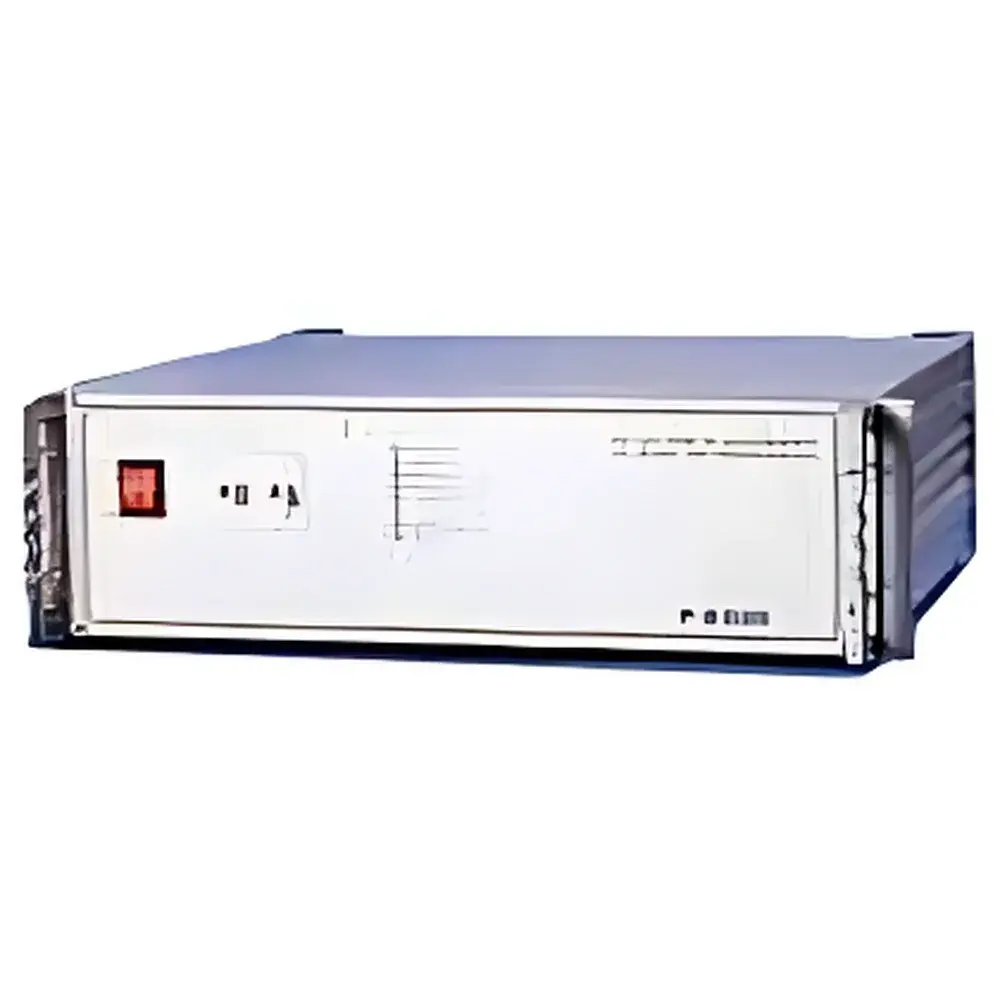
![DesTest DWMM4[G]-6-60 Series 4×4 MIMO Omnidirectional Antenna for 4G/5G LTE and GNSS](https://img.instrumenthive.com/raw_images/IH-143150-1.webp)
![DesTest DWMM4[G]-6-60 Series 4×4 MIMO Omnidirectional Antenna for 4G/5G LTE and GNSS](https://img.instrumenthive.com/raw_images/IH-143150-2.webp)
![DesTest DWMM4[G]-6-60 Series 4×4 MIMO Omnidirectional Antenna for 4G/5G LTE and GNSS](https://img.instrumenthive.com/raw_images/IH-143150-3.webp)
![DesTest DWMM4[G]-6-60 Series 4×4 MIMO Omnidirectional Antenna for 4G/5G LTE and GNSS](https://img.instrumenthive.com/raw_images/IH-143150-4.webp)
DesTest DWMM4[G]-6-60 Series 4×4 MIMO Omnidirectional Antenna for 4G/5G LTE and GNSS
| Brand | Panorama |
|---|---|
| Origin | Guangdong, China |
| Manufacturer Type | Authorized Distributor |
| Product Origin | Domestic (China) |
| Model | DWMM4 Series |
| Pricing | Available Upon Request |
| Frequency Range | 617–6000 MHz |
| GPS/GNSS Integration | Yes (with 26 dB LNA and bandpass filtering) |
| Ingress Protection | IP66 |
| Cable Type | Integrated Flame-Retardant CS32 (RF), FR CS29 (GNSS) |
| Mounting Options | Wall, Mast, Panel, Desk |
| Radiation Pattern | Omnidirectional |
Overview
The DesTest DWMM4[G]-6-60 Series is a purpose-engineered 4×4 Multiple-Input Multiple-Output (MIMO) omnidirectional antenna system designed for robust, high-reliability connectivity across global 4G LTE and 5G NR deployments. Operating over an ultra-wideband frequency range of 617–6000 MHz, the antenna supports all major cellular bands—including n1, n3, n5, n7, n8, n20, n28, n41, n71, n77, n78, and n79—as well as sub-6 GHz 5G spectrum allocations defined by 3GPP Release 15 through 17. Its quad-element architecture features four physically independent, individually fed radiating elements housed within a single compact, weather-resistant enclosure. This configuration enables spatial diversity and polarization multiplexing essential for MIMO throughput enhancement, link resilience, and reduced fading in non-line-of-sight (NLOS) environments. The integrated GNSS module—available in the [G] variant—incorporates a low-noise amplifier (LNA) with 26 dB gain and sharp-cut bandpass filtering to suppress out-of-band interference from adjacent cellular or ISM emissions, ensuring compliant time-to-first-fix (TTFF) and position accuracy per ICD-GPS-200 and Galileo OS SIS ICD v2.0 specifications.
Key Features
- True 4×4 MIMO support with four decoupled, vertically polarized broadband radiators engineered for <15 dB port-to-port isolation across full operational bandwidth
- Omnidirectional azimuth pattern (±3 dB variation) with near-uniform elevation coverage (−30° to +30°), eliminating site-specific orientation calibration
- IP66-rated UV-stabilized polycarbonate housing with stainless-steel mounting hardware, validated for continuous outdoor operation at −40 °C to +70 °C
- Integrated flame-retardant cabling: CS32-rated RF cable (UL VW-1, IEC 60332-1) and FR CS29 GNSS cable (IEC 60332-3 Cat A), minimizing field connectorization and insertion loss variability
- Modular mechanical mounting system supporting wall, mast (Ø30–60 mm), non-conductive panel, and desktop deployment without external grounding kits
Sample Compatibility & Compliance
The DWMM4[G]-6-60 complies with key international regulatory and interoperability standards applicable to commercial fixed wireless access (FWA) and enterprise-grade CPE installations. It meets EN 301 908-1 (IMT cellular), EN 300 328 (wideband transmission), EN 301 893 (5 GHz SRD), and FCC Part 22/24/27 requirements for radiated emission limits and spurious suppression. GNSS performance adheres to RTCM SC-104 v3.3 differential correction compatibility and supports NMEA 0183 v4.10 output. The antenna’s passive RF characteristics—including VSWR ≤2.0:1 across 617–6000 MHz and peak gain of 3.5–5.2 dBi (frequency-dependent)—are verified per IEEE Std 149-2021 measurement methodology using far-field range or calibrated near-field scanner systems. No proprietary firmware or vendor lock-in is required for integration with third-party baseband units compliant with O-RAN Alliance WG4 Open Fronthaul Interface specifications.
Software & Data Management
As a passive RF component, the DWMM4[G]-6-60 requires no embedded firmware, drivers, or software stack. All calibration data—including measured radiation patterns, phase center stability, and group delay vs. frequency—are provided in standard .s1p/.s2p Touchstone format and MATLAB-compatible .mat files upon request. For GNSS-enabled variants, raw RF output is delivered via standard SMA-F interface compatible with u-blox F9P, Quectel LC86, or Trimble BD9xx-series receivers. Time synchronization metadata (PPS, UTC timestamp) is embedded in NMEA GGA and RMC sentences, supporting traceable timestamping in network timing applications aligned with ITU-T G.8273.2 Class C compliance frameworks.
Applications
- Enterprise branch office connectivity where fiber backhaul is unavailable or cost-prohibitive
- Redundant MIMO diversity links for industrial SCADA telemetry gateways operating under intermittent signal conditions
- Temporary deployment nodes for public safety LTE (FirstNet) or private 5G campus networks
- Fixed wireless access (FWA) customer premises equipment (CPE) requiring carrier-agnostic multi-band support
- EMC pre-compliance testing environments requiring known-gain, repeatable reference antennas between 600 MHz and 6 GHz
FAQ
Does the DWMM4[G]-6-60 require active powering or PoE?
No—it is a fully passive antenna system. The integrated GNSS LNA is powered via bias-T injection from the connected GNSS receiver (typically +3.3 V or +5 V DC on the coaxial line).
Can this antenna be used indoors without degradation in MIMO performance?
Yes—its omnidirectional pattern and moderate gain (3.5–5.2 dBi) minimize multipath nulls typical of high-gain directional arrays, making it suitable for indoor distributed antenna system (DAS) edge nodes.
Is the GNSS module compatible with BeiDou and Galileo constellations?
Yes—the integrated front-end supports GPS L1/L2, GLONASS G1/G2, Galileo E1/E5a, and BeiDou B1I/B2I signals simultaneously.
What is the maximum recommended cable run length for optimal GNSS signal integrity?
For FR CS29 cable, maximum run length is 15 m at 1.575 GHz; beyond that, an external inline LNA meeting ISO 16750-2 automotive EMC immunity is advised.
Are anechoic chamber measurement reports available for this model?
Yes—full 3D radiation pattern data, axial ratio, and phase center offset reports are supplied with each batch shipment in accordance with ANSI C63.5-2017.