
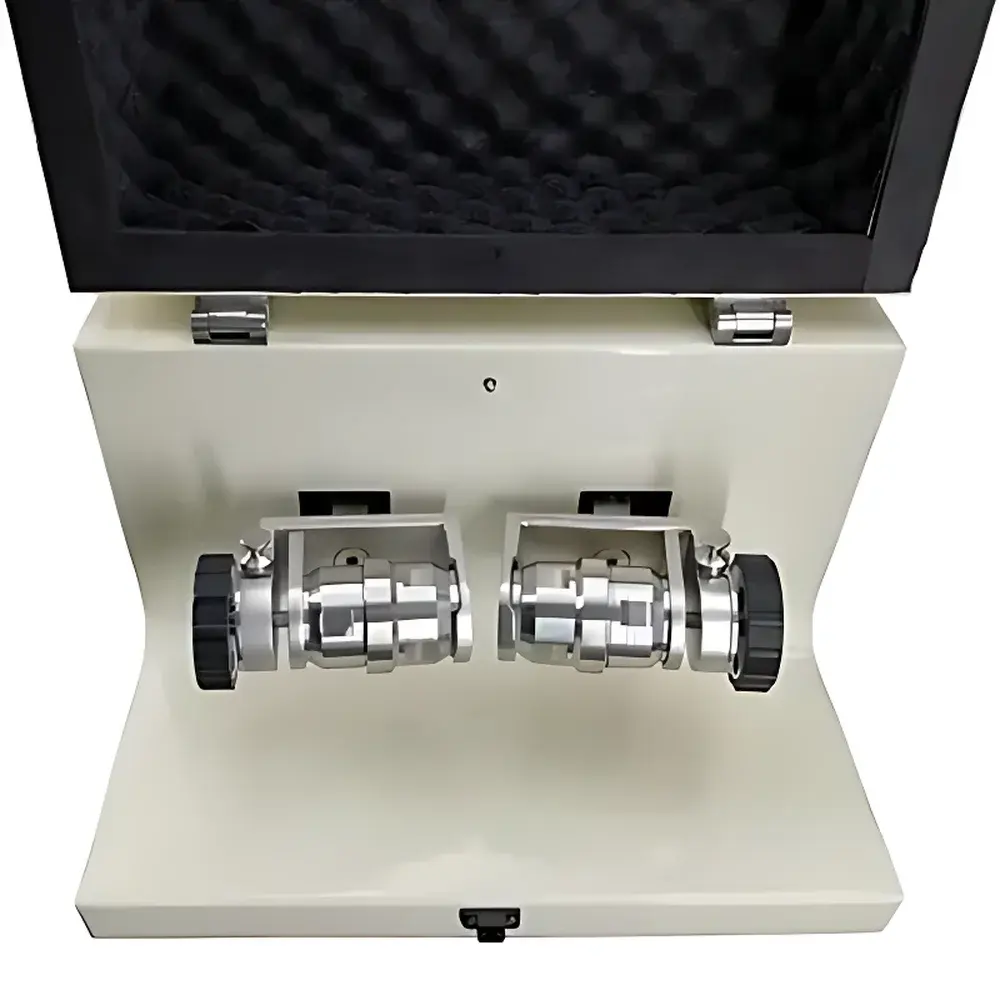
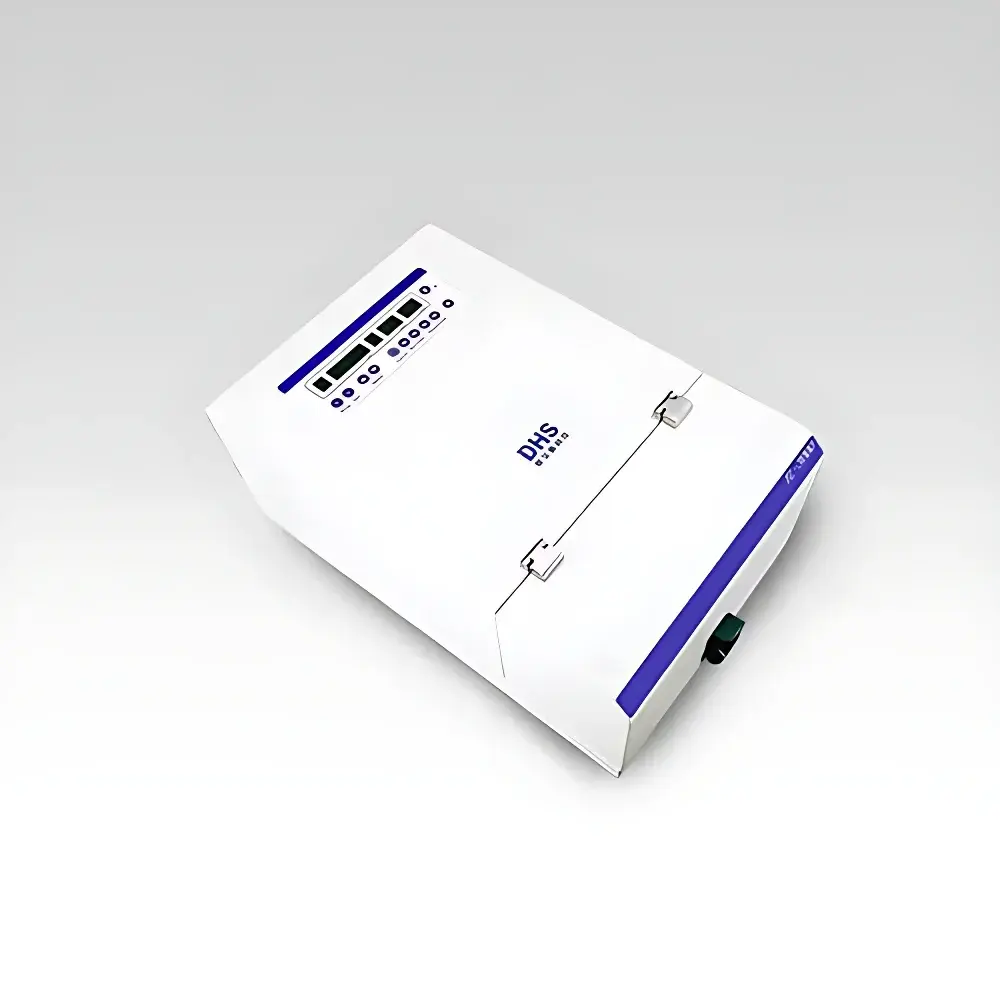
DHS TL3000 High-Throughput Low-Noise Tissue Grinder
| Brand | DHS |
|---|---|
| Origin | Tianjin, China |
| Model | TL3000 |
| Instrument Type | Benchtop Vibratory Tissue Grinder |
| Sample Compatibility | Hard and brittle biological tissues (e.g., bone, tooth, plant stems, frozen muscle) |
| Input Particle Size | < 8 mm |
| Output Particle Size | < 5 µm |
| Throughput Capacity | 2 × 96-well deep-well plates OR 2 × 50 mL grinding jars OR 2 × 25 mL grinding jars OR 2 × 12 × 5 mL rigid tubes OR 2 × 4 × 5 mL stainless steel tubes OR 2 × 28 × 2 mL microcentrifuge tubes |
| Vibration Frequency Range | 100–1800 cycles/min |
| Grinding Modes | Dry grinding, wet grinding, cryogenic grinding |
| Processing Time | 1–99 s per cycle |
| Rest Interval | 0–99 s |
| Programmable Protocols | 10 stored methods |
| Power Consumption | 150 W |
| Dimensions (W×D×H) | 340 × 230 × 550 mm |
| Net Weight | 31 kg |
| Enclosure Material | Full metal housing with smooth electrostatic powder-coated finish |
| Safety Mechanism | Dual mechanical locking system with vibration-sensing lid interlock |
Overview
The DHS TL3000 High-Throughput Low-Noise Tissue Grinder is an engineered vibratory mill designed for reproducible, high-efficiency homogenization of hard and heterogeneous biological samples under controlled laboratory conditions. Operating on the principle of high-frequency orbital oscillation—where sample containers undergo rapid, multi-directional motion against grinding media (e.g., stainless steel or ceramic beads)—the TL3000 achieves mechanical cell disruption through impact, shear, and compression forces. Unlike rotor-stator or bead-beating systems reliant on rotational speed alone, this device delivers tunable kinetic energy via adjustable frequency (100–1800 cycles/min), enabling precise control over particle size reduction while minimizing thermal degradation. Its design targets applications requiring consistent sub-5 µm particle distribution across large sample cohorts—particularly in genomics, proteomics, metabolomics, and biobanking workflows where batch-to-batch comparability is critical for downstream analytical validity.
Key Features
- Low-noise architecture: Acoustically damped housing and precision-balanced drive mechanism reduce operational sound pressure to ≤55 dB(A) at 1 m distance—enabling continuous use in shared lab spaces without acoustic isolation.
- High-throughput flexibility: Supports parallel processing of up to 192 samples simultaneously using standardized 2 mL EP tubes, or dual 50 mL stainless-steel grinding jars for bulk tissue homogenization.
- Dual safety interlock system: Mechanical latch plus electronic lid sensor prevents operation unless fully secured; automatic shutdown triggered by lid opening or abnormal vibration amplitude.
- Rugged construction: All-metal frame with corrosion-resistant powder-coated surface ensures long-term dimensional stability and ease of decontamination between runs.
- Multimode grinding compatibility: Configurable for dry grinding, aqueous suspension homogenization, or cryogenic processing using liquid nitrogen–precooled adapters—preserving labile biomolecules during mechanical lysis.
- User-programmable protocols: Ten independent method slots store time, frequency, rest interval, and cycle count parameters—supporting GLP-compliant documentation when paired with optional timestamped log export.
Sample Compatibility & Compliance
The TL3000 accommodates a broad spectrum of challenging sample matrices—including calcified tissues (bone, dental enamel), fibrous plant material (wood, seed coats), frozen animal organs, and microbial pellets—without requiring pre-cutting or extensive manual pretreatment. Input size limitation (<8 mm) ensures uniform energy transfer and avoids jar deformation or media jamming. Final particle size distribution consistently achieves <5 µm median diameter (D50) as verified by laser diffraction analysis of representative mammalian liver homogenates. The instrument complies with IEC 61000-6-2 (EMC immunity) and IEC 61000-6-4 (EMC emission) standards. Its closed-system configuration meets ISO 15195:2018 requirements for reference measurement laboratories handling clinical specimens, and its programmable logging capability supports audit readiness for ISO/IEC 17025:2017 and CLIA-certified environments.
Software & Data Management
The TL3000 operates via an embedded microcontroller interface with tactile keypad and LCD display—eliminating dependency on external computers or proprietary software stacks. All method parameters are stored locally with non-volatile memory retention exceeding 10 years. Optional RS-232 serial output enables integration into LIMS or ELN platforms for automated protocol recall and run-time metadata capture (start/stop timestamps, actual frequency deviation, cycle completion status). Audit trail functionality includes operator ID input (via alphanumeric code), method version tracking, and tamper-evident log archiving—aligned with FDA 21 CFR Part 11 requirements for electronic records when implemented with validated access controls.
Applications
- Genomic DNA extraction from bone marrow aspirates and formalin-fixed paraffin-embedded (FFPE) blocks.
- RNA stabilization and lysis of fibrous plant leaves prior to qRT-PCR or RNA-seq library prep.
- Proteome-wide peptide generation from cryopreserved tumor biopsies for LC-MS/MS analysis.
- Homogenization of microbial consortia for metagenomic DNA isolation and shotgun sequencing.
- Preparation of uniform pharmaceutical excipient blends for dissolution testing per USP <711>.
- Standardized comminution of certified reference materials (CRMs) for proficiency testing in environmental toxicology labs.
FAQ
What types of grinding media are compatible with the TL3000?
Stainless steel, tungsten carbide, zirconium oxide, and silicon nitride beads (0.5–4.0 mm diameter) are supported; selection depends on sample hardness and desired contamination limits.
Can the TL3000 be used for cryogenic grinding without modification?
Yes—when equipped with the optional LN2-compatible adapter set (P/N 0401261-20), the unit maintains stable operation at −196 °C with no condensation ingress into drive mechanisms.
Is validation documentation available for IQ/OQ/PQ protocols?
DHS provides a comprehensive User Requirement Specification (URS)-aligned validation package, including test scripts, acceptance criteria, and blank execution records compliant with ASTM E2500-13.
How is calibration traceability maintained for vibration frequency?
Each unit ships with factory calibration certificate traceable to NIST SRM 2806a (vibration calibrator), with annual recalibration recommended using a Class 1 accelerometer and FFT analyzer.
Does the TL3000 support remote monitoring or network connectivity?
No Ethernet or Wi-Fi interface is built-in; however, RS-232 output allows integration with third-party SCADA or building management systems via standard Modbus RTU mapping.



