
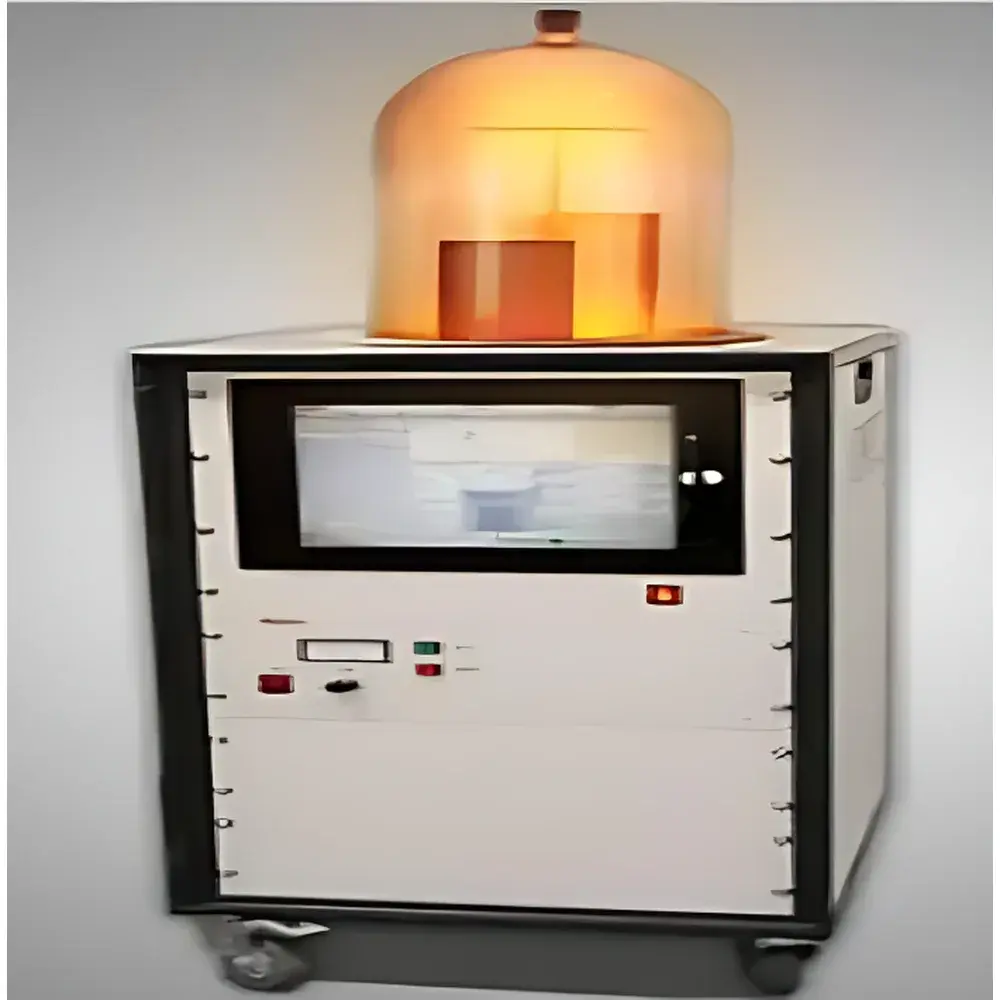
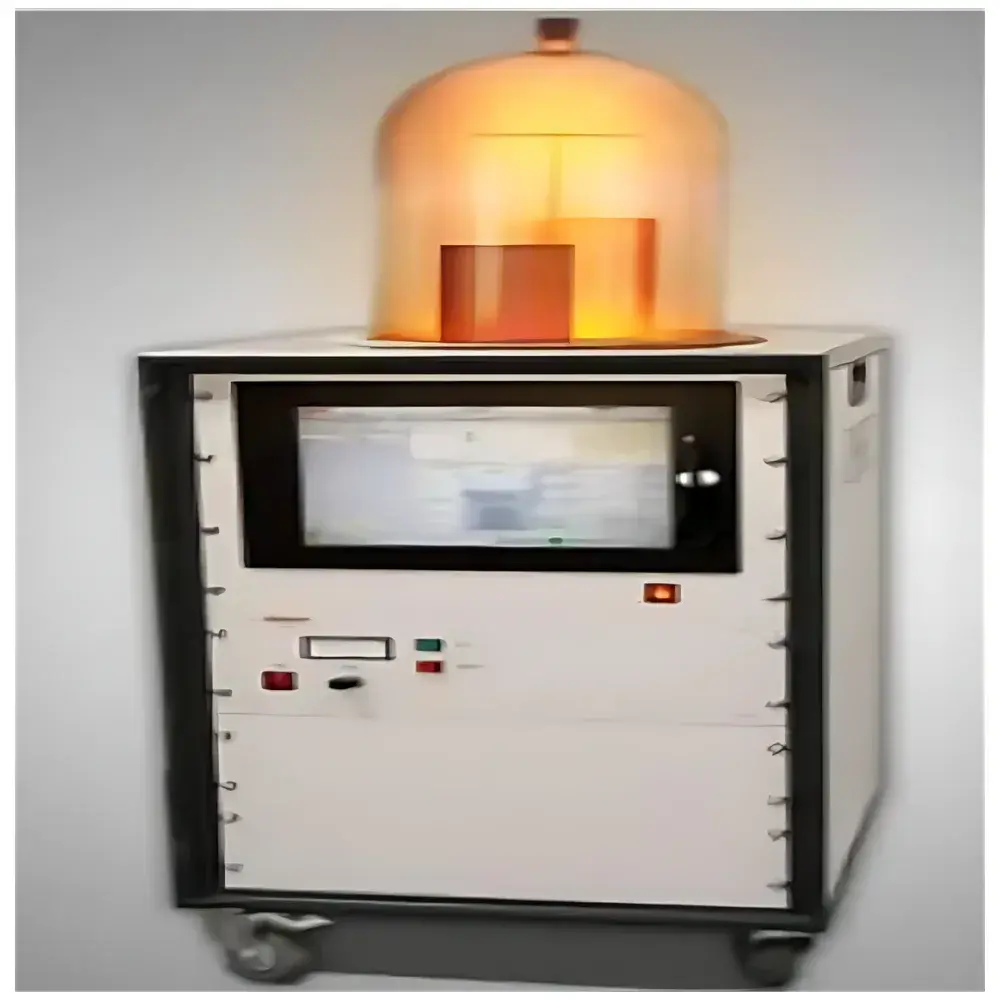
Diener Bell Jar 35 Research-Grade Plasma Cleaner
| Brand | Diener |
|---|---|
| Origin | Germany |
| Model | Bell Jar 35 |
| Instrument Type | Imported Plasma Surface Treater |
| Chamber Volume | ~35 L |
| Chamber Material | Borosilicate Glass (Bell Jar: Ø315 mm × H500 mm) |
| Power Supply | 230 V / 16 A |
| RF Frequencies | 40 kHz (0–500 W), 13.56 MHz (0–300 W), DC/Unipolar Pulsed (0–300 W, up to 600 V) |
| Vacuum System | Compatible with Standard Rotary Vane or Dry Pumps (User-Specified) |
| Gas Control | Three Mass Flow Controllers (MFCs) |
| Substrate Holder | Ø140 mm (Optional Rotation, Heating, Cooling) |
| Pressure Measurement | Pirani Gauge |
| Control System | PCCE Software on Microsoft Windows XPe |
| Electrode Configuration | Switchable for Plasma Cleaning, Activation, Etching |
| Sputter Source | 2″–3″ with Shutter (Optional Exhaust Duct & Gas Inlet) |
| Additional Options | Faraday Cage, Plasma Polymerization Kit, TEM Flange, Corrosive-Gas-Compatible Design, Heated Chamber, Oxygen Generator, Slow Vent/Suction Modules, Maintenance & On-Site Installation Support |
Overview
The Diener Bell Jar 35 is a modular, research-grade plasma cleaning and surface modification system engineered for precision laboratory applications in materials science, microelectronics, nanotechnology, and life sciences. Based on low-pressure capacitively coupled plasma (CCP) technology, it operates across three distinct excitation modes—low-frequency (40 kHz), radio frequency (13.56 MHz), and DC/unipolar pulsed discharge—enabling controlled surface activation, organic residue removal, oxide reduction, and thin-film sputtering. Its bell-jar configuration features a borosilicate glass vacuum chamber (Ø315 mm × 500 mm height, ~35 L volume), providing full optical access and compatibility with in situ diagnostics such as optical emission spectroscopy (OES). Designed for integration into multi-step sample preparation workflows—including SEM coating, thermal/e-beam evaporation pre-treatment, and TEM grid functionalization—the system supports reproducible, non-thermal plasma processing under precisely regulated gas composition, pressure (measured via Pirani gauge), and power delivery.
Key Features
- Triple-mode RF/DC plasma generation: 40 kHz (0–500 W), 13.56 MHz (0–300 W), and DC/unipolar pulsed (0–300 W, up to 600 V bias) for process flexibility across cleaning, etching, and sputter deposition.
- Borosilicate glass bell-jar chamber (Ø315 mm × 500 mm) offering high UV transparency, chemical inertness, and visual process monitoring without metallic interference.
- Three independent mass flow controllers (MFCs) enabling precise, repeatable gas blending (e.g., O₂, Ar, N₂, CF₄, H₂, air) for tailored surface chemistry.
- Switchable electrode configuration: configurable as grounded chamber wall (for downstream plasma) or powered electrode (for direct substrate exposure), supporting both remote and direct plasma treatment.
- Modular substrate stage: Ø140 mm platform with optional rotation, resistive heating (up to 200 °C), and liquid-cooled backside cooling for thermal management during extended plasma exposure.
- Integrated sputter source (2″–3″ magnetron with mechanical shutter) compatible with metal (Au, Pt, Cr, Ti) and dielectric target materials; optional exhaust ducting and reactive gas inlets support reactive sputtering.
- PCCE control software running on embedded Windows XPe provides deterministic recipe storage, real-time parameter logging (power, pressure, gas flows), and audit-ready event timestamps.
Sample Compatibility & Compliance
The Bell Jar 35 accommodates substrates up to Ø140 mm—including silicon wafers, TEM grids, polymer films, ceramic substrates, and biological specimens on conductive or insulating carriers. Its open-chamber geometry allows manual loading of irregularly shaped samples and integration with external transfer systems. The system meets fundamental safety and electromagnetic compatibility requirements per EU directives (2014/30/EU EMC, 2014/35/EU LVD) and is constructed to support GLP-compliant operation when configured with optional audit-trail-enabled PCCE logging and user-access controls. While not certified to ISO 13485 or FDA 21 CFR Part 11 out-of-the-box, its deterministic control architecture and timestamped data export (CSV, XML) facilitate validation under GMP/QSR frameworks for medical device R&D and pharmaceutical packaging development.
Software & Data Management
The PCCE (Plasma Control and Communication Environment) software serves as the central interface for system operation, offering intuitive recipe programming, real-time graphing of process parameters, and automated sequence execution. All operational events—including power ramping, gas switching, shutter actuation, and pressure stabilization—are logged with millisecond-resolution timestamps. Data exports comply with FAIR principles (Findable, Accessible, Interoperable, Reusable): time-stamped CSV files include column headers aligned with SI units (W, Pa, sccm, °C, mbar), enabling direct import into MATLAB, Python (pandas), or LIMS platforms. Optional firmware extensions support OPC UA connectivity for integration into Industry 4.0 lab automation networks.
Applications
- SEM/TEM sample preparation: hydrocarbon removal, surface charge dissipation, and conductive metal layer deposition (via integrated sputter source).
- Microfabrication pre-bonding: wafer surface activation (O₂ plasma) to enhance anodic or adhesive bonding strength.
- Biomedical material functionalization: amine-group grafting on PDMS or PET for protein immobilization assays.
- Optical component cleaning: sub-monolayer contaminant removal from laser optics and photomasks without abrasive contact.
- Plasma polymerization: using monomer vapors (e.g., allylamine, hexamethyldisiloxane) introduced via MFC-controlled carrier gas for conformal functional coatings.
- Failure analysis: selective organic residue ablation prior to TOF-SIMS or XPS surface chemical mapping.
FAQ
What vacuum level can the Bell Jar 35 achieve with standard pumping configurations?
Base pressure typically reaches 1 × 10⁻² mbar using a standard two-stage rotary vane pump; lower pressures (≤5 × 10⁻³ mbar) are attainable with dry scroll or turbomolecular pump options.
Is the system compatible with corrosive process gases such as Cl₂ or SF₆?
Yes—optional corrosion-resistant internal components (stainless-steel gas lines, Viton-free seals, alumina-coated electrodes) are available for sustained use with halogenated or acidic chemistries.
Can the PCCE software be validated for regulated environments?
While the base software does not include 21 CFR Part 11 electronic signature modules, its deterministic logging, user-level access control, and immutable CSV export enable third-party IQ/OQ/PQ validation protocols.
What maintenance intervals are recommended for long-term reliability?
Routine inspection of O-rings and MFC calibration is advised every 6 months; RF matching network tuning and electrode surface polishing are recommended annually or after 2,000 plasma hours.
Is remote operation supported?
Yes—PCCE supports secure RDP and VNC connections over local networks; firewall-configurable TCP/IP ports allow integration with centralized lab monitoring systems.



