DIK Rainfall Simulator
| Origin | Japan |
|---|---|
| Manufacturer Type | Distributor |
| Origin Category | Imported |
| Model | DIK Rainfall Simulator |
| Quotation | Upon Request |
| Effective Rainfall Area | 1 m² (1 m × 1 m) or 2.25 m² |
| Effective Rainfall Height | 2 m |
| Rainfall Intensity Range | 5–40 mm/h, 10–80 mm/h, or 10–100 mm/h |
| Droplet Diameter Range | 1.7–3.0 mm |
| Power Supply | 110 V AC (for 1 m² configuration) |
Overview
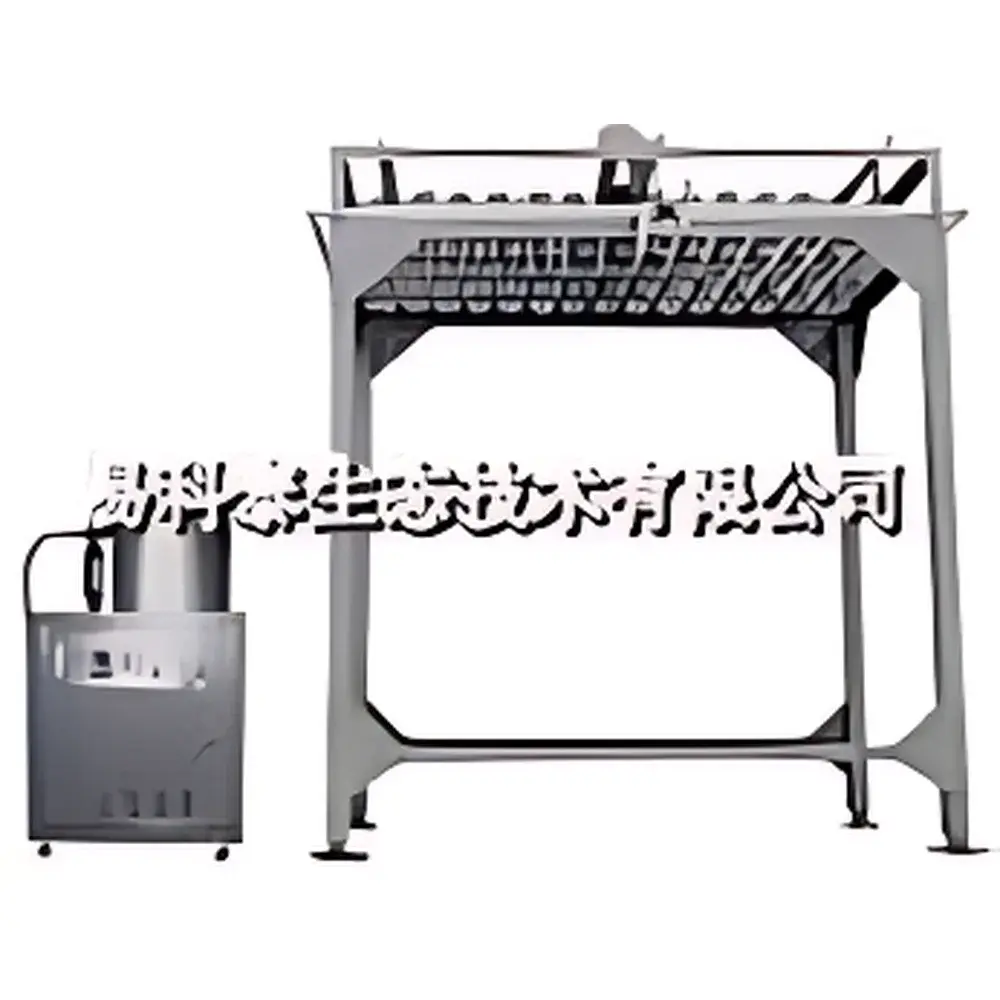
The DIK Rainfall Simulator is a precision-engineered laboratory and field-deployable apparatus designed to replicate controlled, reproducible rainfall conditions for hydrological, pedological, and environmental research. Based on the principle of pressurized nozzle-based droplet generation, it enables systematic investigation of rainfall kinetic energy, drop size distribution (DSD), and intensity–duration relationships under repeatable boundary conditions. Unlike empirical rainfall gauges or open-field observations, this simulator provides deterministic control over two critical physical parameters—rainfall intensity and droplet size—allowing researchers to isolate variables influencing soil detachment, infiltration dynamics, surface runoff initiation, and interrill/rill erosion processes. Its modular architecture supports both bench-scale soil pan experiments and larger plot-level simulations, making it suitable for fundamental process studies as well as validation of erosion prediction models (e.g., RUSLE, WEPP, or EUROSEM).
Key Features
- Adjustable droplet diameter (1.7–3.0 mm) achieved via calibrated nozzle arrays and regulated water pressure, enabling simulation of light drizzle to intense convective rainfall.
- Three selectable rainfall intensity ranges (5–40 mm/h, 10–80 mm/h, and 10–100 mm/h), each validated for uniform spatial distribution across the effective test area.
- Two standard effective rainfall areas: 1 m² (1 m × 1 m) and 2.25 m² (1.5 m × 1.5 m), with structural frame and hydraulic system scaled accordingly.
- Dedicated metering water tank subsystem featuring calibrated flowmeter, overflow pipe, sediment-trapping filter, vibration-dampened spherical protrusions to suppress water surface oscillation, and dual-valve (bypass + drain) configuration for precise volumetric control.
- Integrated electronic control panel with independent 24-hour timer, programmable rainfall duration timer, motor speed regulator (for variable pump output), main power switch, and mode selection switches for intensity/droplet profile presets.
- Modular mechanical design allows customization of support frame height, spray height (fixed at 2 m nominal), and integration with auxiliary instrumentation (e.g., laser disdrometers, tensiometers, or high-speed imaging systems).
Sample Compatibility & Compliance
The DIK Rainfall Simulator is compatible with standardized soil trays (e.g., USLE-standard 22.1-m plots scaled to lab dimensions), packed soil columns, vegetated micro-plots, and engineered geomaterials (e.g., biochar-amended substrates or erosion-control blankets). Its operation aligns with ASTM D422-63 (particle-size analysis of soils), ISO 11274:2020 (soil water retention curves), and USDA-NRCS Technical Note No. 29 (Rainfall Simulation Protocol). While not certified to IEC 61000 or UL standards per se, its electrical components conform to JIS C 8301 (Japanese Industrial Standard for low-voltage equipment) and are CE-marked for safe operation in research environments. The system supports GLP-compliant experimental documentation when paired with external data loggers recording time-stamped flow, pressure, and duration metrics.
Software & Data Management
The simulator operates as a hardware-controlled platform without embedded firmware or proprietary software. All operational parameters—including pump runtime, intensity selection, and droplet mode—are set manually via front-panel controls. For traceable, auditable experimentation, users are advised to integrate third-party data acquisition systems (e.g., Campbell Scientific CR1000X or NI CompactDAQ) connected to analog outputs from the flowmeter and pressure transducer (optional add-on). This configuration ensures full compliance with 21 CFR Part 11 requirements when electronic records are generated, including user authentication, audit trails, and electronic signatures. Raw volumetric discharge data can be exported in CSV format for post-processing in MATLAB, Python (Pandas/NumPy), or R for statistical analysis of erosion rate–intensity correlations.
Applications
- Quantification of soil erodibility (K-factor) under varying raindrop impact energies derived from controlled DSD and intensity combinations.
- Evaluation of conservation practices—including mulching, cover cropping, contour tillage, and geotextile application—under standardized rainfall stress.
- Calibration and validation of physically based erosion models requiring input of kinetic energy flux and splash detachment coefficients.
- Investigation of infiltration-excess (Hortonian) vs. saturation-excess (Dunne) runoff generation mechanisms across soil texture gradients (sand, loam, clay).
- Assessment of sediment transport capacity in rills under simulated rainfall–runoff coupling, supporting flume-based scaling studies.
- Testing of green infrastructure performance (e.g., rain gardens, permeable pavements) under reproducible storm-event scenarios.
FAQ
What is the maximum allowable operating height above the soil surface?
The standard effective rainfall height is fixed at 2 m to ensure stable droplet terminal velocity and minimize wind-induced dispersion; custom configurations up to 3 m are available upon engineering review.
Can the simulator reproduce natural raindrop size distributions (e.g., exponential or gamma functions)?
No—it delivers discrete, user-selected droplet diameters within the 1.7–3.0 mm range; for statistical DSD replication, pairing with a multi-nozzle bank and external pulse-width modulation controller is required.
Is calibration documentation provided with the system?
Yes—each unit ships with a factory calibration certificate for the flowmeter (traceable to JCSS standards) and nozzle performance report detailing uniformity index (UI) across the test area.
Does the system support automated sequential testing protocols?
Not natively—but integration with programmable logic controllers (PLCs) or LabVIEW-based sequencers enables fully automated multi-intensity, multi-duration test series.
What maintenance is required for long-term operational stability?
Quarterly inspection of nozzle orifices for clogging, annual recalibration of the flowmeter, and biannual replacement of the sediment filter and vibration-dampening spherical elements are recommended.