
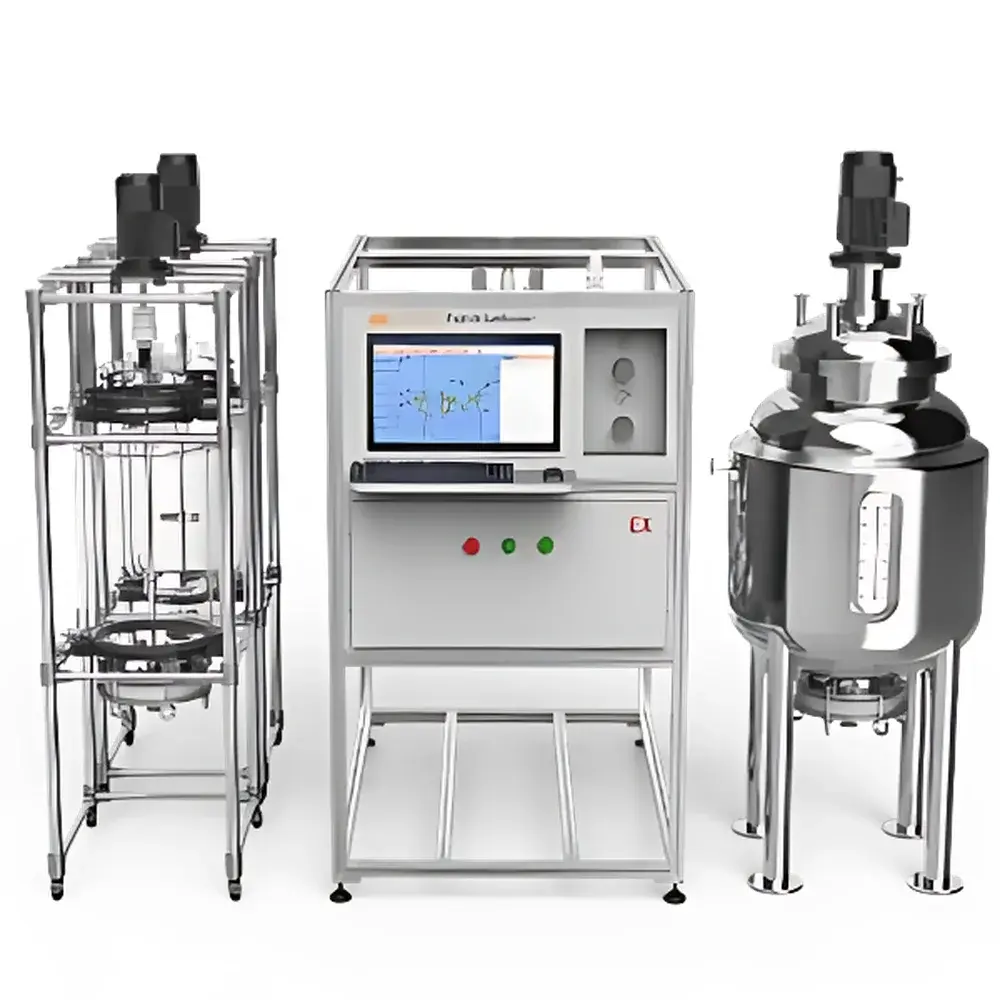
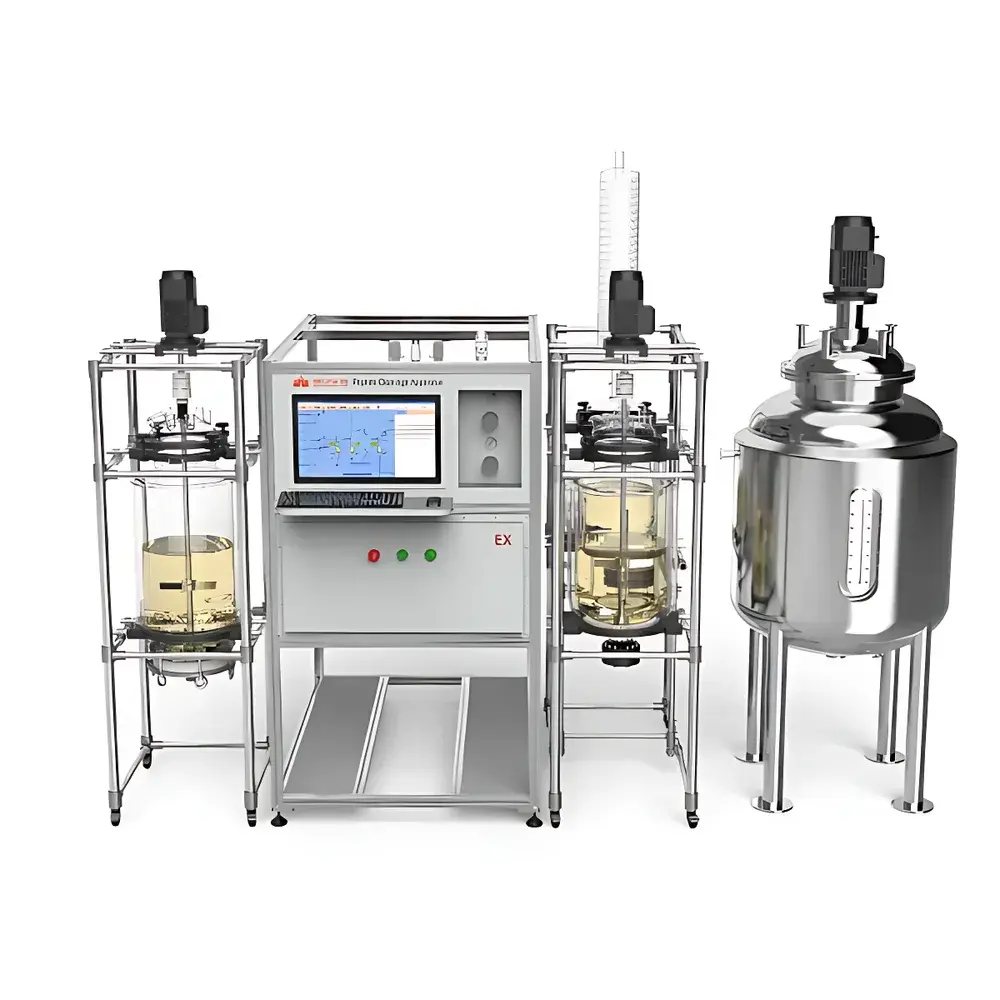
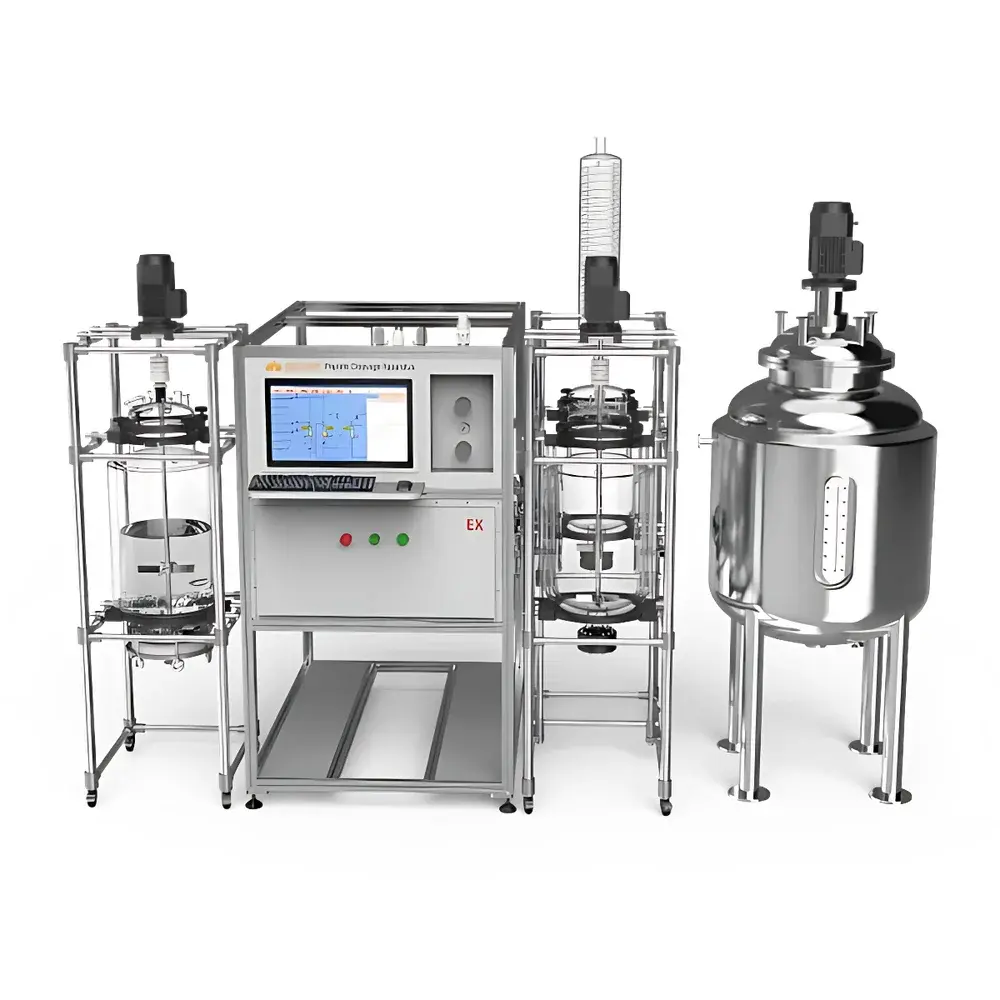
Dilun PS-Series Production-Scale Peptide Synthesizer
| Brand | PSI |
|---|---|
| Origin | Beijing, China |
| Model | Dilun-PS |
| Amino Acid Delivery | Automated |
| Reagent Delivery | Automated |
| Operator Authentication | Password + Facial Recognition |
| Audit Trail | Yes |
| Synthesis Scale | 1–10 mol |
| Reactor Quantity | 1 |
| Reactor Volume Range | 50 L – 2000 L |
| Syringe Pump Accuracy | ±0.1% |
| Crude Peptide Purity | ≥99.5% |
Overview
The Dilun PS-Series Production-Scale Peptide Synthesizer is an integrated, GMP-aligned solid-phase peptide synthesis (SPPS) platform engineered for reproducible, scalable manufacturing of therapeutic and diagnostic peptides under cGMP-compliant conditions. Designed for batch synthesis at the 1–10 mol scale, it implements Fmoc/t-Bu chemistry with fully automated reagent sequencing, real-time process monitoring, and closed-system nitrogen/argon inerting—critical for maintaining amino acid integrity, minimizing racemization, and ensuring batch-to-batch consistency. The system employs a single large-volume reactor architecture (50–2000 L), eliminating multi-vessel parallelism in favor of high-fidelity process control across extended reaction cycles. Its core operation follows classical SPPS steps—deprotection, coupling, washing, and cleavage—with precise temporal, thermal, and stoichiometric regulation governed by a deterministic, validated control logic engine.
Key Features
- Single-reactor modular design with configurable volume range (50 L to 2000 L), constructed from either borosilicate glass (≤50 L) or electropolished 316L stainless steel (≥50 L) for chemical compatibility and cleanability.
- Dual-zone temperature control via integrated TCU units: reactor, activation tank, solution preparation tanks, and drying/filtration vessel all maintain setpoints within –20 °C to +50 °C with ≤±0.3 °C stability.
- Nine independent solvent delivery lines—including Fmoc-amino acid solutions, piperidine-based deprotection reagents, acetylation agents, activators (e.g., HBTU/HOBt), and wash solvents—with inert gas (N₂/Ar) purging before, during, and after transfer to prevent oxidation and moisture ingress.
- Real-time UV absorbance monitoring at 301 nm for quantitative assessment of deprotection efficiency—enabling endpoint detection and adaptive cycle adjustment without offline HPLC verification.
- Redundant safety architecture: pressure-relief valves, overtemperature alarms, emergency hardware/software stop triggers, and intrinsic safety-rated electronics (Ex ia IIC T4 GB, IP64).
- Operator authentication via dual-factor biometric verification (password + facial recognition) and full electronic audit trail compliant with FDA 21 CFR Part 11 requirements—including user actions, parameter changes, alarm events, and data exports.
Sample Compatibility & Compliance
The Dilun-PS supports standard resin types (e.g., Wang, Rink amide MBHA) and common coupling reagents (DIC/Oxyma, HATU/DIEA). It accommodates both standard and sterically hindered amino acids, including phospho-, glyco-, and D-amino acid derivatives, provided solubility and activation kinetics fall within defined operational envelopes. All wetted materials meet USP Class VI and ISO 10993-5 biocompatibility standards. System validation documentation includes IQ/OQ/PQ protocols aligned with ISO 13485 and ASTM E2500-13. Regulatory submission support packages are available for IND/IMPD filings, including traceable calibration records, software verification reports, and cybersecurity risk assessments per IEC 62443-3-2.
Software & Data Management
The embedded control software provides role-based access, recipe-driven execution, and synchronized visualization of temperature, pressure, stir speed, UV signal, and pump status on a centralized HMI touchscreen. All process data—including timestamps, setpoints, deviations, and alarm logs—are stored in a tamper-evident SQLite database with SHA-256 hashing. Data export supports CSV, PDF, and XML formats; raw files retain cryptographic signatures for long-term archival integrity. Optional integration with LIMS (via ASTM E1578-compliant API) and MES systems enables automated batch record generation and electronic signature workflows meeting ALCOA+ principles.
Applications
- Manufacturing of generic and innovator peptide APIs (e.g., leuprolide, octreotide, semaglutide analogs) under commercial GMP conditions.
- Process development and tech transfer from lab-scale (0.1–1 mmol) to production scale with linear scalability modeling.
- Synthesis of complex cyclic, branched, or post-translationally modified peptides requiring strict oxygen/moisture exclusion.
- Support for continuous-flow hybrid modes when coupled with inline purification modules (e.g., preparative SFC or tangential flow filtration).
- Regulatory filing batches for Phase III clinical trials and commercial launch dossiers (CTD Modules 2 & 3).
FAQ
What regulatory standards does the Dilun-PS comply with?
The system meets mechanical and electrical safety requirements per IEC 61010-1 and IEC 60079-11 (intrinsic safety). Software design follows GAMP5 v5.1, and audit trail functionality satisfies FDA 21 CFR Part 11, EU Annex 11, and PIC/S PI 041-1.
Can the system be qualified for sterile manufacturing?
While the synthesizer itself is not aseptic, its 316L stainless steel reactors and CIP/SIP-compatible design allow integration into classified cleanroom environments (ISO 5–7) when paired with validated sterilizable transfer interfaces and isolator docking.
Is remote monitoring and troubleshooting supported?
Yes—via optional TLS-encrypted VPN tunneling to the onboard industrial Ethernet interface, enabling secure remote diagnostics, log retrieval, and supervised parameter adjustments by PSI-certified engineers.
How is resin handling managed at production scale?
Resin charging and harvesting are performed externally using validated manual or semi-automated loading/unloading stations; the reactor is designed for fixed-bed or suspended slurry operation with optimized agitation profiles to ensure uniform swelling and coupling efficiency.
What validation documentation is included with delivery?
Standard package includes Factory Acceptance Test (FAT) report, Installation Qualification (IQ) templates, Operational Qualification (OQ) test scripts, and a Software Design Specification (SDS) with traceability matrix to functional requirements.





