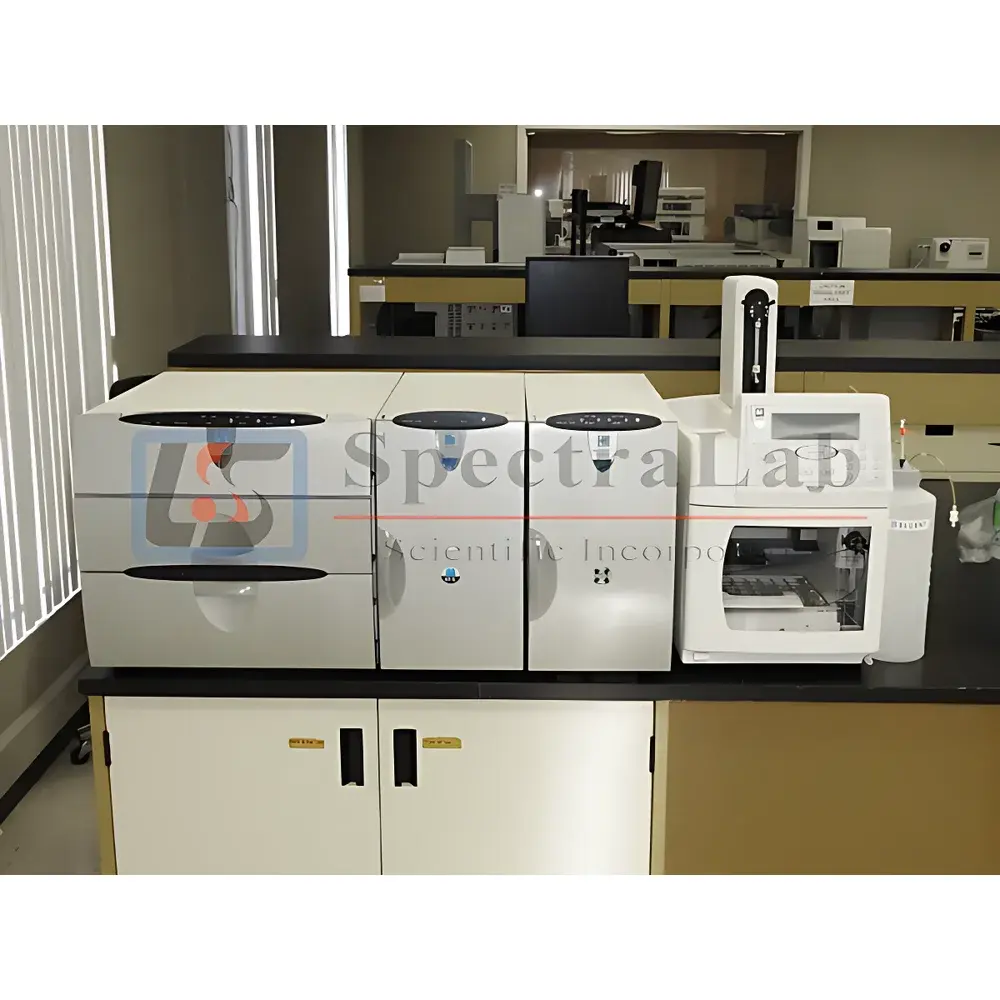
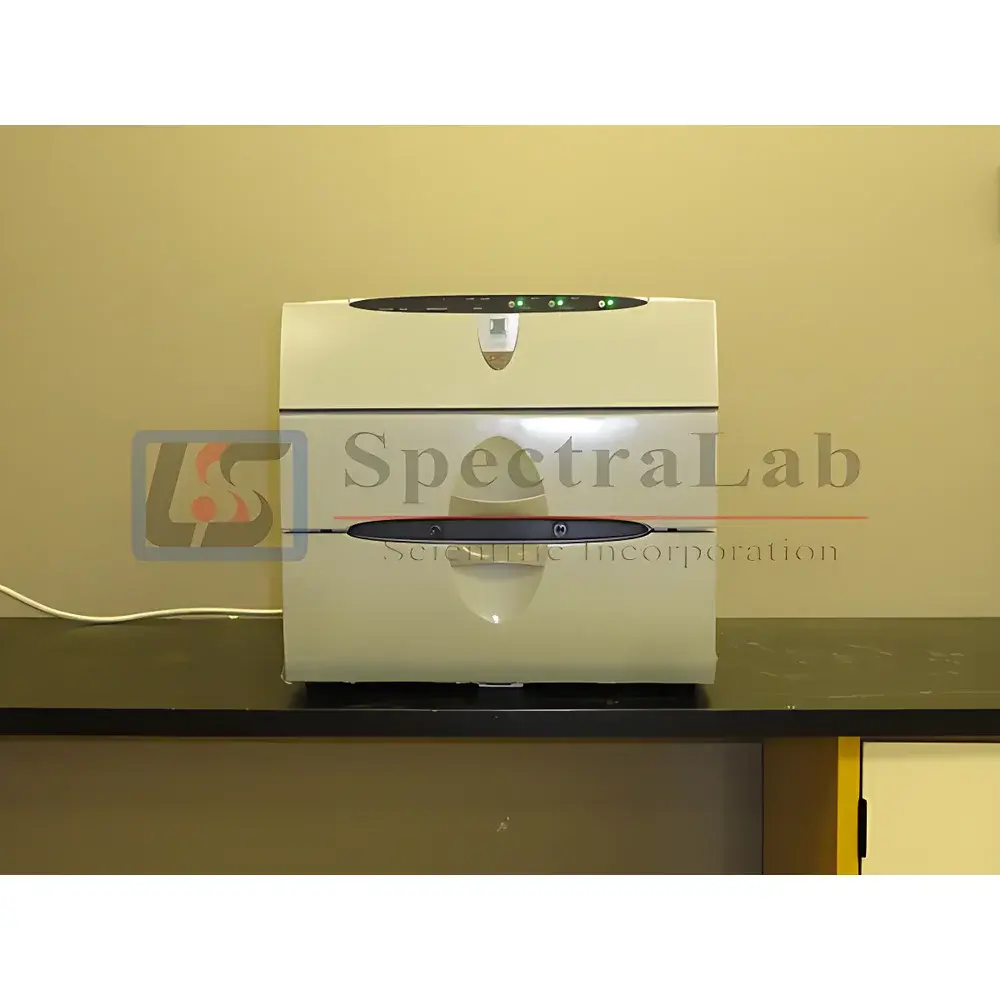
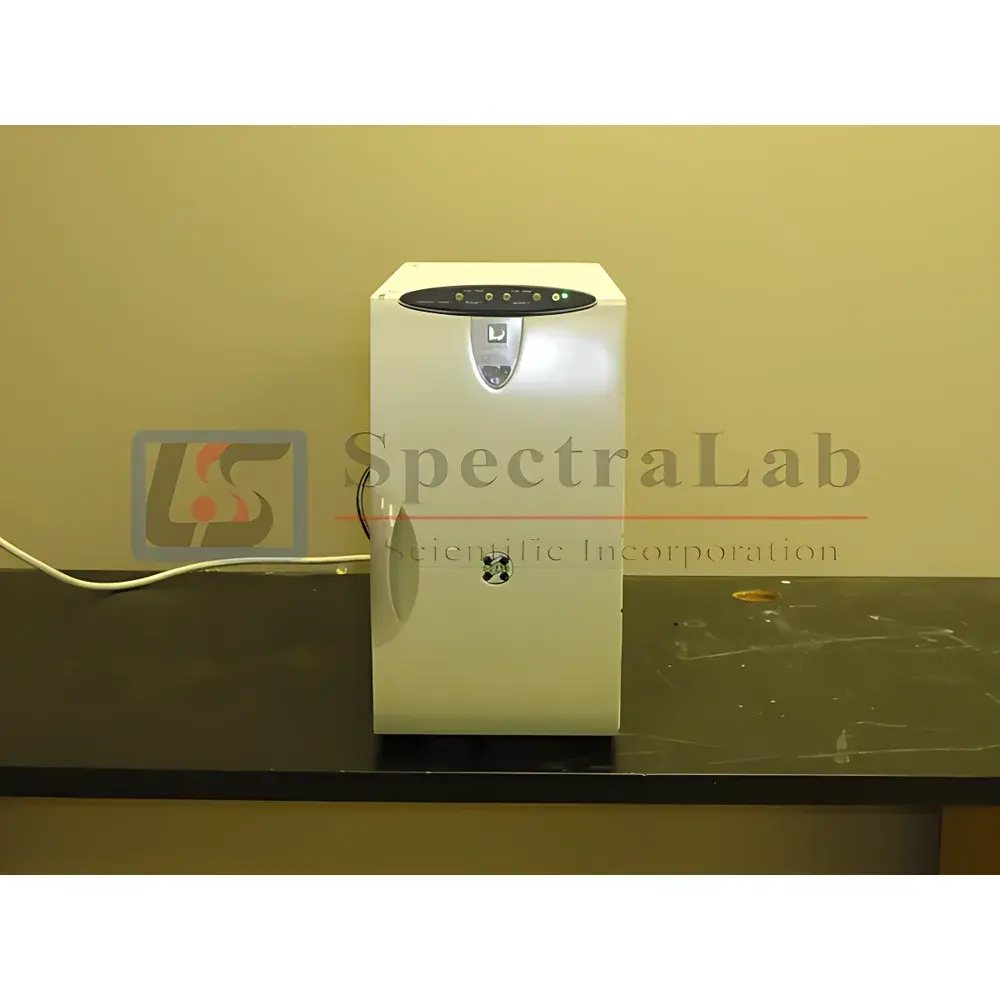
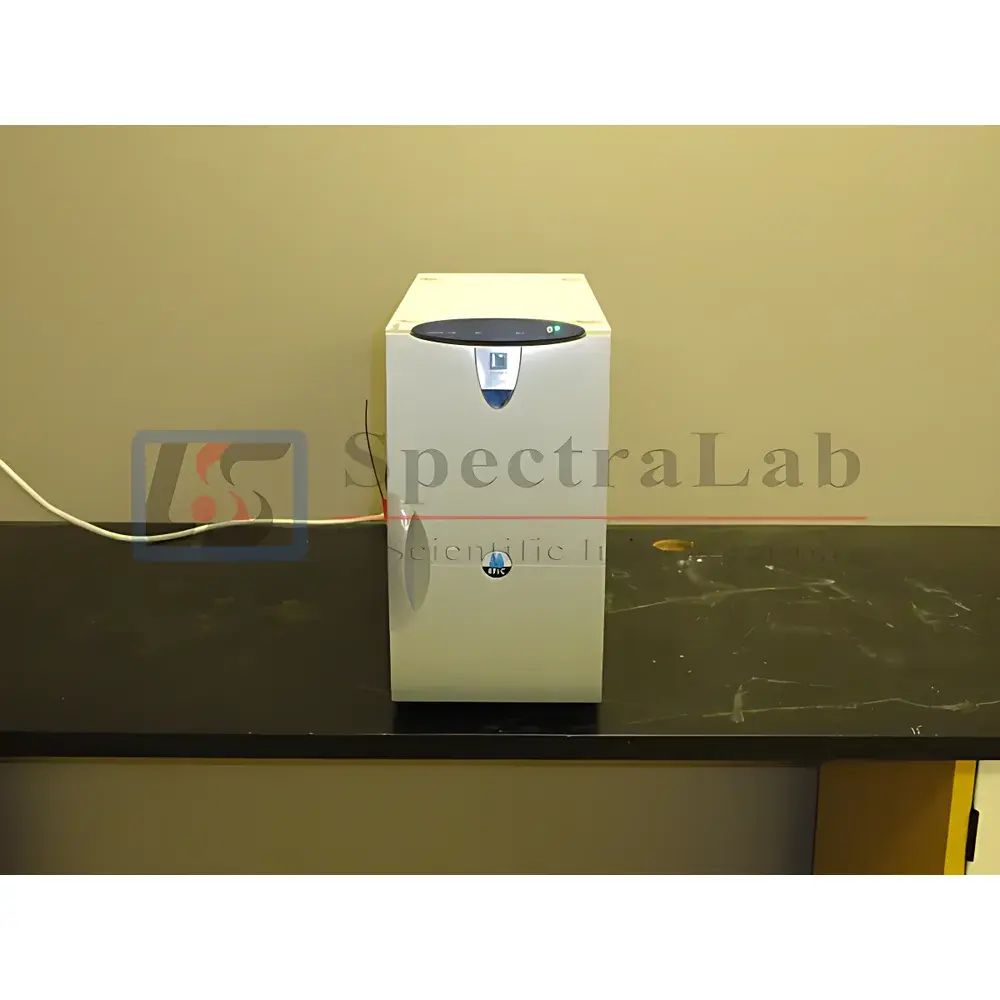
Dionex ICS-3000 Used Ion Chromatography System
| Brand | Dionex |
|---|---|
| Origin | USA |
| Model | ICS-3000 |
| Pump Configuration | Single or Dual Pump (SP/DP) |
| Flow Rate Range | 0.001–10.0 mL/min |
| Max Operating Pressure | 35 MPa (5000 psi) |
| Detector Modules | Conductivity Detector (0–15,000 µS), Electrochemical Detector (Ag, Pt, Au, GC electrodes) |
| Eluent Generator | Single- or Dual-Channel EG with Programmable High-Voltage Power Supply & High-Pressure Degassing |
| Eluent Organizer | Dual EO slots, each supporting up to four 1-L/2-L or two 4-L bottles with simultaneous 4-channel pressurization |
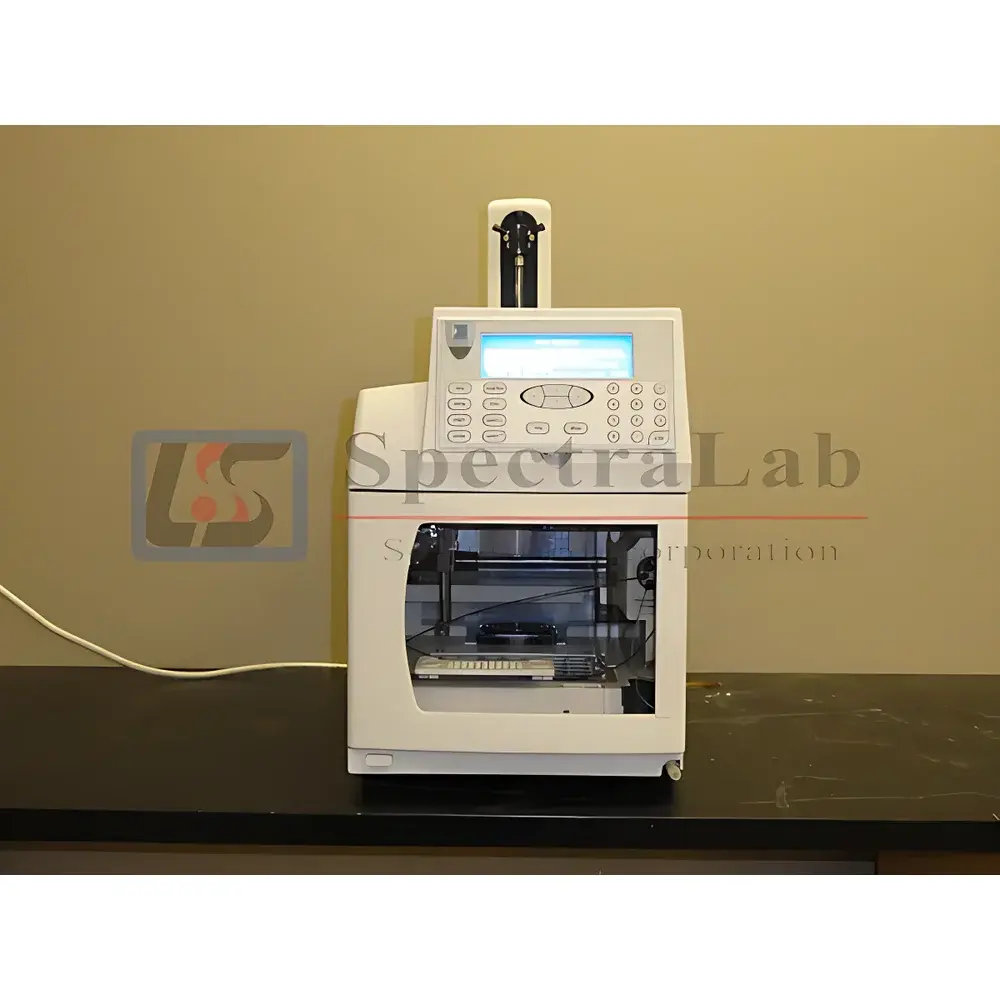
| Auto-sampler | Supports Concentrated, Simultaneous, Sequential, and Sequential-Concentrated Injection Modes |
| Instrument Age | 4 years |
| Warranty | 6 months |
| Compliance | Fully tested per SpectraLab Scientific QC protocol |
Overview
The Dionex ICS-3000 is a high-performance, modular ion chromatography (IC) system originally engineered by Thermo Fisher Scientific (formerly Dionex Corporation) for research-grade anion and cation analysis in complex aqueous matrices. Designed around the principle of suppressed conductivity detection—coupled with gradient elution capability and electrochemical detection options—the ICS-3000 delivers high-resolution separation of inorganic ions, small organic acids, amino acids, carbohydrates, and biogenic amines. Its architecture integrates four core functional modules: pump(s), detector/cartridge module (DC), eluent generator (EG), eluent organizer (EO), and autosampler (AS), enabling configuration flexibility across standard, microbore, and capillary IC applications. The system’s “Eluent Generation” technology eliminates manual preparation of eluents by electrolytically generating high-purity hydroxide (for anion analysis) or methanesulfonic acid (for cation analysis) from deionized water—ensuring exceptional baseline stability, reproducibility, and long-term column lifetime.
Key Features
- Modular dual-pump architecture supporting both isocratic (single-pump) and multi-gradient (dual-pump) operation; flow precision ±0.1% RSD over 0.001–10.0 mL/min range
- Chemically inert PEEK/PEEK-lined fluidic path rated to 35 MPa (5000 psi), compatible with aggressive eluents including KOH, NaOH, and MSA
- Integrated conductivity detector with auto-ranging (0–15,000 µS) and temperature-compensated cell design for low-noise, high-sensitivity quantification
- Optional electrochemical detection module configurable with Ag, Pt, Au, or glassy carbon working electrodes for trace-level analysis of reducible/oxidizable species (e.g., iodide, sulfite, catecholamines)
- On-demand eluent generation via solid-state electrolytic membranes—enabling precise, programmable gradient profiles without solvent degassing or manual mixing
- Autosampler with dual-valve manifold supporting four injection modes: concentrated, simultaneous, sequential, and sequential-concentrated—optimized for trace enrichment and high-throughput screening
Sample Compatibility & Compliance
The ICS-3000 is validated for direct injection of filtered aqueous samples—including drinking water, wastewater, food extracts, pharmaceutical formulations, and biological fluids—without derivatization. It complies with method requirements outlined in ASTM D4327 (anions in water), ISO 10304-1 (determination of dissolved anions), USP (conductivity of purified water), and EPA Methods 300.0, 300.1, and 317.0. All hardware components meet RoHS and CE directives. When operated with Thermo Scientific Chromeleon™ CDS software (v7.2 or later), the system supports full 21 CFR Part 11 compliance—including electronic signatures, audit trails, and user-access controls—making it suitable for GLP/GMP-regulated environments.
Software & Data Management
Data acquisition, sequence control, peak integration, and report generation are managed through Chromeleon Chromatography Data System (CDS). The software provides real-time monitoring of pressure, flow, conductivity, and temperature across all modules, with automated fault logging and predictive maintenance alerts. Raw data files (.cdf) are stored in vendor-neutral format and support third-party reprocessing via open-standard libraries (e.g., netCDF). Audit trail records include operator ID, timestamp, parameter changes, calibration events, and result approvals—fully traceable for regulatory submissions. Optional network licensing enables centralized deployment across multi-instrument laboratories.
Applications
- Inorganic anion analysis: Quantification of F⁻, Cl⁻, NO₂⁻, Br⁻, NO₃⁻, PO₄³⁻, SO₄²⁻, S₂O₃²⁻, CN⁻ in environmental, food, and industrial samples
- Cation analysis: Determination of Li⁺, Na⁺, NH₄⁺, K⁺, Mg²⁺, Ca²⁺ in beverages, fertilizers, and battery electrolytes
- Organic acid profiling: Separation and quantitation of formic, acetic, lactic, citric, malic, and succinic acids in fermentation broths and dairy products
- Amino acid and carbohydrate analysis: Isocratic and gradient methods for glycine, lysine, glucose, sucrose, lactose, and xylose using specialized columns (e.g., CarboPac PA1, SA10)
- Forensic toxicology: Detection of biogenic amines (histamine, putrescine, cadaverine) in postmortem tissue and food spoilage investigations
FAQ
Is this unit fully refurbished and tested prior to shipment?
Yes. This ICS-3000 system underwent comprehensive functional validation at SpectraLab Scientific’s ISO 9001-certified facility, including pressure integrity checks, detector linearity verification, gradient accuracy testing, and multi-day stability assessment.
Does the system include Chromeleon software and a valid license?
The instrument ships with Chromeleon CDS v7.2 preinstalled and includes a perpetual node-locked license; optional upgrade paths to v7.4+ are available upon request.
Are consumables and spare parts included?
A starter kit is provided, including one set of suppressor cartridges (ASRS 300/CSRS 300), two guard columns, one analytical column (e.g., IonPac AS18), and six 1-L eluent bottles.
Can this system be upgraded to support capillary IC or RFIC-ER?
Yes—the DC module accepts capillary-scale detectors and RFIC-ER (Reagent-Free IC with Eluent Regeneration) configurations; upgrade kits are available separately.
What documentation accompanies the system?
Full factory manuals (electronic and printed), calibration certificates, test reports, and a detailed handover checklist are delivered with the instrument.