
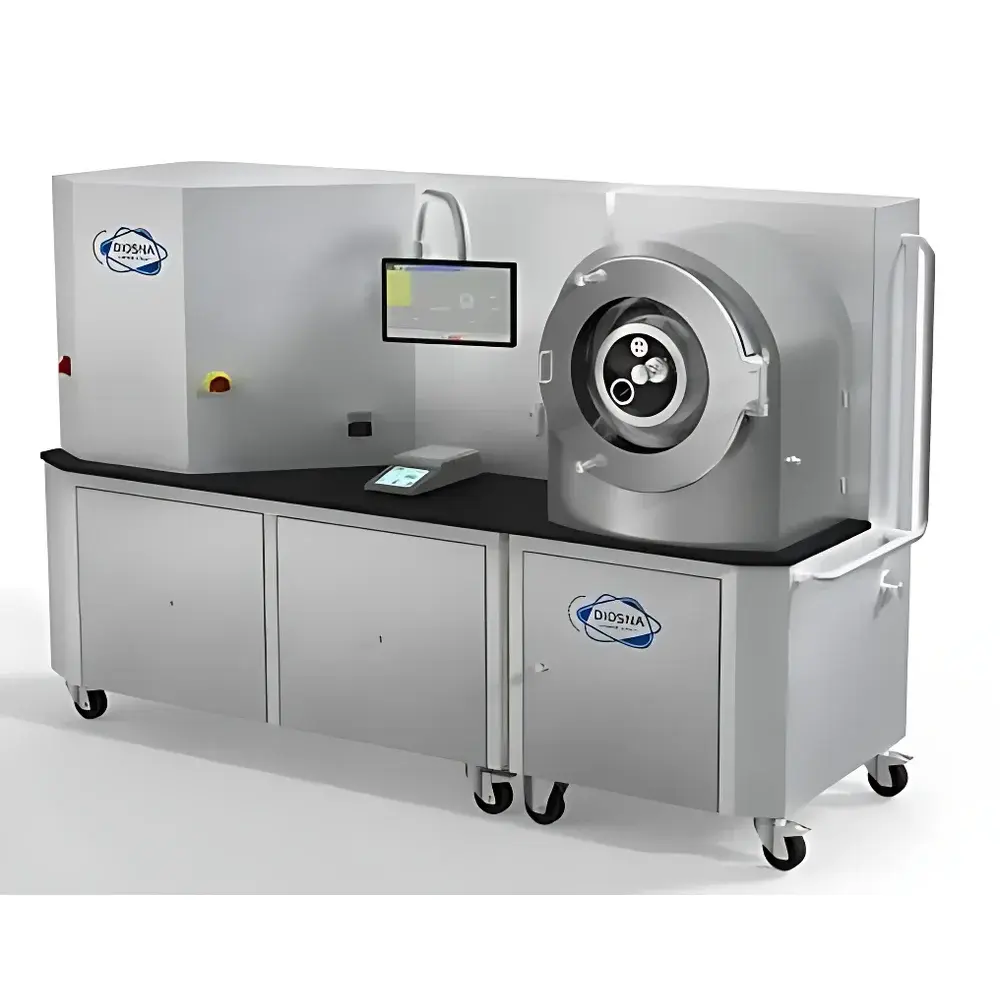


Diosna MidiLab RC Pilot-Scale Film Coating System
| Brand | Diosna |
|---|---|
| Origin | Germany |
| Model | MidiLab RC |
| Coating Drum Volumes | 7 L / 12 L / 20 L |
| Batch Capacity | 2.0–16.0 kg |
| Max Inlet Air Temperature | 100 °C (digital display) |
| Max Airflow | 250 m³/h |
| Power Supply | 380 V / 50 Hz, 24 kW |
| Dimensions (W×D×H) | 288 × 99 × 191 cm |
Overview
The Diosna MidiLab RC is a fully integrated, mobile pilot-scale film coating system engineered for pharmaceutical process development and scale-up validation. Designed around fluidized-bed and pan-coating principles, it enables precise, reproducible application of functional and aesthetic film coatings—including aqueous polymer dispersions, organic solvent-based formulations, and sugar-based systems—on tablets, pellets, and granules. Unlike conventional lab-scale coaters limited to fixed configurations, the MidiLab RC combines modular architecture with industrial-grade control logic, bridging the critical gap between early-stage formulation screening and commercial manufacturing. Its core design philosophy centers on process fidelity: airflow dynamics, thermal profiles, spray atomization geometry, and drum kinematics are all calibrated to mirror those of Diosna’s production-scale systems (e.g., PotaLine or Conti-Glatt series), ensuring direct transferability of coating parameters such as spray rate, inlet/outlet temperature differentials, and relative humidity control.
Key Features
- Modular dual-function platform supporting both fluidized-bed granulation/drying and pan-type film/sugar coating in a single footprint
- Three interchangeable coating drums (7 L, 12 L, 20 L) enabling batch scalability from 2.0 kg to 16.0 kg—aligned with ICH Q5C and Q8(R2) guidance on scale-dependent parameter mapping
- Integrated air handling unit with digitally controlled heating (up to 100 °C), variable-speed fan (max 250 m³/h), and optional inlet air cooling/de-frosting for solvent-based processes
- Rotatable and tiltable stainless-steel touchscreen HMI with intuitive graphical interface; supports recipe storage, real-time trend logging, and alarm management
- Tool-free module exchange: fluid bed base unit and tablet coating kit can be reconfigured in under 15 minutes without mechanical disassembly
- Full mobility via casters and compact footprint (288 × 99 × 191 cm); designed for ISO Class 7/8 cleanroom-compatible lab environments
- Front-access rotating door with large borosilicate observation window for continuous visual monitoring of coating uniformity and particle motion
- Adjustable spray arm geometry—length, angle, and nozzle height—to optimize droplet trajectory and film coverage across varying drum diameters
Sample Compatibility & Compliance
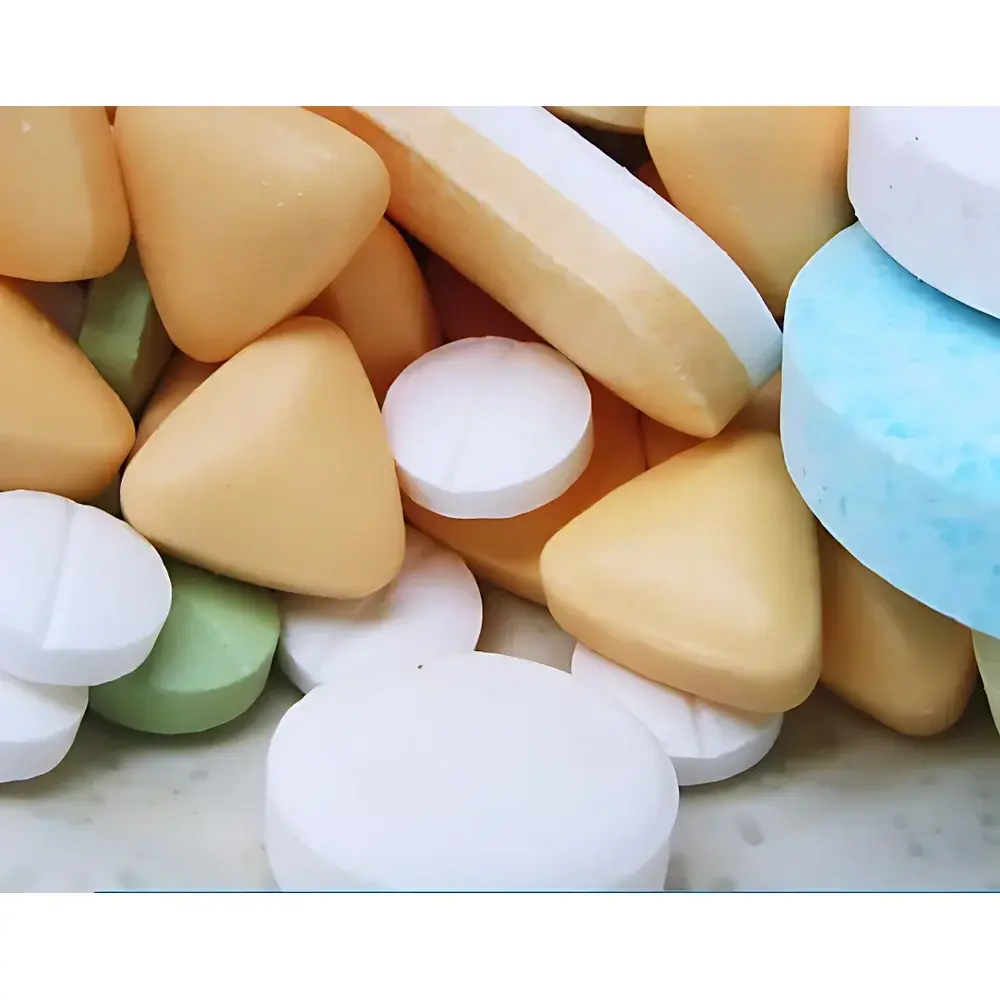
The MidiLab RC accommodates standard pharmaceutical dosage forms including immediate-release and modified-release tablets (round, oval, capsule-shaped), multiparticulates (spheres, pellets ≥ 0.5 mm), and granules. It complies with fundamental GMP-aligned engineering practices per EU Annex 15 and FDA Process Validation Guidance (Stage 1: Process Design). All wetted parts contact surfaces are electropolished AISI 316L stainless steel (Ra ≤ 0.4 µm), certified per ASTM A967 and compliant with USP . Optional configurations support operation under inert atmosphere (N₂ purge) and organic solvent handling (ATEX Zone 22 certification available upon request). Data integrity meets ALCOA+ principles; audit trail functionality and user access levels align with 21 CFR Part 11 requirements when paired with Diosna’s validated CoatingMaster software.
Software & Data Management
CoatingMaster software (v4.2+) provides full lifecycle data capture: setpoint programming, real-time PID-controlled parameter visualization (inlet/outlet temperature, airflow, drum speed, spray pressure), and automated event tagging (e.g., “spray start”, “drum rotation change”). Raw time-series data exports to CSV or SQL databases for statistical analysis (e.g., DoE, PCA, multivariate control charts). Batch reports include metadata (operator ID, timestamp, environmental conditions), deviation flags, and digital signatures. The system supports electronic batch record (EBR) integration via OPC UA or MQTT protocols for enterprise MES/SCADA connectivity.
Applications
- Formulation optimization of polymeric film coatings (e.g., Eudragit®, Kollicoat®, Opadry®) under varied drying kinetics
- Process characterization for regulatory filings (CTD Module 3.2.P.3), including identification of critical process parameters (CPPs) affecting dissolution profile and coating thickness distribution
- Stability-indicating method development: correlation of lab-scale coating parameters with long-term stability outcomes (e.g., moisture ingress, plasticizer migration)
- Scale-down modeling for tech transfer: establishing predictive correlations between lab-scale residence time, specific energy input, and final product attributes (weight gain RSD ≤ 2.5%, gloss uniformity > 92%)
- Training platform for manufacturing personnel on coating defect recognition (orange peel, twinning, erosion) and root-cause troubleshooting
FAQ
What regulatory standards does the MidiLab RC support for data integrity?
It supports 21 CFR Part 11 compliance when used with validated CoatingMaster software, including electronic signatures, audit trails, and role-based access control.
Can the system handle ethanol- or acetone-based coating solutions?
Yes—optional explosion-proof components (ATEX-certified fans, sealed enclosures) and inert gas purging enable safe operation with flammable solvents.
Is remote monitoring or integration with a central LIMS possible?
Yes—via OPC UA or MQTT interfaces; raw sensor streams and batch summaries can be routed to LIMS, MES, or cloud analytics platforms.
How is coating uniformity verified during development runs?
Through integrated weight gain measurement (external analytical balance interfaced via RS-232/USB), near-infrared (NIR) probe compatibility (optional), and post-run content uniformity testing per USP .
What maintenance intervals are recommended for the spray nozzles and air filters?
Nozzle inspection every 20 operating hours; HEPA filter replacement every 500 hours or per differential pressure threshold (≥ 250 Pa); full preventive maintenance annually by Diosna-certified engineers.



