
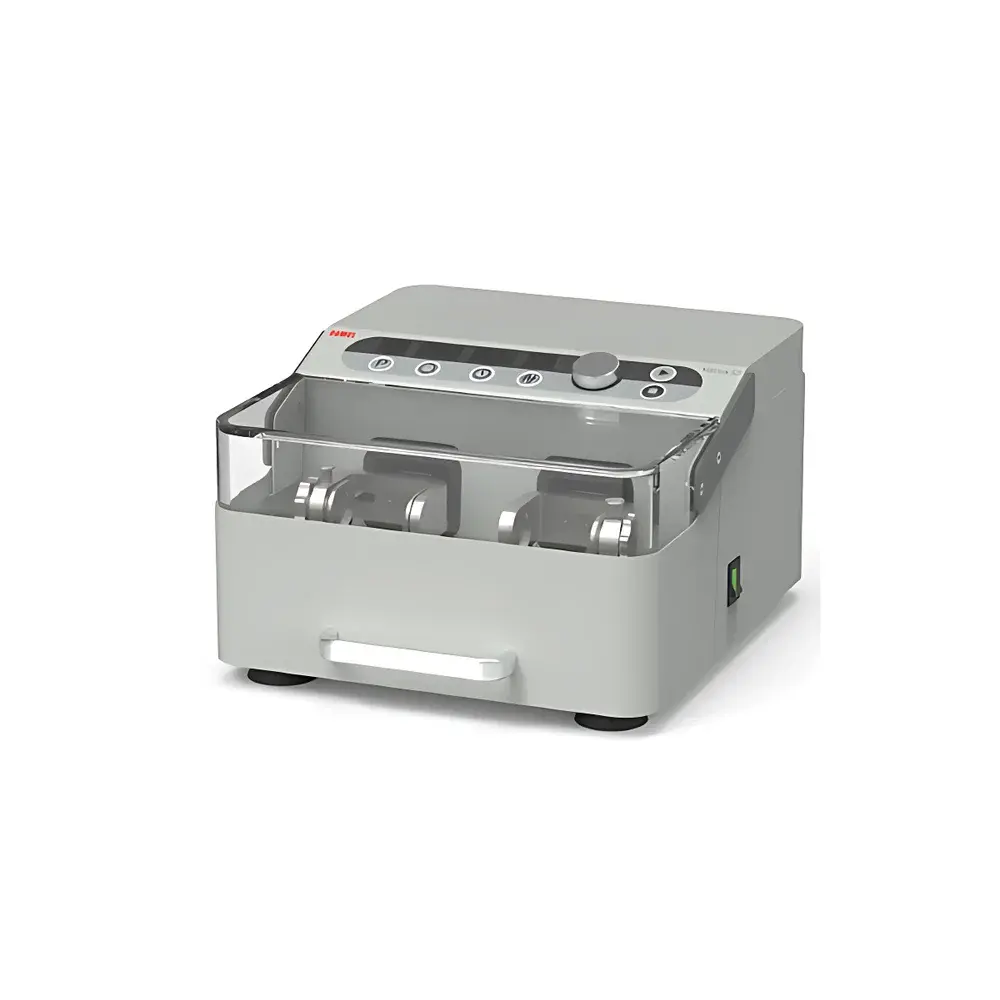
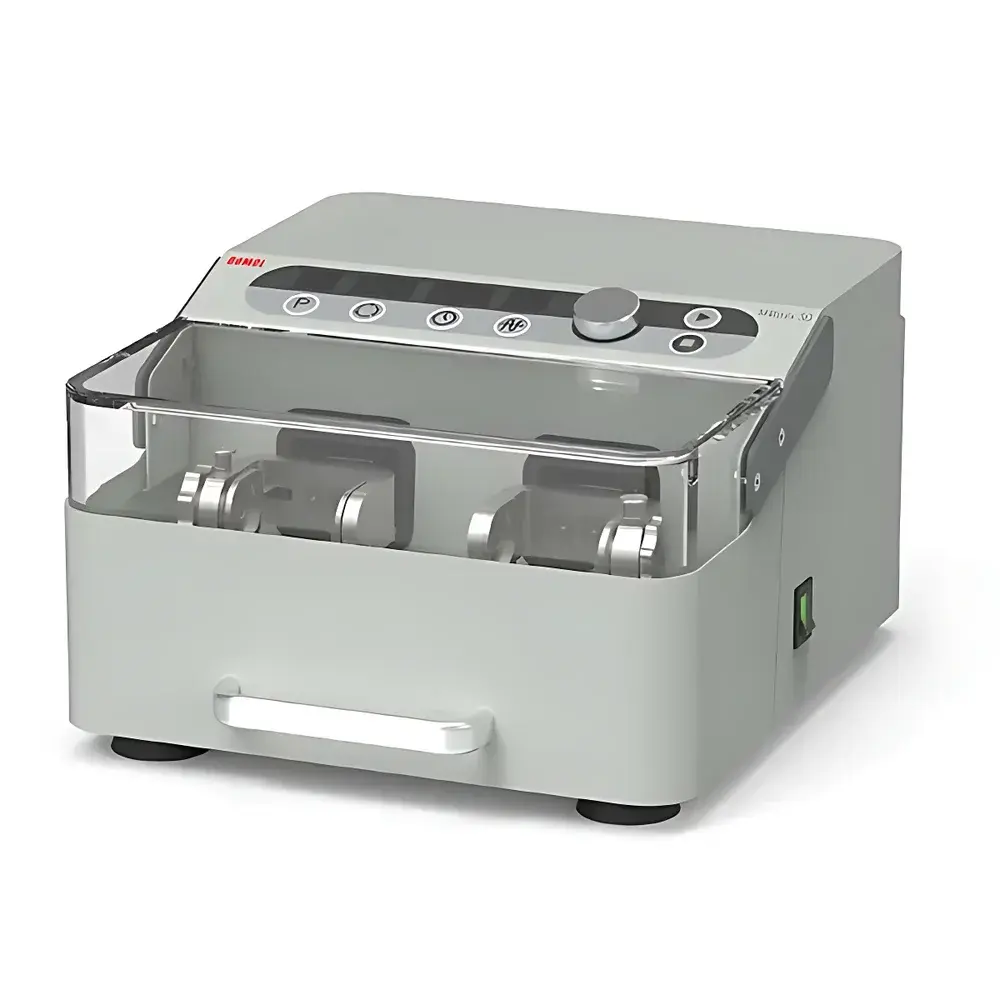
Domel MillMix 30 High-Performance Benchtop Ball Mill & Homogenizer
| Brand | Domel |
|---|---|
| Origin | Imported (Non-Chinese) |
| Model | MillMix 30 |
| Instrument Type | Ball Mill / Oscillating Mixer |
| Sample Compatibility | Hard, Brittle, Fibrous, and Cryogenic Samples |
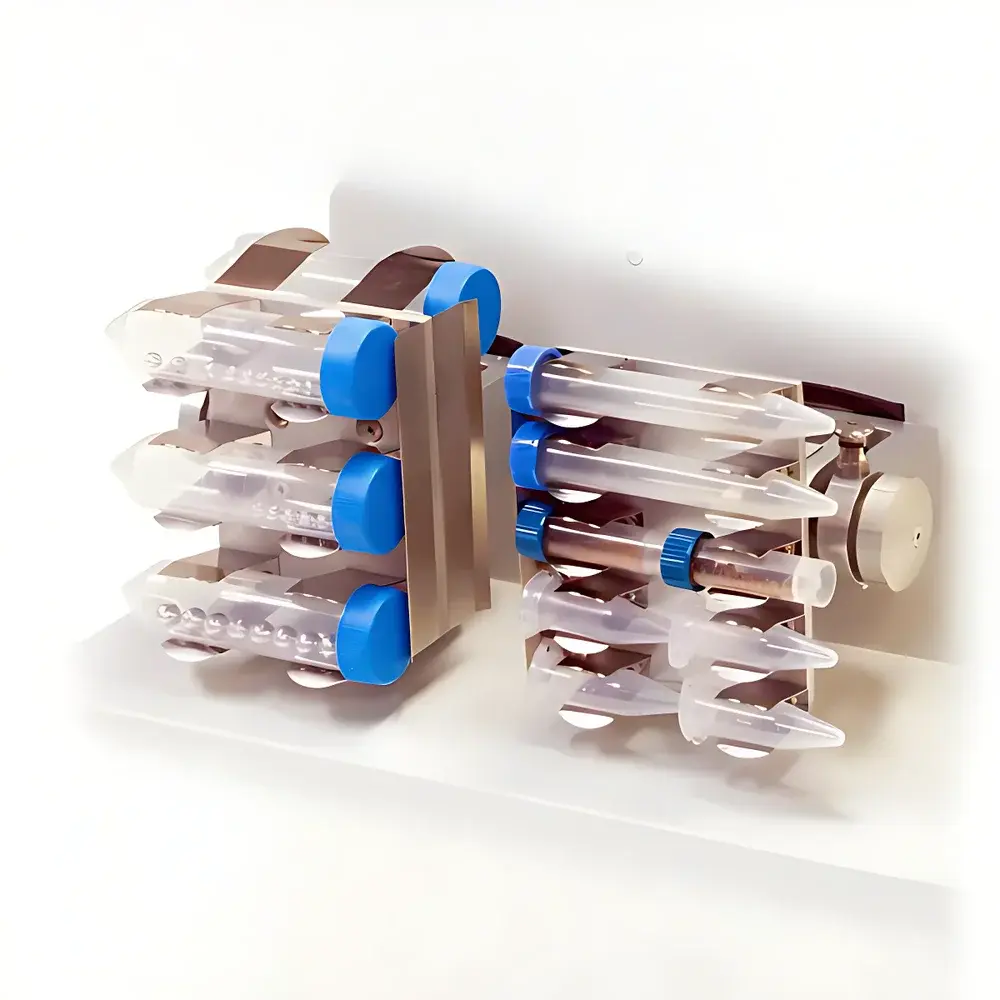
| Batch Capacity | 2 × 50 mL or up to 192 individual samples (e.g., 24 × 1.5/2 mL tubes, 6 × microplates) |
| Max. Frequency | 30 Hz (3600 oscillations/min) |
| Stroke Length | 32 mm |
| Max. Feed Size | 20 mm |
| Max. Total Load | 2 × 600 g |
| Speed Control | Single-knob analog + digital LED interface |
| Timer Range | 5 s – 99 min 50 s (1 s / 10 s steps) or continuous mode |
| Power | 200 W |
| Motor | Brushless DC induction motor |
| Dimensions (H×W×D) | 256 × 400 × 471 mm |
| Height (lid open) | 570 mm |
| Net Weight | 45.5 kg |
| Operating Environment | 5–40 °C, ≤85% RH |
| Power Supply | 230 V, 50/60 Hz |
Overview
The Domel MillMix 30 is a high-efficiency, benchtop ball mill and oscillating homogenizer engineered for reproducible mechanical disruption of diverse solid and semi-solid samples under ambient, chilled, or cryogenic conditions. It operates on the principle of high-frequency linear reciprocating motion—driving grinding jars along a precise 32 mm stroke at up to 30 Hz—inducing intense impact, shear, and friction forces between sample material and grinding media (e.g., stainless steel, tungsten carbide, or zirconia beads). This mechanism enables rapid cell lysis, particle size reduction, homogenization, and powder mixing across biological, geological, agricultural, polymer, and pharmaceutical research domains. Unlike rotary or planetary mills, the MillMix 30’s unidirectional oscillation minimizes heat generation during extended runs and ensures consistent energy transfer regardless of sample volume asymmetry—critical for inter-sample comparability in regulated workflows.
Key Features
- Brushless DC motor with sealed magnetic drive: Delivers stable torque output over time, zero carbon brush wear, and maintenance-free operation for >10,000 hours of service life.
- Programmable control system: Stores up to 99 user-defined protocols—including speed (1–30 Hz), duration (5 s–99 min 50 s), and cycle count (1–9)—with real-time parameter adjustment during active runs via intuitive single-knob interface and backlit LED display.
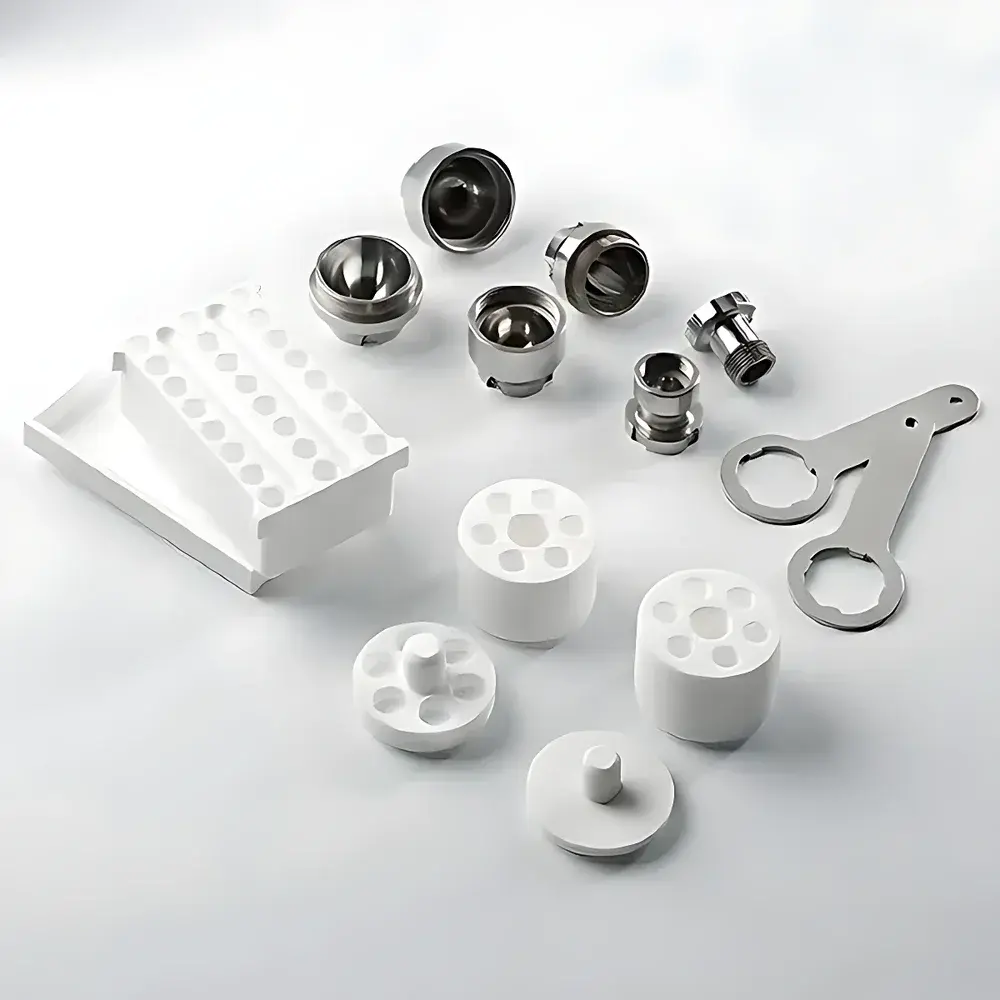
- Cryogenic compatibility: Stainless steel grinding jars and POM or medical-grade stainless steel adapters are certified for pre-cooling in −80 °C freezers or liquid nitrogen baths; validated for sub-zero milling without thermal shock or seal failure.
- Modular sample handling architecture: Supports dual 50 mL jars simultaneously—or scalable configurations including 24 × 1.5/2 mL tubes, 6 × standard microplates, 3 × deep-well plates, or custom centrifuge tube arrays (5–50 mL), enabling parallel processing while preserving cross-contamination control.
- Robust mechanical design: Heavy-duty aluminum alloy frame with vibration-damping feet and reinforced lid locking mechanism ensures operational stability at maximum frequency, even with unbalanced loads.
Sample Compatibility & Compliance
The MillMix 30 accommodates hard, tough, fibrous, and temperature-sensitive materials—including plant tissues (roots, leaves, seeds), animal organs (liver, muscle, bone), microbial pellets, soil aggregates, mineral ores, thermoplastics, and ceramic powders. Its mechanical action achieves median particle size reductions from millimeter-scale fragments to sub-10 µm distributions, depending on media selection and run parameters. All contact surfaces comply with ISO 8573-1 (compressed air purity) and FDA-relevant non-reactive material standards (e.g., USP Class VI-certified POM adapters, EN 10204 3.1 material certificates for stainless steel components). The device supports GLP/GMP-aligned documentation through optional audit-trail-enabled software integration (see Software section) and meets electromagnetic compatibility requirements per IEC 61326-1 and safety standards per IEC 61010-1.
Software & Data Management
While the MillMix 30 operates as a standalone instrument with embedded firmware, it is compatible with Domel’s optional LabLink™ PC software suite (v2.4+), which provides remote protocol management, execution logging with timestamped metadata (operator ID, jar ID, ambient temperature), and CSV export for LIMS integration. When configured with audit trail activation, the system records all parameter changes, start/stop events, and error codes—fully compliant with FDA 21 CFR Part 11 requirements for electronic records and signatures. Raw timing and frequency data can be exported for statistical process control (SPC) analysis or method validation reports aligned with ISO/IEC 17025 clause 7.2.2.
Applications
- Molecular biology: Rapid lysis of Gram-positive bacteria, yeast, and filamentous fungi prior to DNA/RNA extraction; homogenization of frozen tissue biopsies without RNA degradation.
- Environmental analysis: Grinding of soil, sediment, and sludge samples to <250 µm for heavy metal leaching assays (EPA Method 3050B) or organic contaminant extraction (EPA Method 3540C).
- Materials science: Production of nanostructured composites via high-energy milling of metal oxides, alloys, or battery cathode precursors.
- Pharmaceutical QA/QC: Uniform blending of active pharmaceutical ingredients (APIs) with excipients and particle size distribution verification per USP and Ph. Eur. 2.9.32.
- Agricultural research: Cell wall disruption in lignocellulosic biomass for enzymatic digestibility studies and metabolite profiling.
FAQ
What types of grinding media are recommended for soft biological tissues versus hard mineral samples?
For soft tissues (e.g., liver, leaf), 3–5 mm stainless steel or hardened steel beads provide optimal lysis efficiency with minimal nucleic acid shearing. For quartz, basalt, or ceramic powders, tungsten carbide (25 mL jar) or zirconia (35 mL jar) media are required to sustain impact integrity at 30 Hz.
Can the MillMix 30 be used for solvent-assisted grinding (wet milling)?
Yes—grinding jars are hermetically sealed with silicone O-rings rated for common organic solvents (e.g., ethanol, chloroform, acetone) and aqueous buffers. Ensure jar fill level remains ≤60% to prevent pressure buildup during high-frequency oscillation.
Is calibration traceable to national standards?
Frequency output is factory-calibrated against NIST-traceable laser vibrometry (±0.2 Hz accuracy); certificate of conformance included with each unit. Optional annual recalibration service available via Domel-accredited service centers.
How does the dual-jar configuration affect balance and reproducibility?
The symmetrical dual-clamp system mechanically couples both jars to the same oscillation axis—eliminating phase shift. Independent load variation of up to ±30% between jars has been verified to maintain ≤1.5% coefficient of variation in final particle size distribution (PSD) across replicate runs.
What safety certifications apply to the MillMix 30 in EU and North American laboratories?
CE-marked per Machinery Directive 2006/42/EC and EMC Directive 2014/30/EU; listed to UL 61010-1 (US/Canada) with full third-party verification by TÜV Rheinland. No additional lab-specific installation permits required.



