
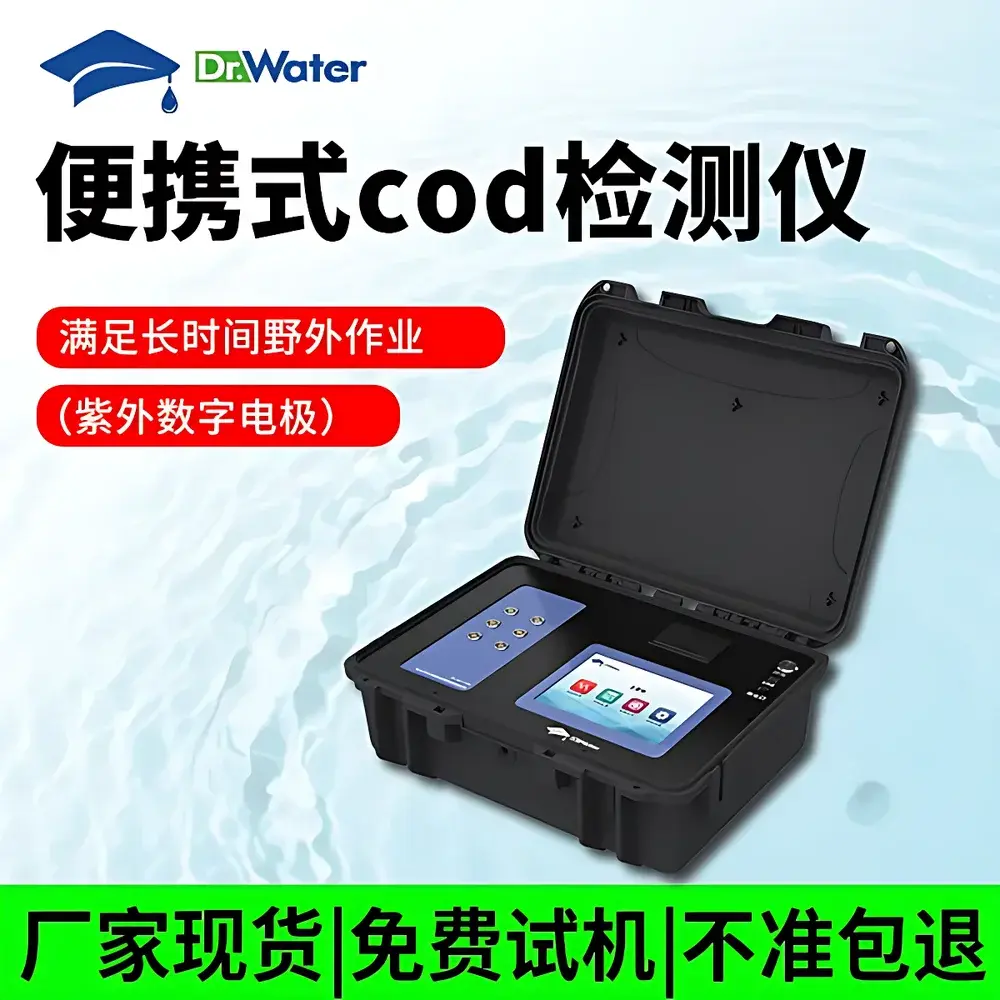
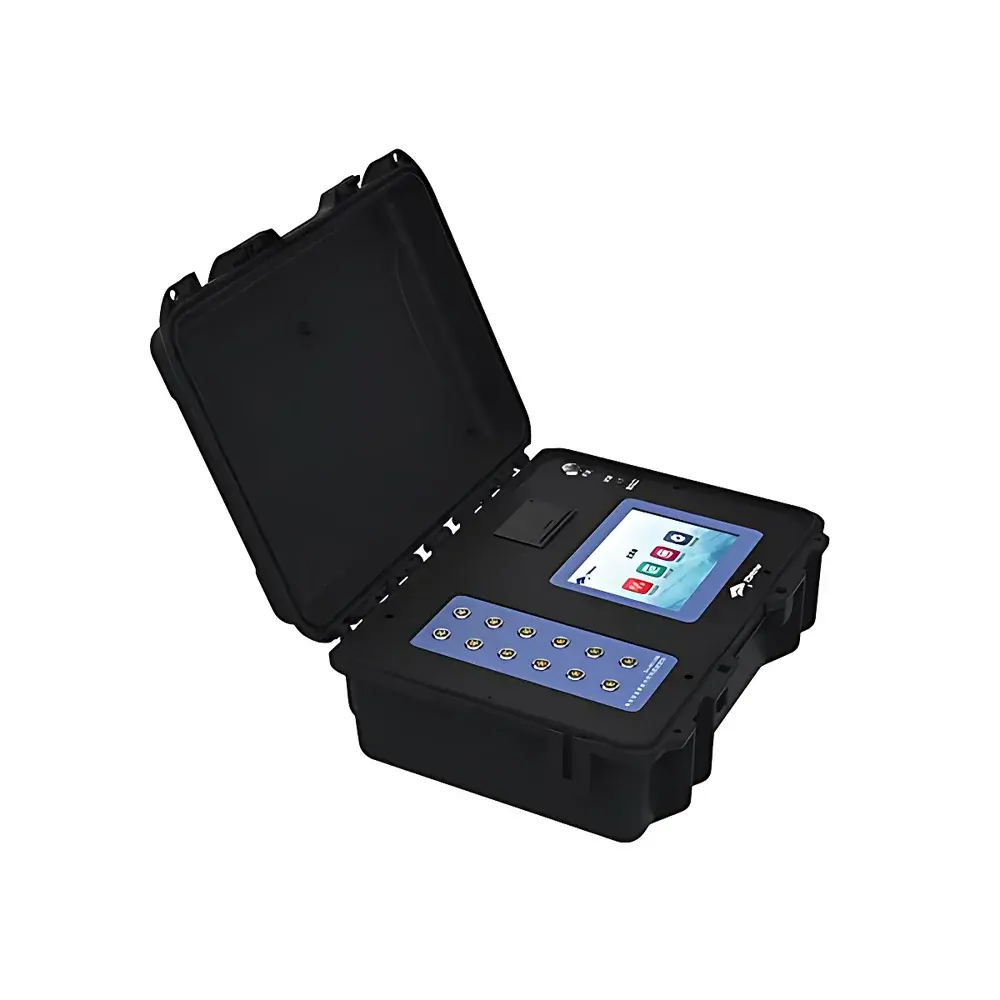
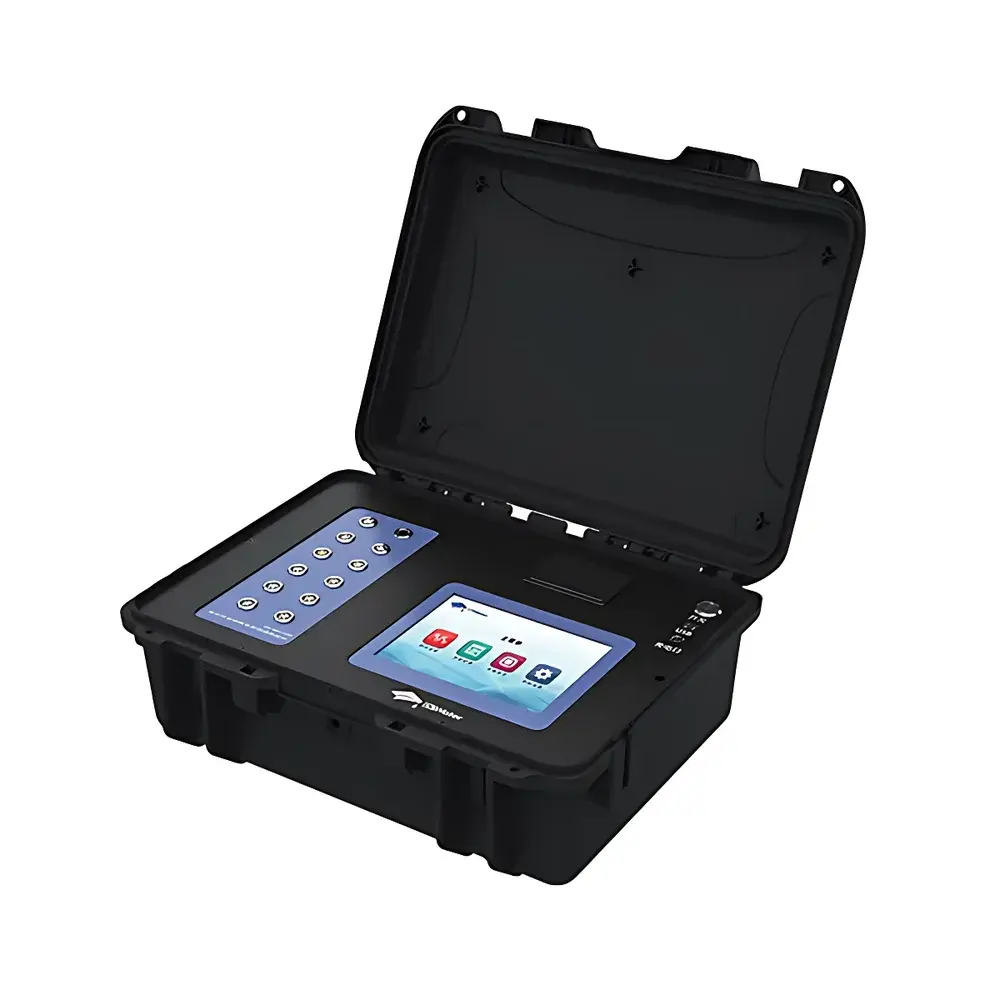
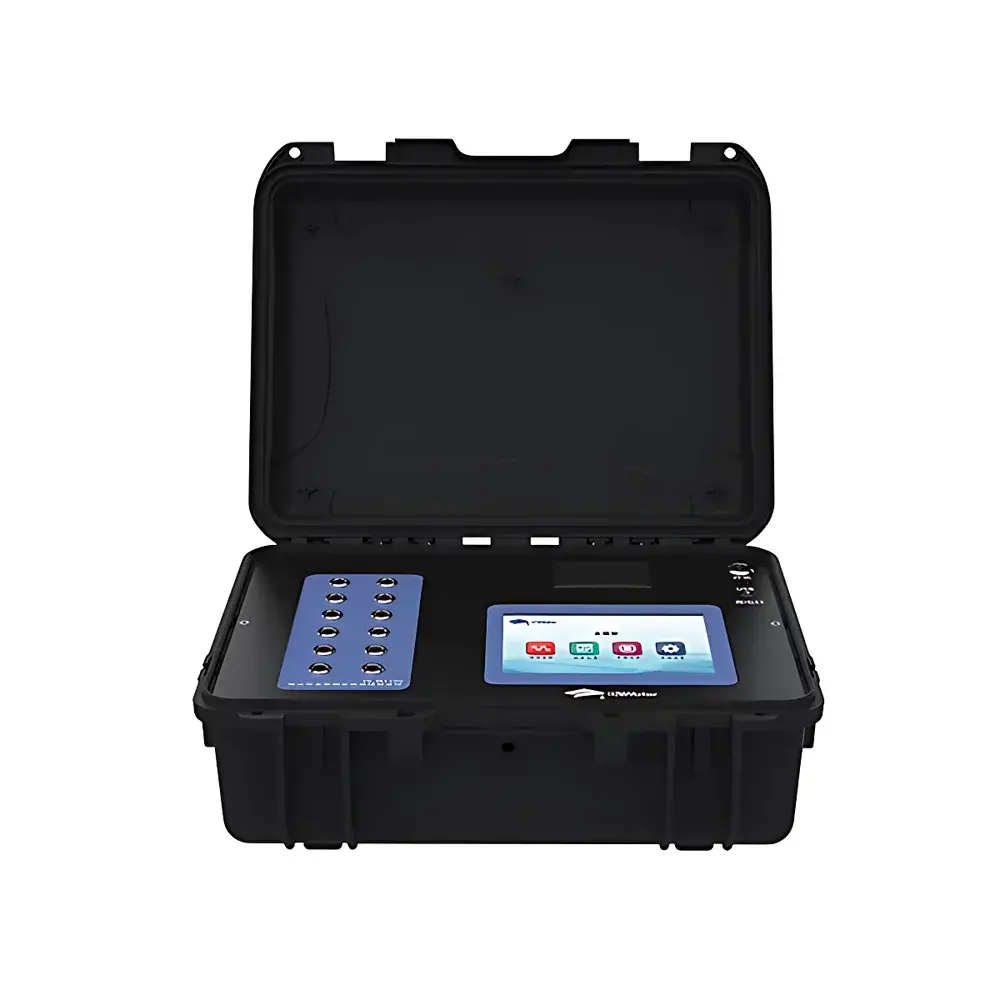
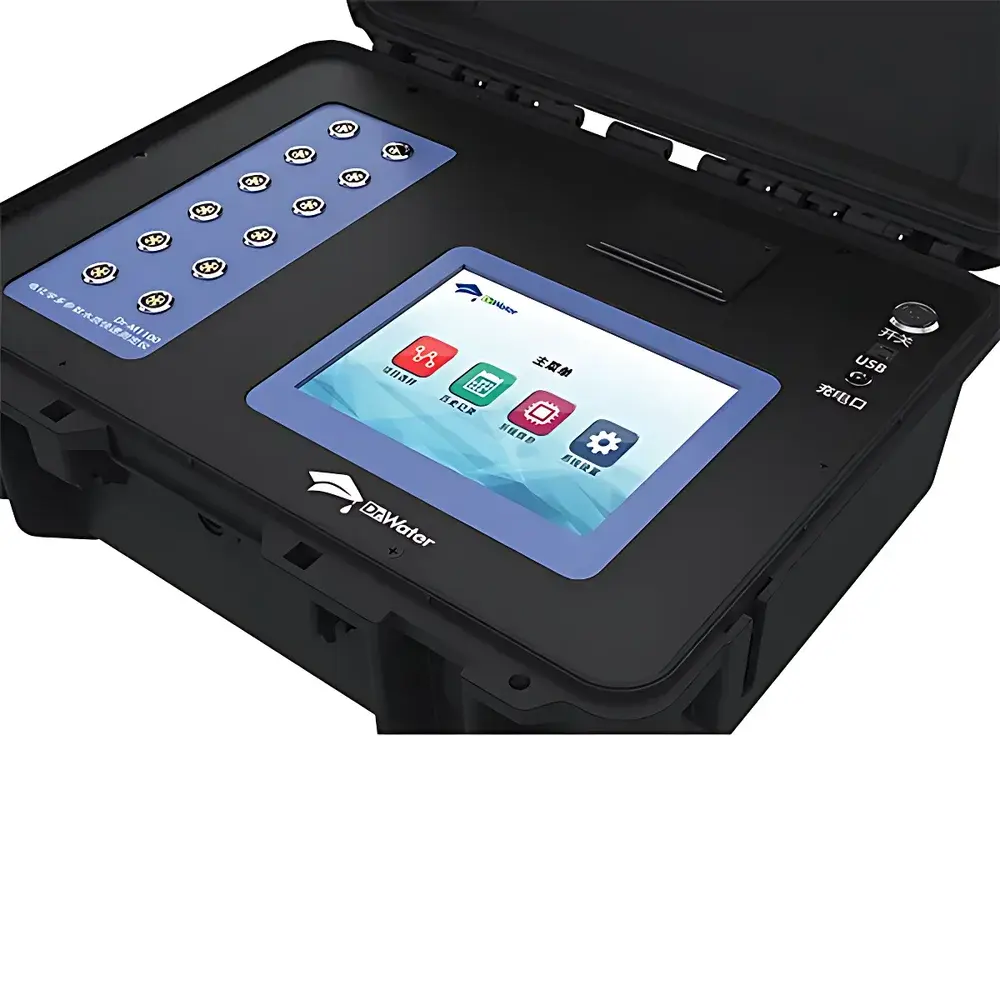
Dr-M1101 Portable Multi-Parameter Water Quality Analyzer (COD, pH, DO, EC, Turbidity, ORP, TDS, Chlorophyll-a, etc.) by DoctorWater
| Brand | DoctorWater |
|---|---|
| Model | Dr-M1101 |
| Type | Portable Multi-Parameter Analyzer |
| Measurement Principle | Electrochemical Sensing (COD via catalytic oxidation current detection) |
| COD Range | 0–500 mg/L |
| COD Accuracy | ≤ ±5% FS |
| Detection Limit | Not Specified (Typical for electrochemical COD sensors: ~2 mg/L) |
| Measurement Time | < 60 s per parameter |
| Display | 8-inch HD color capacitive touchscreen |
| Data Storage | Up to 1,000,000 records |
| Power Supply | Rechargeable Li-ion battery + AC adapter |
| Operating Environment | 0–50 °C, ≤85% RH (non-condensing) |
| Electrode Protection Rating | IP68 |
| Electrode Interface | Digital smart interface with auto-recognition |
| Number of Simultaneous Channels | 6 independent digital electrode ports (expandable to 12) |
| Readout Modes | Real-time, Timed, Interval |
| Data Output | USB 2.0 |
| Language Support | English & Chinese |
Overview
The Dr-M1101 Portable Multi-Parameter Water Quality Analyzer is an integrated field-deployable instrument engineered for rapid, reagent-free assessment of critical water quality parameters—including Chemical Oxygen Demand (COD)—using solid-state electrochemical sensing technology. Unlike conventional dichromate-based or spectrophotometric COD methods, the Dr-M1101 employs a catalytic oxidation amperometric sensor that quantifies oxygen demand through real-time current response under controlled potential, eliminating hazardous chemical handling, digestion steps, and laboratory infrastructure dependency. This principle enables on-site COD estimation with high repeatability and minimal interferences from chloride or nitrate—key advantages in wastewater screening, effluent compliance checks, and source water surveillance. Designed for dual-use scenarios, the system meets the operational rigors of environmental field surveys while maintaining metrological integrity suitable for QA/QC documentation in regulated environments.
Key Features
- Digital smart electrode architecture with plug-and-play recognition—each sensor self-identifies its parameter type and calibration coefficients upon connection, removing manual configuration errors.
- Auto-temperature compensation (ATC) algorithm integrated into all thermal-sensitive measurements (pH, DO, EC, ORP), ensuring traceable accuracy across ambient gradients from 0 to 50 °C.
- Six independent digital electrode channels operate concurrently without cross-talk; each channel supports full parameter autonomy—including zero/span adjustment, calibration logging, and diagnostics.
- Triple readout mode selection: real-time continuous monitoring, timed endpoint acquisition (user-defined duration), and programmable interval sampling (e.g., every 5/15/30 min) for unattended profiling.
- Energy-optimized power management: customizable sleep timeout (1–120 min), low-power deep-sleep state (<5 µA standby current), and battery status telemetry displayed in real time.
- Ruggedized housing with IP68-rated electrode connectors and corrosion-resistant enclosure; compatible with extended-length (3–5 m) submersible probes for deep-well or open-channel deployment.
Sample Compatibility & Compliance
The Dr-M1101 is validated for use with freshwater, wastewater, surface runoff, drinking water pre-treatment streams, and aquaculture effluents. Its electrochemical COD module complies with the functional equivalence principles outlined in ISO 15705:2002 (water quality — determination of COD using electrochemical oxygen demand sensors) and aligns with ASTM D1253-22 guidance for non-digestive organic load estimation. While not a direct replacement for standardized closed-reflux dichromate methods (e.g., ISO 6060 or EPA 410.4), it serves as a rapid screening tool for trend analysis, process control, and early-warning monitoring—particularly where frequent, low-cost, on-site data are prioritized over absolute reference-grade values. All firmware and data handling modules support GLP-compliant audit trails, including timestamped calibration events, operator ID tagging (via optional login), and immutable record storage.
Software & Data Management
The embedded Linux-based operating system delivers a responsive 8-inch capacitive touchscreen interface with intuitive icon-driven navigation and bilingual (English/Chinese) language switching. Instrument firmware includes built-in data management functions: measurement logging with automatic geotagging (when paired with external GNSS), user-defined project folders, and CSV export via USB mass storage mode. Internal memory retains up to one million timestamped records with full metadata (parameter, unit, temperature, electrode SN, calibration date). The integrated thermal printer produces compliant hard-copy reports featuring instrument ID, test date/time, measured values, and QC flags. For centralized oversight, raw data files are structured for seamless ingestion into LIMS platforms or third-party analytics software (e.g., LabArchives, Panorama, or custom Python/Pandas workflows).
Applications
The Dr-M1101 supports mission-critical workflows across multiple sectors: municipal wastewater treatment plants perform daily influent/effluent COD trending; environmental agencies conduct river basin health assessments without lab turnaround delays; industrial pretreatment units monitor discharge compliance in real time; and research teams deploy multi-sensor arrays for longitudinal limnological studies. Its versatility extends to photovoltaic manufacturing (cooling tower water COD tracking), pharmaceutical facility clean-in-place (CIP) rinse validation, food processing line sanitation verification, and aquaculture pond DO/COD/nutrient co-monitoring. The modular design allows field technicians to swap electrodes based on site-specific needs—e.g., pairing COD + NH₃-N + turbidity for stormwater outfall screening or COD + Cl₂-residual + pH for disinfection efficacy evaluation.
FAQ
Does the Dr-M1101 meet regulatory requirements for COD reporting?
It is designed for rapid screening and process monitoring—not certified for regulatory submission under EPA, ISO, or EU WFD statutory frameworks requiring closed-reflux digestion. Users should verify acceptance criteria with local authorities prior to compliance use.
Can the COD sensor be calibrated against standard potassium hydrogen phthalate (KHP) solutions?
Yes—two-point calibration (zero and span) using KHP standards (e.g., 100 mg/L and 300 mg/L COD equivalents) is supported via the instrument’s calibration menu, with slope and offset stored per sensor serial number.
Is firmware update capability available over USB or wireless connection?
Firmware updates are performed exclusively via USB drive; no Wi-Fi or Bluetooth connectivity is included to maintain electromagnetic compatibility in industrial settings and ensure cybersecurity integrity.
What is the expected service life of the COD electrochemical sensor under routine field use?
With proper cleaning and storage per manufacturer guidelines, the sensor demonstrates ≥12 months of stable performance in typical municipal wastewater matrices; replacement intervals depend on exposure frequency and fouling severity.
Are calibration certificates and traceable standards provided with the instrument?
NIST-traceable calibration check standards (pH 4.01/7.00/10.01, DO saturation, EC 1413 µS/cm) are optionally available; factory calibration certificates conform to ISO/IEC 17025 requirements when ordered with accredited calibration services.
Related Products







