
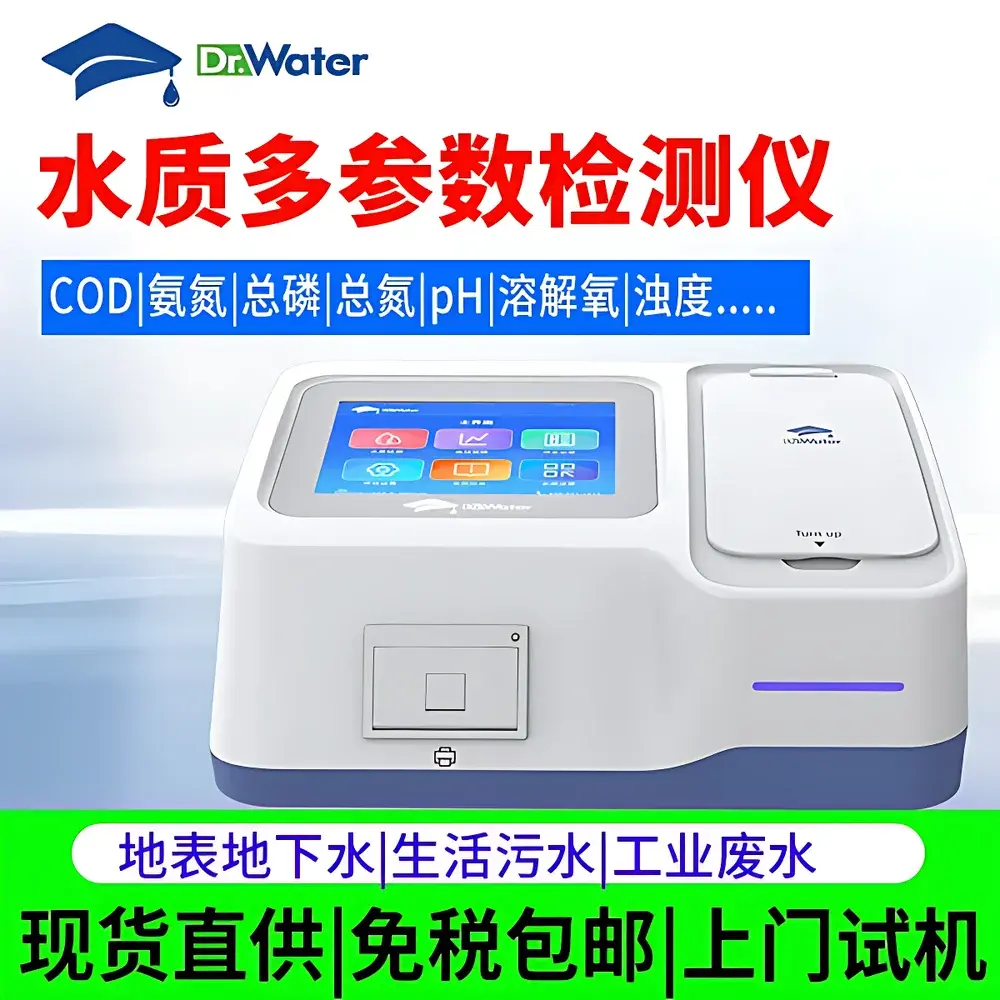
Dr-T9000 Multi-Parameter Water Quality Analyzer by DoctorWater
| Brand | DoctorWater |
|---|---|
| Origin | Hunan, China |
| Model | Dr-T9000 |
| Instrument Type | Laboratory Water Quality Analyzer |
| Detection Principle | Spectrophotometry & Electrochemical Sensing |
| Measurable Parameters | COD (2–20,000 mg/L), Ammonia-N, Total Phosphorus, Total Nitrogen, pH, Dissolved Oxygen (DO), Conductivity, ORP, Chlorophyll-a, Turbidity, Color, TDS, Oil-in-Water, Heavy Metals (via compatible reagent kits) |
| Repeatability | ≤ ±2% |
| Accuracy | ≤ ±5% |
| Wavelength Range | 340–900 nm |
| Wavelength Accuracy | ±1 nm |
| Wavelength Repeatability | < 0.2 nm |
| Spectral Bandwidth | 4 nm |
| Transmittance Error | ±0.5% |
| Transmittance Repeatability | ≤ 0.2% T |
| Absorbance Resolution | 0.001 Abs |
| Optical Stability | ≤ ±0.005 Abs/20 min |
| Light Source | Imported Cold LED (Lifespan > 100,000 h) |
| Pre-stored Calibration Curves | 1,000 |
| Data Storage Capacity | 1,000,000 records |
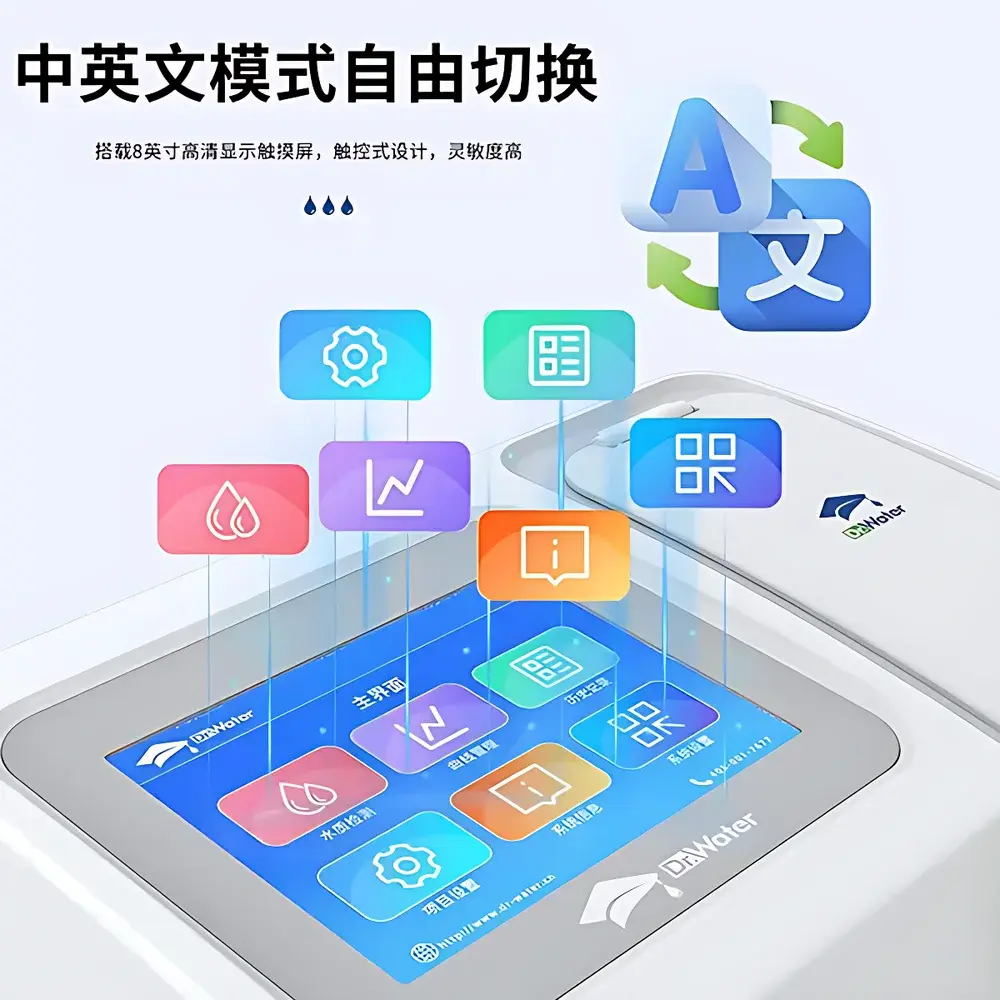
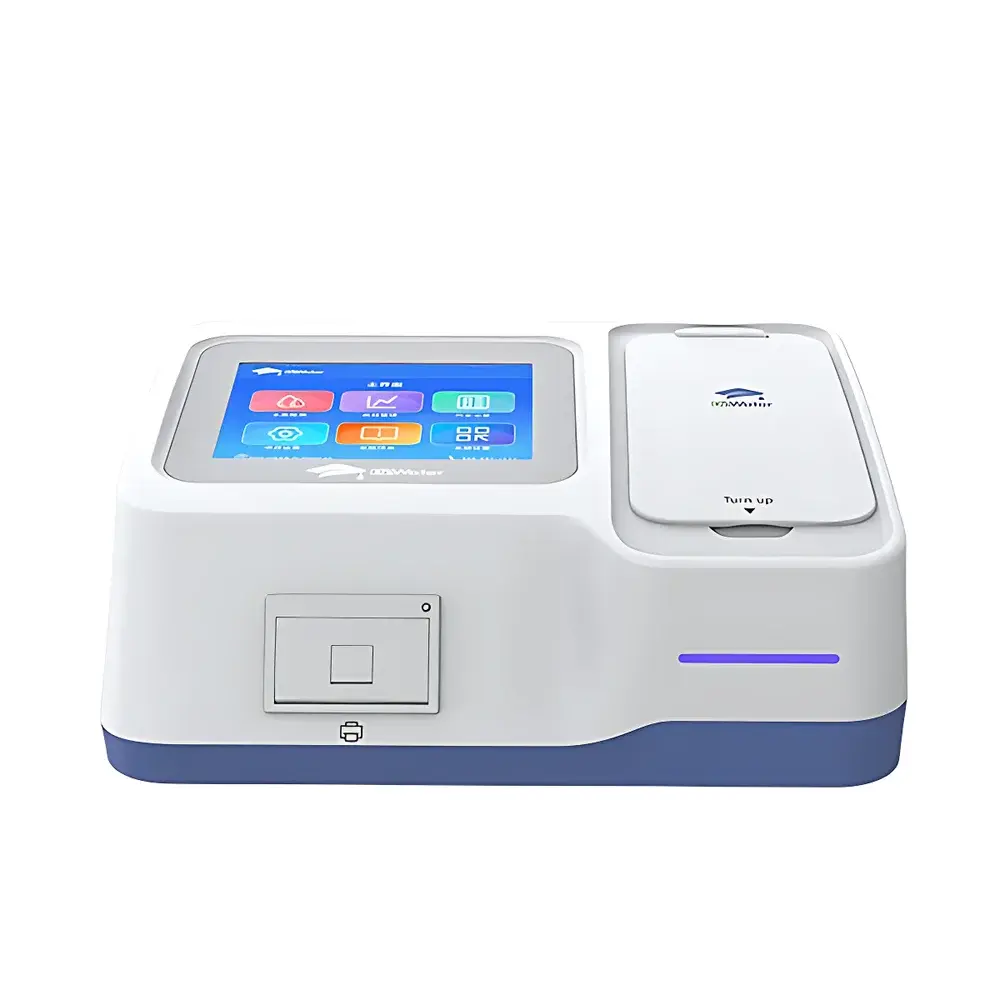
| Display | 8-inch HD capacitive touchscreen |
| Interface | Fully localized Chinese UI (English optional) |
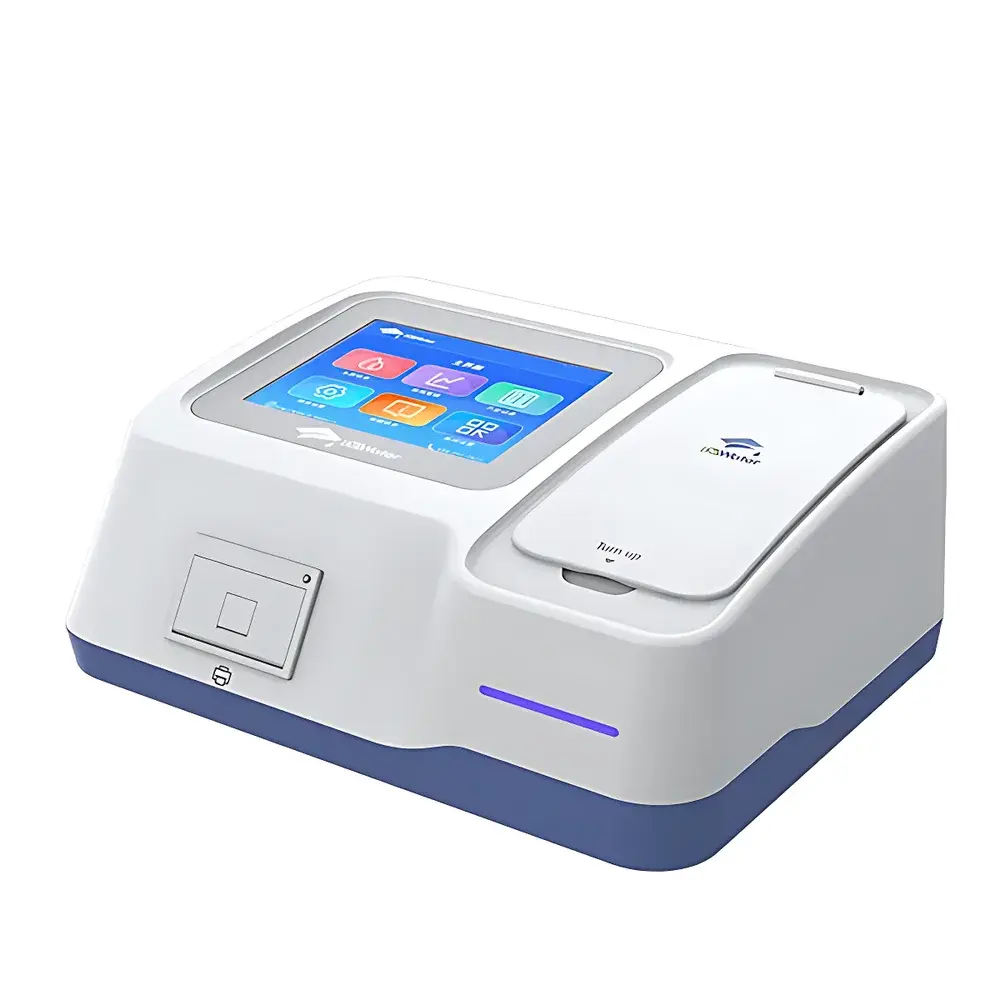
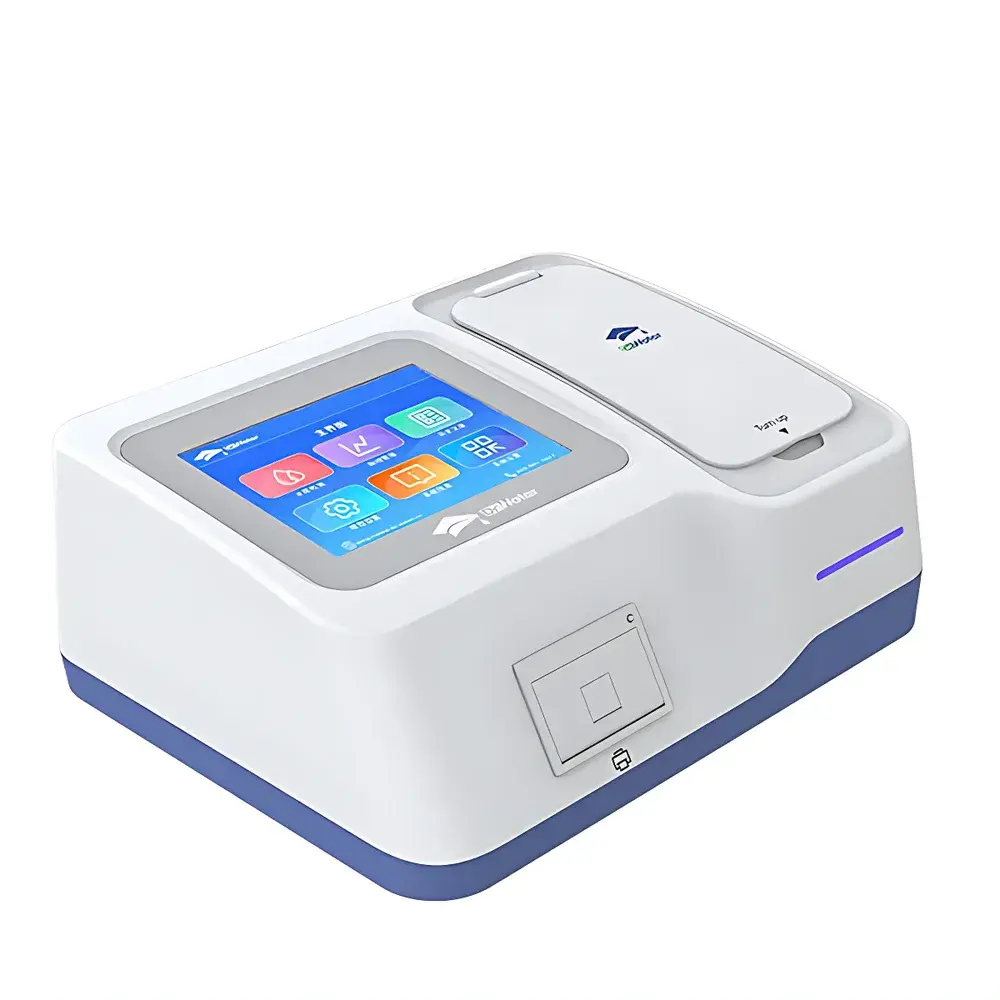
| Sample Holders | Rotatable tube holder (360°), dual cuvette positions (10 mm & 30 mm pathlength), four independent digital electrode ports |
| Auto-calibration | Single-point and multi-point calibration support |
| Data Output | USB export, thermal printer, on-screen curve visualization, real-time filtering |
| Compliance Standards | HJ/T 399–2007 (COD), HJ 535–2009 (Ammonia-N), GB 11893–1989 (Total Phosphorus), ISO 5815-1:2016 (DO), ISO 7888:2012 (Conductivity), ASTM D1293 (pH), EPA 180.1 (Turbidity) |
Overview
The Dr-T9000 Multi-Parameter Water Quality Analyzer by DoctorWater is a benchtop laboratory instrument engineered for high-precision, standardized analysis of physicochemical and nutrient parameters in aqueous matrices. It integrates dual detection modalities—UV-Vis spectrophotometry (340–900 nm) and electrochemical sensing—within a single platform to deliver traceable, reproducible measurements across regulatory-compliant methods. The optical system employs a fiber-optic coupled cold LED light source with spectral stability ≤ ±0.005 Abs/20 min and wavelength accuracy ±1 nm, ensuring long-term fidelity for absorbance-based determinations including COD (HJ/T 399–2007), ammonia-nitrogen (HJ 535–2009), and total phosphorus (GB 11893–1989). Simultaneously, its four independent digital electrode ports support calibrated, temperature-compensated measurements of pH, dissolved oxygen (ISO 5815-1:2016), conductivity (ISO 7888:2012), and ORP—enabling concurrent multi-analyte assessment without cross-interference. Designed for routine compliance testing and method validation, the Dr-T9000 meets the functional requirements of ISO/IEC 17025-accredited laboratories and supports audit-ready data integrity through time-stamped storage and GLP-aligned operational logs.
Key Features
- Triple-mode sample presentation: 360° rotatable tube holder (eliminates tube-to-tube variability), dual-pathlength cuvette positions (10 mm and 30 mm), and four isolated digital electrode inputs for simultaneous electrochemical readings.
- 8-inch HD capacitive touchscreen with adjustable brightness and fully localized Chinese interface (English firmware available upon request); intuitive guided workflows minimize operator-induced error.
- Pre-loaded library of 1,000 method-specific calibration curves—including EPA, ISO, ASTM, and Chinese environmental standards—with support for user-defined curve generation and multi-point linear/nonlinear regression.
- Optical system certified to ≤ ±0.5% transmittance error and < 0.2 nm wavelength repeatability; absorbance resolution of 0.001 Abs enables low-concentration quantification with high signal-to-noise ratio.
- Onboard thermal printer, USB mass storage export, real-time spectral curve overlay, and dynamic threshold alerts (color-coded red/green per user-set limits) enhance data review and QA/QC documentation.
- Robust ABS housing rated for continuous operation in ambient lab environments (10–40°C); compact footprint (392 × 315 × 170 mm) and lightweight design (4.4 kg) facilitate deployment in mobile labs or space-constrained facilities.
Sample Compatibility & Compliance
The Dr-T9000 is validated for use with raw and treated water samples from diverse sources: municipal wastewater, industrial effluents, groundwater, surface water, reclaimed water, aquaculture systems, and process streams in pharmaceutical, food & beverage, and power generation sectors. Its modular architecture accommodates standard 16-mm glass tubes, 10-mm and 30-mm quartz or plastic cuvettes, and industry-standard BNC or DIN-style digital electrodes (e.g., for DO, pH, conductivity). All photometric assays comply with national and international reference methods—including HJ/T 399–2007 (COD), HJ 535–2009 (NH₃-N), GB 11893–1989 (TP), ISO 5815-1:2016 (DO), and ASTM D1293 (pH)—and are suitable for reporting under ISO 17025, US EPA Contract Lab Program (CLP), and China’s Environmental Monitoring Technical Specifications. The system supports full traceability via timestamped measurement logs, operator ID tagging, and electronic audit trails—facilitating alignment with GLP/GMP documentation practices.
Software & Data Management
The embedded operating system provides native support for method-driven assay sequencing, automatic blank subtraction, kinetic and endpoint reading modes, and real-time deviation flagging against user-configured acceptance criteria. Data are stored locally in non-volatile memory (1 million records capacity) with metadata including date/time stamp, method ID, calibration status, and operator input. Export formats include CSV and PDF reports with embedded calibration curves and raw absorbance spectra. USB interface enables direct transfer to LIMS or Excel-based QA dashboards. Firmware updates are delivered via encrypted USB key to maintain version control and cybersecurity compliance. While not natively 21 CFR Part 11 compliant, the system supports external electronic signature integration through third-party middleware for regulated environments requiring ALCOA+ data governance.
Applications
- Environmental monitoring stations performing routine surveillance of surface water bodies and wastewater discharge points.
- Municipal and industrial wastewater treatment plants conducting process control and effluent compliance verification.
- Academic and research laboratories engaged in limnology, ecotoxicology, and nutrient cycling studies.
- Regulatory agencies executing field-deployable lab verification under national water quality standards.
- Pharmaceutical and biotechnology facilities monitoring purified water (PW) and water-for-injection (WFI) pre-treatment streams.
- Aquaculture and hydroponics operations requiring rapid, on-site assessment of nitrogen species, DO, and chlorophyll-a concentrations.
FAQ
Does the Dr-T9000 support EPA-certified methods?
Yes—its photometric modules implement EPA-referenced protocols for COD (Method 410.4), ammonia-N (Method 350.1), and total phosphorus (Method 365.2) via compatible reagent kits and pre-validated curves.
Can custom calibration curves be imported or generated?
Yes—the instrument allows manual entry of slope/intercept values or automated multi-point calibration using up to 10 standard concentrations per parameter.
Is the touchscreen interface available in English?
Standard units ship with Chinese firmware; English-language UI is available as an optional firmware upgrade at time of order.
What electrode types are compatible with the four digital ports?
BNC- and DIN-compatible digital sensors for pH, ORP, conductivity, dissolved oxygen, and ion-selective electrodes (e.g., nitrate, fluoride) are supported via plug-and-play configuration.
How is optical drift compensated during extended runs?
The system performs automatic zero-reference correction before each measurement cycle using an internal dark reference channel and monitors LED output intensity in real time to trigger recalibration alerts when deviation exceeds ±0.005 Abs.







