
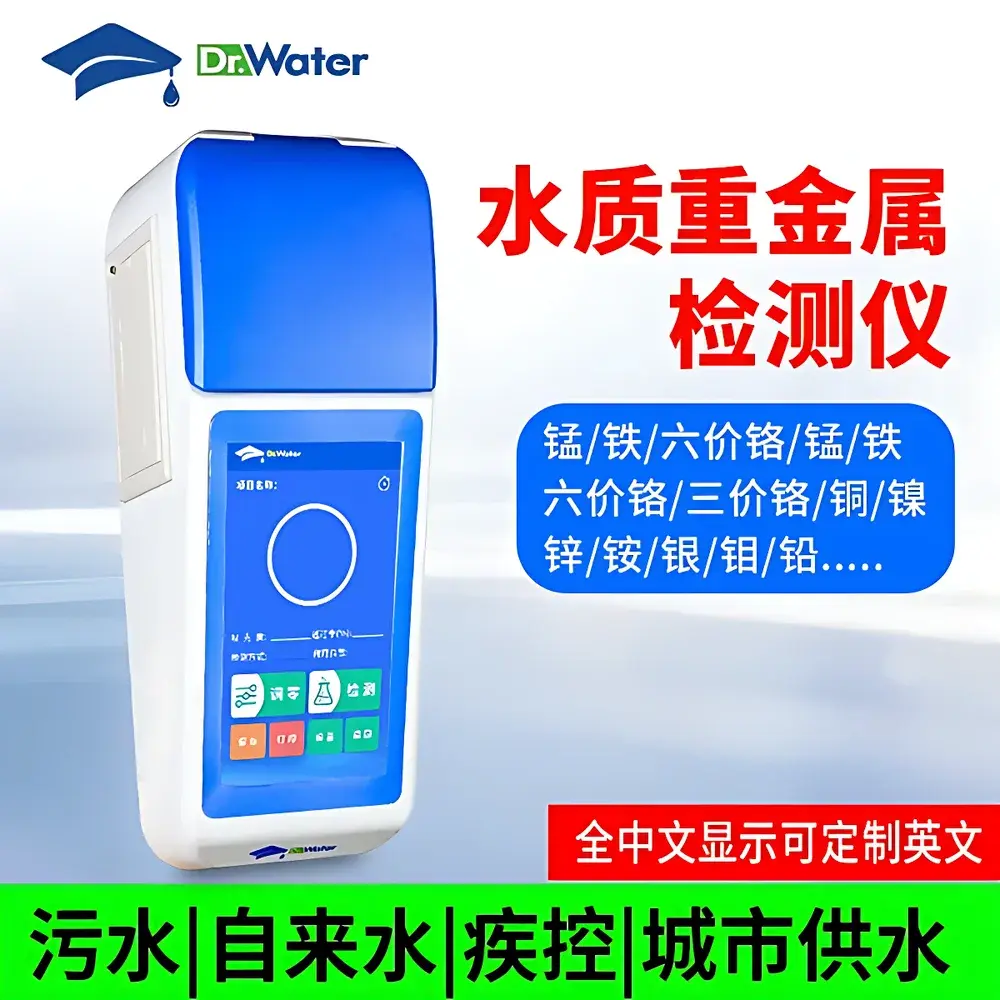
Dr-W110 Handheld Heavy Metals Analyzer by DoctorWater
| Brand | DoctorWater |
|---|---|
| Origin | Hunan, China |
| Model | Dr-W110 |
| Instrument Type | Portable |
| Detection Principle | Photometric (Colorimetric) Method |
| Target Analyte | Chromium (Cr) |
| Detection Time | 10 min |
| Wavelength Range | 330–900 nm |
| Wavelength Accuracy | ±5 nm |
| Photometric Resolution | 0.001 Abs |
| Photometric Stability | ≤±0.005 Abs/20 min |
| Repeatability | ≤±2% |
| Accuracy | ≤±5% |
| Sample Format | 16 mm & 25 mm Cuvettes |
| Light Source | Imported Cold LED (Lifespan >100,000 h) |
| Display | 5-inch HD Color Touchscreen |
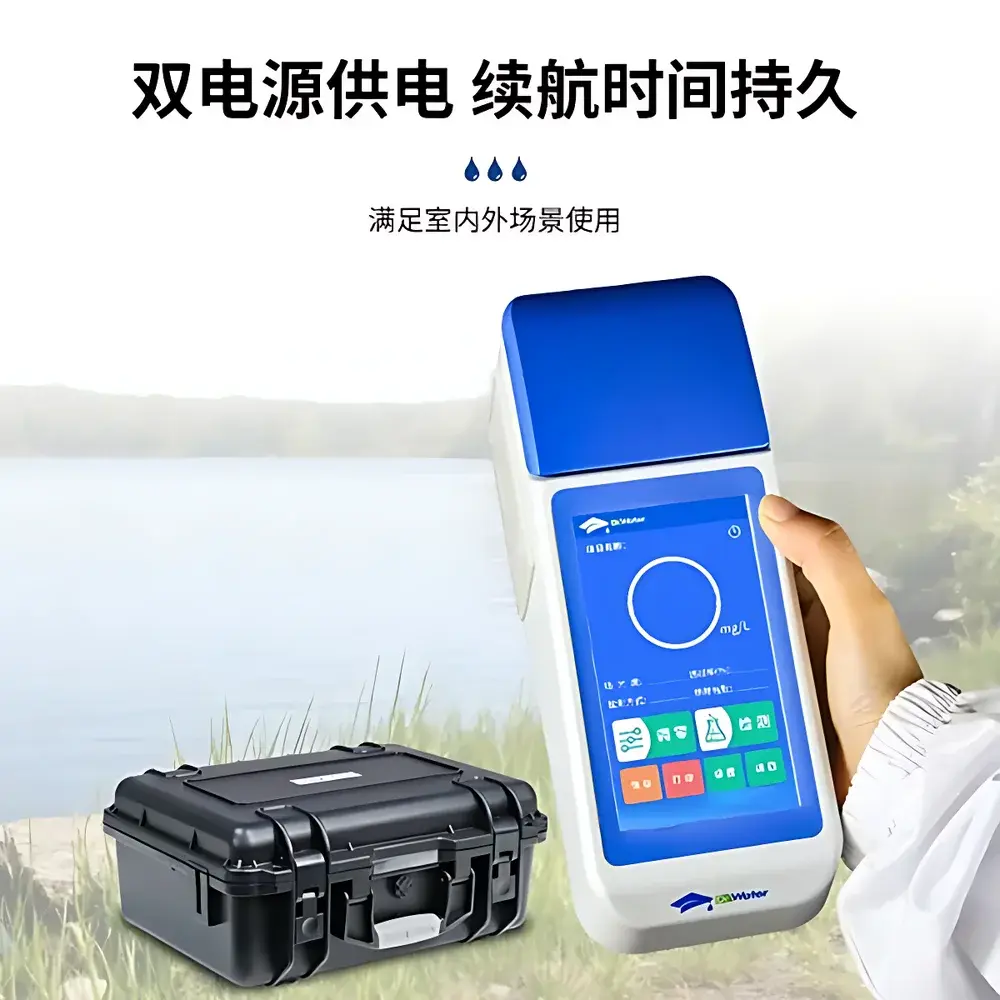
| Power Supply | Rechargeable Li-ion Battery + AC Adapter |
| Data Storage | Up to 1,000,000 Records |
| Connectivity | USB Type-C (Charging & Data Transfer) |
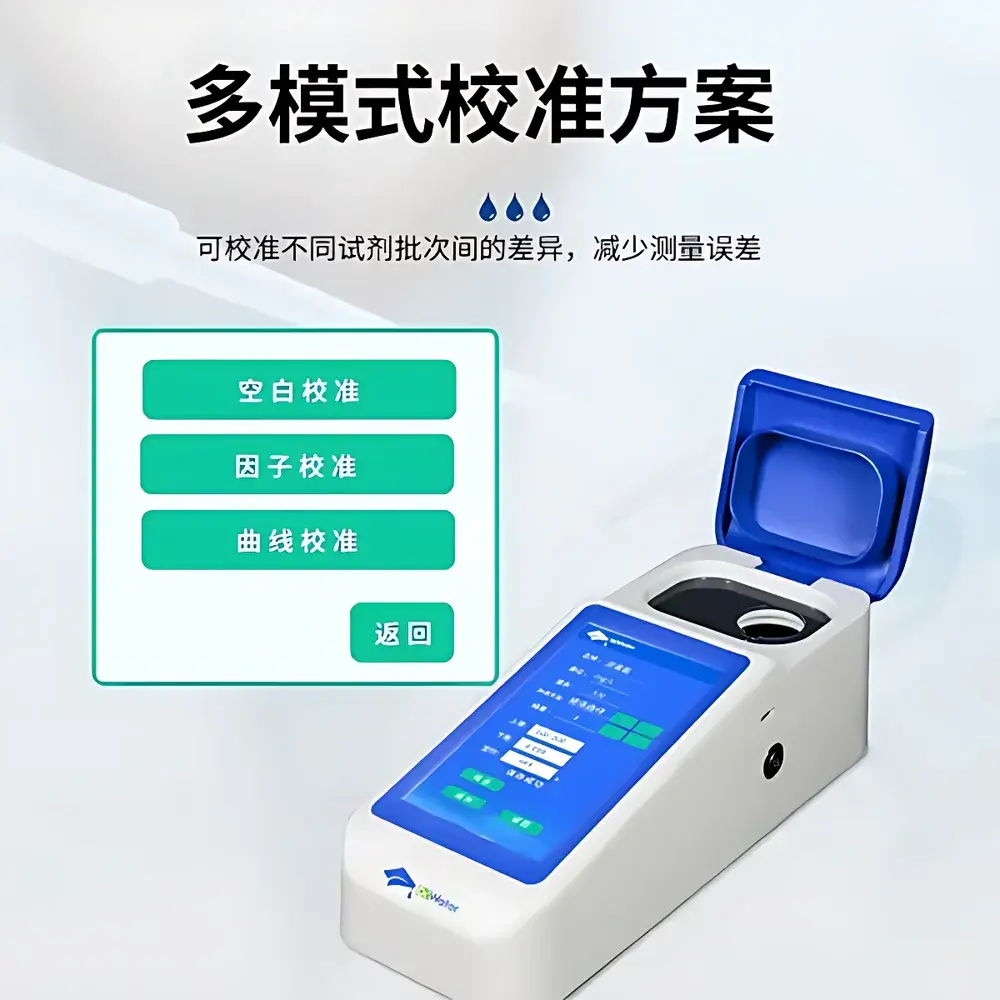
| Calibration Modes | Blank, Factor, and Calibration Curve |
| Readout Units | Absorbance & Concentration |
| Housing Material | Corrosion-Resistant ABS |
| Compliance | Designed in accordance with GB/T 5750 (China Standard Methods for Examination of Drinking Water) |
Overview
The Dr-W110 Handheld Heavy Metals Analyzer by DoctorWater is a field-deployable photometric instrument engineered for rapid, on-site quantification of chromium (Cr) in aqueous matrices. It operates on the principle of colorimetric photometry—where target metal ions react with specific chromogenic reagents to form stable colored complexes whose absorbance intensity is directly proportional to analyte concentration, per the Beer–Lambert law. The system integrates an auto-wavelength positioning optical engine with a high-stability cold LED light source (330–900 nm range), enabling precise spectral interrogation without mechanical grating movement. Its design conforms to key elements of China’s national standard GB/T 5750 for drinking water analysis, ensuring methodological alignment with regulatory testing protocols used by municipal water utilities, environmental monitoring stations, and public health laboratories. Unlike benchtop spectrophotometers, the Dr-W110 eliminates dependency on centralized lab infrastructure—delivering laboratory-grade photometric performance in a ruggedized, battery-powered form factor suitable for mobile deployment across distribution networks, source water sites, or emergency response scenarios.
Key Features
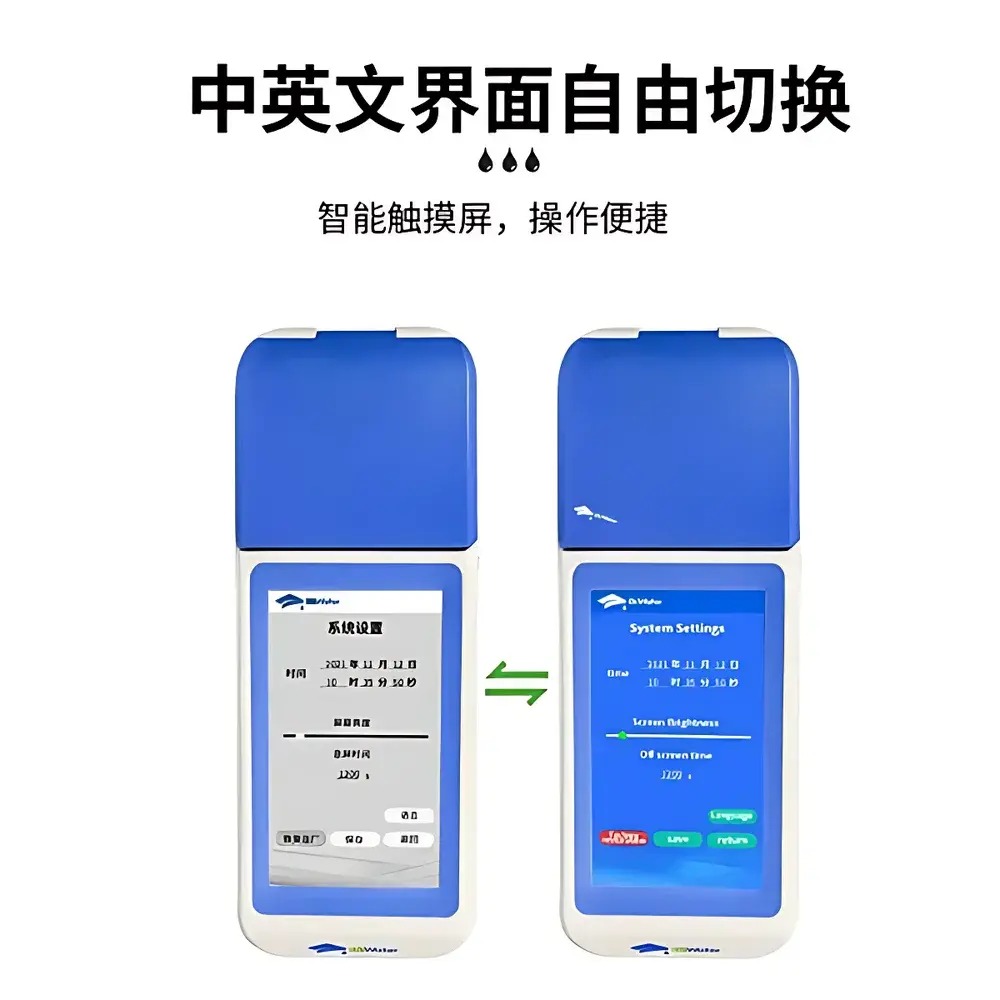
- 5-inch HD capacitive touchscreen interface with intuitive icon-driven navigation and seamless switching between English and Chinese language modes.
- Self-diagnostic initialization routine that monitors optical baseline stability during startup, suppressing transient drift artifacts before measurement initiation.
- Dual-algorithm data processing engine combining interpolation-based peak fitting and multi-point calibration curve regression to enhance quantitative fidelity across dynamic ranges.
- Integrated dilution factor input module: users enter sample dilution ratio directly; instrument automatically applies correction and displays final concentration—no manual calculation required.
- Programmable timer function supports unattended batch analysis, enabling scheduled measurements at user-defined intervals for continuous process monitoring or time-series sampling.
- Triple-mode calibration architecture—blank, factor, and full calibration curve—accommodates variability across reagent lots and ensures long-term inter-batch comparability under GLP-aligned workflows.
- User-configurable alarm thresholds with visual and audible alerts triggered upon exceedance of pre-set concentration limits—critical for real-time compliance verification.
- Advanced interference compensation algorithm dynamically corrects for spectral overlap from color and turbidity-induced light attenuation, improving accuracy in non-ideal water samples.
- Multi-mode turbidity measurement suite—including standard, low-turbidity, signal-averaging, and rapid sedimentation modes—extends analytical utility beyond heavy metals into comprehensive water quality profiling.
- USB Type-C dual-role port supporting simultaneous charging and high-speed data export, eliminating proprietary cables and simplifying fleet-level data aggregation.
Sample Compatibility & Compliance
The Dr-W110 accepts standard 16 mm and 25 mm round glass or quartz cuvettes, compatible with widely available EPA- and ISO-aligned chromium test kits (e.g., diphenylcarbazide-based methods for Cr(VI)). It is validated for use in drinking water, surface water, groundwater, wastewater effluents, and industrial process streams. While optimized for chromium detection, its broad 330–900 nm spectral window permits method adaptation for other transition metals (e.g., Cu, Ni, Zn) when paired with appropriate reagents and calibration standards. The instrument’s optical architecture meets photometric stability requirements outlined in ISO 7027 (turbidity) and ASTM D1253 (residual chlorine), and its operational logic supports audit-ready data integrity practices aligned with GLP and ISO/IEC 17025 documentation expectations. Though not FDA 21 CFR Part 11 certified out-of-the-box, its timestamped, user-logged measurement records—with immutable storage and no post-acquisition editing capability—provide foundational traceability for regulated environments.
Software & Data Management
Embedded firmware delivers full-cycle analytical control: measurement acquisition, parameter configuration, calibration management, result interpretation, and local archiving. All data are stored with metadata including date/time stamp, operator ID (optional), cuvette ID, reagent lot number, and calibration status. With capacity for up to one million records, the device enables longitudinal trend analysis without external memory cards. Data export via USB Type-C yields CSV-formatted files compatible with LIMS platforms, Excel, and statistical software (e.g., JMP, Minitab). The onboard thermal printer provides immediate hard-copy output for field reports or chain-of-custody documentation. Firmware updates are delivered via encrypted USB flash drive, preserving version control and change history—a requirement for auditable instrumentation in environmental compliance programs.
Applications
The Dr-W110 serves as a primary screening tool in decentralized water safety assurance systems. Municipal utilities deploy it for routine Cr(VI) verification at treatment plant inlets, finished water points, and distribution loop endpoints. Environmental protection agencies utilize it during watershed surveys, industrial discharge inspections, and post-spill reconnaissance. In food and beverage manufacturing, it supports raw water intake monitoring and rinse-water validation prior to product contact surfaces. Pharmaceutical facilities apply it to purified water (PW) and water-for-injection (WFI) system surveillance where chromium leaching from stainless-steel piping may occur. Its portability and battery endurance (>8 hours continuous operation) make it ideal for remote well-head testing, disaster-response triage, and educational field labs requiring robust, self-contained instrumentation.
FAQ
What chromium species does the Dr-W110 detect?
The instrument quantifies hexavalent chromium (Cr(VI)) using the standard diphenylcarbazide colorimetric reaction. Total chromium determination requires sample digestion and speciation separation prior to analysis.
Is the Dr-W110 compliant with international standards such as ISO or ASTM?
Its photometric performance parameters align with ISO 7027 (turbidity), ASTM D1253 (chlorine), and GB/T 5750.3–2023 (chromium in drinking water); however, formal certification requires third-party verification per application context.
Can the device store calibration curves for multiple analytes?
Yes—up to 100 independent calibration sets can be saved onboard, each associated with unique reagent lot numbers, expiration dates, and operator annotations.
How is photometric drift mitigated during extended field use?
The system performs automatic dark-current compensation every 20 minutes and includes a built-in reference channel for real-time LED output monitoring, ensuring <±0.005 Abs stability over 20-minute intervals.
Does the Dr-W110 support connectivity with cloud-based water quality dashboards?
Native cloud integration is not included; however, exported CSV files can be ingested into common IoT platforms (e.g., AWS IoT Core, Microsoft Azure IoT Hub) via custom middleware or API gateways.







