DRETOP ACW-350Pro Anaerobic Incubator
| Brand | DRETOP |
|---|---|
| Origin | Shanghai, China |
| Manufacturer Type | Direct Manufacturer |
| Instrument Type | Automated Anaerobic Incubator |
| Operating Temperature Range | RT + 3°C to 65°C |
| Temperature Uniformity & Stability | ±0.5°C |
| Oxygen Concentration Range | 0.1–25% (displayable in % or ppm) |
| Chamber Dimensions (W×D×H) | 800 × 690 × 660 mm |
| Gas System | Dry, oil-free vacuum pump |
| Anaerobic Performance | O₂ ≤ 1% achievable |
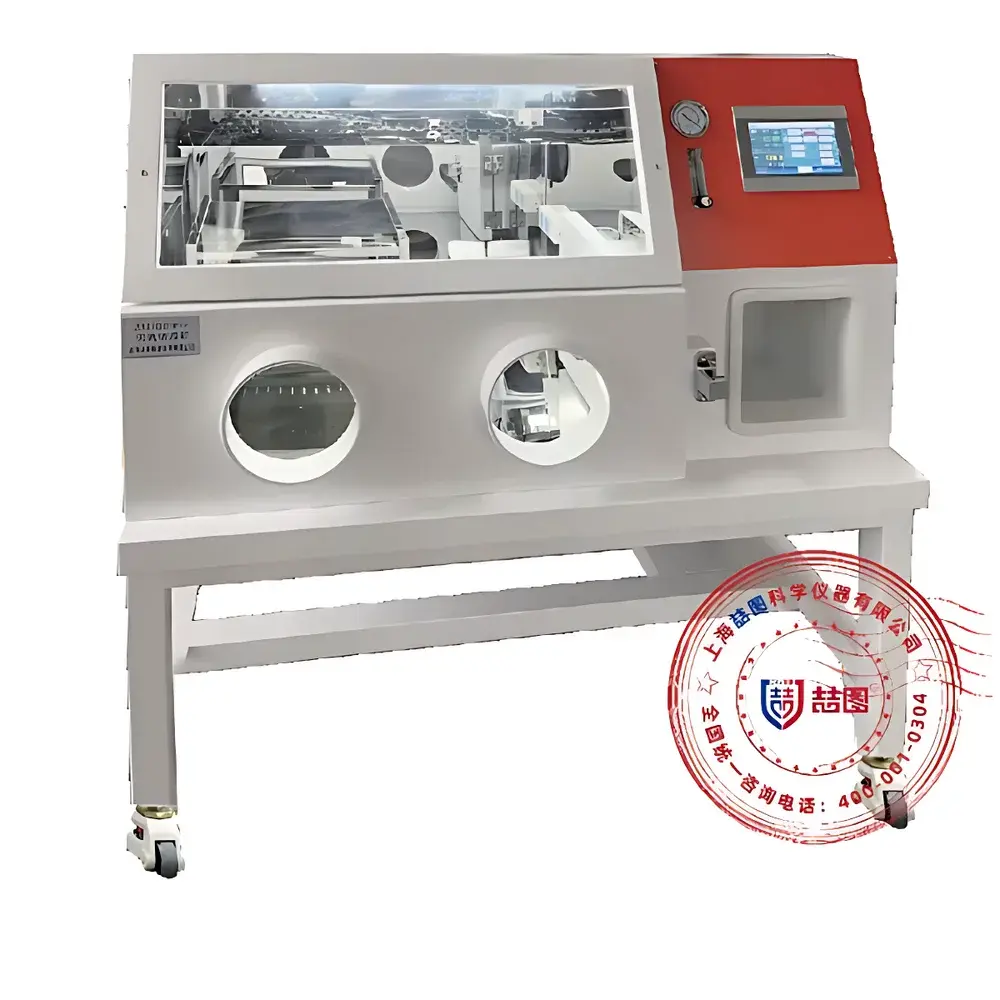
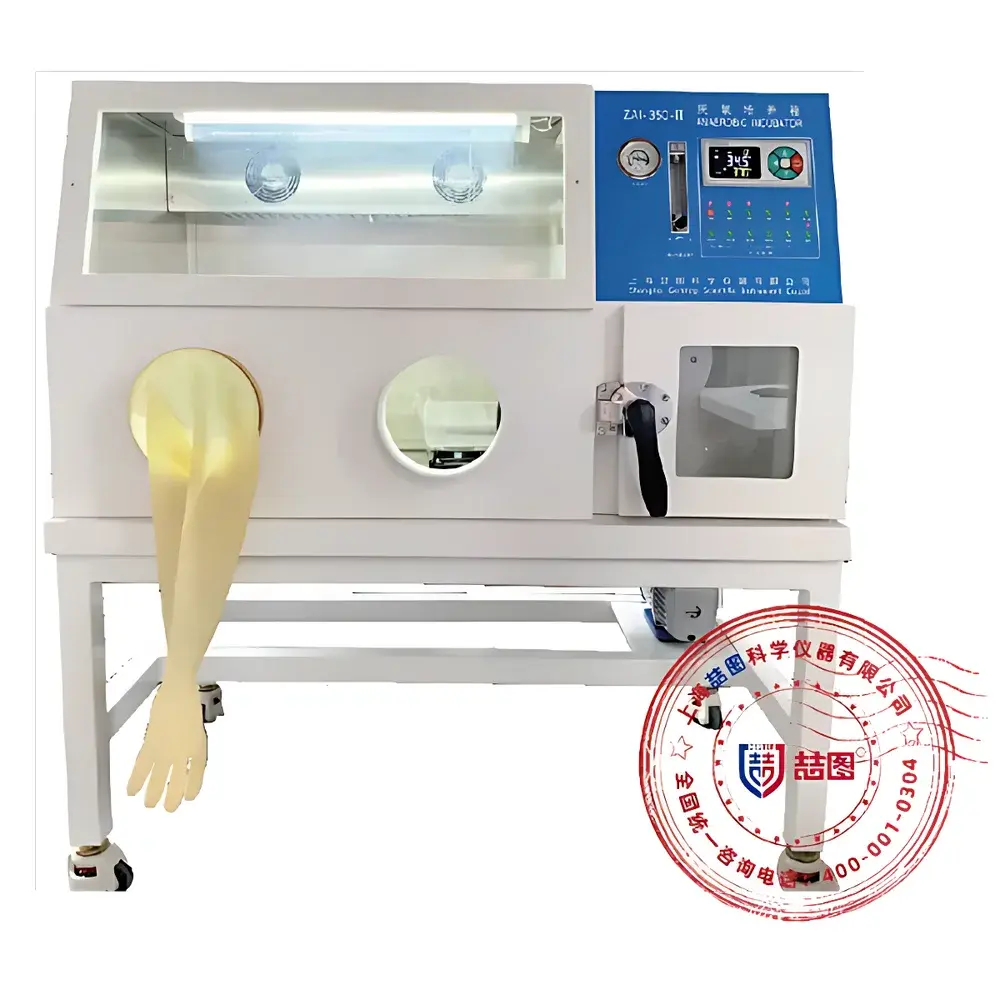
| Control Interface | Full-color capacitive touchscreen with real-time O₂/temperature display, local atmospheric pressure readout, and touch-activated solenoid valve control |
| Safety Features | Over-temperature alarm (audible/visual), auto power recovery with parameter memory, UV sterilization lamp, 12 mm tempered front window, 304 stainless steel inner chamber |
| Compliance Enablers | Supports GLP/GMP documentation workflows |
Overview
The DRETOP ACW-350Pro Anaerobic Incubator is an engineered platform for precise, reproducible cultivation and manipulation of obligate anaerobes, microaerophiles, and hypoxia-sensitive mammalian cells under rigorously controlled atmospheric conditions. It operates on a dual-stage gas management principle—combining high-efficiency dry vacuum evacuation with programmable gas injection (N₂/H₂/CO₂ mixtures)—to establish and sustain oxygen concentrations from 1 ppm to 25% across its 367 L working chamber. Unlike passive glove boxes or single-gas purging systems, the ACW-350Pro integrates real-time electrochemical O₂ sensing, closed-loop feedback control, and adaptive flow regulation to maintain setpoint stability within ±0.1% O₂ during extended operation. Its temperature control architecture employs PID algorithms with linear thermal compensation, ensuring spatial uniformity of ±0.5°C throughout the chamber volume—critical for quantitative microbiological assays and low-oxygen cell differentiation studies.
Key Features
- Full-color capacitive touchscreen interface with intuitive navigation, real-time O₂ concentration (displayed in % or ppm), ambient pressure monitoring, and touch-activated solenoid valve control for gas flow modulation.
- 304 stainless steel inner chamber and reinforced 12 mm tempered glass viewport ensure corrosion resistance, structural integrity, and optical clarity during prolonged exposure to reducing atmospheres.
- Dry, oil-free piston vacuum pump eliminates hydrocarbon contamination risk and requires zero routine maintenance—preserving sample purity and instrument longevity.
- Integrated UV-C germicidal lamp (254 nm) and HEPA-filtered gas inlet mitigate airborne microbial load, supporting aseptic technique compliance in clinical and research microbiology workflows.
- Over-temperature safety cutoff with audible/visual alarm, automatic power recovery with parameter retention after interruption, and self-diagnostic fault reporting enhance operational reliability and audit readiness.
- Modular design supports integration with peripheral equipment—including shakers, centrifuges, and analytical balances—via standardized mounting rails and auxiliary power outlets inside the work area.
Sample Compatibility & Compliance
The ACW-350Pro accommodates diverse biological and material science applications requiring strict redox control. It is routinely deployed for culture of clinically relevant anaerobes (e.g., Clostridium perfringens, Bacteroides fragilis, Porphyromonas gingivalis), fastidious microaerophiles (Campylobacter jejuni), and hypoxic mammalian cell lines (e.g., HIF-1α stabilization studies). Its ability to sustain O₂ ≤ 1% for >12 hours without continuous gas replenishment meets CLSI M45-A3 and ISO 11133:2014 requirements for anaerobic culture system validation. The unit’s construction materials, traceable calibration paths, and optional RS485/USB data export support alignment with GLP and GMP environments—particularly when integrated with validated electronic lab notebook (ELN) or LIMS platforms compliant with FDA 21 CFR Part 11.
Software & Data Management
While the ACW-350Pro operates as a standalone instrument with embedded firmware, its optional communication interfaces enable seamless data capture and remote supervision. The RS485 port supports Modbus RTU protocol for integration into facility-wide environmental monitoring systems (EMS), allowing centralized logging of O₂%, temperature, cycle timestamps, and alarm events. USB connectivity permits direct export of session logs (CSV format) for retrospective analysis or regulatory submission. When used with third-party validation software, the incubator supports full audit trail generation—including user ID, parameter changes, and timestamped event records—fulfilling ALCOA+ data integrity principles required in pharmaceutical QC laboratories.
Applications
- Clinical microbiology: Isolation and identification of anaerobic pathogens from stool, blood, and tissue specimens per CLSI guidelines.
- Gut microbiome research: Cultivation of unculturable or oxygen-sensitive commensals (e.g., Faecalibacterium prausnitzii) under physiologically relevant O₂ gradients.
- Hypoxia modeling: Controlled low-oxygen conditioning of stem cells, tumor spheroids, or endothelial monolayers to study angiogenesis, metabolic reprogramming, or radioresistance mechanisms.
- Materials science: Processing of oxygen-sensitive battery electrode materials (e.g., lithium metal anodes), OLED precursors, and MOCVD substrates under inert or reducing atmospheres.
- Food safety testing: Enumeration of Clostridium botulinum spores and Shigella spp. in enrichment media under strictly defined anaerobic conditions.
FAQ
What gases are required to operate the ACW-350Pro?
Nitrogen (≥99.99% purity), hydrogen (5%), and carbon dioxide (10%) are supplied via regulated gas manifolds; the system mixes these on-demand using proportional solenoid valves.
Can the unit maintain anaerobic conditions without continuous gas flow?
Yes—the sealed chamber retains O₂ ≤ 1% for over 12 hours after gas supply termination, verified by internal sensor drift testing per ISO 8573-1 Class 2 standards.
Is the touchscreen interface compatible with glove use?
The capacitive screen responds reliably through standard nitrile or latex gloves, eliminating need for stylus or exposed finger contact during sterile procedures.
How is temperature uniformity validated across the chamber?
DRETOP provides a factory-verified temperature mapping report (per ISO/IEC 17025) showing point-to-point deviations ≤ ±0.5°C at nine locations under steady-state operation.
Does the system support automated CO₂ concentration control?
CO₂ is delivered as part of the premixed gas blend; independent CO₂ modulation requires optional add-on module (sold separately) with dedicated IR sensor and feedback loop.