
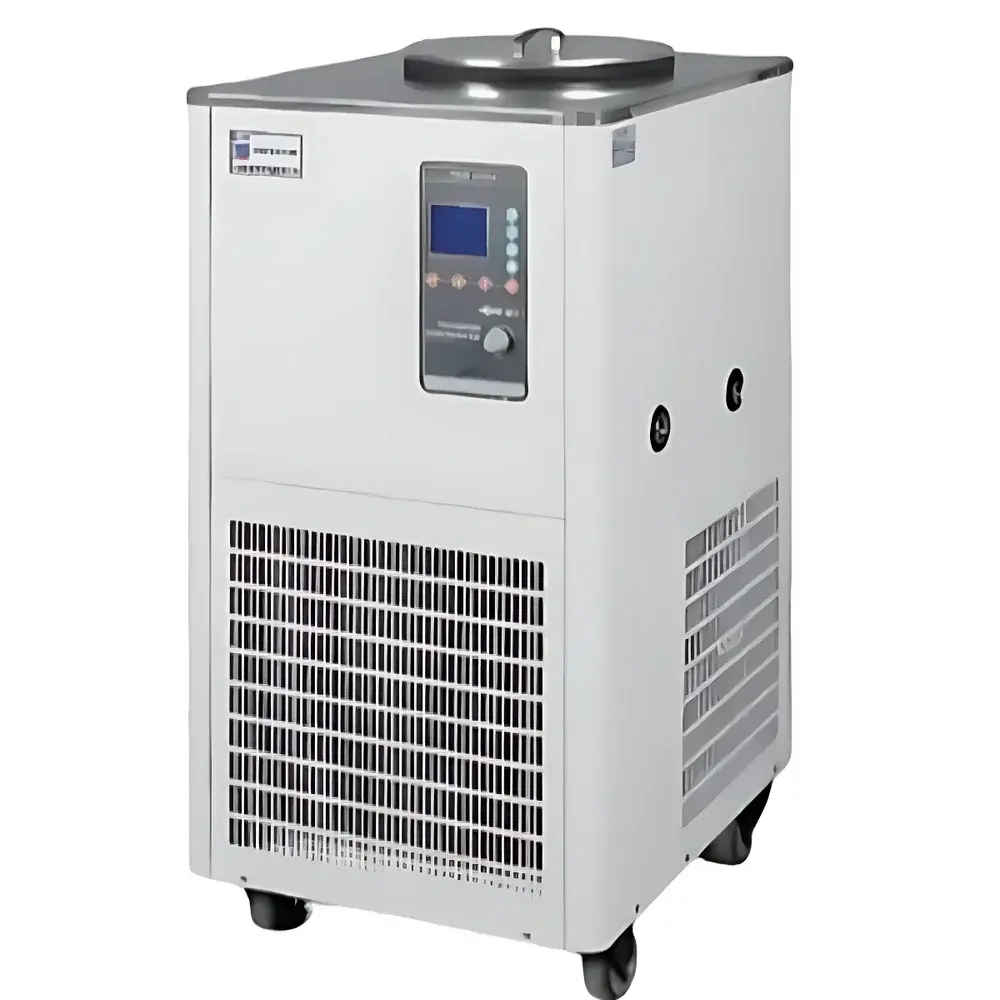
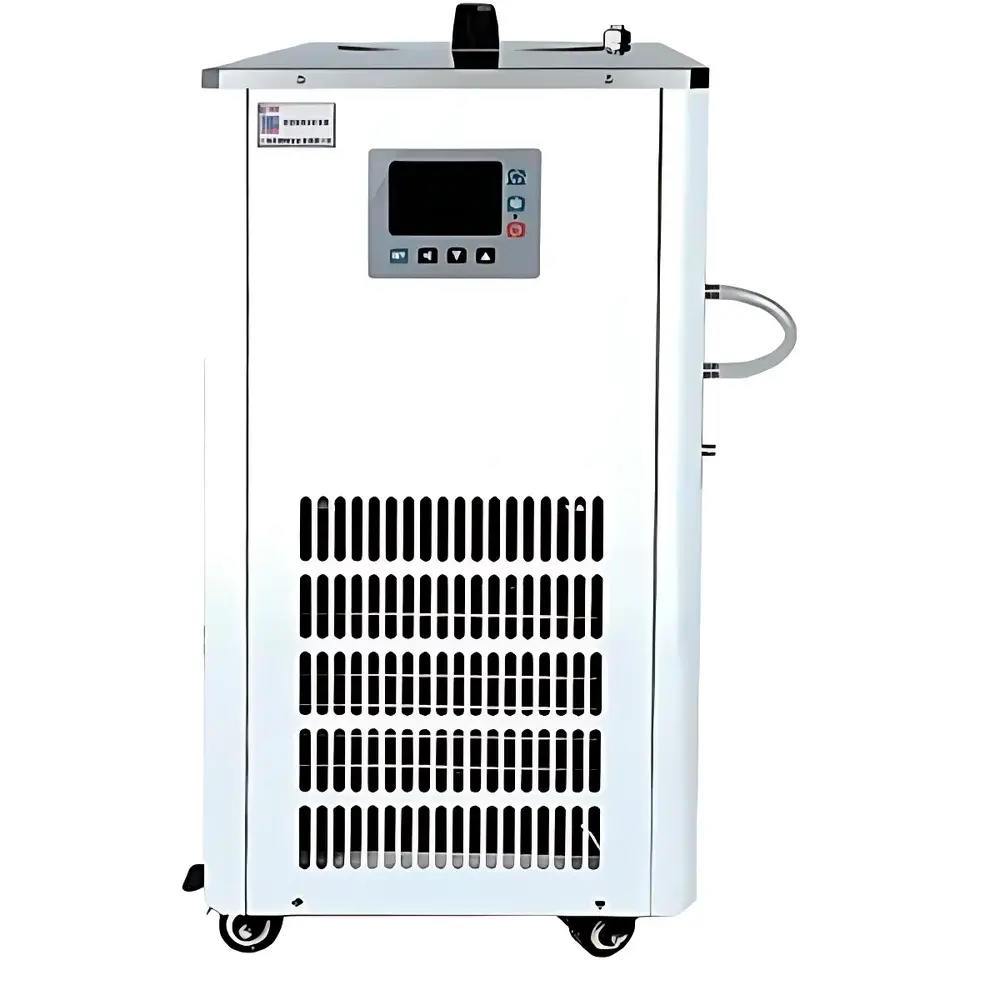
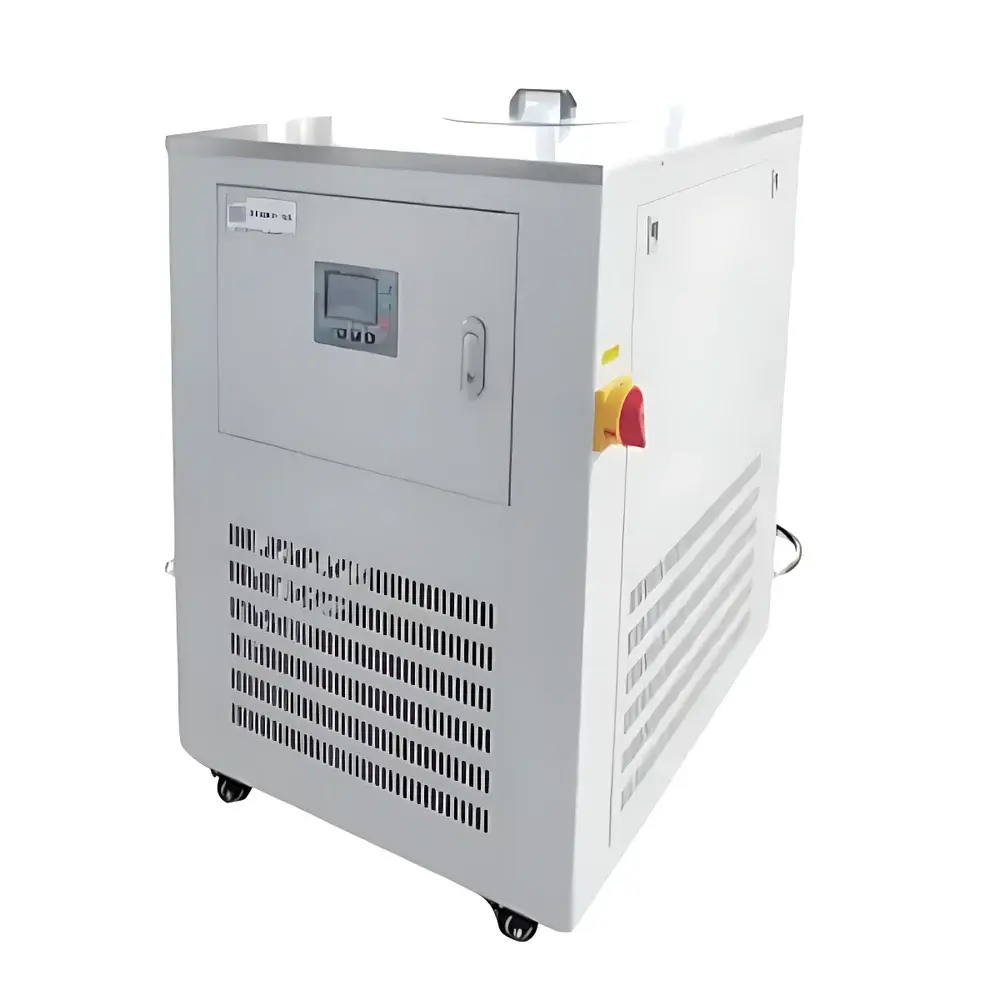
DRETOP ADC-05-N20 AI-Driven Cryogenic Constant Temperature Circulator
| Brand | DRETOP |
|---|---|
| Origin | Shanghai, China |
| Manufacturer Type | Direct Manufacturer |
| Model | ADC-05-N20 |
| Temperature Range | −20 °C to 100 °C |
| Bath Volume | 5 L |
| Temperature Stability | ±1 °C |
| Flow Rate | 20 L/min |
| Max. Head | 10–12 m |
| Circulation Port | φ10 mm stainless steel metal hose with bayonet fitting |
| Control Mode | 99-segment programmable linear ramp/soak |
| Power Supply | 220 V, 50 Hz |
| IP Rating | IP54 |
Overview
The DRETOP ADC-05-N20 AI-Driven Cryogenic Constant Temperature Circulator is a precision-engineered thermal management system designed for laboratory and industrial applications requiring stable, bidirectional temperature control across a wide operational range (−20 °C to 100 °C). Unlike conventional chillers or bath circulators, the ADC-05-N20 integrates adaptive thermal regulation logic—termed “AI Dynamic Control”—to enable smooth, linear ramping and precise soak profiles without overshoot or thermal lag. Its closed-loop architecture circulates heat-transfer fluids (e.g., water, ethylene glycol/water mixtures, or specialized low-temperature media) through external equipment via a high-efficiency magnetic drive pump. This enables active cooling and heating of connected instrumentation—including rotary evaporators, PCR thermal cyclers, spectrometers, mass spectrometers, reaction vessels, and vacuum drying ovens—while maintaining thermodynamic consistency critical for reproducible experimental outcomes.
Key Features
- AI-Optimized Thermal Regulation: Proprietary PID-based control algorithm with real-time load compensation ensures ±1 °C temperature stability across the full range; supports up to 99 programmable segments with linear ramp/soak capability for complex thermal protocols.
- Dual-Mode Thermal Actuation: Integrated variable-speed compressor for efficient refrigeration and tubular electric heater for rapid, uniform warming—enabling seamless transitions between sub-zero and elevated temperatures without manual intervention.
- Robust Fluid Handling System: Stainless steel circulation path (including inlet/outlet fittings and internal tubing), corrosion-resistant wetted materials, and sealed-loop design prevent contamination, oxidation, or degradation of heat-transfer media over extended operation.
- Industrial-Grade Safety Architecture: Comprehensive protection suite includes over-temperature, low-fluid-level, phase-loss, pressure anomaly, and electrical fault detection; automatic memory retention after power interruption; IP54-rated enclosure suitable for controlled lab environments and light industrial settings.
- Flexible Integration Interface: RS485 serial communication port compliant with Modbus RTU protocol enables bidirectional data exchange with LIMS, SCADA, or custom lab automation platforms; real-time monitoring and remote parameter adjustment supported.
Sample Compatibility & Compliance
The ADC-05-N20 is compatible with standard laboratory heat-transfer fluids meeting ASTM D1384 (corrosion inhibition) and ISO 21068-2 (glycol-based coolant specifications). Its stainless steel fluid path and absence of elastomeric seals in the primary loop ensure compatibility with high-purity solvents, deionized water, and halogen-free synthetic coolants used in semiconductor fabrication and pharmaceutical process validation. While not certified to UL/CSA safety standards, the unit adheres to IEC 61010-1:2010 requirements for electrical safety in laboratory equipment. Its programmable temperature logging and event-triggered alarm history support GLP-compliant documentation when integrated with validated data acquisition systems. The device does not incorporate FDA 21 CFR Part 11-compliant electronic signatures natively but provides timestamped, non-editable log files exportable for audit trail reconstruction.
Software & Data Management
The onboard controller features a backlit LCD interface supporting multilingual menu navigation (English, Chinese, Spanish). All thermal programs—including ramp rates, dwell times, and setpoint sequences—are stored in non-volatile memory with battery-backed retention. Real-time temperature, flow status, and system alarms are displayed continuously. Through the RS485 port, users may configure and monitor the unit using third-party software (e.g., LabVIEW, Python-based PySerial scripts, or custom SCADA HMI). Exported CSV logs include timestamps, setpoints, actual bath temperature, and alarm flags—structured for traceability in QA/QC workflows. No cloud connectivity or proprietary desktop application is required; configuration remains fully local and deterministic.
Applications
- Life Sciences: Maintaining precise thermal conditions during cryopreservation of cell lines, controlled-rate freezing of tissue samples, and thermal cycling of qPCR instruments; stabilizing detector temperatures in fluorescence spectrometers and confocal microscopes.
- Materials Research: Simulating thermal stress in superconducting ceramics, evaluating low-temperature performance of battery electrolytes, and conditioning test fixtures for thermal expansion coefficient measurement.
- Pharmaceutical Development: Controlling jacketed reactor temperature during API crystallization, managing exothermic reactions in kilolab synthesis, and validating stability chambers per ICH Q1A(R2) guidelines.
- Electronics & Semiconductor: Cooling high-power laser diodes and RF amplifiers; regulating substrate temperature during thin-film deposition (e.g., sputtering, CVD); thermal preconditioning of wafer probes.
- Chemical Engineering: Providing consistent thermal input/output for calorimetric studies, continuous-flow chemistry reactors, and vacuum distillation setups where condenser temperature directly affects separation efficiency.
FAQ
What types of heat-transfer fluids are recommended for use with the ADC-05-N20?
Deionized water is suitable for operation above 0 °C; for sub-zero applications, a 30–50% aqueous ethylene glycol solution is recommended to prevent freezing while preserving thermal conductivity and pump compatibility.
Can the ADC-05-N20 be used for external jacketed reactor cooling without modifications?
Yes—the unit features standardized bayonet-style ports (φ10 mm) and sufficient head pressure (10–12 m) to circulate fluid through typical laboratory-scale jacketed reactors up to 5 L volume; optional insulated tubing is advised for ambient heat gain mitigation.
Does the system support simultaneous heating and cooling during a single program segment?
No—the ADC-05-N20 operates in either heating-dominant or cooling-dominant mode at any given time, but its AI-driven control logic minimizes transition time between modes and suppresses temperature overshoot during directional changes.
Is the internal bath volume sufficient for direct sample immersion?
The 5 L reservoir is engineered for closed-loop circulation rather than open-bath immersion; direct sample placement inside the tank is not supported due to lack of agitation, temperature gradient control, or access ports.
How is calibration traceability maintained for long-term use?
The unit accepts external PT100 or NTC probe inputs for independent verification; users are advised to perform annual calibration against NIST-traceable references per ISO/IEC 17025 practices, documenting deviations in their instrument qualification records.




