
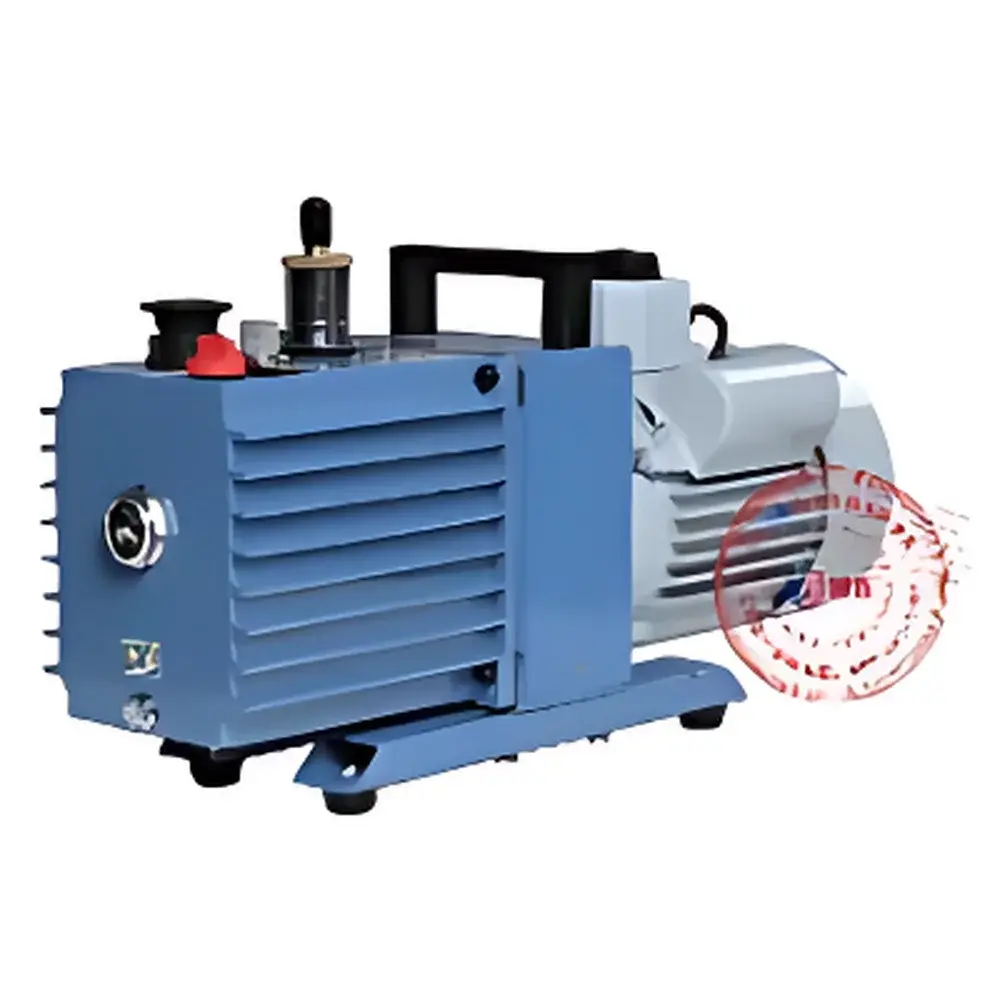
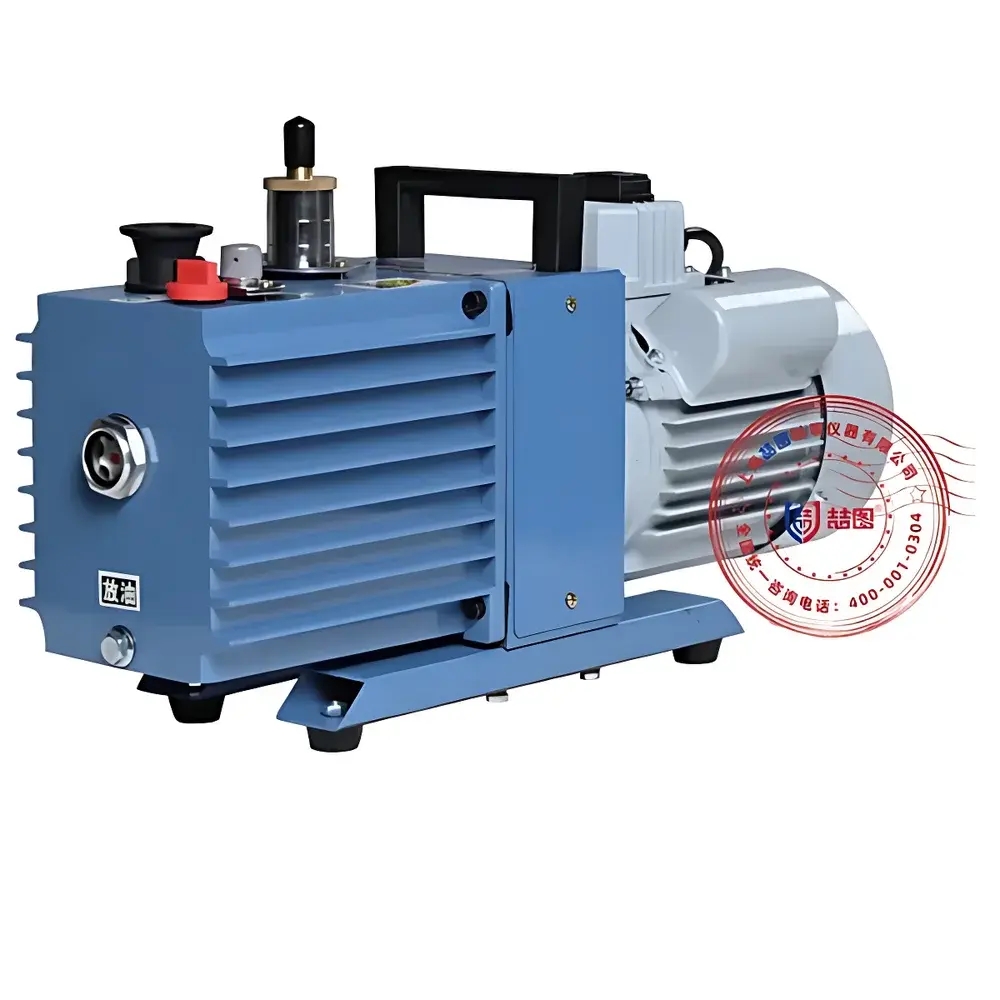
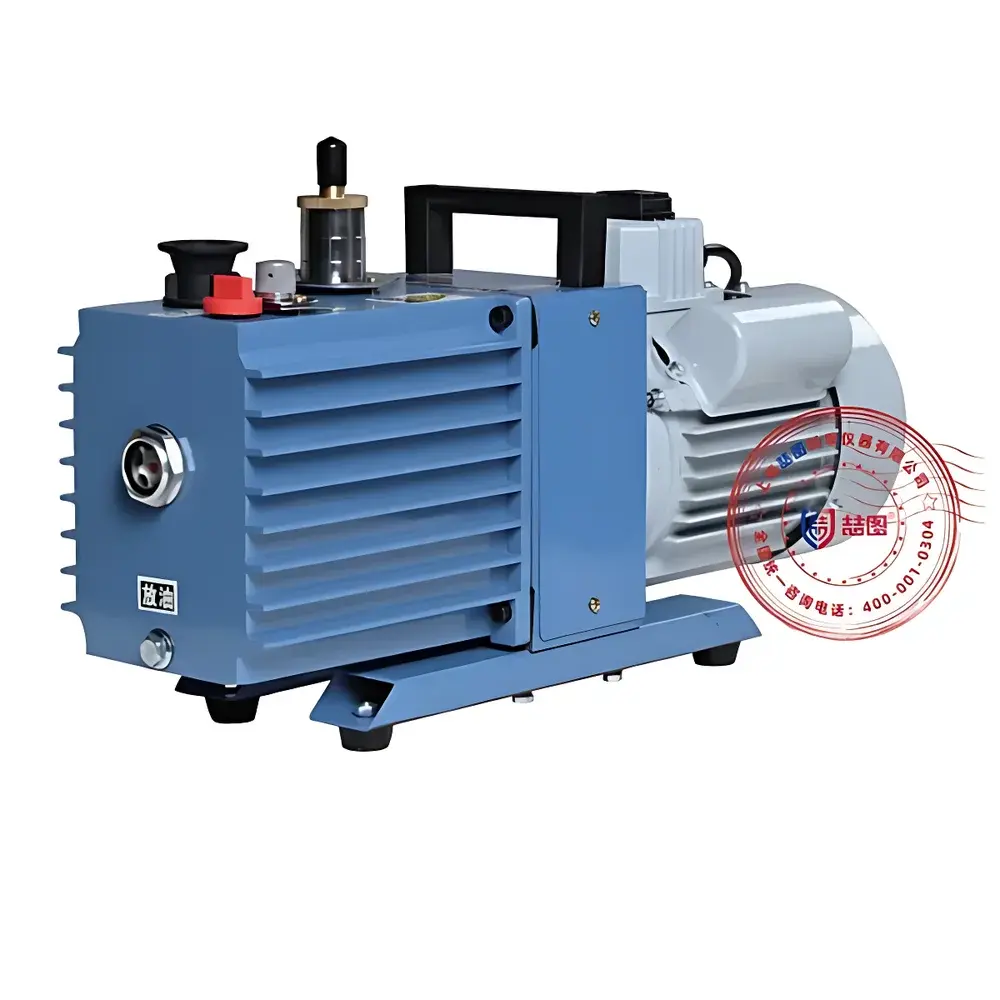
DRETOP AVP-12 High-Speed Direct-Coupled Rotary Vane Vacuum Pump
| Brand | DRETOP |
|---|---|
| Origin | Shanghai, China |
| Manufacturer Type | OEM Manufacturer |
| Country of Origin | China |
| Model | AVP-12 |
| Instrument Type | Rotary Vane Pump |
| Product Type | Oil-Lubricated Pump |
| Pumping Speed | 12 m³/h (3.33 L/s) |
| Ultimate Vacuum | ≤0.4 Pa (base pressure) |
| Operating Vacuum Range | 15–133 Pa (when integrated with DRETOP vacuum chambers) |
| External Dimensions | 505 × 162 × 254 mm |
| Motor Power | 550 W |
| Rated Voltage | 220 V, 50 Hz (380 V optional) |
| Rotational Speed | 1440 rpm |
| Oil Capacity | 1.2 L |
| Inlet/Outlet Port | KF-25 |
Overview
The DRETOP AVP-12 is a high-speed, direct-coupled rotary vane vacuum pump engineered for reliable, continuous-duty operation in laboratory and light industrial environments. It operates on the proven principle of positive displacement via rotating vanes within an eccentrically mounted rotor chamber, generating vacuum through sequential compression and expulsion of gas molecules. Designed for integration with vacuum ovens, freeze dryers, rotary evaporators, vacuum concentrators, reaction vessels, and solid-phase extraction systems, the AVP-12 delivers stable base pressures down to ≤0.4 Pa and maintains operational stability across the 15–133 Pa range—particularly when paired with DRETOP’s proprietary vacuum chambers. Its direct-drive architecture eliminates belt slippage and alignment issues, ensuring mechanical efficiency, reduced maintenance intervals, and long-term repeatability under variable load conditions.
Key Features
- Integrated anti-backstreaming check valve prevents oil migration into the vacuum chamber upon shutdown, eliminating contamination risk to sensitive samples and downstream instrumentation.
- Optimized thermal management system—including finned housing and strategically positioned ventilation paths—enables uninterrupted operation at ambient temperatures as low as –5 °C and supply voltages ≥180 V AC, supporting deployment in non-climate-controlled labs or field settings.
- Dedicated gas ballast (air bleed) valve allows controlled admission of atmospheric air during pumping of condensable vapors, minimizing oil emulsification and extending oil service life by up to 3× compared to standard operation.
- Compact footprint (505 × 162 × 254 mm) and lightweight construction (≈22 kg) facilitate benchtop mounting, mobile cart integration, or space-constrained installations without compromising structural rigidity.
- Low-noise design (<62 dB(A) at 1 m) achieved through precision-balanced rotor assembly, vibration-dampening motor mount, and acoustically tuned exhaust muffler—critical for shared laboratory environments.
Sample Compatibility & Compliance
The AVP-12 is compatible with non-corrosive, non-particulate, and moderately saturated vapor streams typical of solvent evaporation, vacuum drying, degassing, and inert atmosphere purging applications. For use with condensable vapors (e.g., water, ethanol, acetone), installation of an inline cold trap upstream of the pump inlet is strongly recommended. When handling mildly corrosive gases (e.g., HCl, SO₂), a chemically resistant inlet filter and optional oil mist separator (KF-25 mounted) must be deployed. The pump conforms to IEC 61000-6-3 (EMC emission standards) and meets CE marking requirements for machinery safety (2006/42/EC). While not intrinsically safe, it may be operated in Class I, Division 2 hazardous locations when installed per NEC Article 500 guidelines and paired with explosion-proof motor variants (custom order).
Software & Data Management
The AVP-12 is a standalone analog pump with no embedded microcontroller or digital interface; however, its electrical input and mechanical outputs are fully compatible with external process control systems. Optional PLC integration (custom-configured upon request) supports RS-485 Modbus RTU communication for remote start/stop, runtime logging, overtemperature alerts, and vacuum level feedback via connected transducers. All firmware-enabled configurations comply with FDA 21 CFR Part 11 requirements for audit trail generation, electronic signature support, and data integrity validation—essential for GLP- and GMP-regulated laboratories conducting method validation or stability studies.
Applications
- Primary vacuum source for DRETOP vacuum drying ovens (VD series) and environmental test chambers requiring rapid evacuation and stable low-pressure hold.
- Support pump for rotary evaporators (e.g., RE-52 series) and centrifugal concentrators where consistent 10–100 Pa operating pressure enhances solvent recovery efficiency.
- Vacuum assist in vacuum-assisted resin transfer molding (VARTM), vacuum bagging, and packaging line degassing systems.
- Backing pump for diffusion or turbomolecular pumps in high-vacuum systems requiring <10⁻² Pa base pressure.
- Routine vacuum maintenance in analytical sample preparation workflows—including headspace sampling, purge-and-trap GC preconcentration, and vacuum filtration of aqueous/organic suspensions.
FAQ
What oil type is recommended for the AVP-12?
DRETOP specifies ISO VG 68 mineral-based vacuum pump oil (e.g., Shell Vacuol U, Leybold Dri-All 100) or equivalent synthetic alternatives meeting DIN 51506 VDL specifications. Oil change intervals are 500 hours under continuous operation or 6 months under intermittent use.
Can the AVP-12 be used with corrosive gases?
No—standard configuration is unsuitable for halogenated, acidic, or oxidizing gases. A corrosion-resistant variant with stainless steel internals and fluorocarbon seals is available under custom order (lead time: 8–10 weeks).
Is the KF-25 port compatible with ISO-KF standard flanges?
Yes—the inlet and outlet ports conform to ISO 2861 (KF-25) dimensional specifications and seal using standard copper or Viton O-rings.
Does the pump include an oil mist separator?
Not as standard. An inline oil mist separator (model OS-KF25) is available as an optional accessory to reduce airborne oil aerosol emissions in enclosed lab spaces.
What is the expected service life under normal laboratory use?
With proper oil maintenance, clean inlet gas, and avoidance of liquid ingestion, mean time between overhauls exceeds 8,000 operating hours. Rotor vane replacement is typically required every 4,000–6,000 hours depending on duty cycle and gas composition.



