

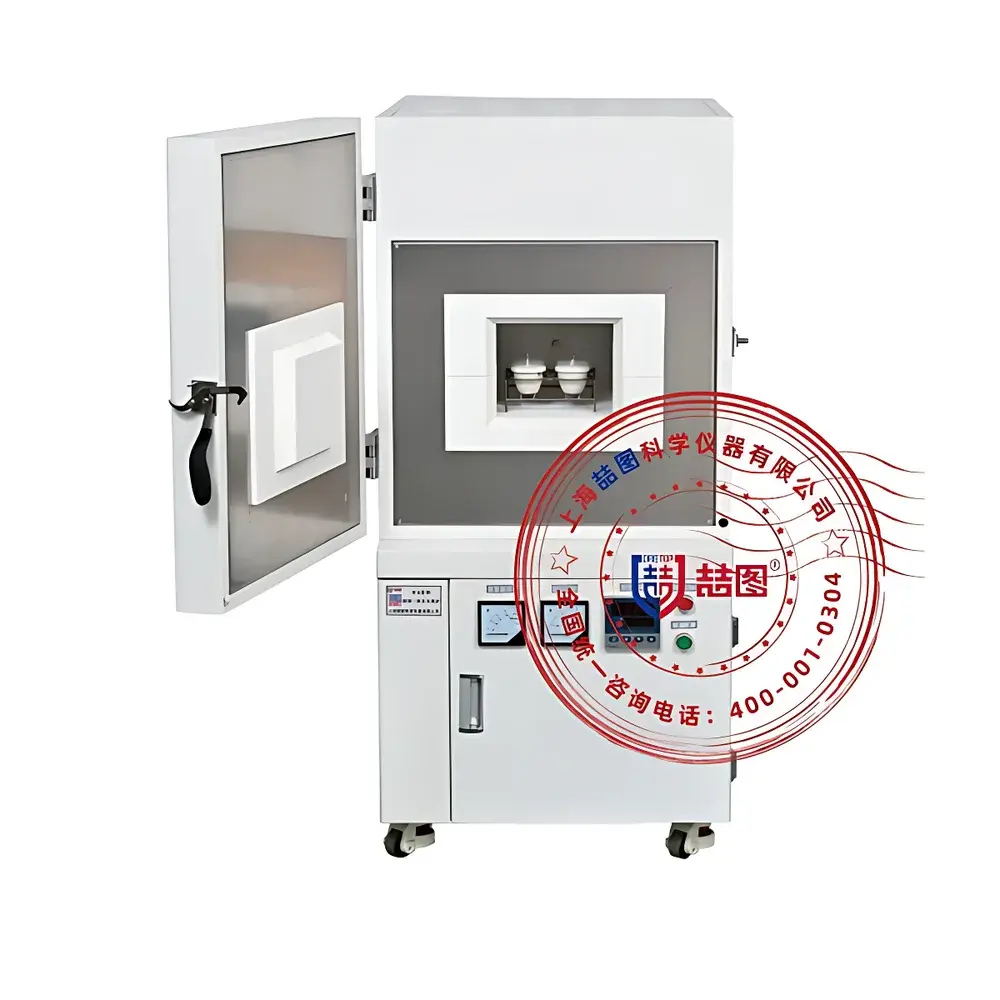
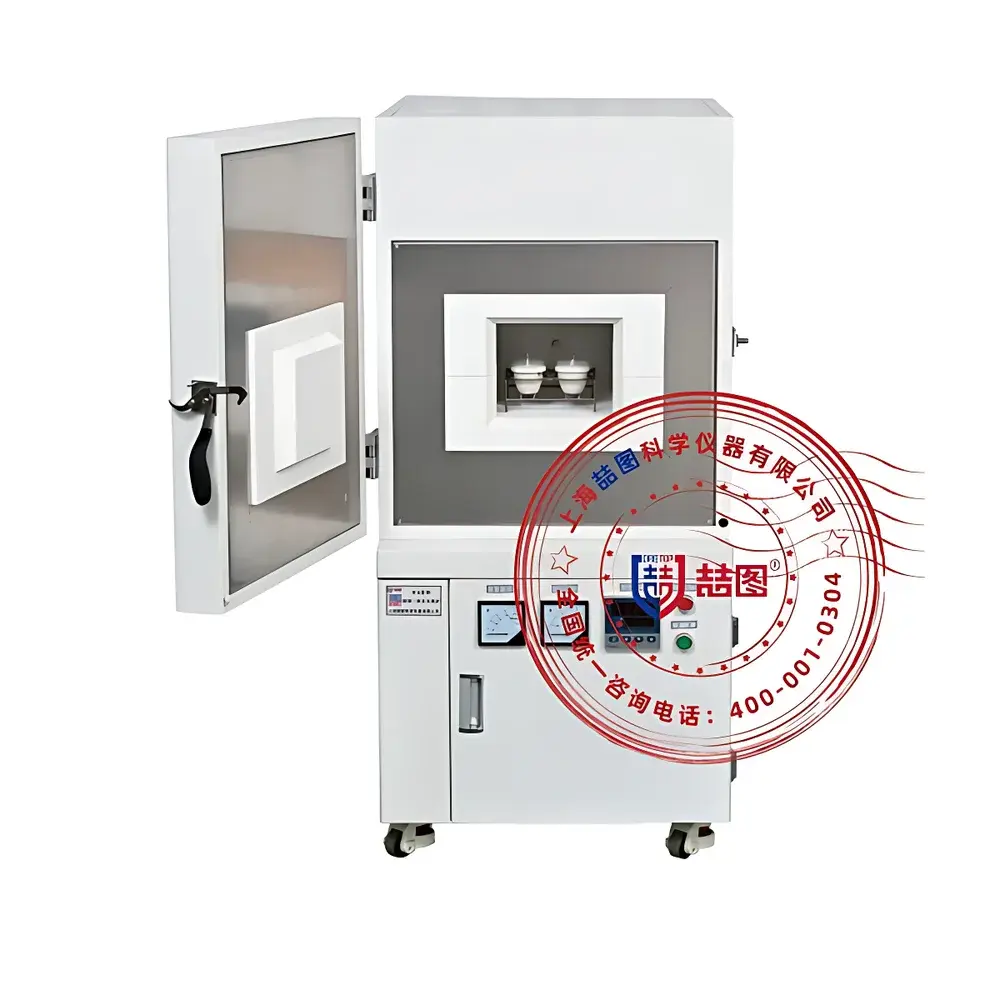
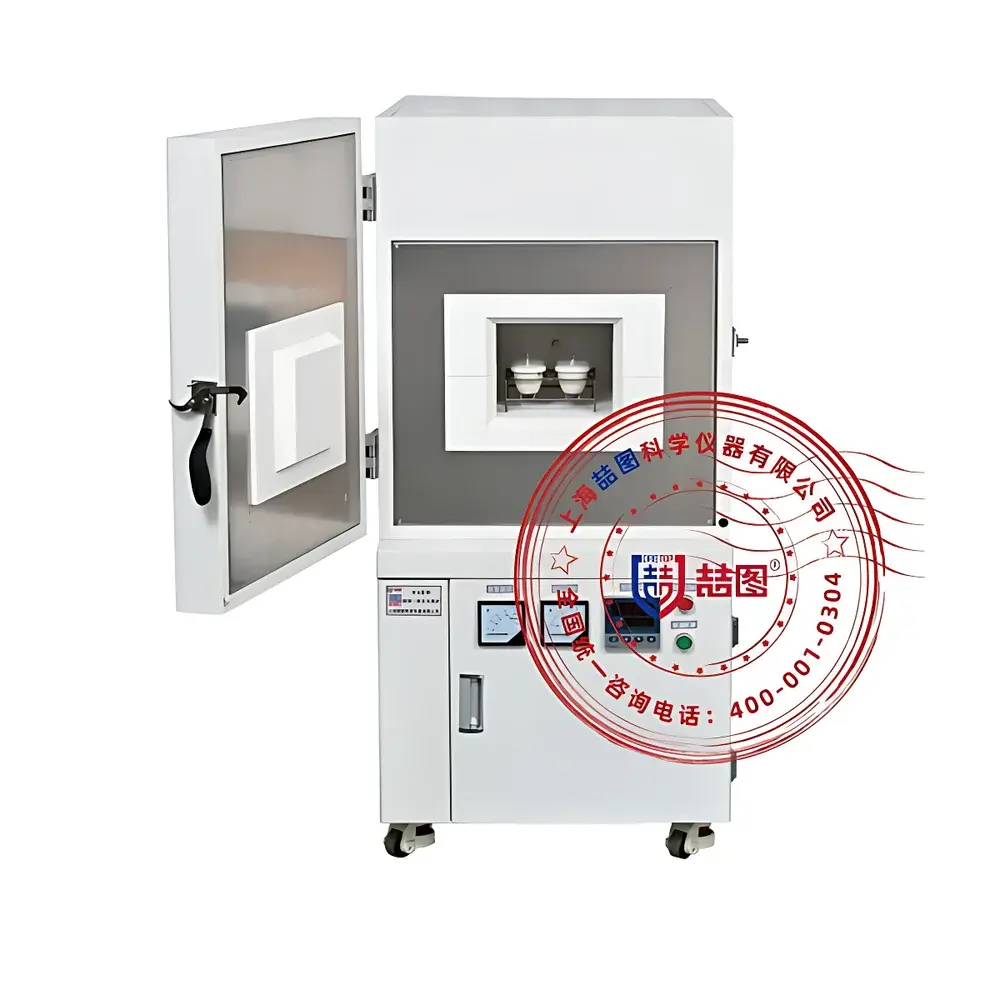
DRETOP B16-12AI Programmable Integrated High-Temperature Muffle Furnace
| Brand | DRETOP |
|---|---|
| Origin | Shanghai, China |
| Manufacturer Type | Direct Manufacturer |
| Instrument Type | Box-Type Muffle Furnace |
| Max Temperature | 1600 °C |
| Temperature Control Accuracy | ±1 °C |
| Max Power | 12 kW |
| Time to Max Temperature | 70 min |
| Heating Element | Silicon-Molybdenum (MoSi₂) Rods |
| Internal Chamber Dimensions | 200 × 300 × 200 mm |
| Nominal Volume | 12 L |
| Control System | 7-inch Color Touchscreen Controller with AI-based PID Algorithm |
| Transformer | Integrated Three-Phase Dry-Type Isolation Transformer |
| Safety Features | Dual-stage Overtemperature Protection, Door-Interlocked Power Cut-off, Power Failure Memory, Phase Loss & Thermocouple Break Detection |
| Insulation | Vacuum-Microporous Ceramic Fiber Board |
| Chamber Lining | Polycrystalline Alumina Fiber |
| Voltage | AC 380 V, 50 Hz |
Overview
The DRETOP B16-12AI Programmable Integrated High-Temperature Muffle Furnace is a precision-engineered box-type resistance furnace designed for demanding thermal processing applications in research laboratories, materials science facilities, and industrial quality control environments. It operates on Joule heating principles, utilizing silicon-molybdenum (MoSi₂) rods as the primary heating element—capable of stable, repeatable operation up to 1600 °C in air atmosphere. Unlike tube furnaces, its fully enclosed chamber architecture ensures uniform radial and axial heat distribution via triple-wall heating configuration (front, back, and top walls), minimizing thermal gradients across the 12-liter nominal workspace. The integrated three-phase dry-type isolation transformer mitigates electrical noise, enhances voltage stability under load fluctuations, and complies with IEC 61558-2-4 safety standards for industrial transformers. Designed for reproducible high-temperature protocols—including sintering, ashing, calcination, annealing, and elemental analysis—the B16-12AI meets foundational requirements for GLP-compliant thermal workflows where traceability, repeatability, and thermal homogeneity are critical.
Key Features
- AI-enhanced programmable controller with adaptive PID tuning: enables precise ramp-hold-cool profiles, multi-segment scheduling (up to 30 segments), and automatic parameter self-optimization based on real-time thermal inertia feedback.
- 7-inch high-resolution color touchscreen interface: displays real-time temperature curves, historical trend logs (up to 30 days), numeric setpoint/actual value overlays, and intuitive alarm diagnostics; supports USB data export in CSV format for post-processing in Excel or MATLAB.
- Triple-wall MoSi₂ heating layout: rods wound in spiral configuration and embedded within polycrystalline alumina fiber walls ensure symmetrical radiant heat transfer and ≤±3 °C uniformity across the working zone at 1600 °C (measured per ASTM E220-22 Annex A3).
- Door-interlocked safety circuit: power disengages instantly upon door opening; resumes automatically upon closure without manual reset—critical for intermittent sample insertion during long-duration firing cycles.
- Vacuum-microporous ceramic fiber insulation: reduces standby heat loss by >40% versus conventional refractory brick linings; contributes to rapid cool-down rates and energy efficiency compliant with ISO 50001 energy management benchmarks.
- Dual-level overtemperature protection: primary controller limit (user-configurable) + independent mechanical overtemperature cut-off switch (hardwired, non-software-dependent), both certified to UL 61010-1 Class II requirements.
Sample Compatibility & Compliance
The B16-12AI accommodates standard crucibles (alumina, zirconia, graphite), ceramic substrates, metal alloys, and powdered oxides within its 200 × 300 × 200 mm chamber. Its inert-air-compatible design permits optional integration of inert gas purge (via N₂/Ar inlet valve) to suppress oxidation during sintering of reactive metals or nitride ceramics. The furnace conforms to key regulatory frameworks applicable to laboratory thermal instrumentation: compliance with CE marking (2014/30/EU EMC Directive and 2014/35/EU Low Voltage Directive), adherence to ASTM E1142 (Standard Practice for Calibration of High-Temperature Furnaces), and compatibility with FDA 21 CFR Part 11–compliant data integrity protocols when paired with validated third-party LIMS interfaces (e.g., LabWare, Thermo Fisher SampleManager). All firmware logs include immutable timestamps, user ID attribution, and audit trail generation—supporting GMP/GLP audit readiness.
Software & Data Management
The embedded controller firmware provides native support for RS485 Modbus RTU communication (standard), enabling bidirectional integration with SCADA systems or centralized lab automation platforms. Optional accessories include an RS485-to-Ethernet gateway for TCP/IP network visibility and a micro-printer module for hard-copy record retention—a requirement under certain ISO/IEC 17025-accredited testing procedures. Data logging intervals are configurable from 1 second to 60 minutes; all records include thermocouple type (Type S standard), cold-junction compensation values, and controller status flags (e.g., “Heating,” “Soaking,” “Cooling,” “Alarm Active”). No cloud dependency: raw data resides exclusively on-device or exported via USB—ensuring full data sovereignty per GDPR and HIPAA-aligned institutional policies.
Applications
- Materials synthesis: solid-state reaction of Li-ion cathode precursors (e.g., NMC, LFP), ferrite sintering, and rare-earth phosphor annealing.
- Geochemical and environmental analysis: gravimetric determination of volatile matter, loss-on-ignition (LOI) testing per ASTM D7348, and ash content quantification in coal, biomass, and sludge samples.
- Metallurgical processing: stress-relief annealing of tool steels, normalization of cast iron, and tempering of high-speed steel components.
- Ceramic engineering: densification of alumina and silicon carbide green bodies, binder burnout prior to HIP processing, and phase-purity verification via controlled thermal cycling.
- Calibration reference: serving as a stable, traceable high-temperature source for secondary calibration of infrared pyrometers and thermographic systems (per ISO/IEC 17025 Clause 6.4.9).
FAQ
What thermocouple type is used for temperature measurement and control?
Type S (Platinum-10% Rhodium / Platinum) thermocouples are factory-installed and calibrated to NIST-traceable standards, providing accuracy of ±0.5 °C from 1000 °C to 1600 °C.
Is the furnace suitable for vacuum or reducing atmospheres?
No—it is rated for ambient air operation only. For vacuum or H₂/N₂-reducing environments, DRETOP recommends its dedicated tube furnace series (e.g., BTF-1600V) with flanged quartz or alumina tubes.
Can the controller store multiple heating programs?
Yes—up to 16 independent multi-segment programs can be saved onboard, each supporting ramp rates from 0.1 to 30 °C/min, hold durations from 1 minute to 999 hours, and cooling-by-environment profiles.
Does the unit include a validation certificate?
A factory-as-built calibration report (including as-found/as-left data at 1000 °C, 1300 °C, and 1600 °C) is supplied with each unit; IQ/OQ documentation templates are available upon request for GxP-regulated installations.
What maintenance is required for long-term reliability?
Annual inspection of MoSi₂ rod emissivity degradation, thermocouple drift verification, and ceramic fiber integrity assessment is recommended; no lubrication or consumable replacement is required under normal operating conditions.



