

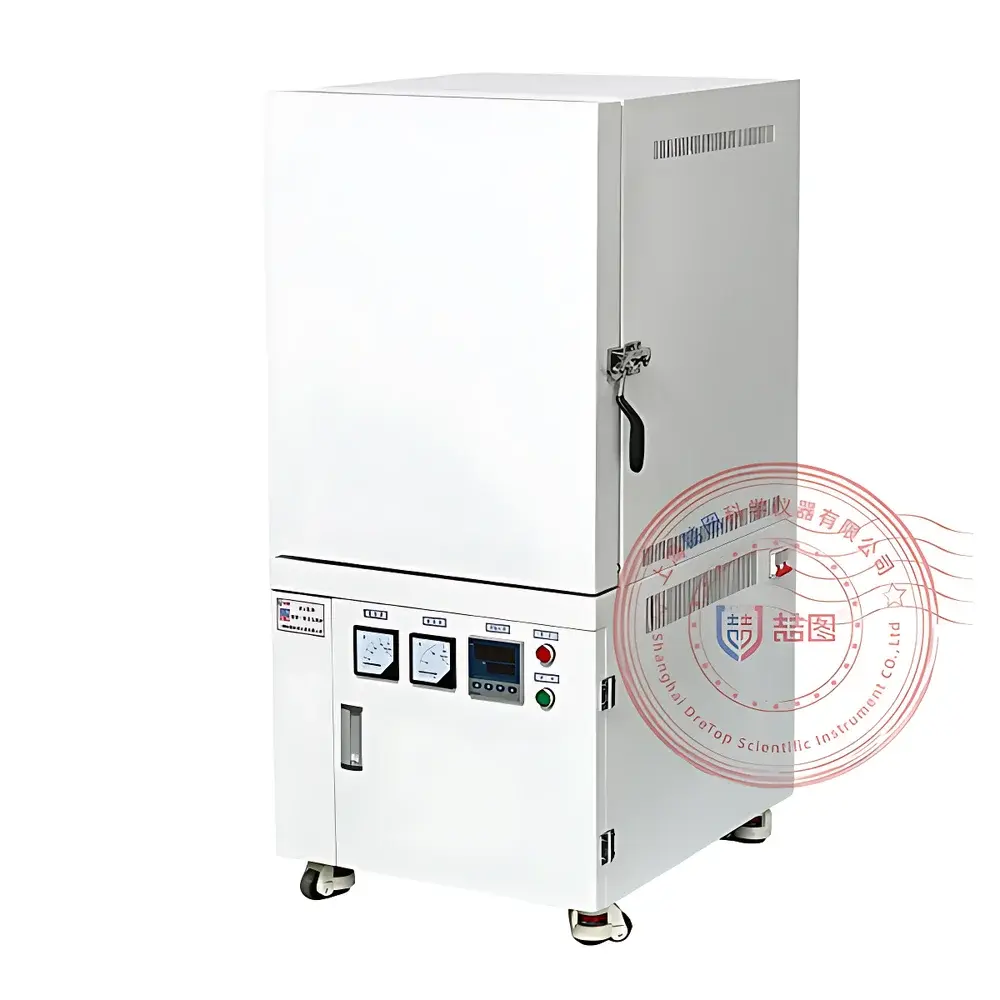
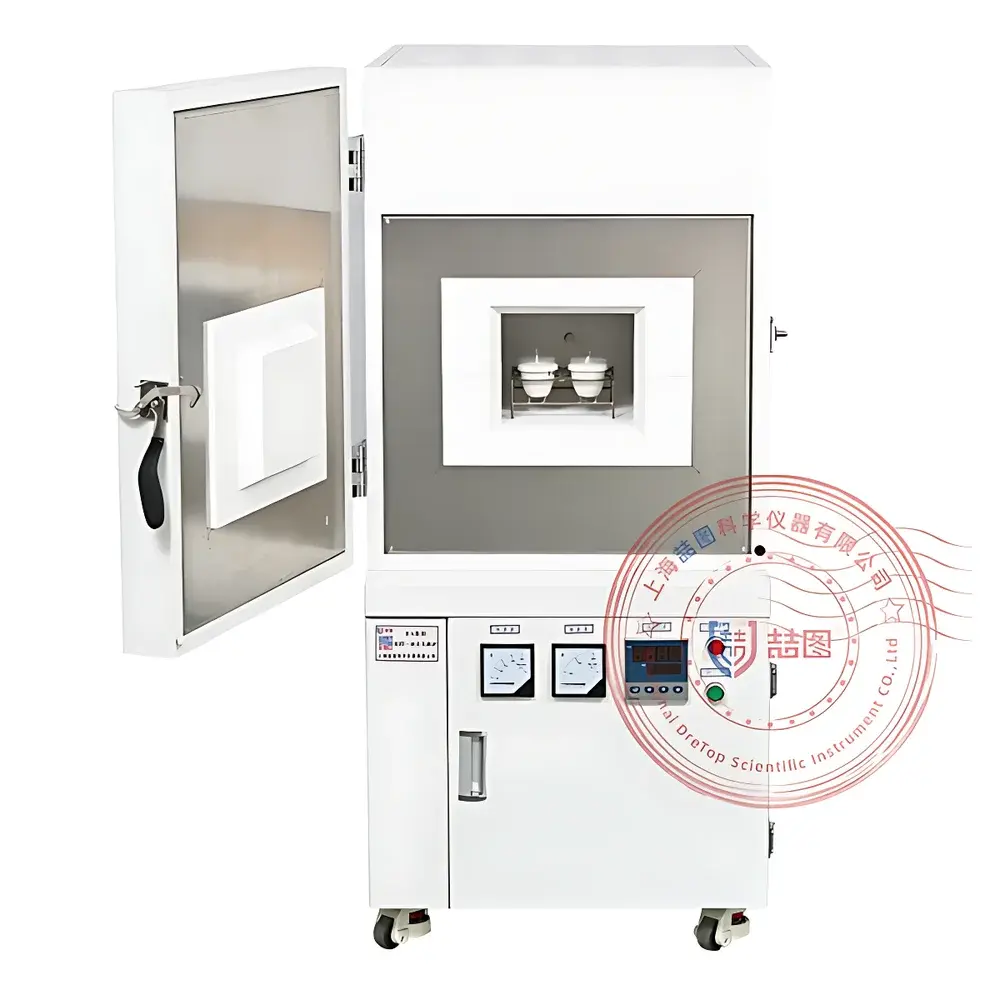
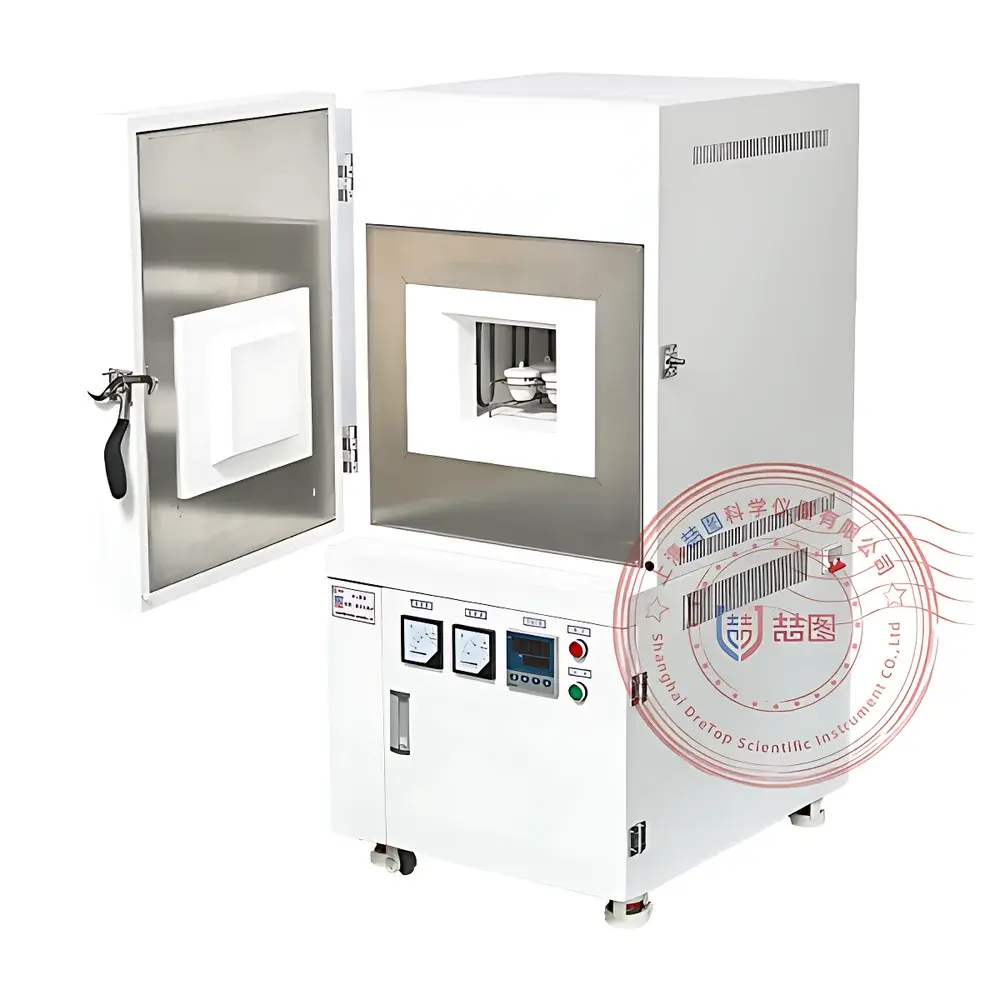
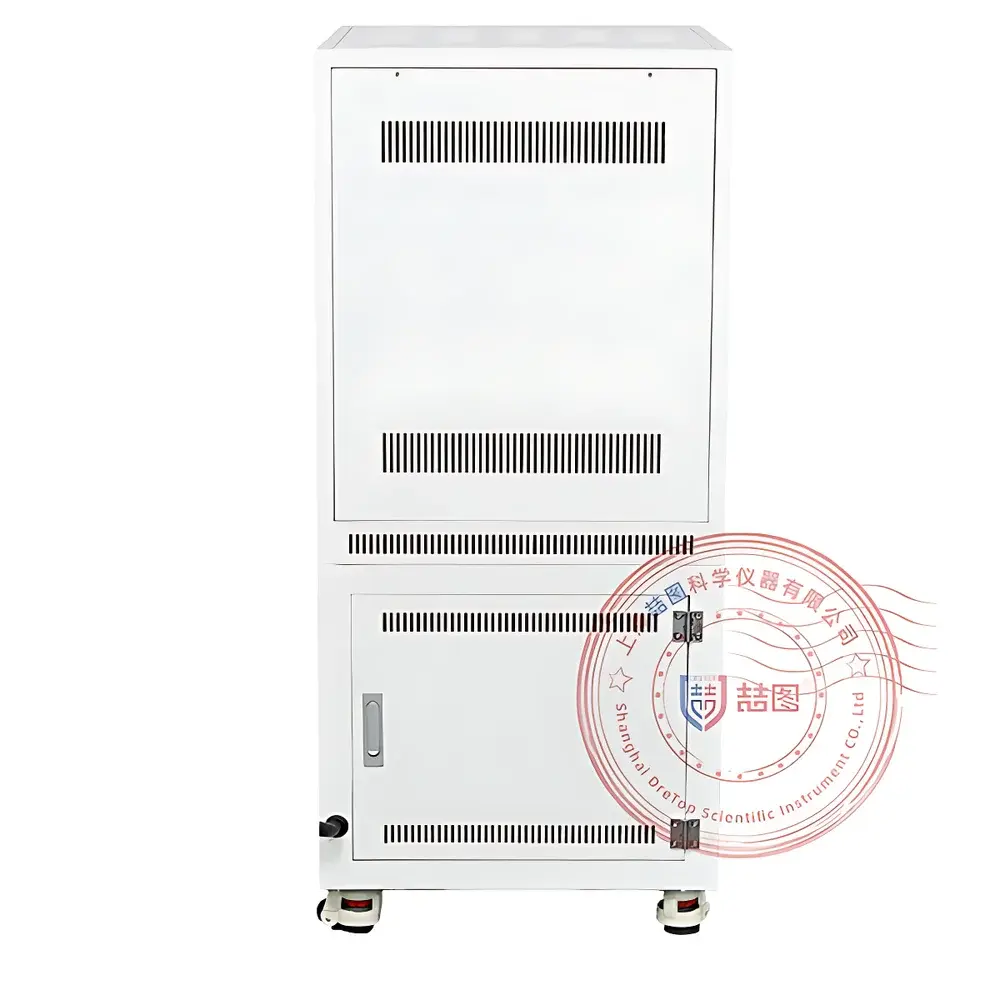
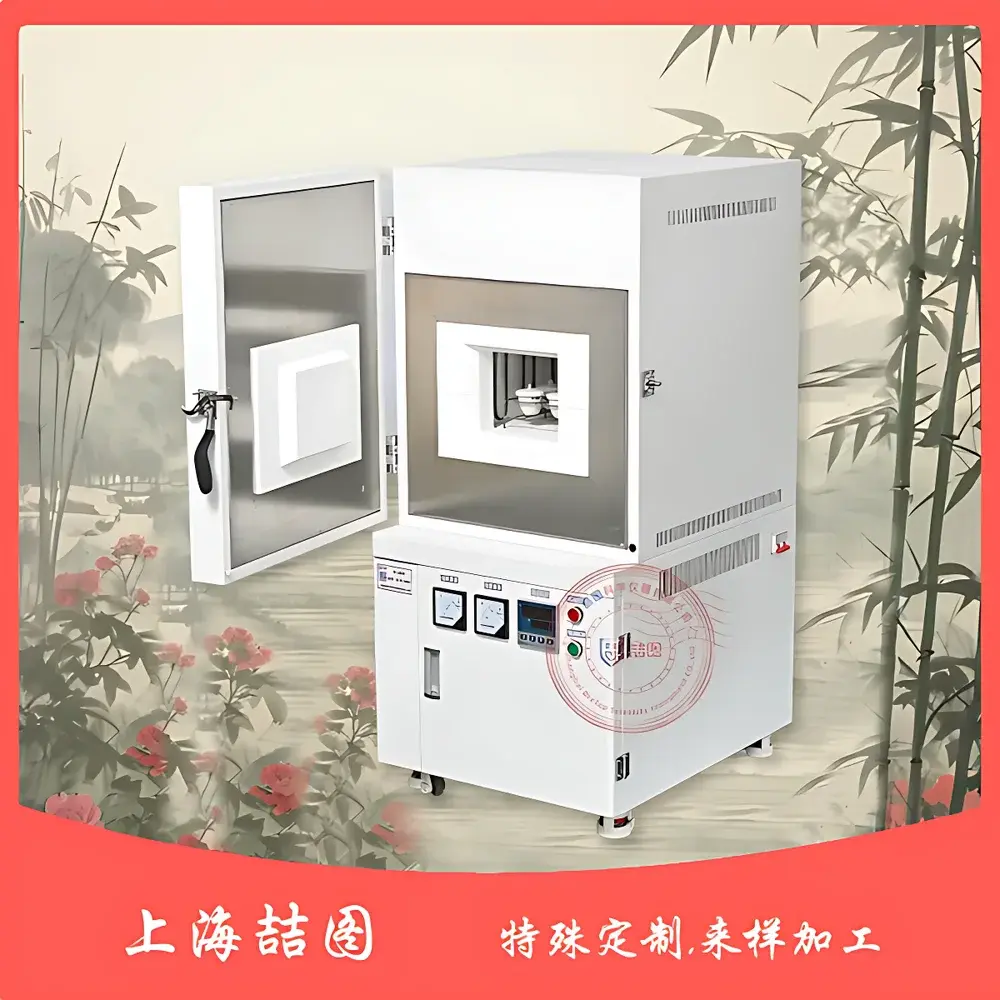
DRETOP B16-5P Programmable High-Temperature Muffle Furnace
| Brand | DRETOP |
|---|---|
| Origin | Shanghai, China |
| Manufacturer Type | Direct Manufacturer |
| Product Category | Domestic |
| Model | B16-5P |
| Instrument Type | Box-Type Muffle Furnace |
| Maximum Temperature | 1600°C |
| Temperature Control Accuracy | ±1°C |
| Rated Power | 8 kW |
| Time to Max Temperature | 70 min |
| Heating Element | Silicon Molybdenum (MoSi₂) Rods |
| Internal Chamber Dimensions | 150 × 300 × 120 mm (W × D × H) |
| Control System | Microcomputer-Based PID Controller |
| Nominal Volume | 5 L |
| Tube Diameter | Not applicable (box-type furnace) |
Overview
The DRETOP B16-5P Programmable High-Temperature Muffle Furnace is a precision-engineered box-type resistance furnace designed for controlled thermal processing in research laboratories, quality control environments, and industrial R&D settings. It operates on Joule heating principles—electric current passing through high-resistance silicon molybdenum (MoSi₂) rods generates radiant heat within an insulated ceramic fiber chamber. With a maximum operating temperature of 1600°C and ±1°C thermal stability across its 5 L nominal chamber volume, the B16-5P meets stringent requirements for sintering, ashing, calcination, annealing, and heat treatment of metals, ceramics, composites, and refractory materials. Its integrated three-sided heating configuration ensures uniform radial and axial temperature distribution, minimizing thermal gradients that could compromise material homogeneity or analytical repeatability. The furnace incorporates a built-in three-phase dry-type isolation transformer, enabling stable power delivery while suppressing electromagnetic interference—a critical feature for labs operating sensitive instrumentation nearby.
Key Features
- Programmable multi-segment thermal profiles: Supports up to 30 programmable steps with linear ramping, dwell, and cooling functions; AI-based self-tuning PID algorithm optimizes response across wide heating/cooling rate ranges.
- Intelligent safety architecture: Dual-level overtemperature protection, thermocouple break detection, phase loss monitoring, and automatic power cutoff upon door opening—ensuring personnel and sample integrity during transient access.
- Robust thermal design: Triple-wall construction with vacuum-microporous alumina ceramic fiber insulation (density: ~220 kg/m³), front-mounted heat-shield baffle, and seamless stainless-steel inner lining (2 mm thick) for corrosion resistance and easy cleaning after high-temperature oxidation cycles.
- Human-centric interface: 7-inch color TFT touchscreen (optional standard) displays real-time temperature curves, historical trend logs, and system status; supports data export via USB and configurable user permissions (engineer/operator/admin tiers).
- Energy-efficient operation: Optimized MoSi₂ element geometry and low-thermal-mass chamber reduce warm-up time to 1600°C in ≤70 minutes while maintaining <1.5 kW/h standby consumption at 1000°C.
Sample Compatibility & Compliance
The B16-5P accommodates standard crucibles (alumina, quartz, graphite, and molybdenum), petri dishes, and custom fixtures up to 120 mm height within its 150 × 300 × 120 mm chamber. Its uniformity profile—verified per ASTM E220–22 (Standard Test Method for Calibration of Thermocouples)—demonstrates ≤±3°C deviation across the central 60% volume at 1400°C. The furnace complies with IEC 61000-6-3 (EMC emission limits), UL 61010-1 (safety requirements for electrical equipment), and supports GLP/GMP workflows through audit-trail-capable software logging (when equipped with AI-series controller and optional RS485 interface). Optional inert gas inlet (N₂/Ar) enables controlled-atmosphere processing aligned with ISO 8501-1 surface preparation standards.
Software & Data Management
The AI-series controller firmware supports full-cycle thermal protocol definition—including ramp rates (0.1–30°C/min), hold durations (1–9999 min), and cooling strategies (natural or forced-air assisted). All setpoints, actual values, alarms, and timestamped events are stored locally with non-volatile memory retention (>10 years without power). Data export formats include CSV and Excel-compatible .xls; optional RS485 Modbus RTU integration allows bidirectional communication with LIMS or SCADA systems. Firmware adheres to FDA 21 CFR Part 11 requirements when paired with password-protected user roles, electronic signatures, and immutable log files—facilitating regulatory submissions in pharmaceutical and medical device development labs.
Applications
- Materials science: Sintering of oxide ceramics (Al₂O₃, ZrO₂), densification of powder metallurgy compacts, and phase transformation studies in Ni-based superalloys.
- Environmental testing: Gravimetric analysis of total suspended solids (TSS), volatile solids (VS), and ash content per APHA Standard Methods 2540F.
- Geochemical research: Fusion bead preparation for XRF analysis of silicate rocks and ores (ASTM D5630–21).
- Metallurgy: Annealing of tool steels, stress-relief treatments of welded assemblies, and tempering verification per ASTM A956.
- Academic instruction: Controlled oxidation kinetics experiments, TGA calibration verification, and pyrolysis behavior modeling of polymer composites.
FAQ
What type of thermocouple is used for temperature sensing?
Type S (Platinum/Rhodium) thermocouples are factory-installed and calibrated traceably to NIST standards.
Is the furnace suitable for vacuum or controlled-atmosphere operation?
It is not vacuum-rated; however, optional inert gas purge ports (N₂/Ar) support positive-pressure atmospheres up to 0.1 MPa gauge.
Can the controller store multiple independent programs?
Yes—the AI-series controller retains up to 16 user-defined programs with individual naming and versioning.
What maintenance is required for the MoSi₂ heating elements?
No periodic replacement is needed under normal use; elements exhibit negligible resistance drift below 1500°C and maintain structural integrity for >2000 thermal cycles.
Does the unit comply with CE marking requirements?
Yes—certified to EN 61000-6-2 (immunity) and EN 61000-6-4 (emissions), with Declaration of Conformity available upon request.



