
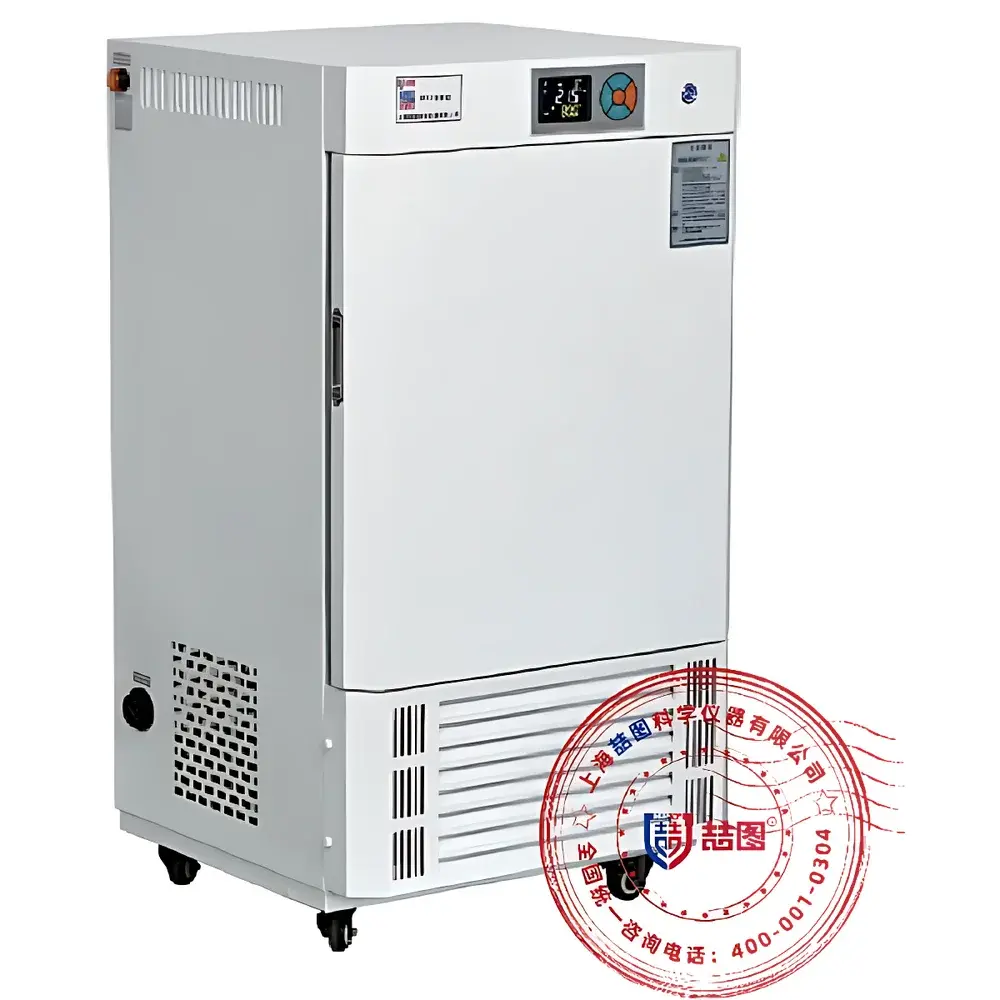
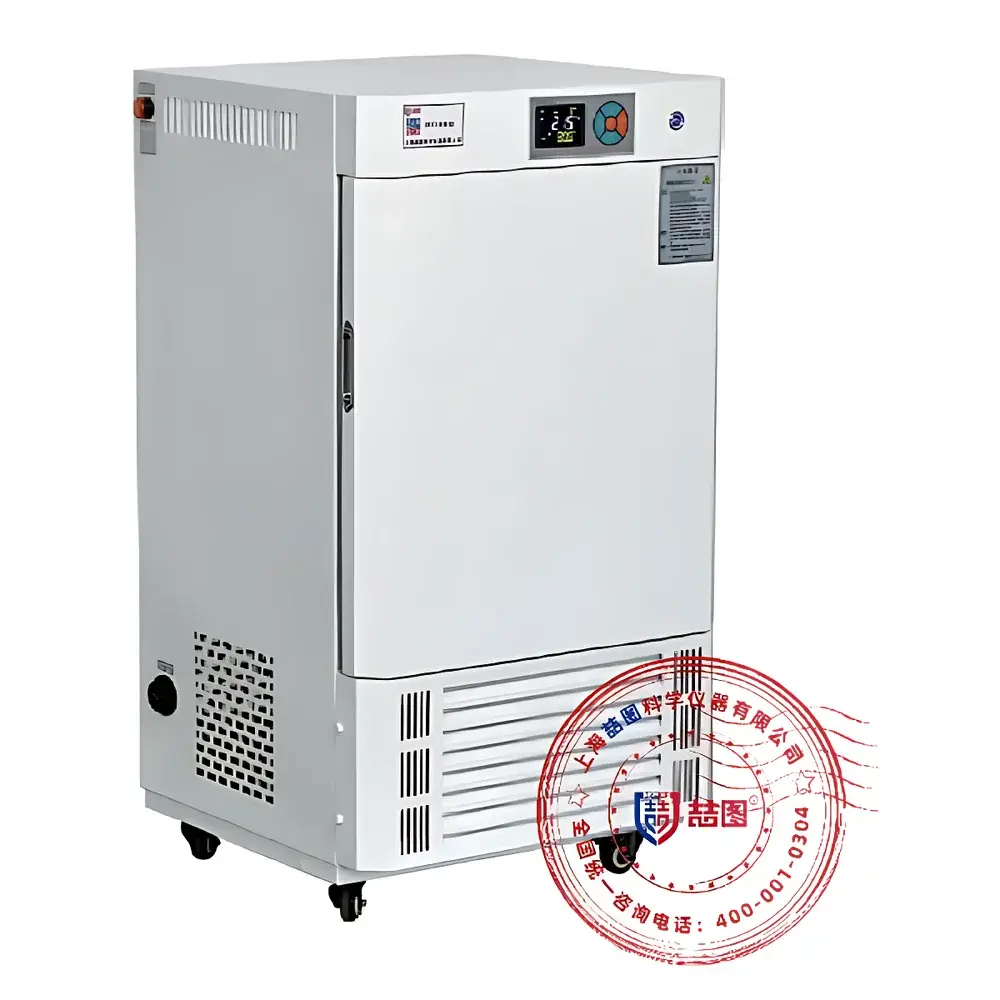
DRETOP BD6-70E Integrated BOD Incubation and Analysis System
| Brand | DRETOP |
|---|---|
| Origin | Shanghai, China |
| Manufacturer Type | Direct Manufacturer |
| Product Category | Domestic (China-made) |
| Model | BD6-70E |
| Price Range | USD 4,200 – 7,000 |
| Instrument Type | Laboratory BOD Analyzer |
| Measurement Range | 0–4000 mg/L |
| Detection Limit | 1 mg/L |
| Accuracy | ±8% |
| Single-Sample Incubation Duration | 1–30 days |
| Incubation Temperature | 20 °C ±1 °C |
| Resolution | 0.01 mg/L |
| Temperature Stability | ±0.5 °C |
| Temperature Resolution | 0.1 °C |
| Sample Capacity | 6 independent channels |
| Cultivation Vessel Volume | 580 mL |
| Data Storage Duration | 10 years |
| Battery Life | ≥2 years |
| Power Supply | AC 220 V, 50 Hz |
| Dimensions (W×D×H) | 450×320×500 mm |
| Shelf Quantity | 2 adjustable stainless-steel shelves |
| Communication Interface | RS485 (optional), USB (optional), Bluetooth data upload & print (standard) |
Overview
The DRETOP BD6-70E Integrated BOD Incubation and Analysis System is a purpose-engineered laboratory instrument designed to perform standardized biochemical oxygen demand (BOD) measurement in strict compliance with ISO 5815-1:2019, ASTM D5210-92(2020), and EPA Method 405.1. It combines a precision-controlled incubation chamber and a multi-channel BOD analyzer into a single compact platform—eliminating inter-device calibration drift, ambient temperature interference, and manual transfer errors common in conventional two-unit workflows. The system operates on the mercury-free pressure-difference principle: microbial respiration within sealed, stirred 580 mL BOD bottles consumes dissolved oxygen, generating a proportional pressure drop across a solid-state sensor array. This differential is converted in real time to mg/L BOD values using stoichiometric oxygen demand conversion algorithms embedded in firmware. Designed for regulatory-grade environmental water testing, the BD6-70E maintains a stable 20 °C ±1 °C incubation environment—meeting the mandatory temperature tolerance specified in ISO 5815 and US EPA guidelines for BOD5 determination.
Key Features
- 6 independent, isolated BOD measurement channels—enabling concurrent analysis of up to six samples without cross-contamination or signal crosstalk;
- Microprocessor-controlled incubation chamber with 30-segment programmable temperature profile, 0.1 °C resolution, and ±0.5 °C uniformity across the 450 × 320 × 500 mm working chamber;
- Mercury-free differential pressure sensing architecture—compliant with Minamata Convention requirements and eliminating hazardous waste disposal liabilities;
- Intelligent power management: auto-recovery after power interruption with parameter retention, delayed compressor restart, and thermal overload protection;
- Optimized forced-air convection system with dual-direction airflow distribution—ensuring homogeneous temperature distribution critical for reproducible BOD kinetics;
- Electro-polished stainless-steel interior and static-resistant powder-coated exterior—resistant to corrosion from repeated exposure to humid, organic-rich environments;
- Touchscreen interface with direct BOD concentration readout, real-time trend plotting, and automatic curve generation per sample channel.
Sample Compatibility & Compliance
The BD6-70E accommodates standard 580 mL glass BOD bottles conforming to ASTM D888 and ISO 5815 bottle geometry specifications. It supports raw wastewater, treated effluent, surface water, groundwater, and industrial process water matrices—provided turbidity remains below 100 NTU and residual chlorine is quenched prior to seeding. The system meets functional requirements for GLP-compliant laboratories: audit-trail-capable data logging (timestamped, user-ID tagged), non-volatile memory retention (10-year minimum), and configurable data export (CSV via USB or Bluetooth). Optional RS485 interface enables integration into SCADA or LIMS platforms compliant with IEC 62443-3-3 and FDA 21 CFR Part 11 when paired with validated software modules.
Software & Data Management
Onboard firmware provides native support for BOD5, BOD7, and extended incubation protocols (up to 30 days). All measurements are timestamped and stored with metadata including operator ID, incubation start/stop time, temperature log (recorded every 5 minutes), and pressure differential raw values. Bluetooth-enabled models support wireless printing of certified test reports and secure cloud upload to DRETOP Cloud Analytics (EN 13843-compliant encryption). Data export formats include CSV (compatible with Excel, R, Python pandas) and PDF report templates pre-formatted to ISO/IEC 17025 reporting requirements. Firmware updates are delivered via USB stick with SHA-256 signature verification.
Applications
- Regulatory wastewater discharge monitoring per national environmental standards (e.g., China’s HJ 505-2009, EU Directive 91/271/EEC);
- Performance validation of biological treatment units (activated sludge, MBR, trickling filters);
- Environmental impact assessment (EIA) field lab support for river, lake, and estuary sampling campaigns;
- Pharmaceutical and biotech facility QC labs assessing biodegradability of effluents under OECD 301 series protocols;
- University teaching laboratories conducting standardized BOD methodology training aligned with APHA Standard Methods 5210B;
- Food & beverage production QA—evaluating organic load variation in process water and cleaning-in-place (CIP) rinse streams.
FAQ
Does the BD6-70E comply with ISO 5815-1:2019 for BOD5 determination?
Yes—the incubation temperature stability (20 °C ±1 °C), pressure-difference measurement principle, and data recording interval meet all mandatory clauses of ISO 5815-1:2019 Annex A.
Can samples be added mid-incubation without disrupting ongoing tests?
Yes—each of the six channels operates independently; new bottles may be inserted and initiated at any time without affecting active assays.
Is dilution required for high-BOD samples within the 0–4000 mg/L range?
No—full-range measurement is achieved without manual dilution due to adaptive sensor gain and auto-ranging firmware logic.
What maintenance is required for long-term operational reliability?
Annual calibration verification using certified NIST-traceable pressure standards and quarterly inspection of O-rings and stirrer motor brushes are recommended.
How is data integrity ensured during power failure?
All parameters and measurement logs are written to non-volatile flash memory before each 5-minute interval; recovery resumes from last valid checkpoint without data loss.
Related Products







