
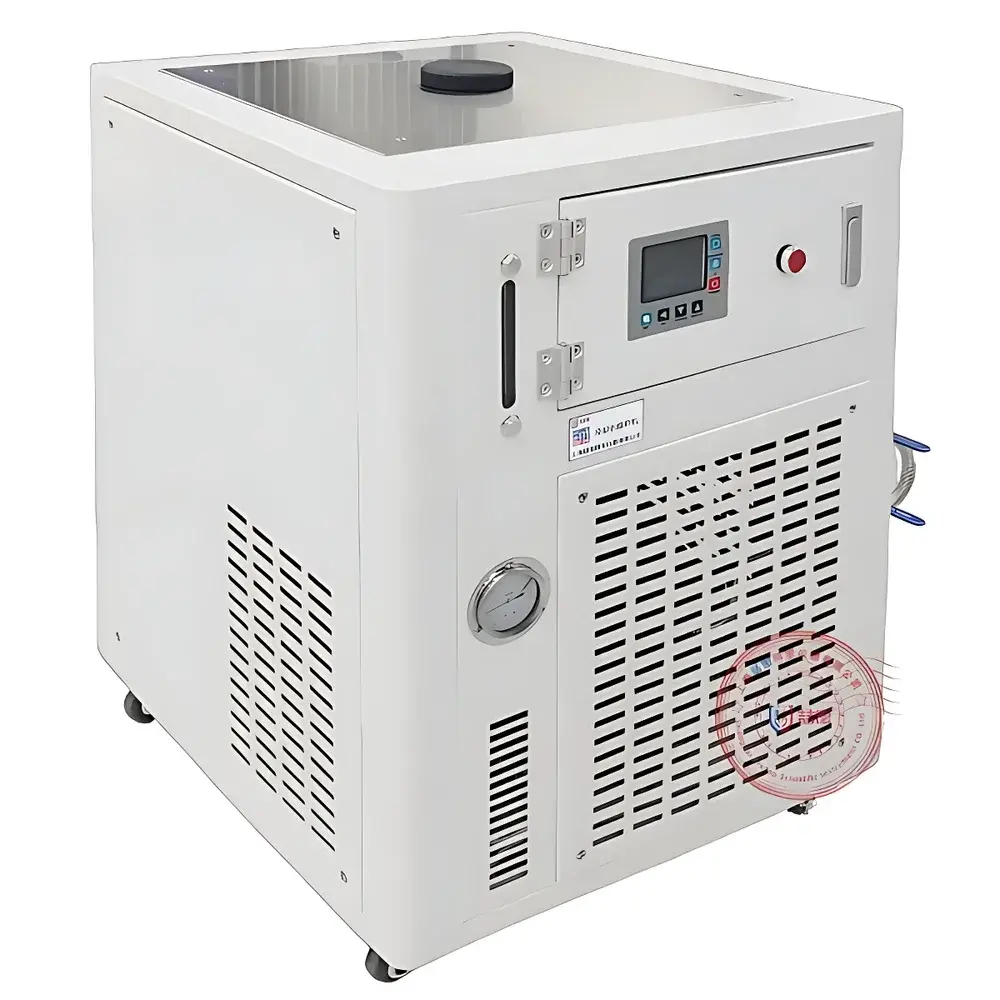
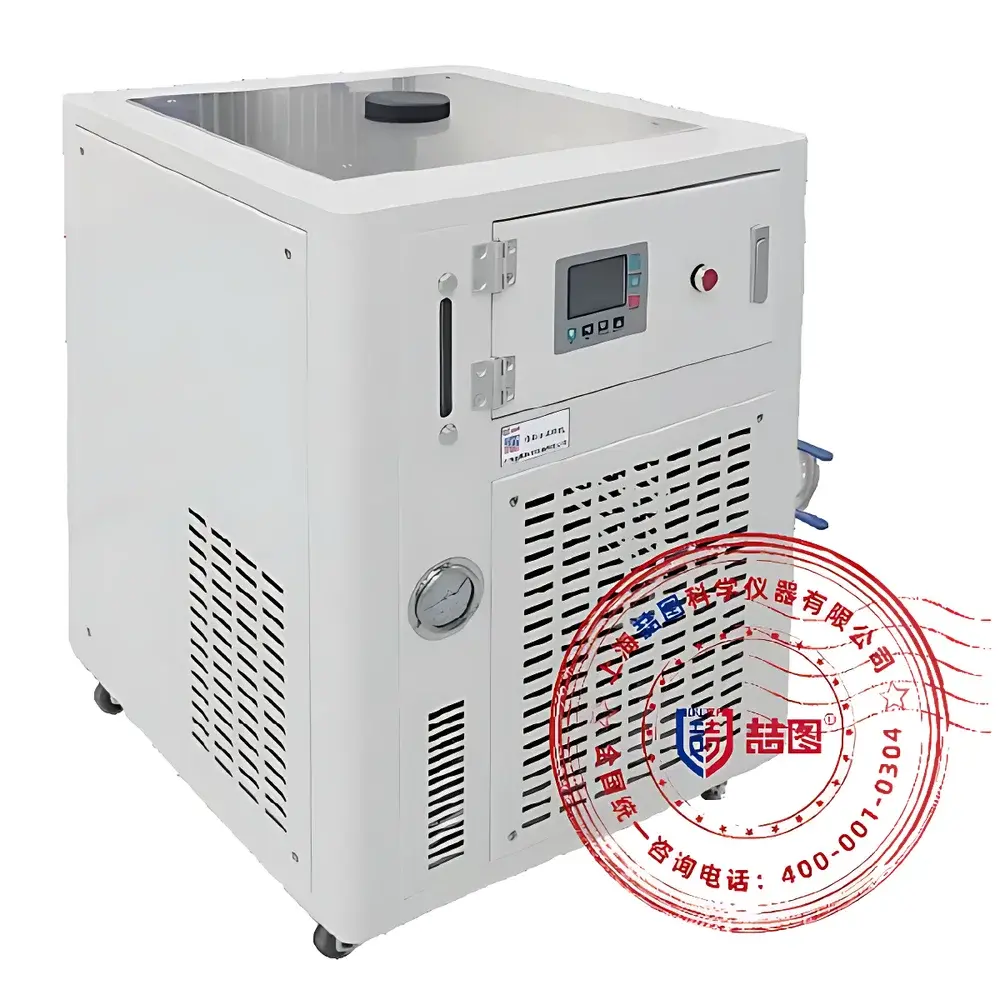
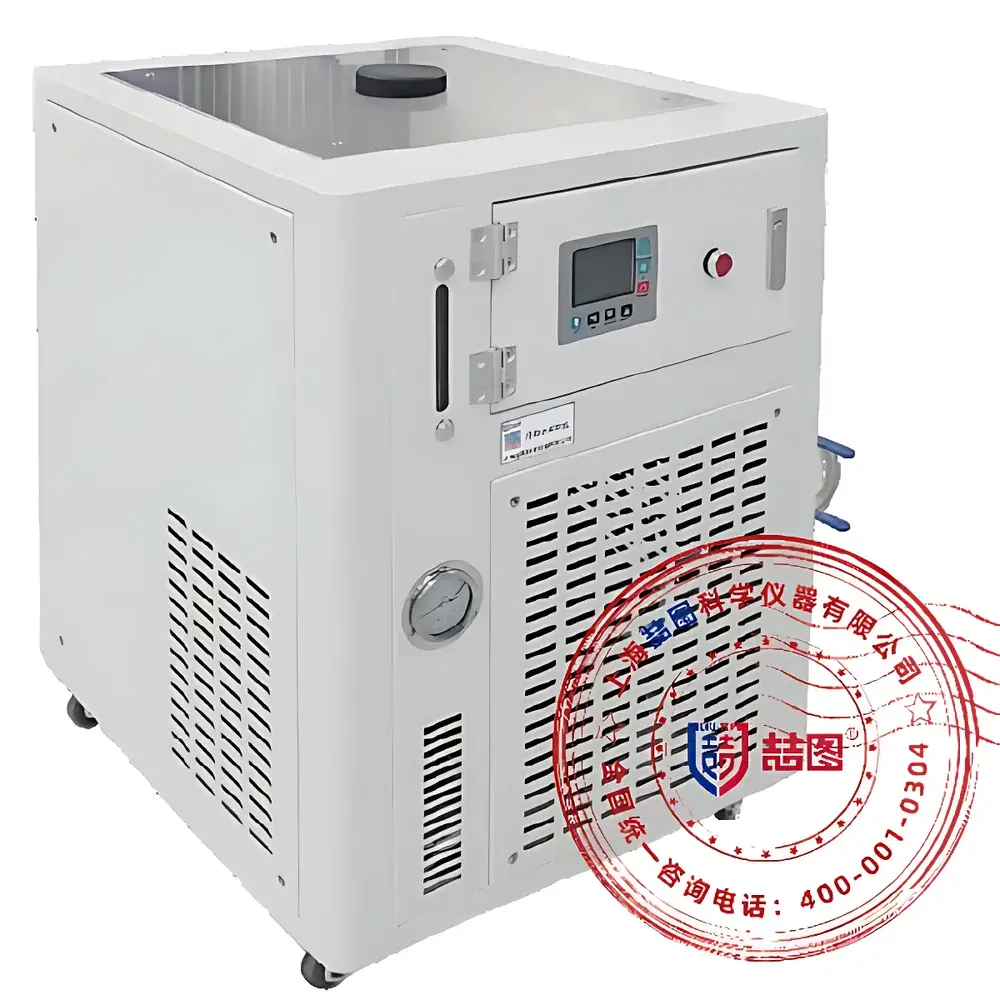
DRETOP CL-260-300HE Circulating Chiller
| Brand | DRETOP |
|---|---|
| Origin | Shanghai, China |
| Manufacturer Type | Direct Manufacturer |
| Product Category | Domestic |
| Model | CL-260-300HE |
| Instrument Type | Integrated Unit |
| Cooling Method | Water-Cooled |
| Temperature Control Range | 5–35 °C |
| Refrigeration Capacity | 30 kW/h |
| Circulating Pump Pressure | 0–4 bar |
| Circulating Pump Flow Rate | 0–60 L/min |
| Reservoir Volume | 260 L |
| Operating Mode | Continuous Duty |
Overview
The DRETOP CL-260-300HE Circulating Chiller is an industrial-grade, integrated water-cooling system engineered for stable, continuous thermal management in demanding laboratory and pilot-scale applications. It operates on a vapor-compression refrigeration cycle with optimized heat exchange architecture, delivering precise temperature control across a wide operational envelope (5–35 °C) while maintaining high thermal stability and flow consistency. Designed for integration with high-heat-load analytical instruments—including mass spectrometers, NMR systems, X-ray sources, rotary evaporators, and laser-based equipment—the unit provides closed-loop cooling with zero process fluid exposure to ambient air, minimizing oxidation, evaporation, and contamination risks. Its robust construction, stainless-steel reservoir and wetted components, and sealed circulation path ensure long-term reliability under 24/7 operation.
Key Features
- Integrated PID-based digital temperature controller with high-resolution RTD sensor (±0.1 °C typical accuracy), enabling rapid thermal response and low-temperature fluctuation—engineered for reproducible instrument performance.
- Stainless-steel insulated reservoir (260 L capacity) and corrosion-resistant internal piping; all fluid-contact surfaces comply with ISO 8502-3 for cleanability and chemical compatibility with common coolant formulations (e.g., water-glycol mixtures).
- Low-heat-generation centrifugal circulation pump (0–60 L/min, max. 4 bar pressure) with thermally isolated motor housing—prevents self-heating interference with bath temperature uniformity.
- Comprehensive safety architecture: real-time monitoring of flow rate, liquid level, outlet temperature, compressor discharge temperature, and current draw; automatic shutdown triggers for low-flow, dry-run, overtemperature, overpressure, and phase-loss conditions.
- RS485 serial interface (Modbus RTU protocol) standard; supports remote parameter setting, data logging (temperature/time stamps), and historical trend export via compatible SCADA or LIMS platforms.
- Energy-efficient refrigeration circuit featuring high-efficiency scroll compressor, microchannel condenser, and intelligent fan speed control—optimized for continuous duty at rated load without thermal derating.
Sample Compatibility & Compliance
The CL-260-300HE is compatible with deionized water, 20–40% aqueous ethylene glycol solutions, and other non-corrosive, low-viscosity heat transfer fluids meeting ASTM D1384 and ISO 21068 standards. Its closed-loop design eliminates direct atmospheric contact, preserving fluid integrity during extended operation. The unit meets CE marking requirements per Directive 2014/30/EU (EMC) and 2014/35/EU (LVD); electrical insulation complies with IEC 61000-6-2/6-4. For regulated environments (GMP/GLP labs), optional audit-trail-enabled firmware supports 21 CFR Part 11-compliant data recording when paired with validated software.
Software & Data Management
The embedded controller stores up to 30 days of timestamped temperature and flow data (1-minute intervals) internally. Through the RS485 port, users can access real-time parameters and configure alarm thresholds using DRETOP’s free PC-based utility (Windows 10/11 compatible). Logged data exports as CSV for post-processing in Excel, MATLAB, or LabVIEW. Optional OPC UA gateway integration enables seamless connectivity to enterprise-level MES or building automation systems. All configuration changes are logged with user ID and timestamp—supporting traceability in quality-critical workflows.
Applications
- Analytical Instrument Cooling: Maintains stable operating temperatures for ICP-OES/MS torches, NMR cryoprobes, X-ray tube anodes, and FTIR interferometers—reducing thermal drift and extending component service life.
- Process Reaction Control: Removes exothermic heat from jacketed reactors, fermenters, and catalytic test rigs in pharmaceutical and fine chemical synthesis per USP & EP guidelines.
- Mechanical & Optical Systems: Stabilizes spindle oil temperature in CNC machining centers and laser cavity coolant in high-power optical setups—minimizing thermal lensing and positional error.
- Vacuum & Thin-Film Deposition: Regulates target and substrate temperatures in sputtering and e-beam evaporation systems to improve film adhesion and stoichiometric fidelity.
- Medical & Biotech Equipment: Supports MRI quench pipe precooling, PET radiotracer synthesis modules, and chilled centrifugation protocols requiring strict thermal compliance.
FAQ
What is the maximum allowable coolant viscosity for continuous operation?
The system is rated for fluids with dynamic viscosity ≤ 5 mPa·s at 20 °C (e.g., ≤40% ethylene glycol/water). Higher viscosities reduce flow efficiency and may trigger low-flow alarms.
Can this chiller operate below 5 °C?
No—the minimum setpoint is 5 °C to prevent freezing risk and ensure stable refrigerant superheat control. For sub-zero applications, consult the CL-260-300HE-LT variant with enhanced low-temp package.
Is external water supply required for the condenser?
Yes—this is a water-cooled unit; it requires a dedicated chilled water loop (typically 10–25 °C inlet) connected to the condenser side per ASHRAE Guideline 33.
Does the unit support dual-temperature zone output?
No—it features a single regulated output circuit. Multi-zone cooling requires external manifold integration with independent flow control valves.
What maintenance intervals are recommended for uninterrupted service?
Condenser cleaning every 6 months (or per site water quality assessment); refrigerant charge verification annually; pump impeller inspection every 24 months under continuous operation.
Related Products



