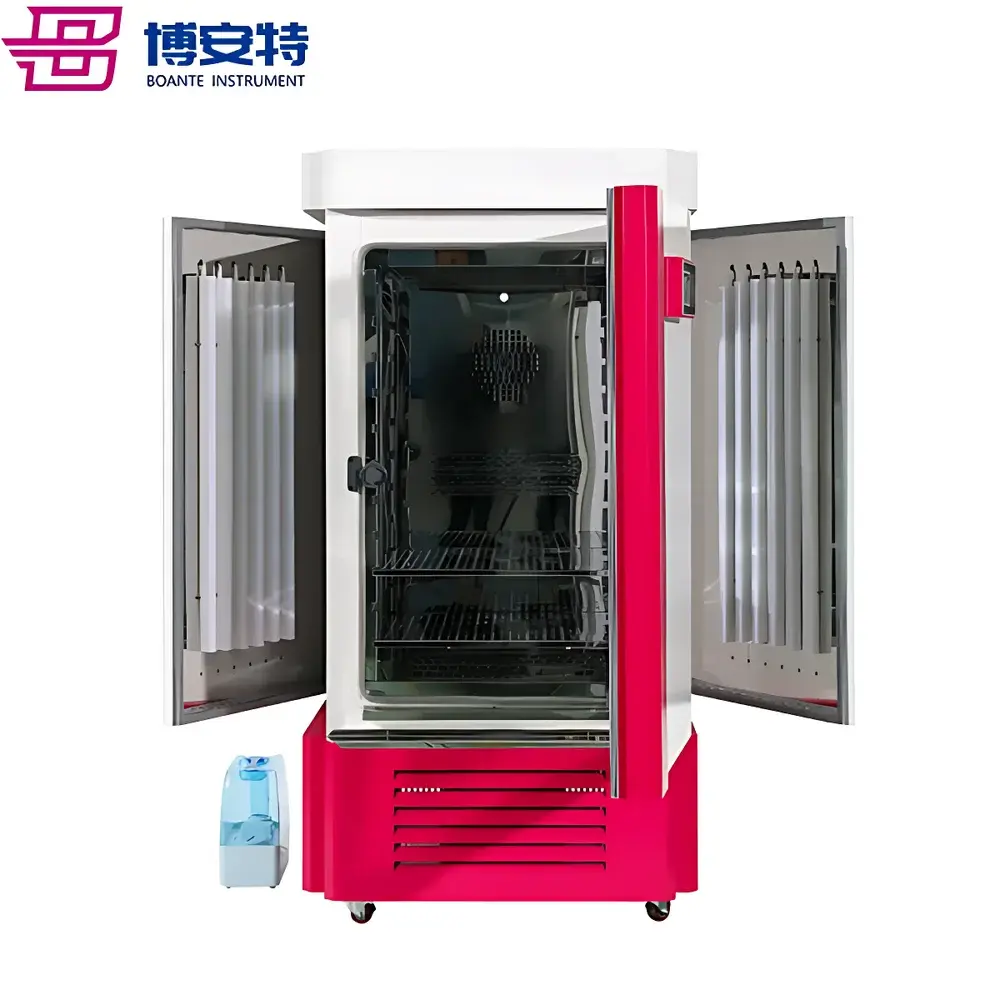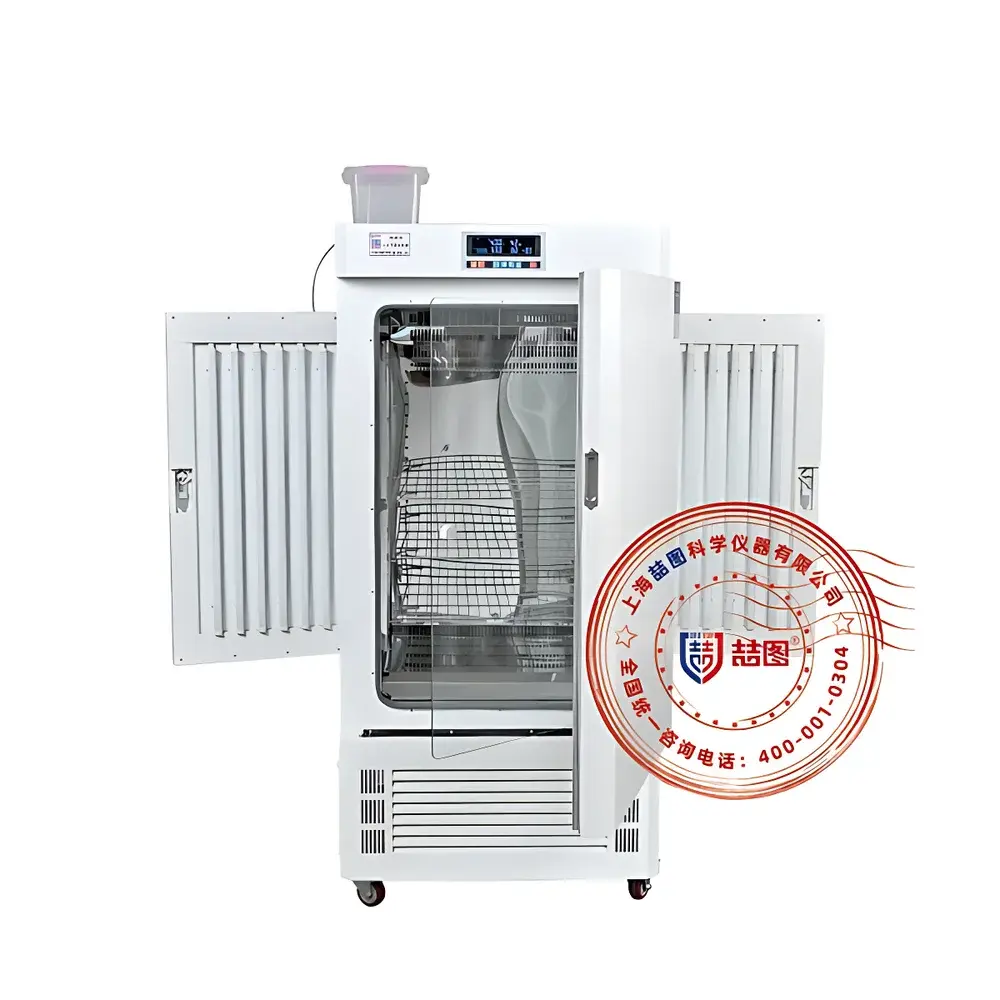
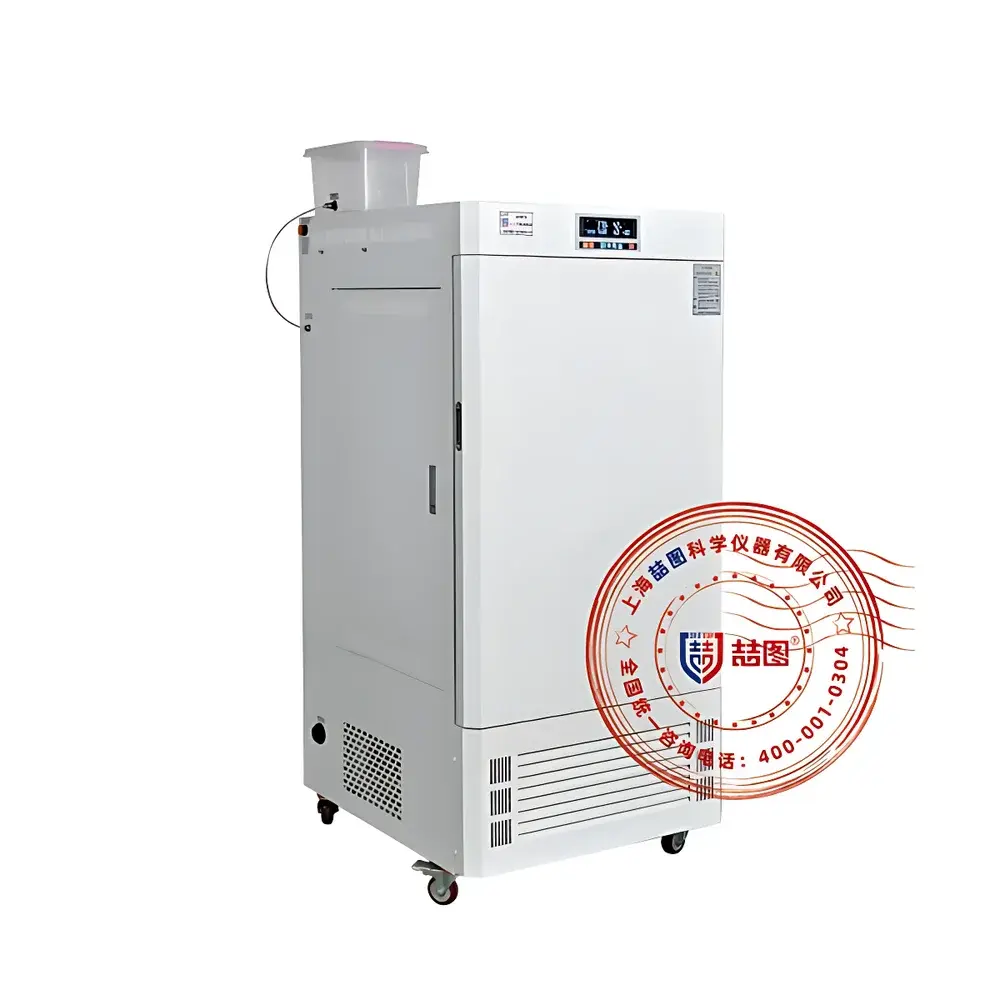
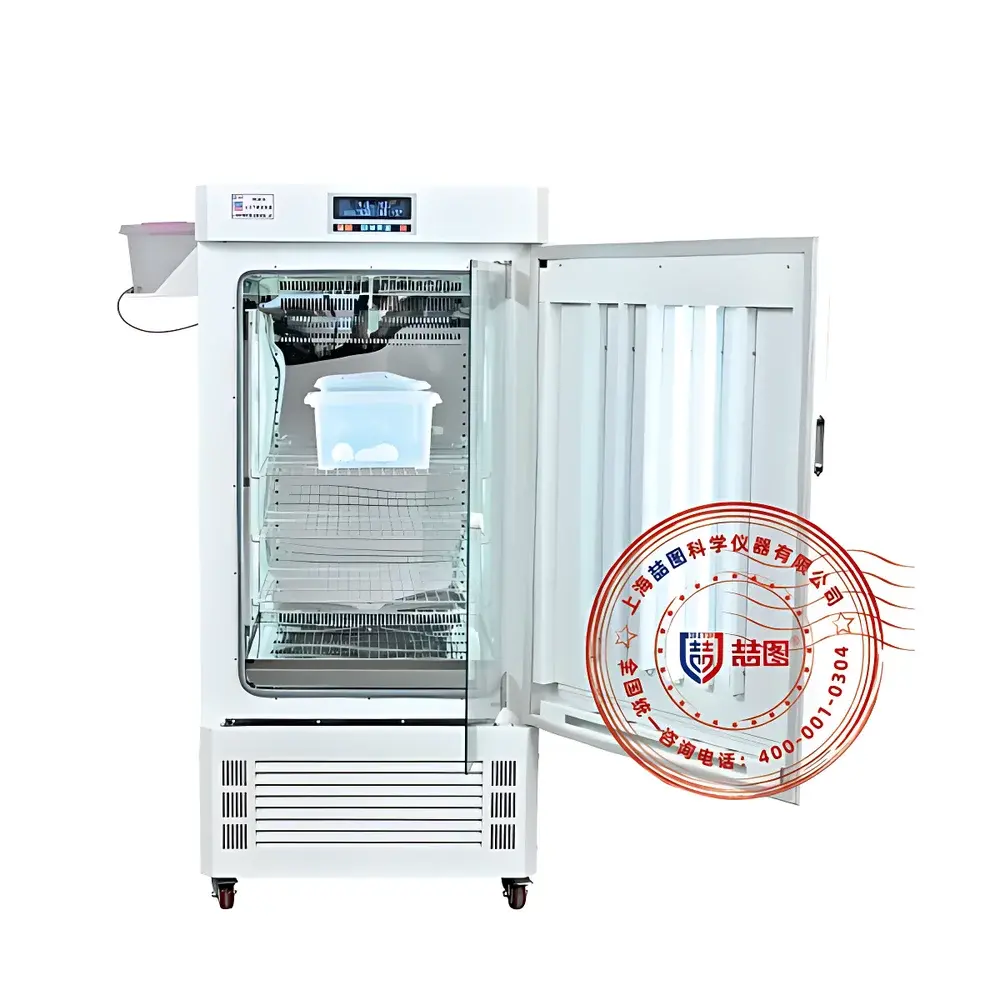
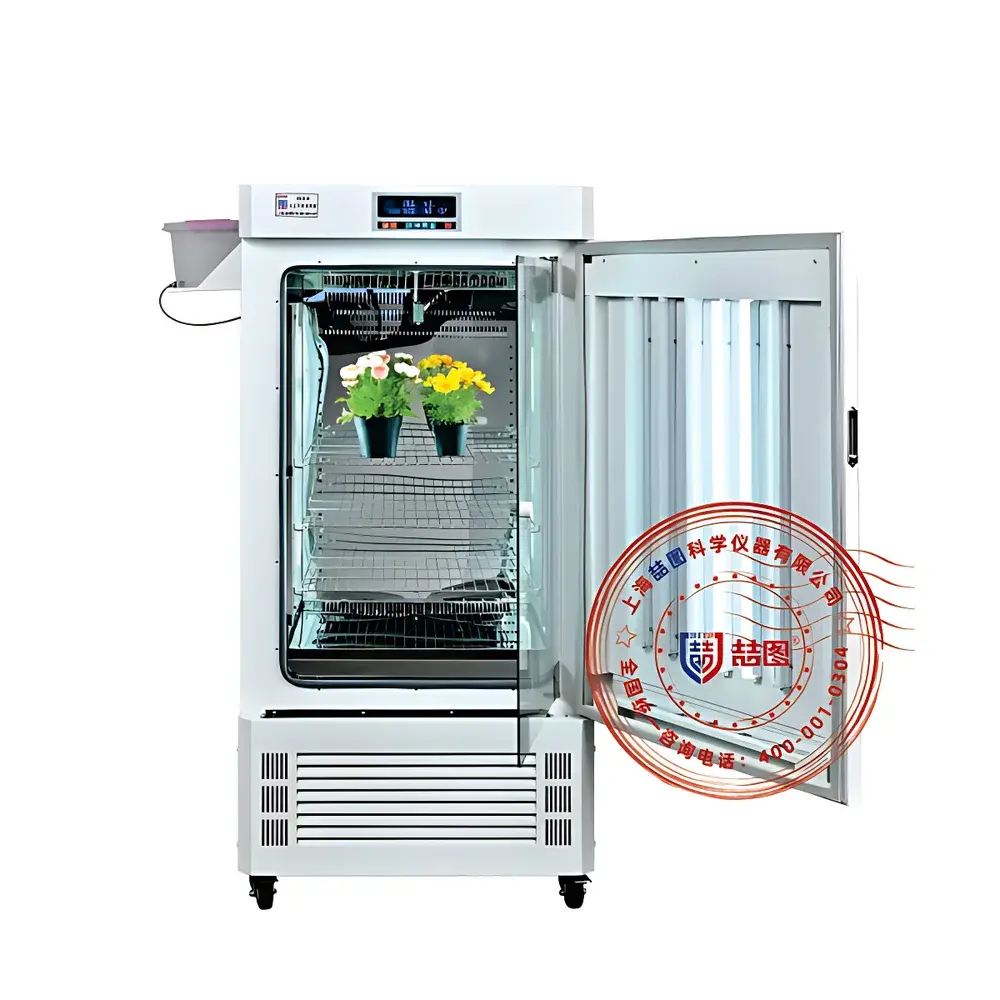
DRETOP DRQ-M150-RBW Multi-Source Artificial Climate Incubator
| Brand | DRETOP |
|---|---|
| Origin | Shanghai, China |
| Manufacturer Type | Direct Manufacturer |
| Instrument Type | Fully Automated (Programmable) |
| Capacity | 150 L |
| Temperature Range | 5–60 °C with illumination |
| Humidity Range | 30–95 % RH |
| Illuminance Range | 0–12,000 lx |
| External Dimensions (W×D×H) | 717 × 680 × 1505 mm |
| Construction | Stainless steel inner chamber, cold-rolled steel outer shell, double-glazed observation door with magnetic seal and nano-insulating gasket |
| Lighting System | Modular RGBWV LED arrays with independent spectral control per panel |
| Air Circulation | Axial-flow fan with optimized ducted airflow path |
| Refrigerant | CFC-free, eco-friendly R134a |
| Heating Element | Nickel-chromium alloy heater |
| Control System | 30-segment programmable touchscreen controller with PID algorithm, real-time data logging, and multi-level password protection |
Overview
The DRETOP DRQ-M150-RBW Multi-Source Artificial Climate Incubator is a precision-engineered environmental simulation platform designed for reproducible, long-term biological experimentation under tightly controlled temperature, humidity, and spectrally tunable illumination conditions. Based on the principle of active climate regulation—integrating refrigeration, resistive heating, ultrasonic humidification, and solid-state LED photonics—the system delivers stable, uniform, and programmable environmental profiles across its 150 L working volume. Unlike conventional incubators limited to thermal control, the DRQ-M150-RBW implements triaxial illumination (front door + dual side panels), enabling directional, multi-wavelength photobiological stimulation aligned with plant photomorphogenesis, circadian entrainment, and stress-response phenotyping protocols. Its architecture supports compliance-critical workflows in academic plant science, agricultural biotechnology, pharmaceutical stability testing (ICH Q1A–Q1E), and regulatory-grade seed germination studies (ISTA, ISO 11241).
Key Features
- Triple-axis modular LED lighting system with independently addressable red (620–780 nm), blue (420–490 nm), green (490–570 nm), white (400–830 nm), and violet (380–450 nm) channels—enabling precise spectral composition tuning for species-specific photobiology.
- 30-segment programmable controller with real-time clock synchronization, supporting complex diurnal cycles (e.g., 16-h light/8-h dark with ramped temperature transitions), multi-step humidity ramps, and conditional illumination triggers.
- Stainless steel interior (304 grade) with removable, height-adjustable shelves; seamless corners and full-surface passivation ensure compatibility with autoclaving, hydrogen peroxide vapor (HPV) decontamination, and ISO 14644-1 Class 5 cleanroom maintenance protocols.
- Dual-door design: outer magnetic-sealed tempered glass door with nano-composite insulation gasket; inner laminated observation window enabling full-field visual monitoring without thermal disturbance or condensation formation.
- Intelligent PID-based climate regulation with adaptive learning—simultaneously managing compressor duty cycle, heater PWM output, humidifier pulse width, and LED driver current to maintain ±0.5 °C temperature stability and ±3–5 % RH accuracy over time.
- Comprehensive data integrity architecture: minute-interval logging of temperature, humidity, illuminance, alarm status, and system diagnostics; encrypted local storage compliant with ALCOA+ principles (Attributable, Legible, Contemporaneous, Original, Accurate, Complete, Consistent, Enduring, Available).
Sample Compatibility & Compliance
The DRQ-M150-RBW accommodates Petri dishes, multi-well plates (6–96-well), tissue culture flasks (T25–T225), hydroponic trays, insect rearing cages, and small-animal behavioral enclosures. Its internal geometry and airflow dynamics are validated per ASTM E1913-22 (Standard Guide for Biological Assay Standardization) and ISO 20387:2018 (Biobanking—General requirements for biobank operations). The system meets IEC 61000-6-3 (EMC emission limits) and IEC 61000-6-2 (immunity to electrostatic discharge, RF fields, and voltage dips). Optional validation packages support IQ/OQ/PQ documentation per FDA 21 CFR Part 11, EU Annex 11, and GLP/GMP Annex 15 requirements—including electronic signature enforcement, audit trail retention (>18 months), and user role-based access control (three-tier password hierarchy with expiration scheduling).
Software & Data Management
Embedded firmware includes a responsive 7-inch capacitive touchscreen interface with bilingual (English/Chinese) UI, screen lock timeout, and backlight dimming to minimize operator fatigue during extended experiments. All operational parameters—including illumination spectra, photoperiods, temperature setpoints, humidity targets, and alarm thresholds—are configurable via intuitive graphical menus. Historical datasets (temperature, RH, lux, UV index, system faults) are exportable as CSV or PDF reports directly to USB storage. Remote monitoring is supported via optional Ethernet/Wi-Fi module (IEEE 802.3/802.11ac), enabling integration into LabVantage, Thermo Fisher SampleManager, or custom LIMS platforms through RESTful API endpoints. Data encryption at rest (AES-256) and TLS 1.2–secured transmission ensure confidentiality in shared-core laboratory environments.
Applications
- Plant phenotyping: Controlled-environment studies of photomorphogenic responses (e.g., hypocotyl elongation under R:FR ratios), drought tolerance assays, and vernalization kinetics.
- Microbial culture standardization: Growth curve analysis of phototrophic bacteria (e.g., Synechocystis sp. PCC 6803) and fungi under defined PAR spectra.
- Seed viability and germination testing: ISTA-certified protocols requiring precise light/dark cycling and moisture gradients.
- BOD5 incubation per APHA Standard Methods 5210B, with integrated temperature uniformity verification across all shelf levels.
- Insect rearing (e.g., Drosophila melanogaster, Tribolium castaneum) under species-specific thermoperiods and photoperiods.
- Cell-based assay preconditioning: Hypoxia-mimetic conditioning of mammalian cell lines using coordinated temperature/humidity stressors.
FAQ
What spectral combinations are available, and can custom wavelengths be integrated?
The standard configuration supports independent R/G/B/W/V LED channels per panel. Custom narrowband LEDs (e.g., 660 nm ±5 nm, 450 nm ±3 nm) or UVA/UVB modules may be added upon request—subject to optical safety certification (IEC 62471) and thermal derating validation.
Is humidity control active during illumination cycles?
Yes. The ultrasonic humidifier operates synchronously with temperature and light programs, maintaining target RH regardless of illumination state or intensity level.
How is temperature uniformity verified across the chamber volume?
Uniformity is assessed per ISO 16730-2 using nine calibrated NIST-traceable PT100 probes positioned at standardized locations (center, corners, mid-height); typical deviation is ≤±0.8 °C at 25 °C/60 % RH.
Does the system support remote calibration and firmware updates?
Field calibration of temperature, humidity, and illuminance sensors is possible via service mode using external reference standards. Firmware updates are delivered via signed binary packages over secure HTTPS, with rollback capability and versioned changelogs.
What is the expected lifetime of the LED arrays under continuous operation?
Rated L70 lifetime exceeds 50,000 hours at 25 °C ambient; spectral drift is monitored automatically and reported in the maintenance dashboard. Replacement modules are field-swappable without chamber disassembly.
Related Products