
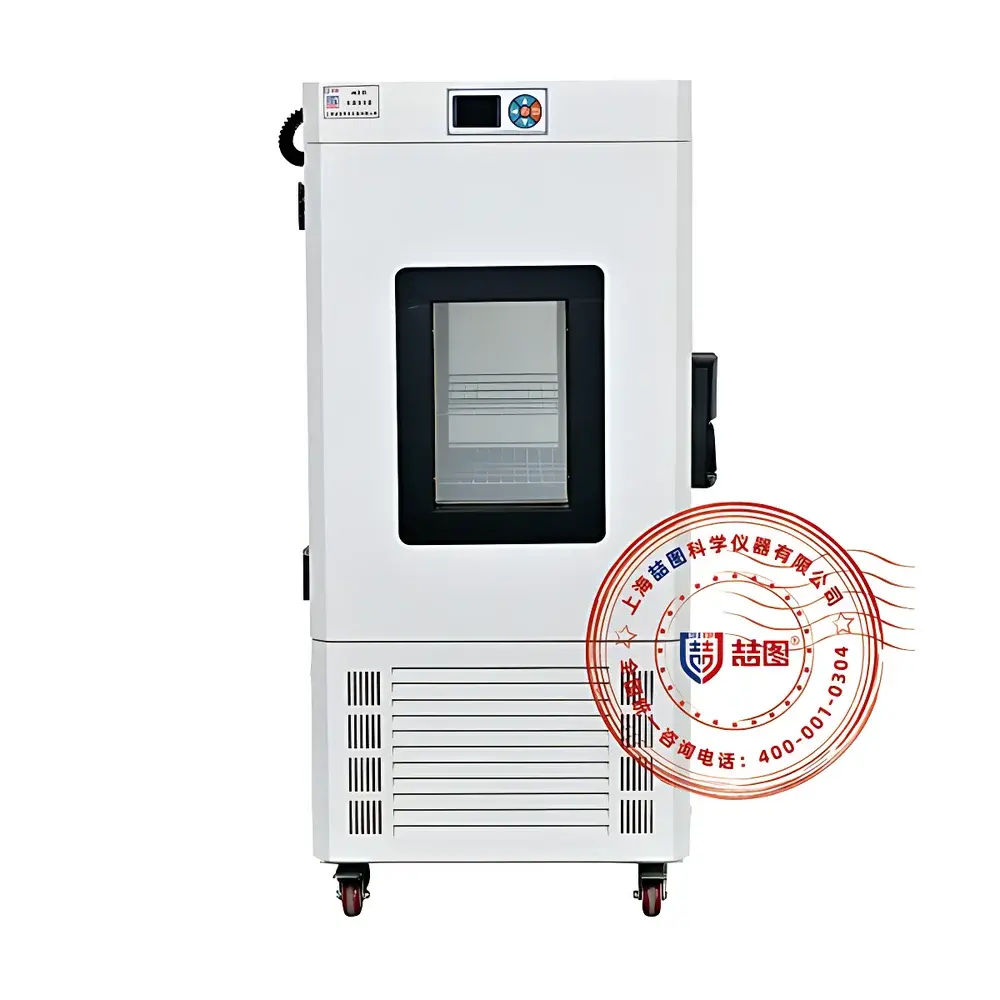
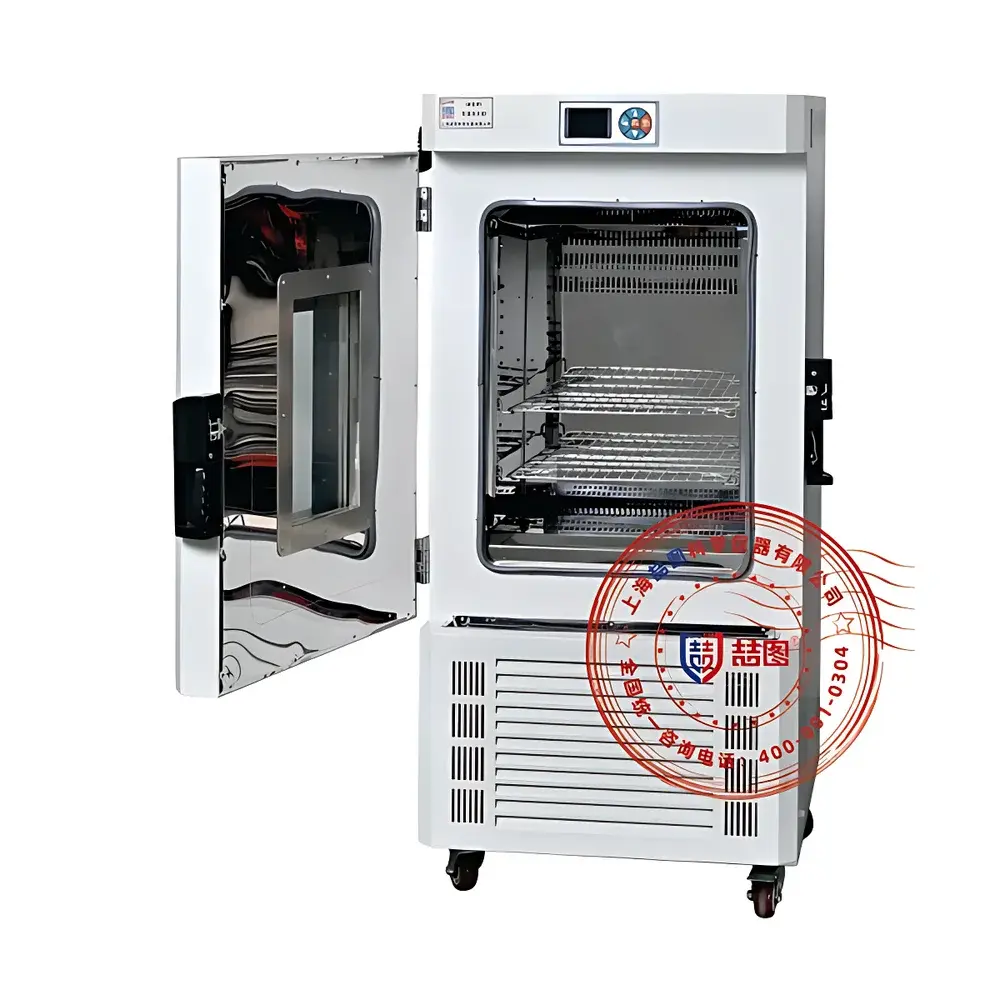
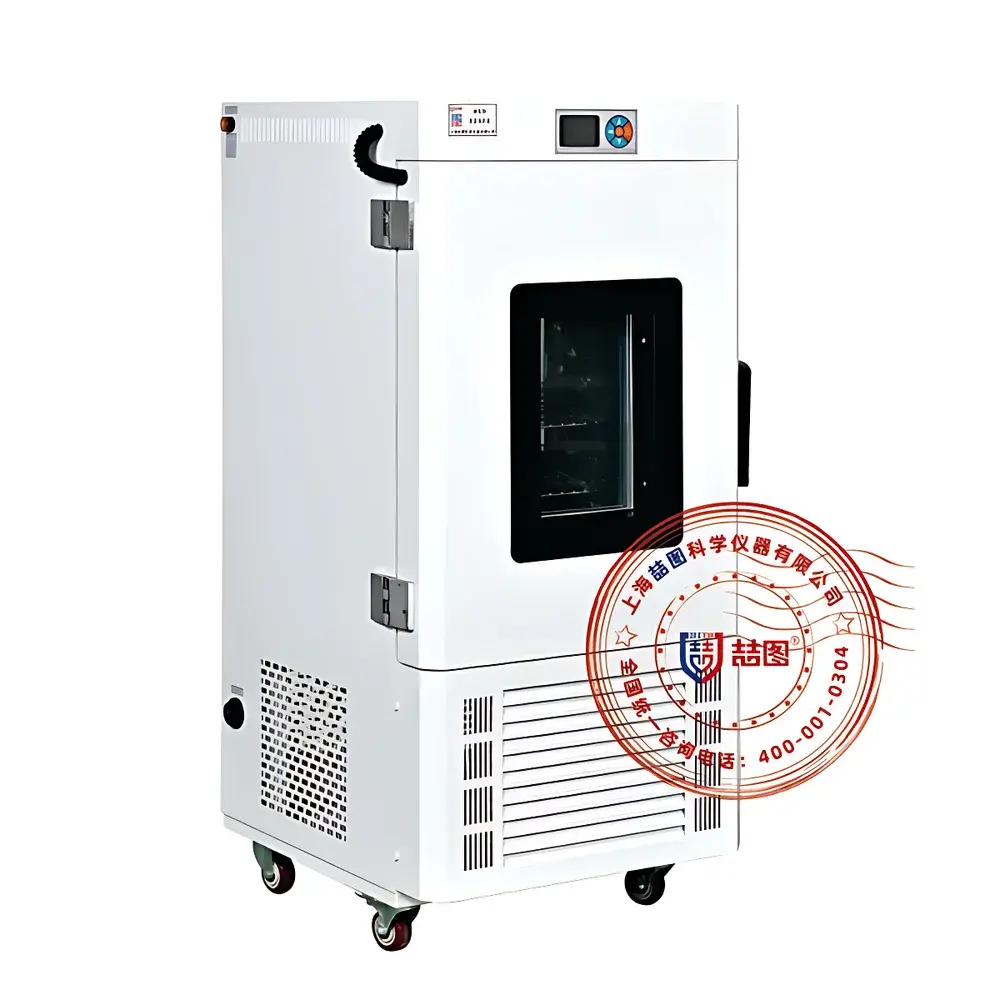
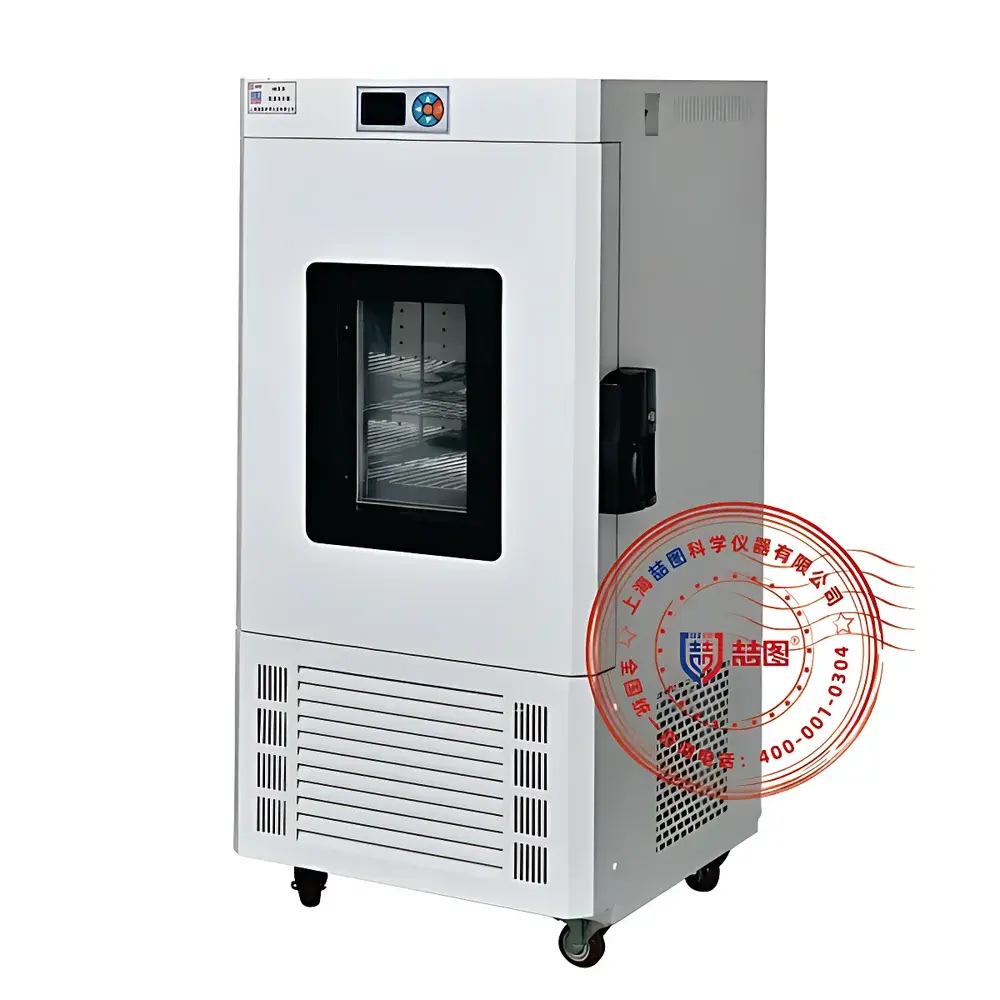
DRETOP DW-250CA Low Temperature Incubator
| Brand | DRETOP |
|---|---|
| Origin | Shanghai, China |
| Manufacturer Type | Direct Manufacturer |
| Country of Origin | China |
| Model | DW-250CA |
| Cooling Method | Compressor-based refrigeration |
| Heating Method | Air-jacketed heating |
| Temperature Range | −20 °C to +65 °C |
| Temperature Resolution | 0.1 °C |
| Temperature Uniformity | Not specified |
| Temperature Fluctuation | ±0.5 °C |
| Capacity | 250 L |
| External Dimensions (W×D×H) | 850 mm × 930 mm × 1810 mm |
| Power Supply | AC 220 V, 50 Hz |
| Input Power | 3000 W |
| Internal Chamber Dimensions (W×D×H) | 680 mm × 550 mm × 950 mm |
| Shelf Quantity | 3 adjustable stainless steel shelves |
| Viewing Window | Embedded anti-fog heated glass window |
| Test Port | 25 mm diameter sealed access port |
| Security | Key-lock door mechanism |
| Control System | Microprocessor-based P.I.D. controller with LCD touchscreen interface |
| Safety Features | Over-temperature alarm, parameter memory, auto-recovery after power interruption, compressor delay protection, modular refrigeration unit |
Overview
The DRETOP DW-250CA Low Temperature Incubator is an engineered environmental control system designed for precise, stable thermal management in life science and industrial laboratory settings. Operating on a dual-mode thermoregulation principle—compressor-driven refrigeration combined with air-jacketed resistive heating—the unit maintains setpoint accuracy across a broad operational range from −20 °C to +65 °C. Unlike standard ambient incubators, the DW-250CA integrates cryogenic capability with high-fidelity temperature stability (±0.5 °C fluctuation, 0.1 °C resolution), enabling applications requiring sub-zero storage or low-temperature biological conditioning. Its 250 L internal volume accommodates standardized culture vessels, multi-well plates, reagent bottles, and electronic test specimens while sustaining uniform airflow distribution through optimized internal ducting and a dedicated axial-flow circulation fan.
Key Features
- Microprocessor-controlled P.I.D. temperature regulation with real-time LCD display and intuitive touch-key interface for simultaneous monitoring of setpoint, actual chamber temperature, elapsed time, and alarm status.
- Air-jacketed heating architecture ensures rapid thermal response and minimizes cold bridging; independent compressor-based cooling delivers consistent sub-zero performance without thermal cross-interference.
- Heated, embedded observation window with anti-condensation function prevents fogging during low-temperature operation—critical for uninterrupted visual sample assessment without door opening.
- Stainless steel interior chamber (304 grade) with fully removable, height-adjustable shelves enables thorough cleaning, autoclave compatibility, and residue-free decontamination per GLP-compliant protocols.
- Robust mechanical design includes reinforced cold-rolled steel outer casing, rounded internal corners for laminar airflow optimization, and dual-mode mobility system: swivel casters with locking brakes plus fixed leveling feet for vibration-dampened placement.
- Integrated safety architecture features programmable over-temperature cutoff, non-volatile parameter memory, automatic restart with state recovery post-power failure, and compressor cycle protection (start-delay and stop-interval logic).
Sample Compatibility & Compliance
The DW-250CA supports diverse sample formats including Petri dishes, Erlenmeyer flasks, serum bottles, PCR tubes, and PCB-mounted components under controlled low-temperature conditions. Its chamber geometry and airflow profile comply with ISO 14644-1 Class 8 cleanroom air movement guidelines for non-sterile but contamination-minimized environments. While not certified as a medical device or pharmaceutical-grade storage unit, the incubator meets general-purpose laboratory requirements outlined in ASTM E145–22 (Standard Specification for Gravity-Convection and Forced-Ventilation Ovens) and aligns with foundational elements of USP for equipment qualification. The key-locked door mechanism satisfies basic physical access control needs in shared lab facilities, supporting audit-trail readiness when paired with external logging systems.
Software & Data Management
The onboard controller supports time-stamped event logging—including temperature deviations, alarm triggers, and door-open intervals—stored locally in non-volatile memory. Optional RS485 serial interface enables integration with LabVantage, Benchling, or custom SCADA platforms for centralized monitoring and CSV export. Though no native cloud connectivity or FDA 21 CFR Part 11-compliant electronic signature module is included, the system’s deterministic behavior, parameter retention, and hardware-level alarm redundancy provide foundational traceability suitable for GLP-aligned workflows. Users may configure up to 9999-minute timed cycles or continuous operation mode, with all settings retained across power cycles.
Applications
- Low-temperature microbial cultivation (e.g., psychrophilic bacteria, fungal spore germination studies)
- Stabilization and storage of heat-labile reagents, enzymes, and cell culture media at defined sub-ambient temperatures
- Accelerated aging tests for polymers, adhesives, and electronic assemblies per IEC 60068-2-1/IEC 60068-2-2 protocols
- Environmental stress screening of semiconductor components and optoelectronic devices
- Pre-conditioning of calibration standards prior to metrological use in metrology labs
- Controlled degradation studies of pharmaceutical excipients under variable thermal regimes
FAQ
What is the minimum operating temperature of the DW-250CA?
The unit achieves and maintains −20 °C as its lower limit, verified under standard ambient conditions (25 °C, 50% RH).
Does the incubator support data export or remote monitoring?
Yes—via optional RS485 interface; third-party software integration requires Modbus RTU protocol configuration.
Is the interior chamber humidity-controlled?
No—this is a temperature-only controlled incubator. Humidity management requires external humidification accessories.
Can the unit be validated for IQ/OQ/PQ protocols?
Yes—the stable thermal performance, digital logging capability, and mechanical repeatability support formal qualification when executed with calibrated reference probes and documented SOPs.
What maintenance is required for long-term reliability?
Annual inspection of condenser coil cleanliness, door gasket integrity, and refrigerant pressure verification is recommended; compressor oil does not require replacement under normal operation.




