
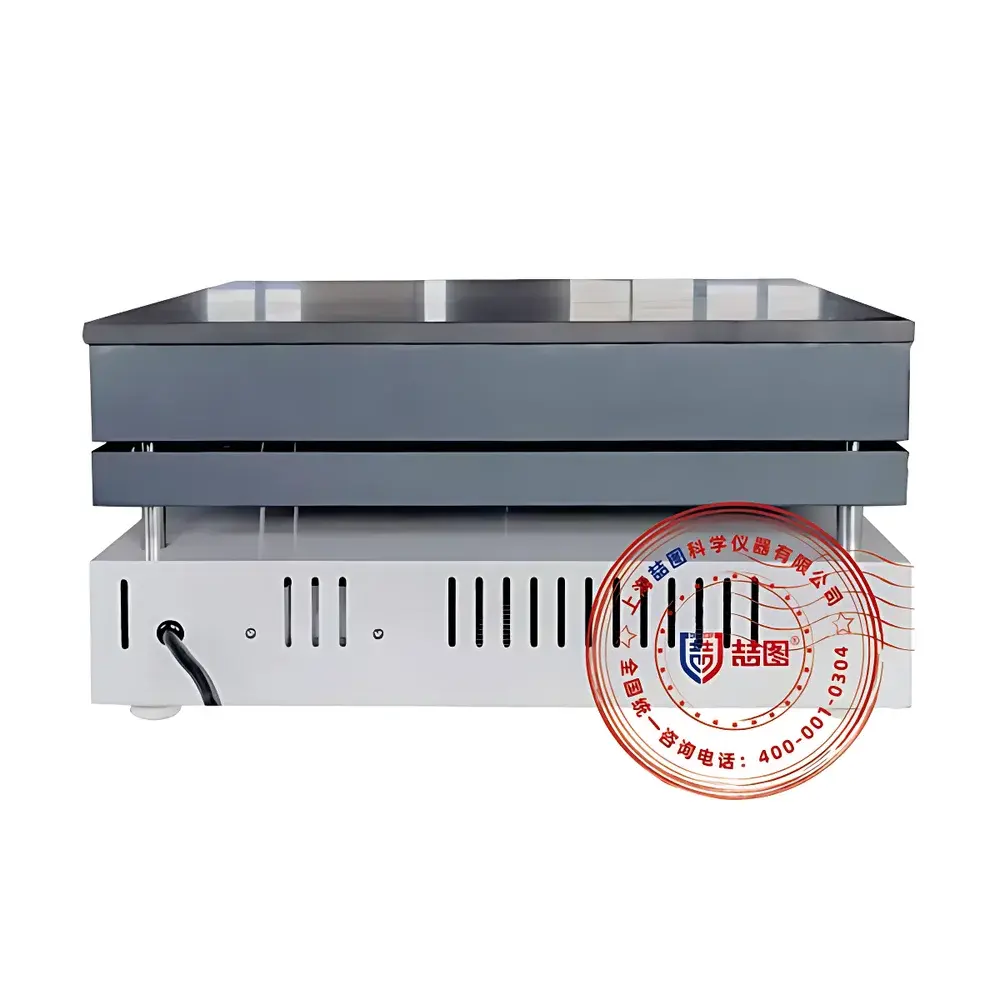
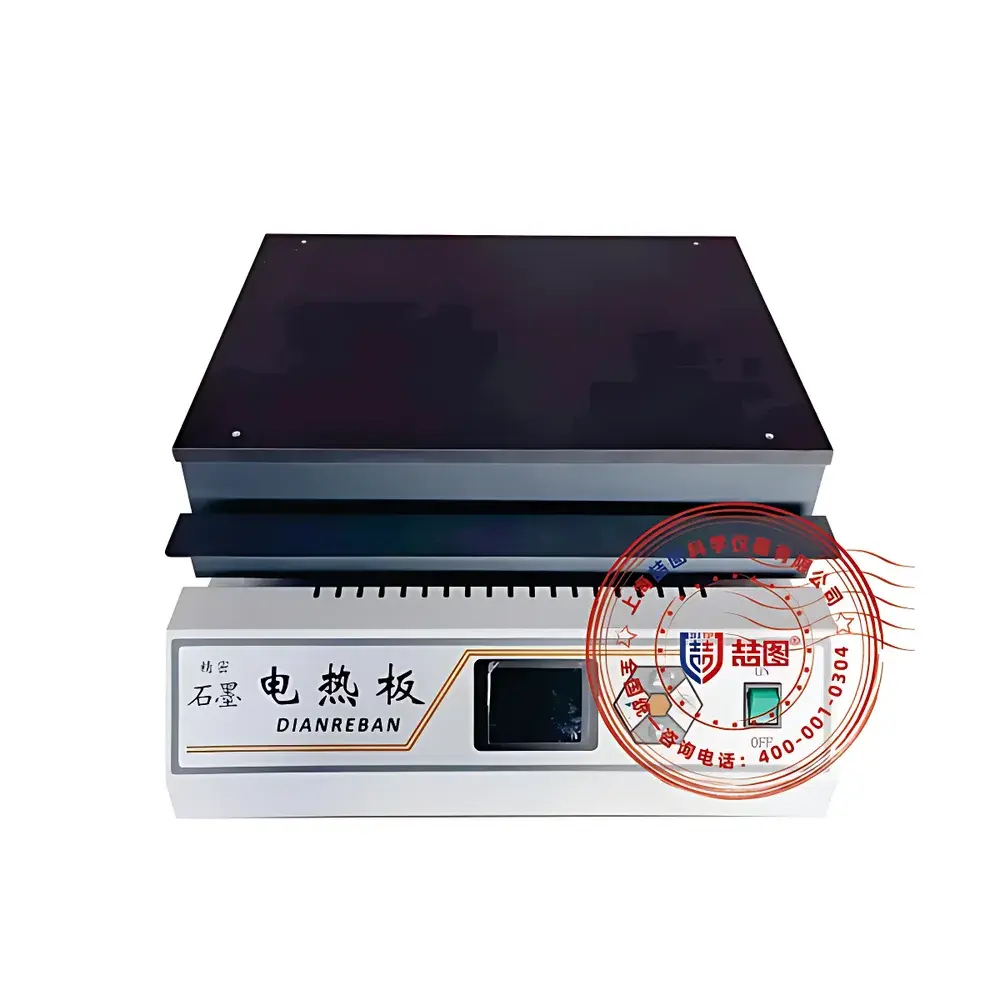
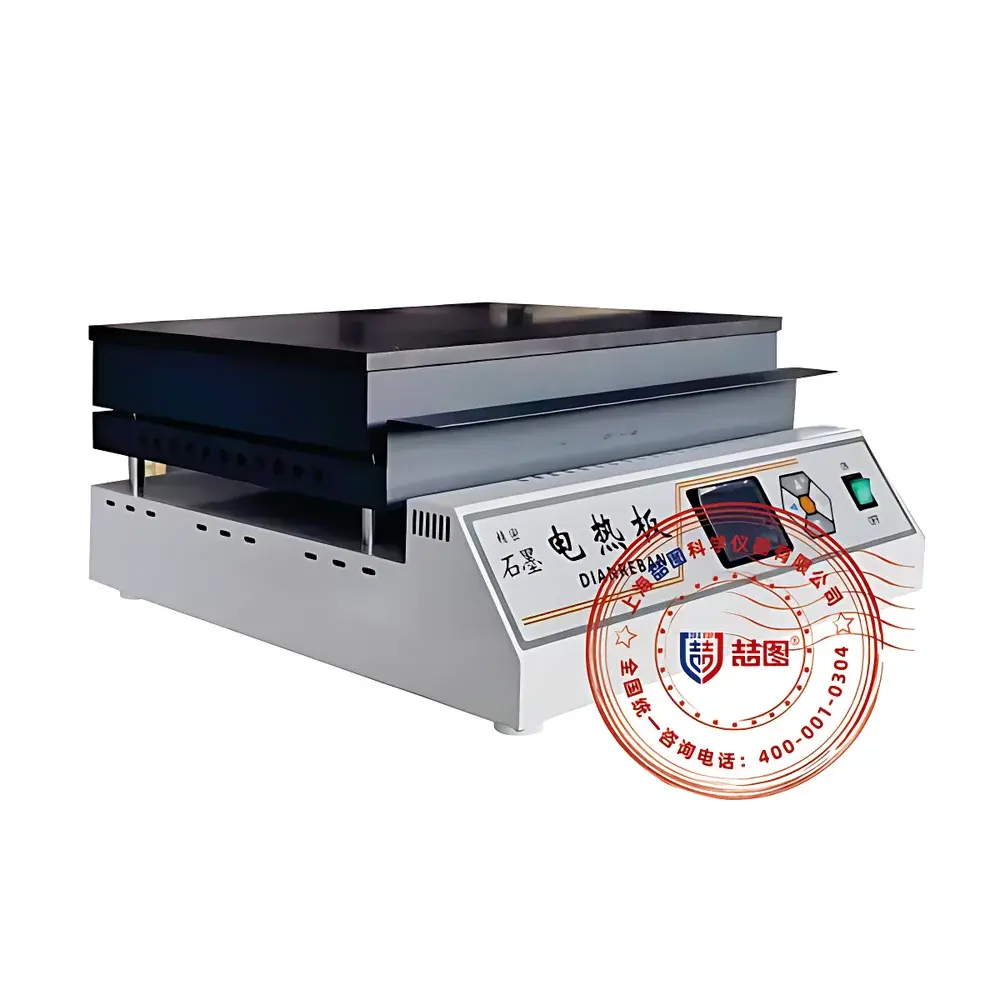
DRETOP EH35-3020 Graphite Heating Block
| Brand | DRETOP |
|---|---|
| Origin | Shanghai, China |
| Manufacturer Type | Direct Manufacturer |
| Model | EH35-3020 |
| Heating Power | 1200 W |
| Temperature Control | PID Digital Controller |
| Max Operating Temperature | 350 °C |
| Heating Surface Dimensions | 300 mm × 200 mm |
| Overall Dimensions (W×D×H) | 340 mm × 300 mm × 200 mm |
| Display | LED Digital Display |
| Temperature Accuracy | ±0.1 °C |
| Temperature Uniformity | Not Specified by Manufacturer |
| Compliance | Designed for GLP-compliant sample preparation workflows |
Overview
The DRETOP EH35-3020 Graphite Heating Block is a precision-engineered laboratory heating platform designed for reproducible, corrosion-resistant thermal treatment of samples during digestion, evaporation, concentration, and controlled heating protocols. Unlike conventional metal-surface hot plates, this unit employs an isostatically pressed high-purity graphite heating block—selected for its exceptional thermal conductivity, chemical inertness, and dimensional stability at elevated temperatures. The graphite block functions as both the heating element support structure and the active heat-distribution medium, enabling uniform thermal transfer across the entire 300 mm × 200 mm working surface. Its operational range spans from ambient +20 °C to 350 °C, with microprocessor-driven PID control ensuring minimal thermal overshoot and long-term stability under continuous duty cycles—critical for multi-hour acid digestions in environmental and regulatory testing laboratories.
Key Features
- Isostatic high-purity graphite block: Resistant to concentrated HNO₃, HCl, HF, H₂SO₄, and aqua regia; non-reactive with most digestion reagents used in EPA Method 3050B, 3051A, and 3052 applications.
- PID digital temperature controller with LED display: Enables real-time monitoring and programmable ramp/soak profiles; supports auto-tuning for optimal response across varying load conditions.
- Zero-contact solid-state relay (SSR) power regulation: Eliminates mechanical switching wear, ensures stable voltage delivery, and reduces electromagnetic interference in sensitive lab environments.
- Surround-heating architecture: Heat is distributed radially from embedded resistance wire elements beneath the graphite block, minimizing edge-to-center gradients and supporting parallel processing of up to 12 standard digestion tubes (e.g., 50 mL Teflon® or quartz vessels).
- Integrated safety protections: Over-temperature cutoff (adjustable setpoint), thermocouple break detection (open-circuit alarm), and fail-safe power interruption upon sensor failure.
- Ventilation-compatible design: Low-profile chassis (200 mm height) and absence of external cooling fans permit safe installation inside fume hoods without airflow disruption or condensation risk.
Sample Compatibility & Compliance
The EH35-3020 accommodates a broad range of sample containers—including borosilicate glass beakers, quartz crucibles, PTFE, PFA, and quartz digestion vessels—without surface degradation or catalytic interference. Its graphite surface eliminates metallic ion leaching, preserving sample integrity in trace-metal analysis (e.g., ICP-MS, AAS). The instrument is engineered to support workflows aligned with ASTM D3682-22 (ash content determination), ISO 11466 (heavy metals in soils), and USP (heavy metals testing). While not certified to UL/CSA or CE for standalone medical device use, its construction meets general electrical safety requirements per IEC 61010-1:2010 for laboratory equipment. Audit-ready operation is facilitated through manual logbook documentation; optional RS232 interface enables connection to LIMS for basic data capture (no 21 CFR Part 11 electronic signature capability natively included).
Software & Data Management
The EH35-3020 operates via embedded firmware with no proprietary software dependency. All temperature settings, ramp rates, and hold times are configured directly on the front-panel keypad. Real-time temperature readings are updated every 0.5 seconds and retained in volatile memory during operation. For laboratories requiring traceability, users may integrate the unit into existing process documentation systems by recording setpoints and durations manually—or via optional serial output (RS232) to third-party data acquisition platforms. No onboard data logging, cloud connectivity, or user-accessible firmware updates are provided. Calibration verification is performed using NIST-traceable reference thermometers placed directly on the graphite surface per ISO/IEC 17025 calibration procedures.
Applications
- Acid digestion of soil, sediment, sludge, and biological tissues prior to elemental analysis (ICP-OES, ICP-MS, AAS).
- Controlled evaporation of solvent extracts in pesticide residue analysis (AOAC 2007.01, EN 15662).
- Pre-concentration of aqueous environmental samples (e.g., wastewater, drinking water) for anion/cation analysis.
- Heating reaction mixtures in synthetic organic chemistry where metal-free surfaces prevent catalyst poisoning.
- Standardization of dissolution media temperature in pharmaceutical QC labs (USP , ).
- Thermal conditioning of calibration standards and reference materials in metrology labs.
FAQ
What is the maximum recommended load weight for the EH35-3020 heating surface?
The graphite block is structurally rated for static loads up to 5 kg evenly distributed across the 300 mm × 200 mm zone. Exceeding this may compromise thermal uniformity and accelerate surface microfracture over time.
Can the EH35-3020 be used with hydrofluoric acid (HF)?
Yes—the isostatic graphite material exhibits high resistance to HF attack below 200 °C. However, prolonged exposure above 250 °C or in combination with oxidizing agents (e.g., HNO₃/HF mixtures) requires validation per internal SOPs.
Is temperature uniformity across the surface specified in the technical documentation?
DRETOP does not publish a certified temperature uniformity value (e.g., ±X °C at Y cm from center) for this model. Users conducting GLP/GMP work should perform in-house mapping per ASTM E2209–22 before deployment.
Does the unit include a calibration certificate?
No factory-issued calibration certificate is supplied. Initial verification must be conducted using a calibrated contact thermometer traceable to national standards prior to first use.
What maintenance is required for long-term reliability?
Routine cleaning with deionized water and soft lint-free cloth is sufficient. Avoid abrasive cleaners or steel wool. Inspect graphite surface annually for visible pitting or discoloration; replace block if thermal response deviates >±1.0 °C from setpoint after stabilization.



