
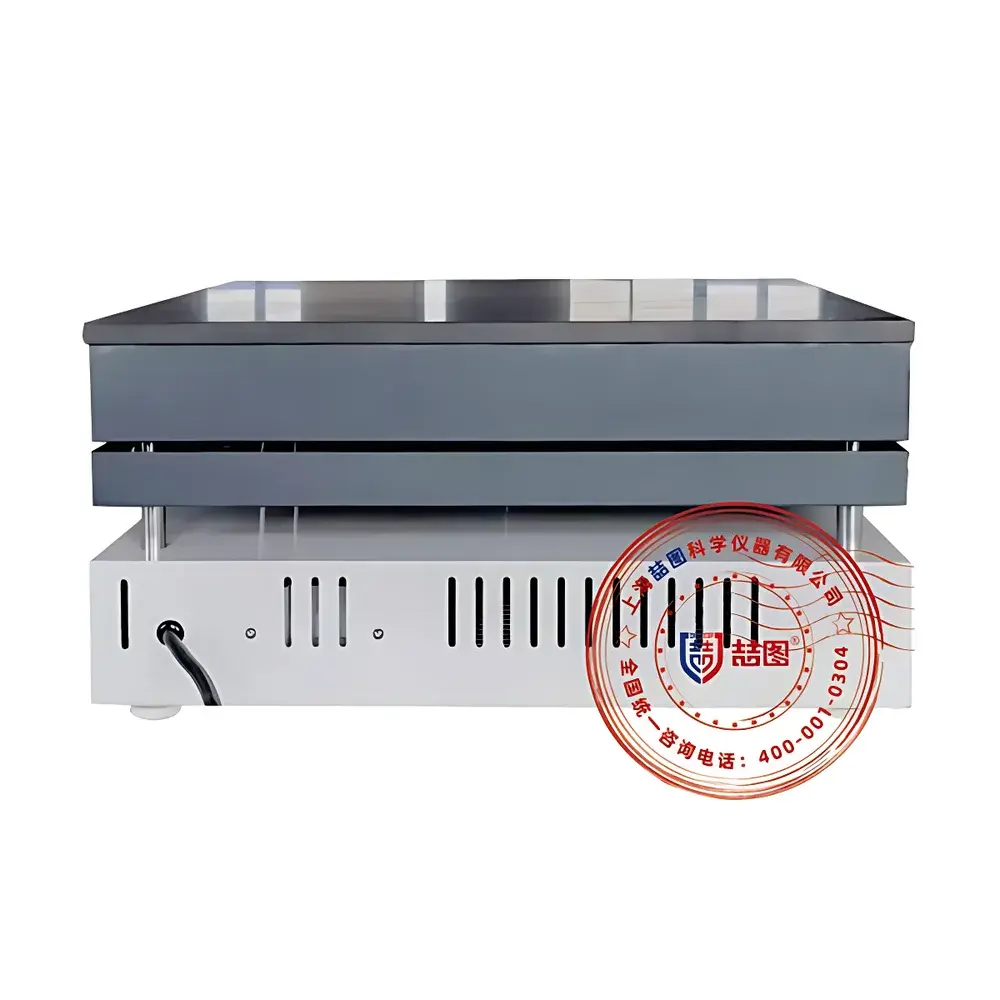
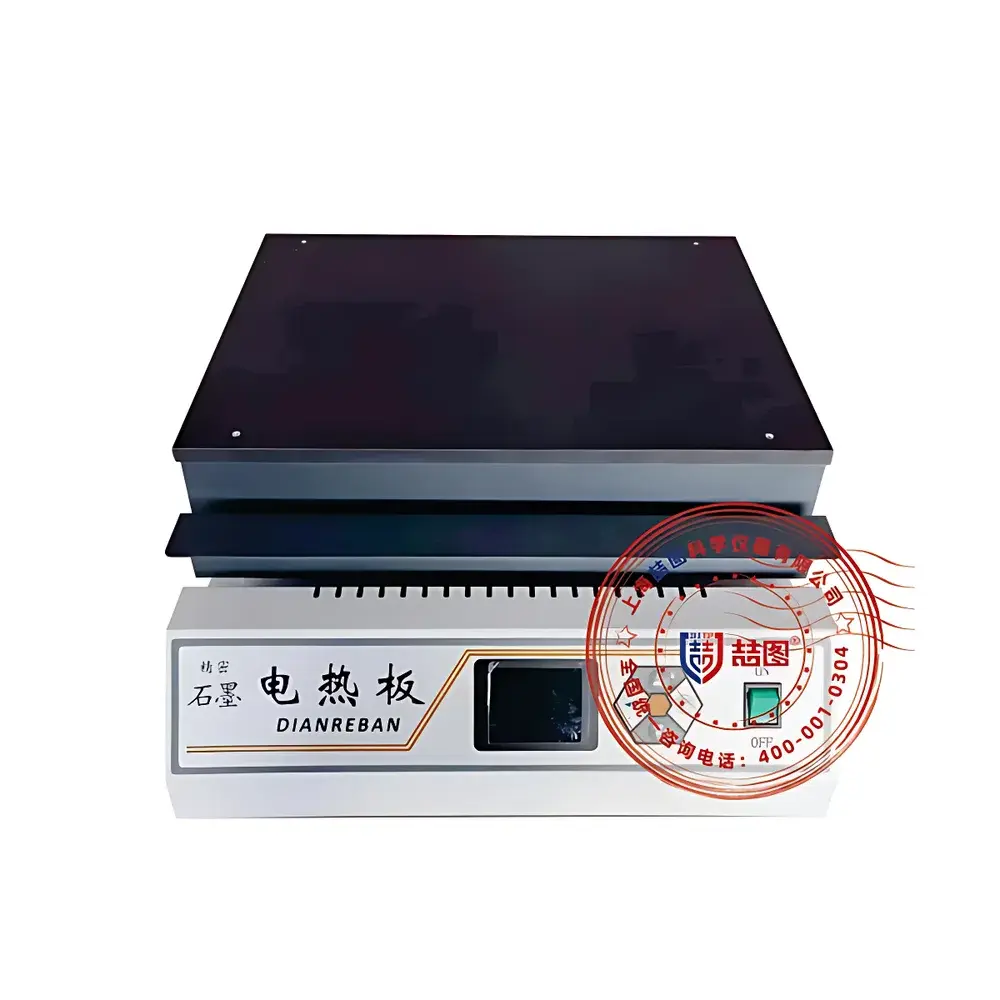
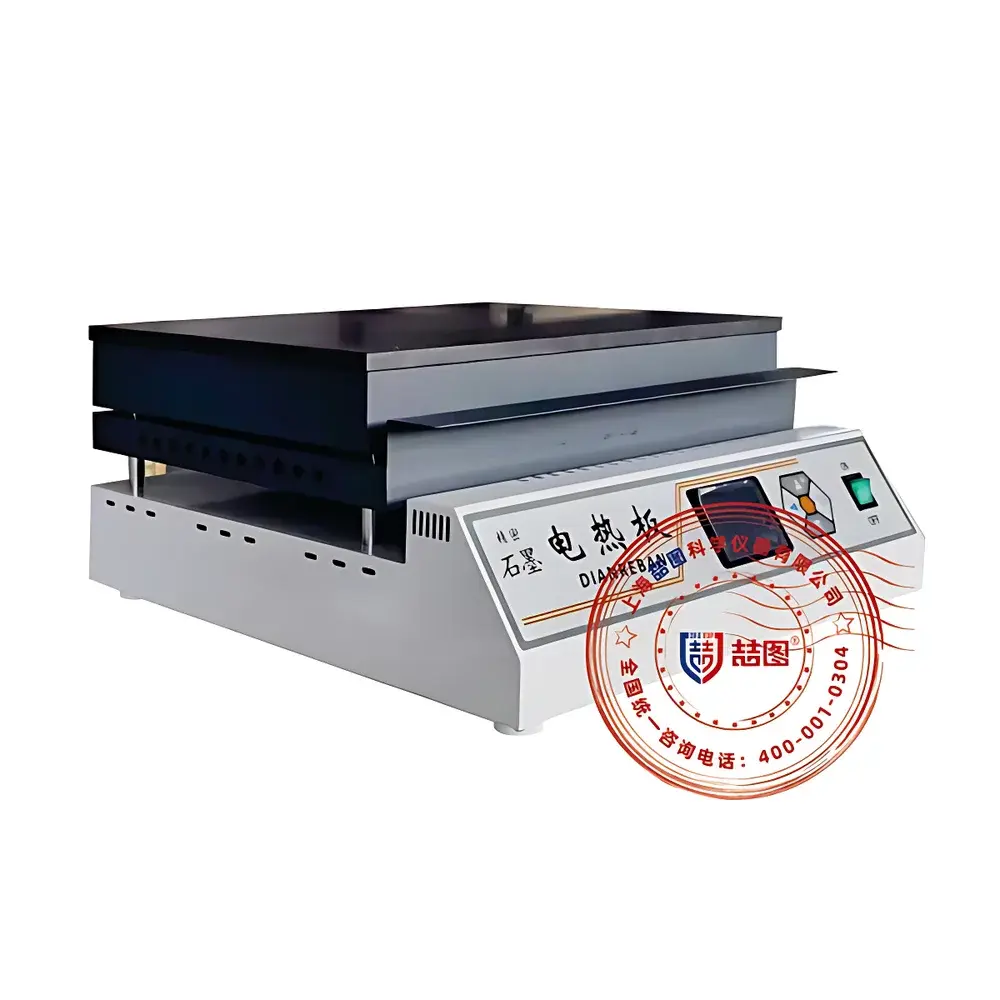
DRETOP EH50-4030 Graphite Heating Block Plate
| Brand | DRETOP |
|---|---|
| Origin | Shanghai, China |
| Manufacturer Type | Direct Manufacturer |
| Model | EH50-4030 |
| Heating Power | 3000 W |
| Temperature Controller | PID Digital Display |
| Max Operating Temperature | 500 °C |
| Temperature Uniformity | ±5–10 °C |
| Heating Surface Dimensions | 400 × 300 mm |
| Heating Zone Dimensions | 400 × 300 mm |
Overview
The DRETOP EH50-4030 Graphite Heating Block Plate is a high-performance, laboratory-grade conductive heating platform engineered for precise, uniform, and chemically resistant thermal treatment of samples during sample preparation, acid digestion, evaporation, concentration, and controlled thermal reactions. Unlike conventional metal-sheathed electric hot plates, the EH50-4030 employs an isotropic, high-purity isostatically pressed graphite block as its core heating element—offering exceptional thermal conductivity (≥120 W/m·K), outstanding chemical inertness against concentrated HNO₃, HCl, HF, H₂SO₄, and aqua regia, and long-term structural stability at sustained temperatures up to 500 °C. Its operational principle relies on resistive Joule heating embedded within the graphite matrix, coupled with real-time feedback from a calibrated Pt100 sensor positioned beneath the heating surface. This architecture enables stable thermal equilibrium across the entire 400 × 300 mm active zone—critical for multi-vessel digestion protocols (e.g., EPA Method 3050B, ISO 11466) where inter-vessel temperature deviation must remain within analytical tolerance limits.
Key Features
- Isostatically pressed, ultra-high-purity graphite heating block—certified for continuous operation at ≤500 °C with no degradation in thermal homogeneity or surface integrity
- PID digital temperature controller with auto-tuning algorithm, enabling setpoint accuracy of ±0.1 °C and steady-state temperature fluctuation ≤±0.5 °C
- Optimized thermal design featuring circumferential heating elements and embedded thermal mass distribution—ensuring rapid ramp rates and minimized edge-to-center gradients (measured uniformity: ±5–10 °C across full surface)
- Zero-contact solid-state relay (SSR) power delivery system—eliminating mechanical arcing, reducing EMI, and supporting uninterrupted operation in fume hoods or GLP-compliant environments
- Integrated safety architecture: over-temperature cut-off (hardware-independent), thermocouple break detection, and fail-safe thermal fuse rated at 550 °C
- Corrosion-resistant graphite surface—non-porous, non-reactive, and easily cleaned with ethanol or dilute nitric acid; compatible with Teflon, quartz, and borosilicate glassware
Sample Compatibility & Compliance
The EH50-4030 accommodates standard digestion vessels—including 50 mL to 100 mL PTFE (Teflon™), quartz, and borosilicate glass beakers, crucibles, and digestion tubes—without requiring vessel-specific adapters. Its flat, rigid graphite surface ensures consistent thermal contact across heterogeneous vessel arrays. The instrument meets essential electrical safety requirements per IEC 61010-1:2010 (Ed. 3.0) and carries CE marking for laboratory equipment. While not intrinsically certified for Class I Div 1 hazardous locations, it is routinely deployed in EPA-accredited environmental labs (e.g., for ASTM D3682-22 and USP heavy metal testing), ISO/IEC 17025-accredited food testing facilities, and pharmaceutical QC labs performing residual solvent or catalyst residue analysis under cGMP Annex 11-aligned workflows.
Software & Data Management
The EH50-4030 operates as a standalone analog-digital hybrid instrument with no embedded firmware or network interface. All temperature setpoints, ramp profiles, hold times, and real-time readings are managed locally via the front-panel keypad and 4-digit LED display. For regulated environments requiring audit trails, optional external data loggers (e.g., Omega OM-DAQPRO-5300 series) may be connected via analog 0–5 V or 4–20 mA output (available upon request). The device supports 21 CFR Part 11 compliance when integrated into validated laboratory information management systems (LIMS) through third-party hardware interfaces—provided user-defined SOPs document calibration frequency (recommended quarterly), sensor verification (before each batch), and maintenance logs for SSR and graphite block integrity.
Applications
- Open-vessel acid digestion of soils, sediments, and biological tissues per EPA 3050B, ISO 11466, and EN 13656
- Pre-concentration of trace metals (As, Cd, Pb, Hg) prior to ICP-MS or AAS analysis
- Controlled evaporation of organic extracts in pesticide residue testing (AOAC 2007.01)
- Thermal activation of catalysts and ceramic precursors in materials science R&D
- Stabilization and drying of calibration standards in reference material laboratories
- Heating bath replacement for low-boiling-point solvent reflux in synthetic chemistry
FAQ
What is the maximum recommended continuous operating temperature?
The EH50-4030 is rated for continuous operation at 480 °C; extended exposure above 490 °C may accelerate graphite oxidation and reduce service life.
Can this unit be used with hydrofluoric acid (HF)?
Yes—the isostatic graphite surface is chemically inert to HF concentrations ≤40% v/v at temperatures ≤200 °C; however, prolonged exposure above 250 °C requires post-use neutralization with saturated CaCO₃ slurry.
Is calibration certificate included with shipment?
A factory calibration report (traceable to NIM, China) is provided; users must perform in-house verification using a NIST-traceable handheld thermometer before first use and after any impact event.
Does the unit support programmable ramp-and-hold sequences?
No—the EH50-4030 features single-setpoint PID control only; for multi-step thermal protocols, integration with external programmable controllers (e.g., Eurotherm 2408) is required.
What maintenance is required to sustain temperature uniformity?
Annual inspection of graphite surface flatness (≤0.1 mm deviation across diagonal) and visual assessment for micro-cracking or localized discoloration; cleaning with lint-free cloth and 70% isopropanol only—no abrasives or steel wool.



