

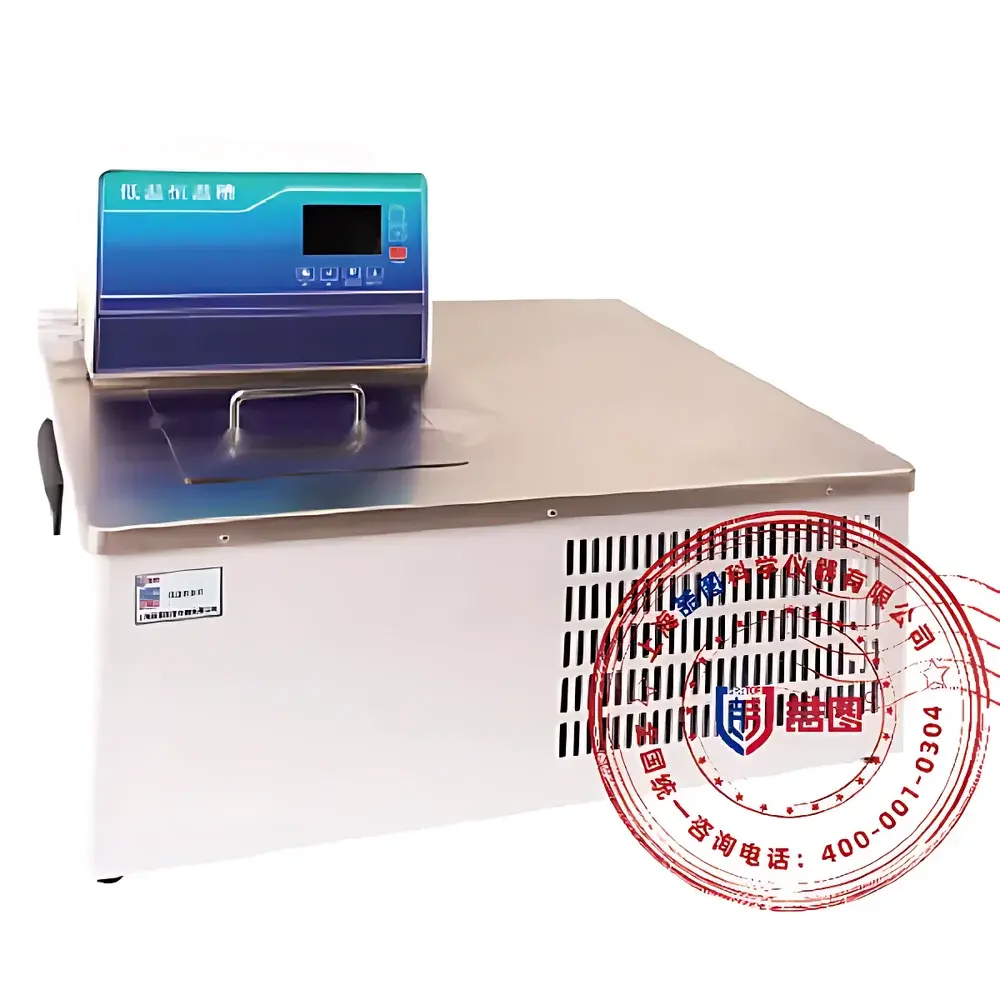
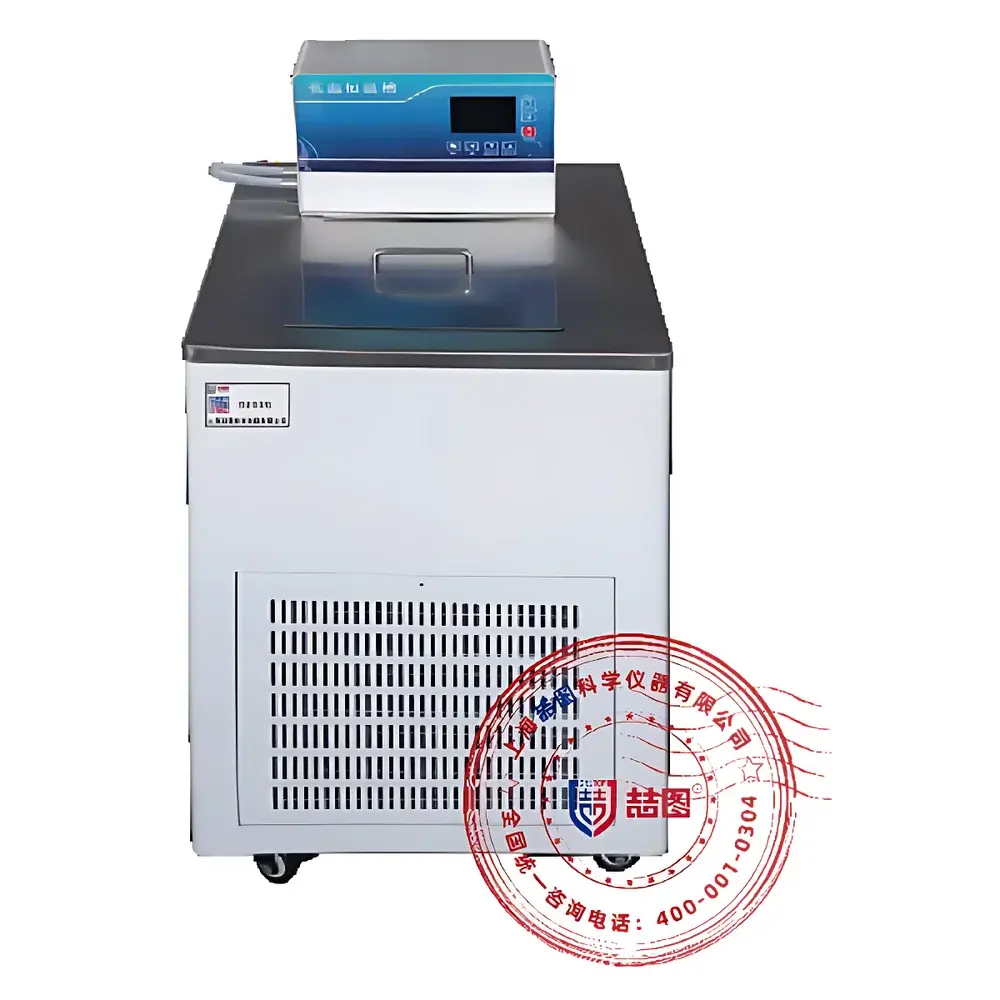
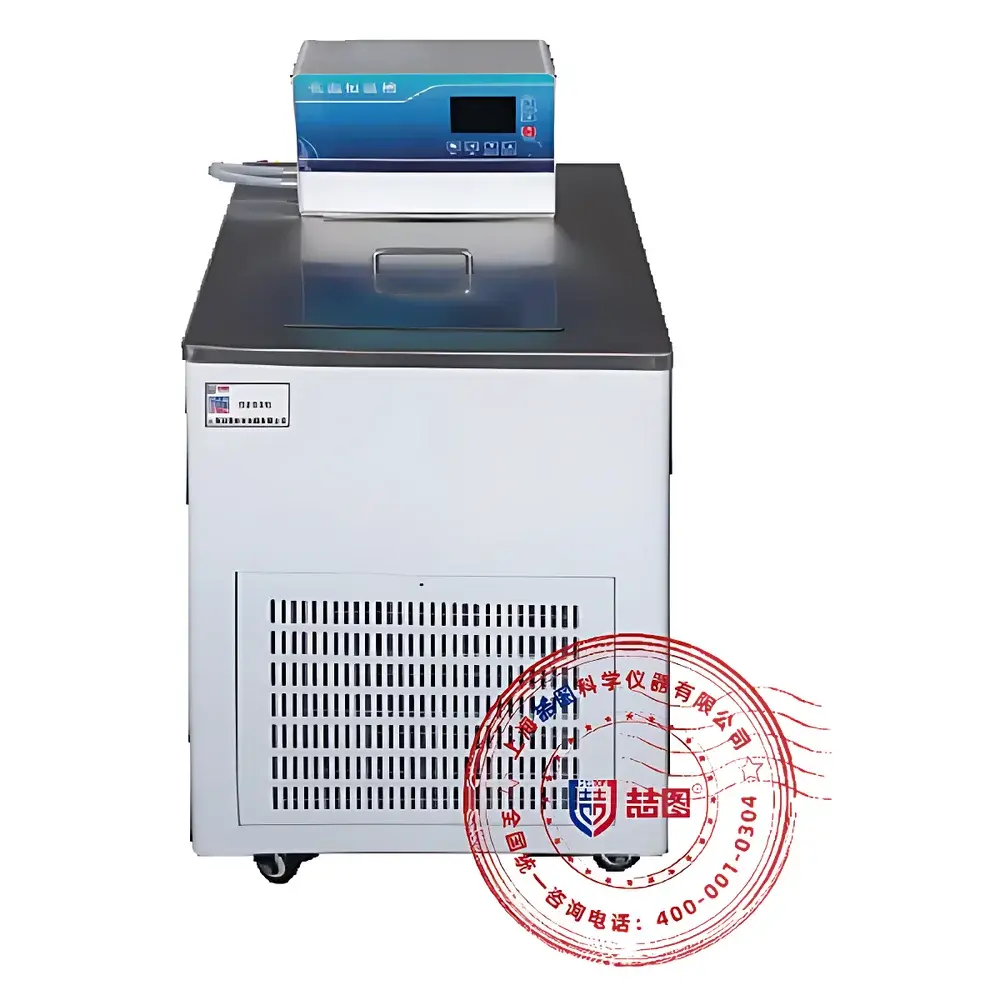
DRETOP FR5-10 Magnetic Stirring Low-Temperature Constant Temperature Bath
| Brand | DRETOP |
|---|---|
| Origin | Shanghai, China |
| Manufacturer Type | Direct Manufacturer |
| Product Category | Domestic |
| Model | FR5-10 |
| Instrument Type | Constant-Temperature Bath |
| Circulation Mode | Internal & External Circulation |
| Temperature Control | Refrigeration & Heating |
| Bath Volume | 5 L |
| Temperature Range | −10 °C to 100 °C |
| Temperature Stability | ±1 °C |
| Temperature Resolution | 0.1 °C |
| Power Supply | 220 V, 50 Hz |
| Flow Rate | 20 L/min |
| Maximum Head | 4–6 m |
| Bath Opening Diameter | Φ210 mm |
Overview
The DRETOP FR5-10 Magnetic Stirring Low-Temperature Constant Temperature Bath is a precision-engineered laboratory thermal management system designed for applications requiring simultaneous temperature control, active mixing, and stable thermal homogeneity across reaction media. Operating on the principle of closed-loop refrigeration-heating circulation, the unit integrates a high-efficiency compressor-based cooling system with resistive heating elements and a built-in magnetic stirrer—enabling uniform thermal distribution within the bath chamber without mechanical agitation of external vessels. This architecture supports both static immersion (e.g., calibration baths, sensor conditioning) and dynamic reaction setups (e.g., jacketed reactors, electrochemical cells), making it suitable for controlled synthesis, kinetic studies, material property testing, and analytical instrument cooling under ISO/IEC 17025-compliant laboratory environments.
Key Features
- Integrated magnetic stirring mechanism with adjustable speed (0–1200 rpm typical range), ensuring homogeneous temperature distribution in the bath medium and eliminating thermal stratification;
- Dual-mode temperature regulation: Peltier-assisted or compressor-driven refrigeration combined with PID-controlled resistive heating for precise setpoint attainment across the full −10 °C to 100 °C operating range;
- High-resolution digital temperature controller (0.1 °C resolution) paired with a calibrated platinum resistance thermometer (PT100) for long-term stability and traceable accuracy;
- Bath chamber constructed from 304 stainless steel with reinforced insulation, minimizing heat loss and supporting external circulation via dual quick-connect ports (inlet/outlet);
- Modular mounting rail and standardized vertical support rod (included) compatible with universal lab accessories—including overhead stirrers, pH electrodes, thermocouples, burettes, and reflux condensers;
- Optional secondary electric stirring module available for synchronized internal–external agitation, enhancing thermal equilibration in high-viscosity or large-volume reaction systems.
Sample Compatibility & Compliance
The FR5-10 accommodates a wide range of heat-transfer media depending on operational temperature requirements: deionized water (5–80 °C), 15% glycerol–water solution (80–100 °C), or ethylene glycol/water or anhydrous ethanol mixtures (−10 to 5 °C). Its sealed bath design prevents evaporation and contamination during extended operation. The unit complies with IEC 61010-1:2010 safety standards for electrical equipment used in laboratory environments and meets electromagnetic compatibility (EMC) requirements per EN 61326-1. While not certified for GMP manufacturing, its temperature logging capability (via optional RS485/USB interface), audit-trail-ready software integration, and stable thermal performance support GLP-aligned workflows in R&D, QC, and method validation laboratories.
Software & Data Management
The FR5-10 operates with embedded firmware supporting real-time temperature monitoring, ramp/soak programming, and over-temperature alarm triggering. When connected to DRETOP’s optional LabLink™ PC software (Windows-compatible), users gain access to time-stamped data export (CSV), multi-channel graphing, remote parameter adjustment, and configurable event logging—including start/stop timestamps, setpoint deviations, and fault codes. All recorded data adhere to ALCOA+ principles (Attributable, Legible, Contemporaneous, Original, Accurate, Complete, Consistent, Enduring, Available) when exported and archived, facilitating compliance with FDA 21 CFR Part 11 requirements where electronic records are employed for regulated testing.
Applications
- Temperature-controlled operation of glass-jacketed reactors (e.g., 1–5 L capacity) in synthetic organic chemistry and polymerization studies;
- Cooling and thermal stabilization of electrophoresis power supplies, viscometers, UV-Vis spectrophotometer cuvette holders, and cryogenic medical devices (e.g., therapeutic cooling caps);
- Thermal management of electron microscope components (filament power supplies, detector housings) requiring stable sub-ambient operation;
- Calibration of temperature-sensitive probes (RTDs, thermistors, infrared sensors) across defined thermal plateaus;
- Controlled crystallization, phase transition analysis, and low-temperature enzymatic assays in biochemistry and pharmaceutical development;
- Supporting ASTM D2570 (low-temperature ductility of bituminous materials) and ISO 3104 (kinematic viscosity measurement) through precise bath temperature maintenance.
FAQ
What types of heat-transfer fluids are recommended for different temperature ranges?
Deionized water is optimal between 5 °C and 80 °C; 15% glycerol–water solution extends usability up to 100 °C; ethylene glycol/water or anhydrous ethanol mixtures are required for operation below 5 °C down to −10 °C.
Does the FR5-10 support external temperature feedback control?
Yes—via optional PT100 probe input, enabling cascade control where the bath regulates based on sample temperature rather than bath fluid temperature.
Can this unit be integrated into automated lab systems?
It supports Modbus RTU protocol over RS485 for bidirectional communication with PLCs or central lab management systems.
Is the magnetic stirrer powerful enough for viscous media?
The standard stirrer delivers torque sufficient for aqueous and low-to-medium viscosity solutions (≤500 cP); for higher viscosities, the optional dual-stirring configuration is recommended.
What maintenance intervals are advised for long-term reliability?
Compressor oil and refrigerant levels should be verified annually; bath fluid should be replaced every 6 months or after 500 operational hours, whichever occurs first.



